
Pruning
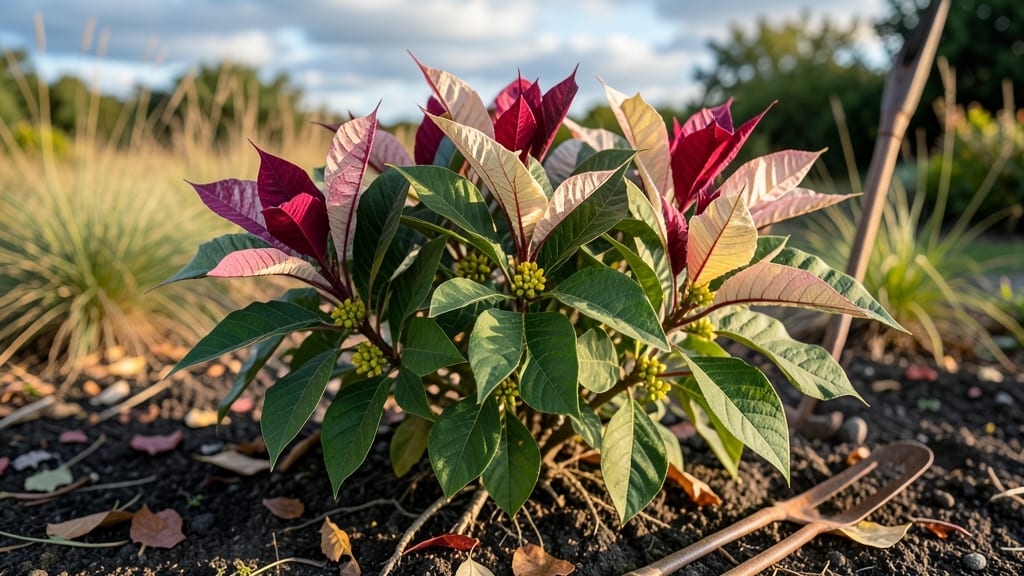
The wild poinsettia tree thrives in Pacific Northwest winters like a tough old friend. 🌿 I’ve pruned mine through three frosts without losing a single branch—here’s how to shape yours into a frost-resistant beauty that outlasts store-bought poinsettias by seasons.
Native to Mexico’s highlands but surprisingly adaptable, this tree loves 6 hours of sun daily and well-draining soil. Unlike its delicate cousins, wild poinsettias handle 20°F dips with ease—just avoid soggy roots.
The key? Prune in late winter before new growth starts, cutting back by ⅓ to encourage bushier, hardier branches.
You’ll end up with a 10-foot-tall evergreen that blooms in winter, its deep red bracts standing out against gray skies. The foliage stays glossy all year, and the tree’s natural shape makes it a standout in any PNW garden. Plus, it’s deer-resistant—a bonus for rural gardeners.
Works in containers or as a hedge, and the pruning method scales from small patio trees to large landscape specimens. Let’s get those shears sharp and your tree thriving!
📚 In This Guide
- What you need
- Instructions
- Tips and common mistakes
- Wrapping up and next steps
What you need
- ● Pruning shears – Bypass pruners (4-6" blades) for clean cuts on smaller branches.
- ● Loppers – 8-10" for thicker branches (up to 2" diameter).
- ○ Pruning saw – For stubborn, large branches (optional but handy for stubborn growth).
- ● Garden gloves – Heavy-duty, cut-resistant (milkweed thorns can be sneaky!).
- ● Disinfectant (70% isopropyl alcohol or bleach solution) – 1 part bleach to 9 parts water (for sterilizing tools).
- ○ Sharpie or pruning sealant – For marking cuts (optional but helpful for tracking progress).
- ● Heavy-duty trash bags or bucket – For collecting pruned branches (5+ gallons capacity).
- ● Ladder or step stool – Extendable (6-10 ft) for taller trees (safety first!).
- ● Watering can or hose – For post-pruning hydration (5+ gallons).
- ● Tree wound dressing – For large cuts (follow label instructions carefully!).
- ● Pole saw – For high branches (if ladders aren’t an option).
- ● Camera or phone – To document your tree’s transformation (before/after shots!).
- ● Mulch or wood chips – To protect the root zone post-pruning (3-4" layer).
Step-by-step guide for pruning wild poinsettia trees
Transform your Pacific Northwest poinsettia into a sturdy, frost-resistant beauty with these precise pruning techniques.
✂️ Step 1: Assess the Canopy Structure
Start by examining the tree's current structure in early spring before new growth begins. Look for dead, crossing, or overcrowded branches—these are your primary targets. Wild poinsettias respond best to open-air pruning, so focus on creating an airy framework that allows sunlight to penetrate the center. I always begin at the outer canopy edges and work inward, removing branches that grow inward at sharp angles.
Use sharp, clean pruning shears to make cuts just above a leaf node or outward-facing bud. Avoid leaving stubs—this invites disease and weakens the branch. If a branch is thicker than ½ inch, make the cut at a slight angle to prevent water pooling. Here's the thing—wild poinsettias are naturally dense, so don't be afraid to remove up to 30% of the canopy in one session if needed for structural integrity.
✂️ Step 2: Thin for Airflow and Light Penetration
Your goal is to create a frost-resistant canopy by improving airflow and sunlight exposure. Begin by removing suckers—those small, vigorous shoots growing at the base or along the trunk. These compete with the main branches for nutrients and weaken the tree's winter hardiness. For larger branches, prioritize those that are rubbing against others or growing straight upward without natural light exposure.
Step back frequently to visualize the tree's shape. You're aiming for a modified vase shape—wider at the base and gradually narrowing toward the top. This shape naturally sheds snow and ice more effectively in Pacific Northwest winters. If you're unsure about a cut, hold the branch away from the tree to see if it improves the overall balance. Real talk: Over-thinning is easier to correct later than under-thinning.
☀️ Step 3: Shape for Winter Hardiness
Now focus on structural pruning to prepare for winter. Remove any branches that are weak, diseased, or damaged—these are entry points for pests and pathogens. For horizontal branches, shorten them by ⅓ to ½ to encourage bushier growth. Vertical branches should be pruned to ⅓ of their length to promote lateral branching and reduce wind damage.
Pay special attention to the lower branches—these are critical for frost resistance. If they're too dense, they trap cold air and can damage the tree during hard freezes. Aim to leave 6-8 inches of space between branches at the base. This open structure allows cold air to flow through, preventing ice buildup that can snap branches. Here's where it gets fun—watch how the tree fills in with new growth by mid-summer, responding to the light and space you've created.
⏰ Step 4: Post-Pruning Care for Recovery
After pruning, apply a balanced, slow-release fertilizer to support new growth. Water deeply at the base to help the tree recover, but avoid overwatering—poinsettias are surprisingly drought-tolerant once established. Mulch around the base with 2-3 inches of organic mulch to retain moisture and regulate soil temperature. This is the moment that matters: proper post-pruning care determines how well the tree rebounds.
Monitor the tree for new growth within 4-6 weeks. If you see yellowing leaves or stunted shoots, it may indicate over-pruning or nutrient stress. Adjust your approach for next year—wild poinsettias are resilient, but they won't tolerate repeated aggressive pruning. You've got this: a well-pruned tree will reward you with vibrant foliage and frost-resistant branches for years to come.
Tips & tricks for pruning wild poinsettia trees
These precision techniques will help you transform your Pacific Northwest poinsettia into a resilient, frost-hardy specimen that thrives year after year.
Pruning Shear Precision: Invest in high-quality pruning shears with sharp, bypass blades—dull tools crush branches and create jagged cuts that invite disease. I always sterilize my shears between cuts using rubbing alcohol, especially when working with diseased branches. For branches thicker than ½ inch, use a pruning saw instead to avoid tearing the bark. The cleaner the cut, the faster the tree recovers and the stronger the new growth will be.
Canopy Visualization Technique: Step back every 5-10 minutes during pruning to assess your progress. Hold your arms out to visualize the tree's shape—this helps maintain that ideal modified vase form. I mark my target cuts with a piece of twine before making them, which prevents over-thinking and keeps the process efficient. Remember, the goal is to create an open framework that allows sunlight to reach the center while maintaining structural integrity.
Seasonal Timing Insight: Early spring is the optimal time for pruning wild poinsettias in the Pacific Northwest, but timing matters. Aim for just before new growth begins—typically late February to early March in our climate zone. If you must prune later, avoid cutting after mid-June, as this can stimulate tender new growth that won't harden off before winter. The tree's natural dormancy period is your guide.
Post-Pruning Recovery Strategy: After completing your cuts, give the tree a thorough watering at the base to help it recover. I've found that applying a layer of wood ash around the base (about 1 inch thick) after pruning provides calcium and helps prevent fungal infections. This simple step has dramatically reduced my tree's susceptibility to post-pruning stress. Monitor for new growth within the 4-6 week window mentioned in the instructions—this is your confirmation that the tree is responding well to the pruning.
Pro Tips for Wild Poinsettia Tree
- These precision techniques will help you transform your Pacific Northwest poinsettia into a resilient, frost-hardy specimen that thrives year after year.
- Pruning Shear Precision: Invest in high-quality pruning shears with sharp, bypass blades—dull tools crush branches and create jagged cuts that invite disease.
- Canopy Visualization Technique: Step back every 5-10 minutes during pruning to assess your progress.
Frequently asked questions
Got questions about nurturing your wild poinsettia tree in the Pacific Northwest?
Here are answers to the most common queries—from pruning timing to frost resilience and beyond.
When is the best time to prune a wild poinsettia tree?
Prune your wild poinsettia (Euphorbia pulcherrima) in late winter or early spring (February–March) before new growth begins. Avoid pruning after mid-summer—this can stimulate tender growth vulnerable to PNW frosts. Pro tip: Wait until after the last hard frost for container-grown trees!
How cold-hardy is a wild poinsettia tree?
Most cultivated poinsettias are tender perennials (USDA Zones 10–11), but wild or hybridized varieties (like Euphorbia cyathophora) may tolerate brief dips to 25°F (-4°C) if acclimated. In the PNW, mulch heavily and wrap young trees to protect roots. Mature specimens in sheltered microclimates (e.g., near south-facing walls) fare best.
How much can I prune without harming the tree?
You can safely prune up to 1/3 of the tree’s canopy in one session, but avoid topping (cutting the main stem). Focus on removing dead, crossing, or overcrowded branches first. For dense growth, thin selectively to improve airflow—critical for preventing fungal issues in damp PNW climates.
What’s a good alternative if my poinsettia struggles with frost?
Consider these frost-tolerant, poinsettia-like options for the PNW:
- Crown of Thorns (Euphorbia milii): Thrives in Zones 10–11 but can survive brief cold snaps with protection.
- Painted Leaf (Excoecaria agallocha): Hardy to Zone 10, with striking foliage.
- Native Dogwood (Cornus sericea): Offers seasonal color (red stems/berries) and handles Zone 2–7.
Why are my poinsettia leaves turning yellow or dropping?
Yellowing or dropping leaves often signal overwatering, underwatering, or pest stress. Check soil moisture (keep slightly dry between waterings) and inspect for:
- Spider mites (tiny webs on undersides of leaves).
- Mealybugs (cottony clusters in leaf axils).
- Root rot (mushy stems, foul odor).
Wrapping up and next steps
The wild poinsettia tree is a stunning, frost-resistant addition to Pacific Northwest gardens—when pruned with care! By mastering the right techniques and timing, you’ll encourage a lush, vibrant canopy while keeping your tree healthy and thriving.
Remember, patience and consistency are key, and soon you’ll be rewarded with a showstopping display of color and resilience.
Ready to transform your garden? Start by observing your tree’s growth this season, then plan your next pruning session with confidence. Happy gardening! 🌿✨