
Pruning
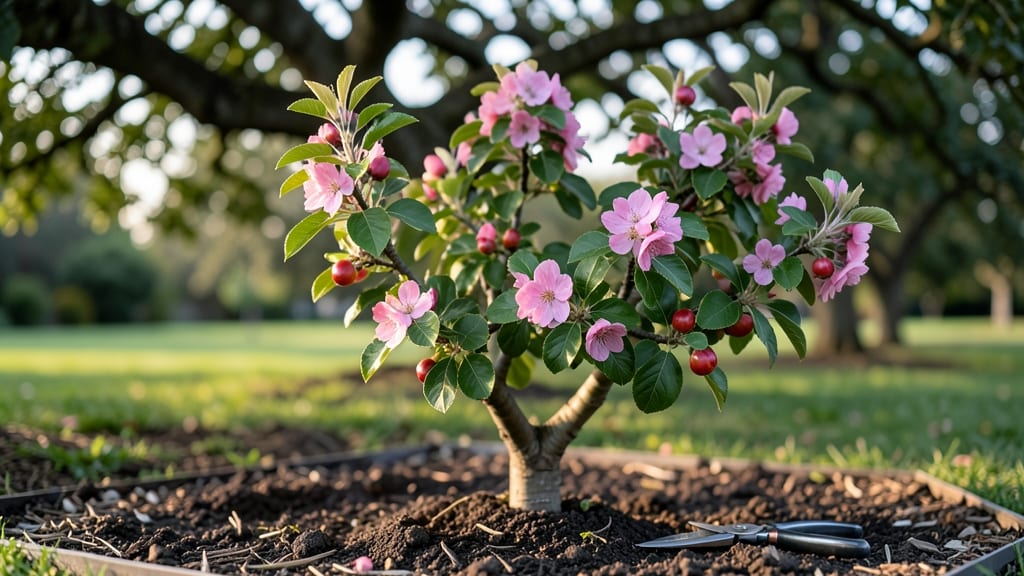
The pink flowering crabapple tree transforms Pacific Northwest gardens into a painter’s palette of color, from delicate spring blooms to fiery fall foliage. 🌸 I planted mine last spring, and now it’s the centerpiece of our front yard—its branches heavy with blossoms that hum with bees and butterflies by early May.
This tree thrives in partial shade, making it perfect for borders or as a standalone focal point. Pair it with dwarf rhododendrons for year-round interest, or let it anchor a mixed border with ferns and hellebores for texture contrast.
The blooms last weeks, and the glossy red berries that follow attract birds through winter.
By late summer, its leaves turn a stunning crimson, extending the show until frost. The tree’s compact size (20–25 feet) fits urban lots beautifully, while its sturdy branches hold up to coastal winds—ideal for Seattle’s rainy climate.
Plant it where you’ll see it daily; this tree doesn’t just grow, it performs.
For best results, prune lightly after flowering to shape branches and remove dead wood. Mulch well to retain moisture, and water deeply during the first two years. The payoff? A tree that outshines any store-bought ornament, season after season.
📚 In This Guide
- What you need
- Instructions
- Tips and common mistakes
- Wrapping up and next steps
What you need
- ● Pruning shears: Bypass pruners (for cuts up to ½ inch in diameter) – 1 pair (look for ergonomic, stainless-steel blades).
- ● Loppers: Bypass or anvil type (for cuts ½ to 2 inches in diameter) – 1 pair (extendable handles help!).
- ● Pruning saw: Curved-tooth saw (for branches 2+ inches thick) – 1 (lightweight aluminum is ideal).
- ● Disposable gloves: Nitrile or leather (to protect from thorns and sap) – 1 pair.
- ○ Rubbing alcohol (70%+) or pruning sealant: To disinfect tools between cuts (optional but highly recommended for disease prevention).
- ● 5-gallon bucket or tarp: For collecting debris – 1 (a wet/dry vac can also work!).
- ● Ladder: Sturdy, extendable (for high branches) – 1 (ensure it’s rated for your weight + tools!).
- ● Tree wound dressing: Only if sealing large cuts (e.g., 1-inch diameter+) – 1 small tub (skip if your tree is young/healthy!).
- ● Marking spray: Fluorescent paint (to mark cuts before pruning) – 1 small bottle.
- ● Safety glasses: To shield eyes from debris – 1 pair.
- ● Notebook/pencil: To jot down pruning notes or sketch a branch map – 1.
Step-by-step guide to planting and caring for a pink flowering crabapple tree
Here’s how to establish your tree for decades of vibrant blooms and seasonal interest.
🌱 Step 1: Choose and Prepare the Planting Site
Pink flowering crabapples thrive in full sun to partial shade, but the Pacific Northwest’s mild climate lets them handle 4-6 hours of direct sun daily—just avoid soggy spots. Test your soil: these trees prefer slightly acidic to neutral pH (6.0-7.0). If your soil is heavy clay, amend with 3-4 inches of compost mixed into the top 12 inches of soil.
Dig a hole twice as wide as the root ball but no deeper—planting too deep suffocates roots. Loosen the sides of the hole with a shovel to encourage root spread. Here’s the thing—spring or early fall planting gives roots time to establish before summer heat or winter frost. Avoid planting in extreme heat or drought periods.
🪴 Step 2: Plant the Tree with Proper Spacing and Support
Place the tree so the top of the root ball sits 1-2 inches above ground level—this prevents waterlogging. Gently remove any burlap or wire baskets if present, then spread the roots outward so they fan naturally. Backfill with the native soil you removed, tamping lightly every 6 inches to eliminate air pockets.
For 4-inch caliper trees, space them 20-25 feet apart to allow mature canopies to develop without crowding. Stake only if necessary (windy sites or weak stems), using two stakes placed 18 inches from the trunk and a soft tree tie that won’t girdle the bark as it grows. Water deeply immediately after planting—10-15 gallons—to settle the soil.
☀️ Step 3: Water and Mulch for Establishment
Water deeply once a week for the first year, providing 15-20 gallons per tree to encourage deep root growth. You’ll know you’re doing it right when the soil 6 inches down stays consistently moist but not waterlogged. Overhead watering can spread disease, so use a soaker hose or drip irrigation placed 12 inches from the trunk.
Apply 3-4 inches of organic mulch (wood chips or bark) in a 3-foot diameter ring around the base, keeping it 6 inches away from the trunk to prevent rot. Mulch retains moisture, regulates soil temperature, and suppresses weeds—just refresh it annually. Avoid inorganic mulches like rocks, which don’t improve soil health.
✂️ Step 4: Prune for Structure and Health in Early Spring
Wait until late winter or early spring, just before buds swell, to prune. Remove dead, diseased, or crossing branches first, cutting back to the collateral bud (just outside the branch bark ridge) to encourage outward growth. Thin the canopy to improve air circulation—aim for an open center that lets light reach the interior.
Never remove more than 25% of the canopy in one year, or you’ll stress the tree. Here’s where it gets fun—watch for suckers (shoots at the base) and water sprouts (vertical shoots from the trunk or branches). Prune these aggressively, as they drain energy from flowering. Use clean, sharp pruners and sterilize them with rubbing alcohol between cuts to prevent bacterial spread.
🌿 Step 5: Maintain Through the Seasons
Fertilize lightly in early spring with a balanced, slow-release fertilizer (10-10-10) applied 6 inches from the trunk in a 3-inch diameter ring. These trees are generally low-maintenance, but a quarter-strength application encourages vibrant blooms. Avoid high-nitrogen fertilizers—they promote leafy growth at the expense of flowers.
Monitor for apple scab and cedar-apple rust, common fungal diseases in the PNW. Remove fallen leaves and fruit promptly, and apply copper fungicide in early spring if your area has a history of these issues. Pink flowering crabapples are relatively pest-resistant, but watch for aphids or scale on new growth—blast them off with a strong stream of water if you spot them.
Tips & tricks for perfect pink flowering crabapple tree establishment
Took me a while to figure these out, so here are the game-changing details that'll help your tree thrive for decades.
Site Selection Nuance: While the Pacific Northwest's mild climate allows for flexibility, prioritize the western or southern exposure of your property for those crucial 4-6 hours of direct sun. Morning sun and afternoon shade is ideal—it prevents leaf scorch while still giving enough light for vibrant blooms. I learned this the hard way after planting mine in a spot that got too much afternoon sun, which caused some leaf browning during summer droughts.
Root Ball Preparation: When removing the tree from its container, gently loosen the root ball's outer edges with your fingers to encourage root spread into the surrounding soil. This step is often skipped, but it makes a world of difference in how quickly your tree establishes. After planting, I always run my fingers around the edges of the hole to ensure no soil pockets remain—this prevents air gaps that could suffocate young roots.
Watering Strategy: The first year is critical for root development, so consider installing a soaker hose on a timer for that 15-20 gallons per week requirement. I set mine to run for about 2 hours twice a week, which delivers consistent moisture without the risk of overhead watering spreading disease. The key is keeping that 6 inches of soil consistently moist—use a moisture meter to check if you're unsure.
Pruning Insight: When thinning the canopy in Step 4, aim to remove branches that are growing inward or downward—they'll create a more open structure that allows light and air to circulate. I always make my cuts just outside the collateral bud and at a slight angle to prevent water from pooling on the wound. This technique promotes faster healing and reduces disease risk.
Pro Tips for Pink Flowering Crabapple Tree
- Took me a while to figure these out, so here are the game-changing details that'll help your tree thrive for decades.
- Site Selection Nuance: While the Pacific Northwest's mild climate allows for flexibility, prioritize the western or southern exposure of your property for those crucial 4-6 hours of direct sun.
- Root Ball Preparation: When removing the tree from its container, gently loosen the root ball's outer edges with your fingers to encourage root spread into the surrounding soil.
Frequently asked questions
about the pink flowering crabapple tree—your go-to guide for pruning, care, and troubleshooting!When is the best time to prune my pink flowering crabapple?
The ideal time to prune is late winter or early spring (February–March) before new growth begins. This helps maintain shape, removes dead wood, and encourages vibrant blooms. Avoid pruning in fall, as it can stimulate tender growth vulnerable to frost. Pro tip: Light pruning after flowering (May–June) can help control size without sacrificing next year’s blossoms!
How much can I prune without harming the tree?
For young trees, limit pruning to 15–20% of the canopy per year to avoid stress. Mature trees can handle up to 25% of selective pruning if needed. Focus on removing dead, diseased, or crossing branches first. Over-pruning weakens the tree—prioritize structure over aggressive cuts! Warning: Never remove more than ⅓ of the canopy in one season.
Why are my pink crabapple leaves turning yellow or dropping?
Yellowing leaves often signal nutrient deficiencies (iron/chlorosis), pests (aphids/mites), or fungal issues (apple scab). Check for soil pH imbalances (test it!) and apply iron supplements if needed. Spray with neem oil for pests or fungicide for disease. Overwatering or poor drainage can also cause stress—ensure well-draining soil.
Can pink flowering crabapples handle Pacific Northwest rain?
These trees thrive in wet climates but need good air circulation to prevent fungal diseases. Space trees 15–20 feet apart and prune to reduce humidity in the canopy. Mulch around the base to improve drainage, and avoid overhead watering. Bonus: Their glossy leaves repel rain better than many ornamentals!
What’s a good alternative if my crabapple isn’t blooming?
If your tree skips flowers, try these PNW-friendly alternatives with similar beauty:
- ‘Dolgo’ Crabapple – Cold-hardy, disease-resistant, and prolific bloomer.
- Oregon Grape Holly – Native, berry-producing, and drought-tolerant.
- Korean Spice Viburnum – Fragrant spring flowers and red berries.
- ‘John Brooks’ Crabapple – Disease-resistant with stunning pink blossoms.
Ensure your soil is acidic (pH 5.5–6.5) and well-draining for optimal blooms!
Wrapping up and next steps
The pink flowering crabapple tree is a true gem for Pacific Northwest gardens, offering stunning blooms, vibrant foliage, and seasonal interest—all with minimal fuss. With the right pruning techniques and care, you’ll enjoy its beauty for decades while keeping it healthy and thriving. 🌸
Ready to transform your outdoor space? Grab your tools, mark your calendar for late winter pruning, and get started—your future tree (and neighbors!) will thank you. 🌿 Need a refresher? Revisit our FAQs or dive into pruning step-by-step!