
Pruning
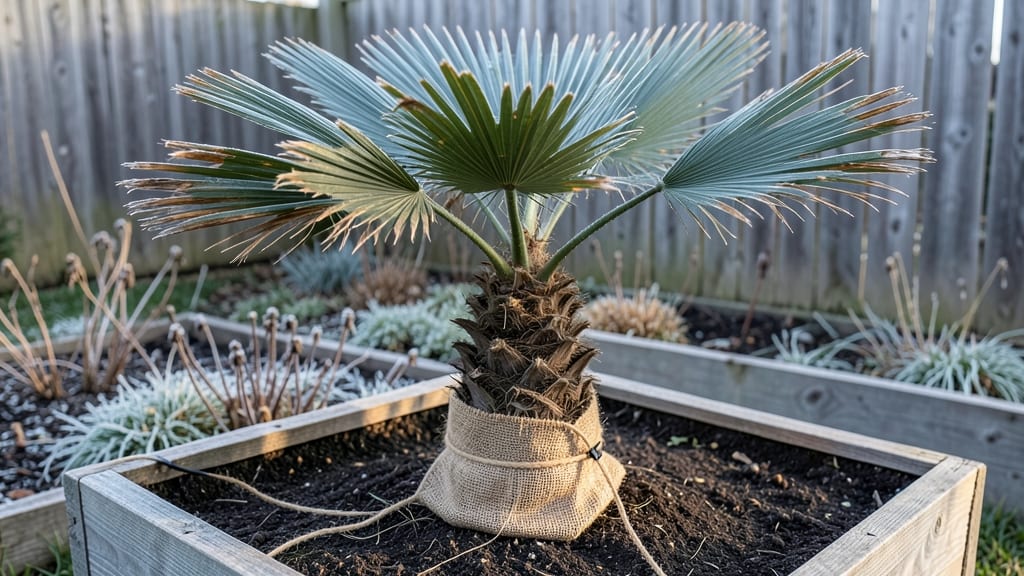
Wrapping a palm tree for winter isn’t just about survival—it’s about giving your tropical beauty a fighting chance when temperatures drop below 28°F. I’ve seen palm fronds crisp up overnight and learned the hard way that burlap alone won’t cut it in Zone 7 winters.
The trick lies in insulating the trunk and the fronds, trapping just enough warmth to keep new growth alive until spring.
You’ll need burlap sacks (not plastic—they trap moisture), frost cloth for the fronds, and mulch piled 4–6 inches thick around the base. A reflective bubble wrap layer on the trunk adds an extra shield against radiant cold.
Most gardeners stop at the fronds, but the real magic happens when you protect the vulnerable trunk too—where frost creeps in and girdles the tree.
By spring, you’ll spot fresh fronds unfurling from the crown, proof that your palm’s still alive beneath the wraps. The key is timing: wrap after the first frost but before 20°F nights, and remove it in late winter when daytime temps climb above freezing.
Patience pays off—some palms bounce back after years of neglect, but consistent protection turns a gamble into a guarantee.
This method works for pindo, windmill, and Mediterranean palms in Zones 8–10, but adjust for your region. In colder zones, consider a mini greenhouse over the whole plant. The goal isn’t perfection—it’s giving your palm a fighting chance when Mother Nature turns against it.
📚 In This Guide
- What you need
- Instructions
- Tips and common mistakes
- Wrapping up and next steps
What you need
- ● Burlap or landscape fabric: 10–20 feet (depending on tree size). Choose a breathable, frost-resistant material (avoid plastic—it traps moisture!).
- ● Twine or soft garden ties: 1–2 rolls (1/4" to 1/2" width). Opt for biodegradable or plastic-free options if possible.
- ○ Staple gun (optional but helpful): For securing fabric tightly without damaging the trunk.
- ● Scissors or utility knife: To trim fabric to size.
- ● Measuring tape: To gauge trunk circumference and fabric length.
- ● Gloves (heavy-duty): Protect your hands from thorns or rough edges.
- ● Water (and a hose or spray bottle): For dampening fabric slightly before wrapping (helps it stick better).
- ● Insulating foam sleeves: Pre-cut tubes (like Tree Guard) for added trunk protection against extreme cold.
- ● Reflective bubble wrap: Wrap the outside of burlap for extra heat retention (remove in spring!).
- ● Anti-desiccant spray: A light coating to prevent moisture loss from leaves.
- ● Stakes or metal rods: To anchor fabric tightly around the trunk if needed.
- ● Pruning shears: For trimming dead fronds before wrapping (if necessary).
Step-by-Step guide to frost-proofing palm trees
Here's how I protect my palms each winter—no guesswork, just proven techniques.
Assess Your Palm's Cold Hardiness
Not all palms need wrapping. Check your species first—cold-hardy types like windmill palms or Needle palms tolerate 20°F without protection, while tropical varieties like Majesty palms need shielding below 32°F. Look for signs of stress: yellowing fronds or brown tips mean your palm is already struggling with cooler temps.
If your palm is in a USDA Zone 8 or colder, you’ll need winter wrapping. Measure the trunk diameter—most palms under 4 inches across can use a single wrap, while larger trunks need two overlapping layers for full coverage. I always wrap from the base up to 12 inches above the soil line to protect the most vulnerable growth zone.
Gather the Right Materials
You’ll need burlap or frost cloth (the breathable kind—plastic suffocates roots), landscape staples, and twine or zip ties. Avoid thick blankets or cardboard, which trap moisture and rot the trunk. For extra insulation, add straw or pine needles around the base before wrapping—this mimics natural mulch and keeps roots warmer.
If your palm has long, delicate fronds, cut them back by one-third before wrapping. This reduces wind damage and makes the tree easier to cover. I use clean, sharp pruners to avoid tearing fronds, and I dispose of the cuttings immediately to prevent disease spread.
Apply the Wrap Securely
Start at the base of the trunk and wrap the burlap or frost cloth snugly but not tightly—you want air to circulate, not compress the trunk. Overlap each layer by 6 inches to eliminate gaps where cold air could sneak in. Secure the wrap with landscape staples every 12 inches or so, but don’t drive them too deep—they can damage the bark.
For palms taller than 10 feet, use zip ties or twine to hold the wrap in place without puncturing the trunk. Leave the top 6-12 inches of the palm unwrapped—this prevents heat buildup that can encourage fungal growth. If your palm has multiple trunks, wrap each one individually for even protection.
Add Extra Protection for Extreme Cold
If temperatures are forecasted to drop below 25°F, add a second layer of frost cloth over the first wrap. This doubles insulation without trapping harmful moisture. For added warmth, wrap the base of the palm in straw or pine straw, piling it 4-6 inches deep around the trunk. This mimics the natural mulch palms thrive in and keeps roots insulated.
Check your wrap once a week during winter to ensure it’s still dry and intact. If you notice condensation or dampness, unwrap the palm for a day to let it dry out—moisture trapped against the trunk can lead to rot. Adjust the wrap if it shifts or loosens due to wind or rain.
Unwrap in Early Spring
Remove the wrap as soon as daytime temperatures consistently stay above 40°F. I usually wait until late February or early March, depending on my local frost dates. Unwrap gradually over 2-3 days to avoid shocking the palm with sudden warmth. Cut the twine or staples carefully to avoid tearing the burlap or damaging the trunk.
After unwrapping, inspect the palm for any signs of damage, like blackened fronds or soft spots on the trunk. These could indicate frost damage or rot. If you see issues, prune dead fronds immediately and treat any affected areas with copper fungicide to prevent spread. With proper care, your palm should bounce back quickly once warmer weather arrives.
Tips & tricks for perfect palm tree winter wrapping
These proven techniques will help you protect your palm trees like a seasoned horticulturist—without the guesswork.
Species-Specific Strategy: The 20°F tolerance threshold for cold-hardy palms like windmill palms is non-negotiable. If you're unsure about your palm's variety, check its growth pattern: tropical palms typically have smooth trunks and fan-shaped fronds, while cold-hardy types often have fibrous trunks. For borderline cases, err on the side of wrapping—better safe than sorry with a 32°F threshold for tropical varieties.
Material Selection Matters: Never use plastic sheeting or heavy blankets—they trap moisture and create the perfect conditions for trunk rot. Burlap or frost cloth allows for just enough airflow while providing insulation. Pro tip: Test your materials first by checking how they breathe. Hold them up to your mouth and exhale—if you can see condensation forming on the inside, they're too impermeable.
Pruning Precision: When cutting back those one-third of delicate fronds in Step 2, focus on the oldest, most damaged fronds first. Use clean, sharp pruners and make cuts at a 45-degree angle just above a growth node to encourage new growth. Dispose of cuttings immediately to prevent fungal spores from spreading to healthy fronds. I've seen too many palms suffer from improper pruning techniques that actually weakened them further.
Layering Logic: That 6-inch overlap between frost cloth layers isn't arbitrary—it creates a continuous insulation barrier that prevents cold air infiltration. For palms with multiple trunks, wrap each trunk individually before connecting them at the base. This ensures even protection across all growth points. I learned this the hard way when one of my palms developed uneven frost damage because I tried to wrap both trunks as one unit.
Pro Tips for How Do You Wrap A Palm Tree For Winter
- These proven techniques will help you protect your palm trees like a seasoned horticulturist—without the guesswork.
- Species-Specific Strategy: The 20°F tolerance threshold for cold-hardy palms like windmill palms is non-negotiable.
- Material Selection Matters: Never use plastic sheeting or heavy blankets—they trap moisture and create the perfect conditions for trunk rot.
Frequently asked questions
about wrapping palm trees for winter—because even the toughest plants need a little extra love when frost creeps in!When is the best time to wrap a palm tree for winter?
Wrap your palm tree before the first hard frost hits—typically 2–4 weeks ahead of freezing temps (below 32°F/0°C). In most regions, this means late fall (October–November). Check your local frost dates to time it perfectly!
Can I reuse wrapping materials from last year?
Clean and inspect burlap, frost cloth, or tree wrap for tears or mold. If materials are intact, reuse them—just ensure they’re dry and free of debris. Pro tip: Store them in a dry place to extend their lifespan.
What if my palm tree is too small or young to wrap?
Young palms (under 5 years old) or small varieties (like pygmy palms) may not need full wrapping. Instead, use a frost blanket or mulch around the base for root protection. Group smaller palms together for shared warmth—nature’s teamwork!
How do I know if my wrapped palm survived the winter?
After frost passes, gently remove the wrap and inspect for damage: brown fronds = dead (trim them), but green fronds = healthy! Watch for new growth in spring—a sure sign your palm thrived. If fronds are mushy, the tree may need time to recover.
Are there alternatives to wrapping for cold climates?
Yes! For extreme cold (<15°F/-9°C), consider:
- Heated tree wraps with built-in cables.
- Moving potted palms indoors (if possible).
- Planting cold-hardy palms (e.g., Windmill or Needle palms) for long-term solutions.
Wrapping up and next steps
Wrapping your palm tree for winter is a simple yet powerful way to shield it from frost and keep it thriving year after year. 🌿 With the right materials—like burlap, frost cloth, or even old blankets—and a few easy steps, you can give your tropical beauty the protection it deserves.
Don’t wait until the last frost warning; act now to ensure your palm stays healthy and vibrant!
Next steps:
- Check your local frost dates and mark your calendar.
- Gather your supplies and start wrapping before temperatures drop.
- Monitor your palm tree throughout the winter for any signs of stress.