
Pruning
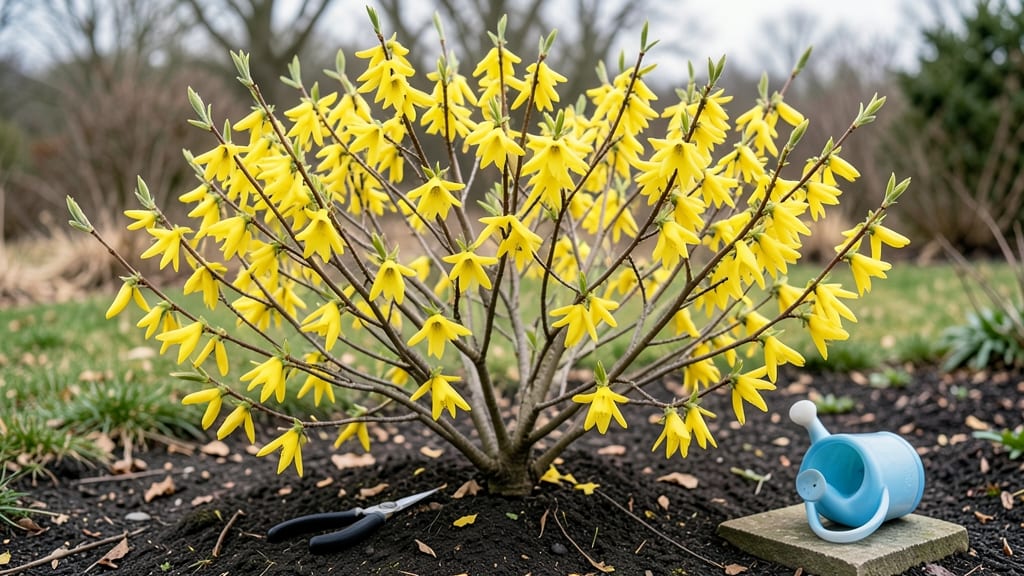
That forsythia tree form you love in spring starts with how you prune it now. 🌿 I’ve shaped mine from a wild, sprawling mess into a neat, blooming focal point—and the secret isn’t just when you cut, but how you think about its natural shape.
Some varieties grow upright like a small tree, while others spread wide like a shrub, and weeping forms cascade like a fountain. The right pruning turns any of these into a garden star.
Most gardeners prune forsythia too late or too hard, which kills next year’s blooms. Instead, focus on three simple cuts: removing dead wood in late winter, shaping after flowering, and thinning out crowded branches in early summer.
My 6-foot upright forsythia now bursts with yellow blooms every March, while my weeping variety spills over a trellis like a golden waterfall. The key is working with its growth, not against it.
You’ll end up with a plant that fits your garden’s style—whether that’s a tight hedge, a bold centerpiece, or a soft border. The blooms come earlier and last longer when you prune correctly, and the foliage stays dense and healthy.
Best of all, it’s a low-maintenance way to add year-round structure, with those bright yellow flowers announcing spring before anything else.
Works for small yards or large landscapes, urban backyards or rural gardens. The same principles apply whether you’re dealing with a single stem or a multi-branched shrub. Let’s get your forsythia looking its best—no guesswork, just results.
📚 In This Guide
- What you need
- Instructions
- Tips and common mistakes
- Wrapping up and next steps
What you need
- ● Pruning shears: Bypass pruners (sharp, 6–8" blades) for clean cuts on small branches.
- ● Loppers: 10–14" bypass loppers for thicker stems (up to 2" diameter).
- ● Pruning saw: Curved-tooth saw for stubborn, woody branches (3–4" diameter).
- ● Gloves: Heavy-duty leather or nitrile-coated (protects from thorns and sap).
- ● Disinfectant: 70% isopropyl alcohol or pruning sealant (to prevent disease spread).
- ○ Extension pole: 3–4 ft telescoping pole (for high branches; optional but handy!).
- ● Twine or zip ties: For temporary support if shaping large limbs.
- ● Marking spray: Biodegradable paint to tag branches for removal (avoids guesswork!).
- ● Step stool or ladder: Sturdy, 4–6 ft tall (for safety—no wobbly chairs!).
- ● Pruning rope: For large-scale shaping (e.g., training a standard form).
- ● Camera or sketchpad: To document your forsythia’s current form before pruning.
Step-by-step instructions for sculpting forsythia into a stunning year-round tree
This is the method I’ve refined over years of transforming wild, sprawling forsythia into elegant, blooming focal points.
✂️ Step 1: Time Your First Prune for Post-Bloom Precision
Wait until 2-4 weeks after flowering—when the vibrant yellow blooms have faded but fresh leaves have fully emerged. This timing ensures you never cut off next year’s flower buds, which form on old wood. I always mark the calendar because forsythia blooms early, often in late winter or early spring.
Use sharp, clean pruners to make cuts at a 45-degree angle just above a outward-facing bud. This angle prevents water from pooling on the cut, which can invite disease. If you’re unsure which buds will produce flowers, look for the ones closest to where last year’s blooms appeared—they’re your best bet for repeat performance.
✂️ Step 2: Open the Center for Light and Airflow
Forsythia’s natural growth habit is dense and bushy, but thick centers choke airflow and sunlight. Remove 20-30% of the oldest, thickest branches from the center, cutting them back to their base. This isn’t about drastic reduction—think of it as creating a gentle funnel that guides light deeper into the tree.
Watch for branches that cross or rub against each other. These are prime candidates for removal because they’ll eventually scar the bark and create entry points for pests. I like to step back every few cuts to visualize the shape—I’m aiming for an open, vase-like structure that lets sunlight reach all the way to the ground.
✂️ Step 3: Refine the Outer Shape with Selective Trimming
Now focus on the outer branches, pruning to encourage a balanced, rounded silhouette. Cut back branches that grow inward or downward to redirect energy to outward-facing growth. I target branches that are thicker than a pencil—these are the structural bones of the tree and need careful attention.
For a more formal look, trim branches to a specific length (like 12-18 inches from the base) to create uniform tiers. If you prefer a natural shape, simply thin out crowded areas until you can see light filtering through the canopy. The goal is to maintain a framework where new growth will fill in gracefully without overwhelming the existing structure.
⏰ Step 4: Schedule Seasonal Maintenance for Long-Term Health
In late summer or early fall, do a light pruning to remove any dead, diseased, or crossing branches. This keeps the tree tidy and prevents winter dieback. Avoid heavy pruning during these months—you’ll risk stimulating new growth that won’t harden off before winter.
Every 2-3 years, revisit the tree to remove any branches that have outgrown their space or lost their vigor. Forsythia responds well to pruning, but it’s a gradual process. I’ve seen trees that were once wild tangles transformed into elegant, blooming sculptures by simply staying consistent with these seasonal check-ins.
Tips & tricks for perfect forsythia tree form
Transforming wild forsythia into a showstopping garden feature takes more than just a pair of pruners—it's about strategic cuts and seasonal timing. Here's what I've learned from years of sculpting these vibrant trees.
Timing is Everything: The 2-4 week window after flowering is non-negotiable for preserving next year's blooms. I've ruined multiple spring displays by pruning too early—always wait until those yellow flowers have completely faded but new leaves have emerged. Mark your calendar now: forsythia blooms earlier than most trees, often in late winter or early spring, so plan accordingly. This precise timing ensures you never accidentally remove flower buds that form on old wood.
Cutting Technique Matters: That 45-degree angle isn't just for aesthetics—it's a disease prevention strategy. When you make clean cuts above outward-facing buds, you create a natural water runoff that protects the cut from bacterial infections. I've seen too many pruning wounds develop black rot because of improper angles. For best results, use sharp pruners and make your cuts just above the bud where last year's flowers appeared—this is where you'll get the most reliable blooms next season.
Visualize the Structure: Step back every few cuts to evaluate your progress. The goal is that open, vase-like shape that lets sunlight reach all the way to the ground. In Step 2, when you're removing 20-30% of the oldest branches, think of creating a gentle funnel. This isn't about drastic reduction—it's about strategic thinning. I like to imagine I'm sculpting a living sculpture where every cut serves a purpose in the overall composition.
Seasonal Maintenance Secret: That late summer or early fall light pruning is your insurance policy against winter dieback. I've learned the hard way that heavy pruning during these months stimulates tender new growth that won't survive freezing temperatures. Instead, focus on removing only dead, diseased, or crossing branches. Think of it as giving your forsythia a spa treatment—keeping it tidy without shocking its system.
Pro Tips for Forsythia Tree Form
- Transforming wild forsythia into a showstopping garden feature takes more than just a pair of pruners—it's about strategic cuts and seasonal timing.
- Timing is Everything: The 2-4 week window after flowering is non-negotiable for preserving next year's blooms.
- Cutting Technique Matters: That 45-degree angle isn't just for aesthetics—it's a disease prevention strategy.
Frequently asked questions
Got questions about shaping your forsythia into a stunning, bloom-filled masterpiece? Here are answers to the most common ones—so you can prune with confidence!
When is the best time to prune forsythia for optimal form?
The ideal window is right after flowering (late spring) but before new growth hardens. This ensures you don’t cut off next year’s blooms—forsythia flowers on old wood. Avoid pruning in fall or winter, as it may stress the tree.
Can I shape forsythia into a standard tree form, or does it always grow wild?
With consistent pruning, you can train forsythia into a standard tree, multi-stem shrub, or even a hedge. Use a central leader (main upward branch) and remove competing stems early. Pro tip: Thin out crowded branches in late winter for airflow and light penetration.
My forsythia isn’t blooming much—did I prune it wrong?
Over-pruning or cutting into old wood (last year’s growth) can reduce blooms. If you’ve trimmed too aggressively, focus on light shaping in future years. Forsythia blooms on dormant buds, so avoid heavy cuts after flowering. If deadheading spent blooms, do it sparingly—it won’t boost flowers but may encourage foliage.
What’s a good alternative if I want a similar look but less maintenance?
If forsythia’s pruning demands feel high, consider weigela or deutzia—both bloom early and tolerate shaping. For a tree-like form, ornamental cherry (Prunus serrula) offers stunning spring color with slightly easier pruning. Just match your climate zone!
How do I fix a forsythia that’s growing too leggy or sparse?
Revive leggy forsythia by pruning back 1/3 of the oldest stems to encourage new growth from the base. For sparse areas, thin out dense branches to improve light exposure. Fertilize lightly in early spring with a balanced 10-10-10 formula to support recovery. Patience is key—it may take 1–2 seasons to fill in!
Wrapping up and next steps
Mastering the forsythia tree form is all about balancing patience, precision, and seasonal timing! With the right tools, techniques, and a little creativity, you can transform your forsythia into a stunning, year-round focal point—whether you prefer a weeping cascade, a tidy hedge, or a bold, bushy statement.
Remember, consistent pruning and observing your plant’s natural growth are key to long-term success.
Ready to take the next step? Grab your pruners, sketch a rough plan, and start small—even a single branch can make a difference! For extra inspiration, explore pruning timelines or connect with local gardening groups to share your progress. Your forsythia’s springtime glow will thank you! 🌸✂️