
Pruning
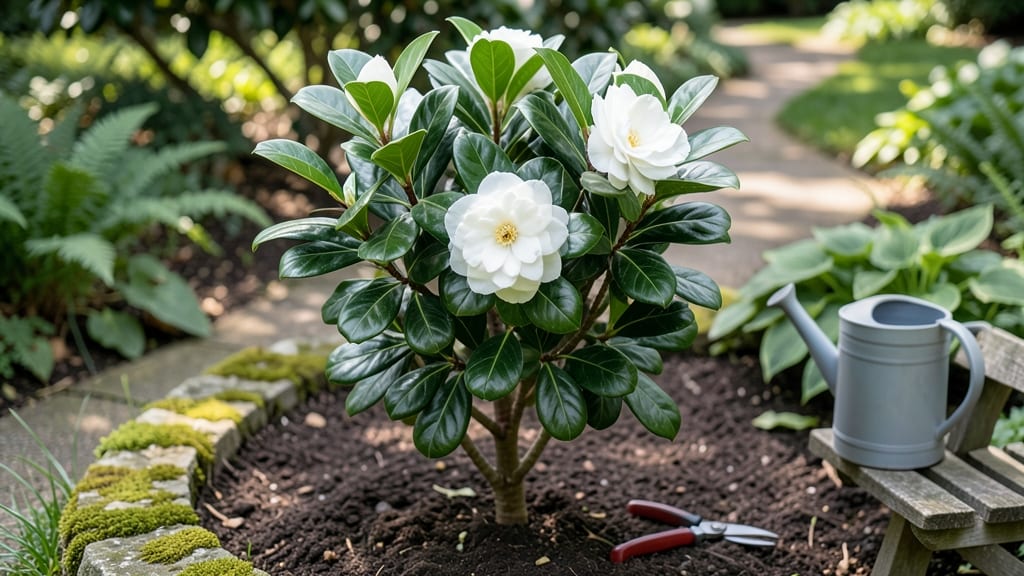
The care of a gardenia tree transforms it from a struggling shrub into a fragrant, ever-blooming stunner—and the key steps are simpler than you’d expect. about timing, sharp cuts, and understanding what your plant really needs.
Most gardeners over-prune or wait too long, and that’s how you end up with leggy stems and sparse flowers.
The magic happens in late winter or early spring, just as new growth begins to swell. Grab your pruners, sterilize them with rubbing alcohol (trust me, this prevents disease), and cut just above a leaf node at a 45-degree angle—never leave stubs.
Remove dead, crossing, or weak branches first, then thin out crowded growth to improve airflow. Think of it like giving your gardenia a spa day: less clutter means more energy for those intoxicating white blooms.
You’ll see the difference within 6-8 weeks—thicker foliage, stronger stems, and buds forming where you made those clean cuts. Even better, gardenias reward consistent care with blooms that last from spring through fall (and sometimes winter, if you’re lucky).
The key is light pruning year-round: just a few strategic snips after each flush of flowers to encourage bushier growth. No more struggling with bare branches or wondering why your gardenia’s sulking.
This method works for both container gardenias (like the ones gracing patios and balconies) and in-ground trees. Container plants need slightly more frequent pruning to control size, while larger trees benefit from shaping cuts to maintain their natural form.
Whether you’re dealing with a mature specimen or a young plant, the same principles apply—just adjust the scale. Ready to transform that underperforming gardenia into a blooming superstar?
📚 In This Guide
- What you need
- Instructions
- Tips and common mistakes
- Wrapping up and next steps
What you need
- ● Garden shears or pruning saw: Sharp, bypass-style shears (for clean cuts) or a small pruning saw for thicker branches. Size: 6–8 inches for most gardenia branches.
- ● Disinfectant (70% isopropyl alcohol or bleach solution): 1 part bleach to 9 parts water (for sterilizing tools between cuts).
- ○ Pruning sealant (optional but helpful): A latex-based sealant (like Tanglefoot Pruning Seal) to coat cuts larger than ½ inch.
- ● Gloves: Heavy-duty gardening gloves (to protect from thorns and sap).
- ● Watering can or hose with a gentle spray nozzle: Gardenias hate soggy roots but love consistent moisture.
- ● pH testing kit: To check soil acidity (ideal range: 5.0–6.5).
- ● Slow-release acid-loving plant fertilizer: Look for a 16-4-8 or 8-3-9 NPK ratio with micronutrients like iron and magnesium.
- ○ Mulch (optional): Pine bark or pine needles (2–3 inches thick) to retain moisture and acidify soil naturally.
- ● Sunlight: At least 4–6 hours of direct sunlight daily (morning sun is ideal to avoid scorching).
- ● Well-draining, acidic soil: Amend clay or alkaline soil with peat moss or sulfur if needed.
- ● Patience: Gardenias bloom best when not over-pruned—focus on shaping, not aggressive thinning.
- ● Knowledge of bloom cycles: Prune right after flowering (late spring/early summer) to encourage next year’s blooms.
Step-by-Step guide to reviving your gardenia tree’s year-round blooms
Here’s how to nurture your gardenia back to vibrant, continuous flowering using science-backed pruning and care.
Master the Pruning Timing and Technique
Prune your gardenia right after flowering—never in late winter or early spring. This timing ensures you don’t cut off next year’s blooms, which form on old wood. Use clean, sharp pruning shears (sterilized with rubbing alcohol) to make cuts at a 45-degree angle, just above a leaf node or bud. Avoid cutting into old, woody growth—focus on shaping rather than drastic reduction.
Here’s the thing—gardenias respond poorly to heavy pruning. I trim back only 10-20% of new growth to maintain shape and encourage airflow. Over-pruning stresses the plant, leading to fewer flowers. Watch for new growth at the tips—this signals where to make your cuts.
Optimize Light, Water, and Soil for Continuous Blooms
Gardenias thrive in bright, indirect light—think morning sun with afternoon shade. A south- or east-facing window works best, but avoid harsh afternoon rays, which scorch leaves. If indoors, supplement with a grow light (12-14 hours daily) to prevent leggy growth. You’ll know the light is right when leaves stay deep green and glossy without yellowing.
Water deeply once a week, ensuring the top 2-3 inches of soil stay moist but never soggy. Gardenias hate wet feet—use a pot with drainage holes and a saucer to catch excess water. Test moisture by sticking your finger in the soil: if it’s dry 1 inch down, it’s time to water. Overwatering causes root rot, which kills blooms faster than anything.
Feed your gardenia every 4-6 weeks during spring and summer with an acid-loving plant fertilizer (pH 5.0-6.0). I use a balanced 10-10-10 formula diluted to half-strength. Fertilizing too much in winter stresses the plant, so pause feeding in fall and winter. You’ll see new buds forming within 2-3 weeks of consistent feeding.
Encourage Blooms with Humidity and Temperature Control
Gardenias love high humidity—aim for 50-70% to mimic their tropical origins. Place the pot on a pebble tray filled with water or use a humidifier nearby. Mist the leaves daily in dry climates, but avoid wetting the blooms, which causes spotting. You’ll notice leaves staying plump and vibrant when humidity is ideal.
Keep temperatures between 60-75°F—cool drafts or sudden temperature swings shock the plant. If your home dips below 55°F at night, move the gardenia away from windows or doors. Buds drop easily in cold drafts, so consistency is key. A thermostat near the plant helps monitor fluctuations.
Prune spent blooms immediately by cutting the stem back to the nearest leaf node. This redirects energy to new flower production. I remove only the faded blossom, not the entire stem—this encourages more buds to form along the branch. Deadheading also prevents seed pods from forming, which weakens the plant.
Troubleshoot Common Issues for Lasting Blooms
If your gardenia drops buds, it’s usually due to low humidity, drafts, or sudden temperature drops. Move it to a warmer, more stable spot and increase humidity immediately. You’ll see buds hold longer within 3-5 days of adjusting conditions. Yellow leaves often signal overwatering or poor drainage—let the soil dry slightly more between waterings.
Pests like aphids or spider mites suck sap and weaken blooms. I treat infestations with neem oil spray (mix 1 tbsp neem oil with 1 quart water) applied every 7 days until pests vanish. Check the undersides of leaves weekly—early detection prevents a full-blown outbreak.
For indoor gardenias, rotate the pot weekly to ensure even light exposure. You’ll notice new growth leaning toward the light—this is your cue to turn the plant. Uneven light causes lopsided growth and fewer blooms. A slow rotation prevents shock to the plant.
With these steps, your gardenia will reward you with year-round blooms—fragrant, full, and thriving.
Tips & tricks for perfect gardenia tree care
Reviving your gardenia’s blooming potential takes patience and precision—here’s how to avoid common pitfalls while maximizing results.
Pruning Precision: When you prune right after flowering, focus on the 10-20% new growth guideline—this is non-negotiable. I’ve seen gardenias stressed beyond recovery when people trim too aggressively. Use your pruning shears to make clean cuts at a 45-degree angle, just above a leaf node. This angle prevents water from pooling on the cut, which could lead to rot. The key is shaping, not reducing—think of it as sculpting rather than haircutting.
Light Optimization: The 12-14 hours of grow light mentioned in Step 2 is crucial for indoor gardenias, especially in winter when natural light is scarce. Position your grow light 12-18 inches above the plant and adjust as the plant grows. You’ll know you’ve got the right balance when leaves stay deep green and glossy—no yellowing or browning. If you notice leaves stretching toward the light, it’s time to move the plant closer or increase light duration slightly. This prevents leggy growth that weakens blooming potential.
Humidity and Temperature Balance: Maintaining that 50-70% humidity range can be tricky in dry climates. Beyond pebble trays, I’ve found that grouping your gardenia with other houseplants creates a microclimate that naturally boosts humidity. For temperature, the 60-75°F range is ideal, but consistency matters more than exact degrees. If your home dips below 55°F at night, consider moving the plant away from drafty windows or using a small space heater nearby—just keep it away from direct heat sources. A sudden drop can cause buds to drop within hours.
Fertilizer Strategy: The 4-6 week feeding schedule during spring and summer is perfect, but timing matters. I always fertilize right after watering to prevent root burn. Use a 10-10-10 formula diluted to half-strength—this gives your gardenia the balanced nutrition it needs without overwhelming it. The 2-3 week window for new buds to form is your reward for consistency. If you notice slow growth or sparse blooms, it might be time to test your soil pH—gardenias thrive in acidic soil (pH 5.0-6.0).
Pro Tips for Care Of A Gardenia Tree
- Reviving your gardenia’s blooming potential takes patience and precision—here’s how to avoid common pitfalls while maximizing results.
- Pruning Precision: When you prune right after flowering, focus on the 10-20% new growth guideline—this is non-negotiable.
- Light Optimization: The 12-14 hours of grow light mentioned in Step 2 is crucial for indoor gardenias, especially in winter when natural light is scarce.
Frequently asked questions
Got questions about nurturing your gardenia tree? You’re not alone! Here are some of the most common concerns—plus expert-backed answers to keep those fragrant blooms thriving.
How often should I prune my gardenia tree?
Prune your gardenia once a year, ideally in late winter or early spring (just before new growth starts). This timing encourages healthy blooms while avoiding the risk of frost damage. Lightly trim dead or overgrown branches to maintain shape and airflow—never cut more than one-third of the foliage at once!
Why aren’t my gardenia flowers opening?
Gardenias are finicky about light and humidity. If blooms refuse to open, check for:
- Insufficient sunlight (they need 6+ hours of morning sun).
- Low humidity (mist leaves daily or use a pebble tray).
- Over-fertilizing (too much nitrogen = fewer flowers).
Can I prune gardenia branches with flowers on them?
Yes, but strategically! Prune spent blooms (deadheading) to encourage new flowers, but avoid heavy cuts during peak bloom season (spring/summer). Save major pruning for late winter. Pro tip: Use clean, sharp shears to prevent disease.
How cold can a gardenia tree tolerate?
Gardenias are tropical and thrive in USDA zones 8–11. If temps drop below 30°F (-1°C), they’ll suffer. Protect potted gardenias with frost cloth or move them indoors. In colder zones, grow them as container plants and winter them over.
What’s the best fertilizer for gardenia blooms?
Use a balanced, acidic fertilizer (e.g., 6-6-6 or 8-3-9) with micronutrients like iron and magnesium. Apply every 4–6 weeks in spring/summer, but skip fertilizing in fall/winter. Never use high-nitrogen lawn fertilizer—it’ll stunt blooms!
Wrapping up and next steps
With the right knowledge and a little patience, your gardenia tree can thrive and reward you with stunning, fragrant blooms year after year. 🌸 Pruning isn’t just about cutting—it’s about nurturing growth, improving airflow, and encouraging health. Start small, observe your tree’s response, and adjust as needed.
Ready to transform your gardenia into a showstopper? Grab your tools and schedule your first pruning session this month! Your future fragrant paradise awaits—one careful cut at a time. 🌿