Pruning
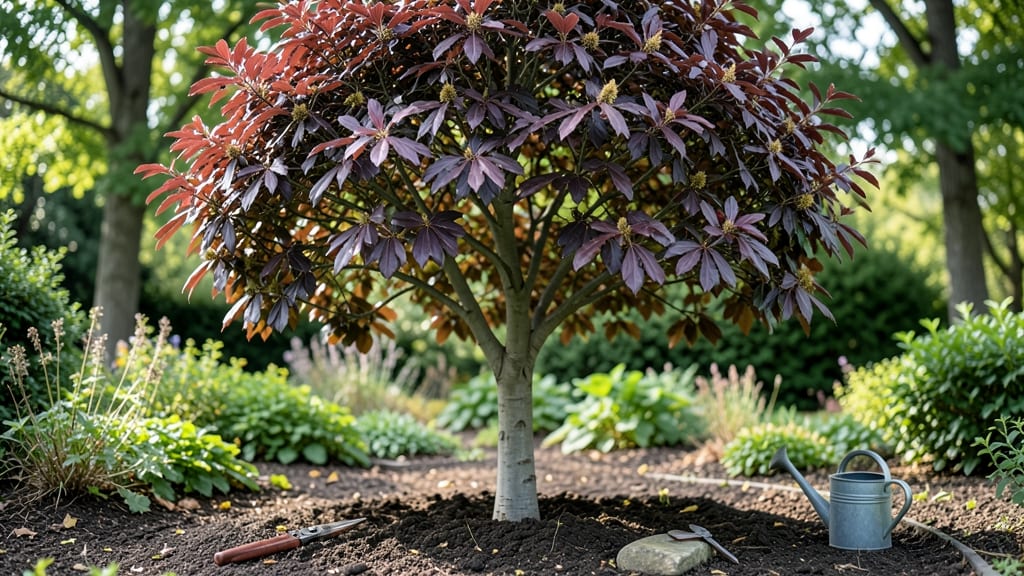
The purple European beech tree steals every season with its deep violet foliage that shifts to bronze in winter. 🌿 I fell for it the first time I saw one in a grand estate garden—its dramatic color and elegant shape made it impossible to ignore.
This isn’t just another shade tree; it’s a living sculpture that transforms with the seasons.
Perfect for grand landscapes, woodland gardens, or as a striking focal point, this tree thrives in partial shade to full sun and tolerates most soil types—though it prefers well-drained conditions. Its slow growth means minimal pruning, letting you enjoy its natural beauty without constant upkeep.
The key to maximizing its impact is spacing: give it room to mature, typically 20-30 feet from other plants.
Pair it with hostas, ferns, or evergreen shrubs to create a layered, ever-changing display. In autumn, its coppery tones contrast beautifully with golden deciduous trees, while winter’s bronze leaves add warmth to a snowy landscape. The result? A garden that feels alive year-round, with effortless drama.
Whether you’re designing a park, a grand estate, or a private woodland garden, this tree delivers bold color and structure with almost no effort. Here’s how to make the most of its natural elegance.
📚 In This Guide
- What you need
- Instructions
- Tips and common mistakes
- Wrapping up and next steps
What you need
- ● Pruning shears: Sharp, bypass-style shears (for cuts under ½ inch thick). Quantity: 1 pair.
- ● Loppers: For thicker branches (½ to 1½ inches). Quantity: 1 pair.
- ● Pruning saw: For branches over 1½ inches (folding saw recommended). Quantity: 1.
- ● Gloves: Heavy-duty, cut-resistant gloves (to protect from thorns and splinters). Quantity: 1 pair.
- ● Disinfectant: 70% isopropyl alcohol or a 10% bleach solution (to sterilize tools between cuts). Quantity: Small bottle.
- ○ Pruning sealant: Optional but helpful for larger wounds (e.g., tree wound dressing). Quantity: Small tube.
- ● Ladder or step stool: Sturdy and tall enough to reach the tree’s canopy safely. Quantity: 1.
- ● Tarp or drop cloth: To collect debris and protect the ground. Quantity: 1 (5’x5’ or larger).
- ● Weather check: Prune on a dry, calm day (avoid wind or rain).
- ● Safety glasses: To shield eyes from debris. Quantity: 1 pair.
- ● Long sleeves/pants: Protects against scratches and sun exposure.
- ● First-aid kit: For minor cuts or scrapes. Quantity: 1.
- ● Tree identification: Confirm it’s a Fagus sylvatica ‘Purpurea’ (purple beech) to avoid mistaking it for other species.
- ● ✨ Sharpen your tools: Dull blades tear bark—ruining the tree’s health. Use a file or sharpening stone.
- ● 🌡️ Timing matters: Late winter or early spring (just before new growth) is ideal for purple beech pruning.
- ● 🎯 Gather debris: Remove fallen leaves/branches to prevent fungal growth around the base.
Step-by-Step instructions for planting and caring for a purple European beech tree
Here's how to establish your striking purple beech for decades of color with almost no fuss.
🌱 Step 1: Choose and Prepare the Perfect Planting Site
Select a location with partial to full shade—this tree thrives where others struggle. The soil should be moist but well-draining, rich in organic matter, and slightly acidic (pH 5.0-6.5). Avoid spots where water pools after rain, as soggy roots lead to root rot.
Dig a hole twice as wide as the root ball but no deeper. Loosen the sides of the hole to encourage root spread. If your native soil is heavy clay, mix in 2-3 inches of compost into the bottom half of the hole—this improves drainage while retaining moisture. The reason we don't bury the root flare is that buried stems suffocate the tree over time.
☀️ Step 2: Plant at the Right Time and Depth
Plant your 4- to 5-foot-tall tree in early spring or fall when temperatures are mild. This gives roots time to establish before summer heat or winter cold. Handle the root ball carefully—wrap it in burlap if it's dry to prevent roots from drying out during transplanting.
Position the tree so the top of the root ball sits 1 inch above ground level. This slight elevation prevents water from settling against the stem. Backfill with native soil, tamping down gently in layers to eliminate air pockets. Water deeply immediately after planting—5 gallons for a 4-foot tree—to settle the soil and remove air gaps.
💧 Step 3: Water Deeply and Mulch for Retention
Water once a week for the first month, then every 10-14 days thereafter, providing 10-15 gallons per watering depending on tree size. You'll know it's enough when water runs out the drainage layer below the root zone. Avoid overhead sprinkling, which can spread fungal diseases.
Apply 3 inches of organic mulch (like wood chips) in a 3-foot-wide ring around the base, keeping it 6 inches away from the trunk. This conserves moisture, regulates soil temperature, and suppresses weeds. Refresh the mulch annually in early spring—never let it pile against the trunk, as this invites rot.
✂️ Step 4: Prune Strategically (Almost Never)
Purple European beeches need minimal pruning—focus only on removing dead, diseased, or crossing branches. The best time to prune is late winter or early spring before new growth begins. Use clean, sharp pruners to make cuts just outside the branch collar (the swollen area where the branch meets the trunk).
Never remove more than 25% of the canopy in one season—this stresses the tree and reduces its stunning color display. If you notice leggy branches reaching for light, it's a sign the tree needs a slightly sunnier spot, not more aggressive pruning. The goal is to maintain the tree's natural shape while encouraging dense foliage.
🌿 Step 5: Monitor and Adjust for Long-Term Health
Check the tree's soil moisture monthly by inserting a finger 2 inches deep—it should feel slightly damp but not soggy. Yellowing leaves in summer often signal underwatering, while brown edges indicate too much sun or salt buildup from hard water. Adjust your watering schedule accordingly.
Fertilize only if needed—apply a balanced 10-10-10 fertilizer in early spring if growth slows. Over-fertilizing leads to weak, fast growth that's more prone to pests. Watch for bronze or purple leaf discoloration in hot summers—this is normal and won't harm the tree. The real red flags are sudden leaf drop or oozing cankers, which require immediate attention from a certified arborist.
Tips & tricks for perfect purple European beech tree planting
Took me years to figure out these simple secrets—your purple beech will thank you for them.
Soil Prep Secret: In Step 1, when mixing 2-3 inches of compost into heavy clay soil, I add a handful of perlite to the bottom of the hole. This creates tiny air pockets that improve drainage while still keeping moisture—exactly what your beech needs to thrive. The key is blending it thoroughly so it doesn't create pockets of different textures.
Planting Depth Visual: That 1-inch elevation above ground level in Step 2 can be tricky to judge. Here's my trick: After placing the tree, use a pencil to mark the soil level at the root flare. Then backfill until the pencil line sits just above the ground. This ensures proper drainage without guessing.
Watering Hack: For the 5 gallons of water in Step 2, I use a 5-gallon bucket with a spigot. This lets me control the flow and see exactly when water starts draining from the bottom—proof you've hydrated the entire root ball properly. Overwatering here is just as bad as underwatering.
Mulch Placement: When applying that 3-inch layer of organic mulch in Step 3, I create a slight depression around the trunk before adding it. This helps water flow toward the roots rather than pooling against the stem. Just make sure to keep it 6 inches away—any closer and you risk rot.
Pro Tips for Purple European Beech Tree
- Took me years to figure out these simple secrets—your purple beech will thank you for them.
- Soil Prep Secret: In Step 1, when mixing 2-3 inches of compost into heavy clay soil, I add a handful of perlite to th...
- Planting Depth Visual: That 1-inch elevation above ground level in Step 2 can be tricky to judge. Here's my trick: Af...
Frequently asked questions
Got questions about keeping your purple European beech tree stunning with minimal fuss? Here are some of the most common queries—and their answers!
How often should I prune a purple European beech tree?
A purple European beech thrives with minimal pruning—just light shaping in late winter or early spring (before new growth starts). Avoid heavy cuts; focus on removing dead branches or crossing limbs. Pro tip: Use sharp tools to prevent tearing bark, which can invite pests.
Can I prune my beech tree in summer?
Summer pruning is not ideal for purple European beeches. Pruning in hot months stresses the tree, slows growth, and can lead to sunscald on fresh cuts. If you must trim, do it early morning or late evening to reduce stress. Save major work for dormant season (winter/early spring).
What’s the best way to shape a purple beech tree?
These trees have a natural, elegant form, so less is more! Use hand pruners for small branches and loppers for thicker limbs. Aim for an open canopy to improve airflow and sunlight penetration. Avoid over-thinning—beeches can handle light shaping but dislike aggressive cuts.
Why are my purple beech leaves turning brown?
Brown leaves on a purple European beech often signal stress from over-pruning, drought, or pests. Check for spider mites or scale insects (common culprits). Water deeply during dry spells and avoid fertilizing unless soil tests show a deficiency. If browning persists, inspect for fungal issues like beech leaf disease.
Are there alternatives to purple European beech for low-maintenance shade?
If you love the dramatic foliage but want other options, consider:
- Red Oak – Fast-growing with bold color, but needs more pruning.
- Japanese Maple – Stunning purple/red leaves, but not drought-tolerant.
- Serviceberry – White spring blooms and edible berries, with minimal pruning needs.
- Hornbeam – Similar structure, but leaves turn gold in fall.
Wrapping up and next steps
The purple European beech tree is a stunning, low-maintenance addition to any landscape—offering vibrant foliage, year-round interest, and minimal pruning demands. Whether you're a seasoned gardener or a beginner, its resilience and beauty make it a perfect choice for adding drama with ease. 🌿
Ready to transform your outdoor space? Start by observing your tree’s natural shape and identifying any dead or overgrown branches—then grab your tools and get pruning! With just a little effort, you’ll enjoy a breathtaking focal point that thrives with almost no fuss.