Pruning
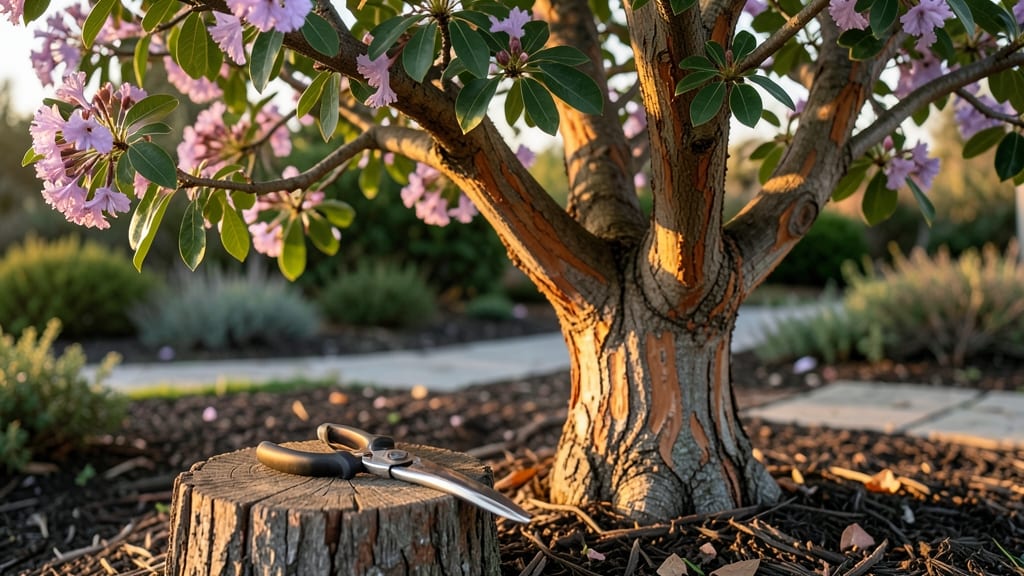
Learn how to prune crepe myrtle into a tree by mastering the right cuts—and the right timing—to shape your shrub into a stunning single-trunk specimen. I’ve pruned these beauties for years, and the difference between a leggy mess and a graceful tree comes down to when and how you prune.
The dormant season is your golden window, when the plant’s energy is resting and wounds heal cleanly.
You’ll need just three tools: sharp bypass pruners for clean cuts, loppers for thicker branches, and a ladder if your tree stands taller than your outstretched arms.
The real work happens in removing those pesky suckers at the base and water sprouts along the trunk—these are the thieves stealing energy from your desired shape. Think of it like sculpting: every cut should serve the vision of that elegant, multi-stemmed tree.
After pruning, you’ll notice new growth emerging from the right spots within weeks, with fuller blooms by next season. The key is patience—avoid the temptation to over-prune, which leads to "crepe murder" and bare branches.
Instead, focus on opening the center for airflow and sunlight, which keeps the remaining wood healthy and blooming reliably year after year.
This method works for both young trees and mature ones needing a refresh, though older specimens may take a season or two to fully transform. The payoff? A tree that’s not only stunning but also easier to maintain. Let’s get those pruners out and shape that beauty.
📚 In This Guide
- What you need
- Instructions
- Tips and common mistakes
- Wrapping up and next steps
What you need
- ● Pruning shears (bypass or anvil type) – Sharp, clean blades (1 pair, 6–8" long)
- ● Loppers – For thicker branches (½"–1½" diameter) (1 pair, 18–24" long)
- ● Pruning saw – For stubborn, larger branches (1½"+ diameter) (1, with a curved blade)
- ● Gloves – Heavy-duty, cut-resistant (1 pair, leather or synthetic)
- ● Disinfectant (70% isopropyl alcohol or bleach solution) – 1:9 bleach-to-water ratio (small spray bottle or rag)
- ● Rubbing alcohol or hand sanitizer – For cleaning tools between cuts
- ● Tarp or drop cloth – To catch debris (medium-sized, 6’x8’ or larger)
- ● Ladder or step stool – Sturdy, non-slip (if pruning high branches)
- ● Permanent marker – For marking branches to remove (1, fine-tip)
- ● Pole pruner – For high branches (extendable, 6–12’)
- ○ Tree wound dressing (optional) – Pruning sealant (controversial—skip if unsure!)
- ● Work boots or closed-toe shoes – For protection
- ● Safety glasses – To shield eyes from debris
- ● Trash bags – For disposing of pruned branches
- ● String or twine – For temporarily securing branches (if needed)
Step-by-Step guide to pruning crepe myrtle for a tree-like form
Transform your crepe myrtle into a graceful, multi-stemmed tree with these proven pruning techniques.
✂️ Step 1: Prune in Late Winter or Early Spring
Timing is everything with crepe myrtle. Wait until late winter or early spring, just as buds begin to swell but before new growth starts. This ensures you remove dead wood while preserving next season's blooms. I always check for tight, brown buds—those are my signal that it's time to prune.
Start by removing any dead, diseased, or crossing branches first. These compete for energy and can stunt your tree's growth. Use sharp, clean pruners to make cuts just above a bud or lateral branch. If you're unsure which branches to remove, look for ones rubbing against others or growing inward—they'll create weak points in your tree's structure.
✂️ Step 2: Shape the Main Trunk and Branches
Crepe myrtles naturally grow with multiple trunks, but if yours has only one, you'll want to encourage a stronger, more stable base. Begin by selecting 3-5 strong, evenly spaced branches near the base of the plant. These will become your main trunks. Remove any smaller or weaker branches growing below these, cutting them back to the main stem.
Next, focus on the main branches you want to keep. Prune back any side branches that are growing too close together or are weaker than your main stems. Aim to create an open center—this allows sunlight and air to circulate, preventing fungal diseases. If a branch is too long, cut it back to a lateral bud that's growing outward, not inward.
✂️ Step 3: Thin Out and Refine the Canopy
Now it's time to shape the canopy. Step back and visualize your crepe myrtle as a tree—you want a balanced, symmetrical look. Start by removing any suckers (shoots growing from the base or trunk) and water sprouts (fast-growing, vertical shoots). These steal energy from your main branches.
Next, thin out the canopy by removing about one-third of the oldest or weakest branches. Focus on branches that are growing inward or crossing over others. Cut these back to a lateral branch or bud. This step is crucial for encouraging new growth and maintaining a healthy, open structure. If you're unsure which branches to remove, look for ones that are thinner or less vigorous—they're likely competing with stronger branches.
✂️ Step 4: Clean Up and Maintain Year-Round
After pruning, clean up your workspace by sterilizing your pruners with rubbing alcohol to prevent the spread of disease. Remove any fallen branches or debris from the base of the plant. This keeps your crepe myrtle healthy and reduces the risk of pests or fungal issues.
Throughout the growing season, keep an eye out for new suckers or water sprouts and remove them as soon as you spot them. This ensures your tree maintains its shape and energy isn't wasted on unwanted growth. In late summer, after the crepe myrtle has finished blooming, you can do a light pruning to remove any dead or weak branches and shape the tree further if needed.
Here's the thing—crepe myrtles bloom on new wood, so pruning in late winter or early spring won't harm next year's flowers. In fact, proper pruning encourages even more blooms by promoting healthy, vigorous growth. You'll see the difference in just one season!
Tips & tricks for perfect crepe myrtle pruning
Here's what nobody tells you about transforming your crepe myrtle into a stunning tree—these are the secrets that make all the difference.
Timing Secret: The late winter or early spring window is non-negotiable because crepe myrtles bloom on new wood. If you prune too early, you risk removing next year's flower buds. I've learned this the hard way—wait until you see those tight, brown buds swelling, but before any green growth appears. This ensures you're cutting only dead wood while preserving the potential for spectacular summer blooms.
Branch Selection Strategy: When choosing your 3-5 main trunks in Step 2, look for branches that are evenly spaced around the plant's center. These should be at least 1/4 inch in diameter and growing outward at a 45-degree angle or wider. If your tree currently has only one trunk, don't be afraid to be aggressive—select the strongest branches near the base and cut back any competing growth to just above the main stem. This creates that beautiful multi-stemmed look while strengthening the tree's structure.
Canopy Thinning Technique: The one-third rule in Step 3 isn't arbitrary—it's about balance. Removing too much at once stresses the tree, while removing too little leaves you with a dense, crowded canopy that blocks sunlight. Focus on the oldest branches first, as these are the most likely to be weak or diseased. Always cut back to a lateral bud growing outward, never inward, to maintain that open, airy structure that prevents fungal problems.
Year-Round Maintenance: The real secret to a beautiful crepe myrtle isn't just the initial pruning—it's the ongoing care. I make it a habit to check my trees every two weeks during growing season for new suckers or water sprouts. These little shoots might seem harmless, but they drain energy from your main branches. A quick snip with clean pruners keeps your tree's energy focused on the structure you've worked so hard to create.
Pro Tips for Prune Crepe Myrtle Into A Tree
- Here's what nobody tells you about transforming your crepe myrtle into a stunning tree—these are the secrets that mak...
- Timing Secret: The late winter or early spring window is non-negotiable because crepe myrtles bloom on new wood. If y...
- Branch Selection Strategy: When choosing your 3-5 main trunks in Step 2, look for branches that are evenly spaced aro...
Frequently asked questions
Got questions about shaping your crepe myrtle into a stunning tree form? You’re not alone! Here are answers to the most common concerns—so you can prune with confidence and keep those gorgeous blooms coming.
When is the best time to prune crepe myrtle into a tree shape?
Prune your crepe myrtle late winter or early spring (before buds swell) to encourage new growth. Avoid pruning in fall or winter, as cold stress can harm the plant. For light shaping, you can also prune right after flowering—just avoid heavy cuts that remove next year’s blooms!
How do I know if I’m pruning too much?
Crepe myrtles are resilient, but never remove more than 25% of the tree’s canopy in one year. If you see excessive bare wood or weak branches, you’ve likely over-pruned. Focus on selective cuts to maintain structure—think "less is more" for long-term health!
Will pruning into a tree shape affect my crepe myrtle’s flowers?
Not if done correctly! Flowers grow on new wood, so pruning in late winter/early spring (before blooms appear) won’t harm flowering. Just avoid cutting back into old, woody stems—keep your cuts just above outward-facing buds to encourage lush, blooming branches.
Can I prune crepe myrtle into a tree shape every year?
Yes, but light maintenance is key. After the first year of heavy shaping, annual pruning should focus on removing dead wood, crossing branches, and refining the form. Over-pruning yearly can weaken the tree—aim for 10-15% of growth per year for a balanced, blooming beauty.
What if my crepe myrtle looks leggy or sparse after pruning?
Leggy growth often means too much shade or insufficient light. Move the plant to full sun (6+ hours/day) and fertilize lightly with a balanced 10-10-10 formula in early spring. Avoid heavy nitrogen—it promotes leafy growth over flowers. Patience helps too; new branches may take 1-2 seasons to fill out!
Wrapping up and next steps
Pruning your crepe myrtle into a stunning tree shape is totally doable with the right tools, timing, and technique! 🌿 By removing suckers, thinning branches, and shaping strategically, you’ll encourage healthier growth and breathtaking blooms all season long.
Whether you’re a pruning pro or just starting out, your crepe myrtle will thank you with vibrant color and a polished look.
Now that you’re ready to transform your shrub into a showstopper, grab your pruners and get started—your garden’s next masterpiece is waiting! 🌸 For extra inspiration, check out before-and-after photos or join a local gardening group to share your progress.