
Pruning
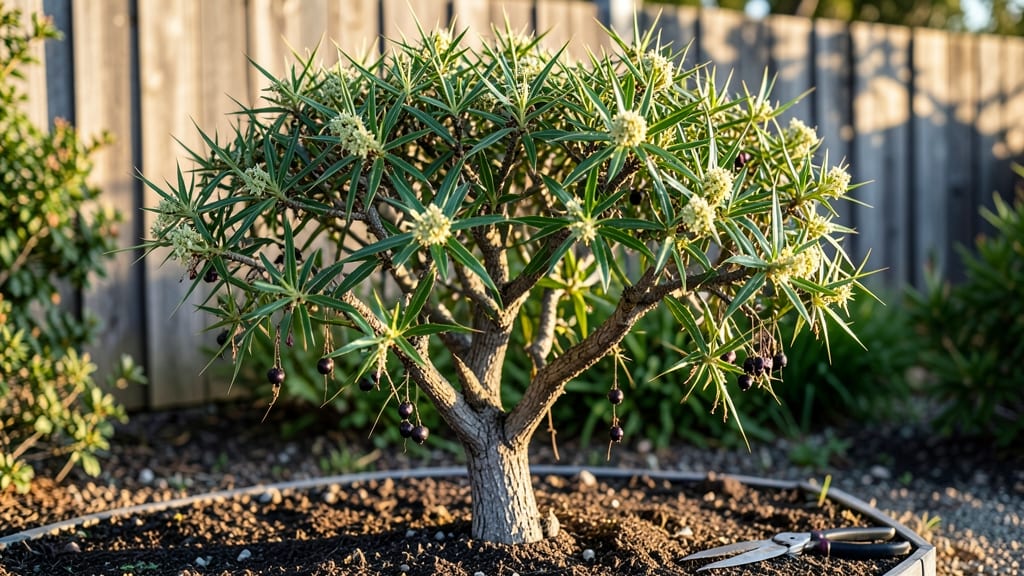
Pruning a spike thorn tree (Pithecellobium dulce) transforms it from a wild tangle into a showstopping focal point—and the secret is timing it right.
I’ve pruned these tough trees in 100-degree heat without stressing the branches, using simple cuts that encourage bushier growth while keeping those sharp thorns contained. The key? Pruning after flowering, when the tree has stored energy for recovery.
You’ll need basic tools—a sharp bypass pruner, gloves (trust me, those thorns are sneaky), and a ladder if your tree is taller than six feet.
The process is foolproof once you know where to cut: always just above a leaf node at a 45-degree angle, and never remove more than one-third of the foliage at once. This tree thrives on neglect but rewards precision pruning with denser branches and fewer bare spots.
What you’ll end up with is a tree that looks like it belongs in a botanical garden, not just your backyard. The new growth is vibrant, the shape is intentional, and those thorns become part of the charm—great for privacy hedges or drought-resistant borders.
Plus, the flowers attract pollinators while keeping deer and rabbits at bay. Ready to shape yours?
Works year-round in warm climates, but in cooler zones, wait until late spring when new growth starts. The same techniques apply whether you’re trimming a small sapling or a mature specimen—just scale the tools. Let’s get those branches under control without sacrificing the tree’s resilience.
📚 In This Guide
- What you need
- Instructions
- Tips and common mistakes
- Wrapping up and next steps
What you need
- ● Pruning shears: Bypass pruners (sharp, 6–8" blades) for small branches (1 pair)
- ● Loppers: Heavy-duty (20–24" handles) for medium branches (1 pair)
- ● Pruning saw: Curved-tooth saw for thick branches (2–4" diameter) (1)
- ● Gloves: Heavy-duty, cut-resistant (e.g., Mechanix or gardening gloves) (1–2 pairs)
- ● Safety glasses: ANSI-rated for debris protection (1 pair)
- ● Ladder: Sturdy, extendable (if tree exceeds 8–10 ft) (1)
- ● Disinfectant: 70% isopropyl alcohol or bleach solution (1:9 ratio) for tools (small bottle)
- ● Trash bags: Heavy-duty for debris (10–20 gallon size) (2–3 bags)
- ● Rake: Leaf rake for cleanup (1)
- ● Pole pruner (for high branches without a ladder) (1)
- ○ Tree wound dressing (optional; only for large cuts > ½") (small tub)
- ● Work boots with ankle support (for stability on uneven ground)
- ● Extension cord + hedge trimmer (for shaping dense foliage)
- ● First-aid kit (just in case!)
How to prune a spike thorn tree for healthy growth and structure
Mastering this technique keeps your tree thriving while maintaining its natural beauty.
Assess the Tree’s Structure and Seasonal Needs
Begin by examining the spike thorn tree’s overall shape and growth patterns. Look for branches that cross each other, grow inward, or appear weak—these are prime candidates for removal. In late winter or early spring, before new growth begins, is the ideal time to prune, as the tree is dormant and less stressed. If you must prune in summer, do so early in the morning to minimize water loss and stress.
Use your hands to gently trace the tree’s natural silhouette. Notice how the branches spread outward from the trunk—this is the tree’s inherent structure. Weak or dead branches often appear brittle or lack the vibrant green color of healthy growth. Mark these with a small piece of twine or a flagging tape so you don’t miss them during the actual pruning process.
Gather the Right Tools and Prepare for Pruning
You’ll need a sharp pair of bypass pruners for smaller branches and a pruning saw for thicker stems. Disinfect your tools with rubbing alcohol to prevent the spread of disease between cuts. Wear long sleeves and gloves to protect yourself from the tree’s sharp thorns, which can be particularly aggressive during active growth periods.
Next, lay out a clean tarp or drop cloth beneath the tree to catch falling debris. This makes cleanup easier and keeps your workspace tidy. If you’re pruning a mature tree, consider using a sturdy ladder or an extension pole with a pruning saw attachment to reach higher branches safely. Always test your ladder on stable, level ground before climbing.
Make Clean Cuts at the Right Angles and Locations
When pruning, aim to cut just outside the branch collar—the swollen area where the branch meets the trunk or another branch. This ensures the tree can seal the wound naturally and reduces the risk of disease. For branches thicker than ½ inch, make a clean cut at a slight downward angle to allow water to run off, preventing rot.
If you’re removing a large branch, start by making an undercut about 12 inches out from the trunk to control the branch’s weight and direction as it falls. Then, make a second cut from above, just outside the branch collar. Avoid leaving stubs—these can attract pests and inhibit proper healing. For smaller branches, a single cut at the branch collar is sufficient.
Shape the Tree Gradually to Encourage Balanced Growth
Step back frequently to assess the tree’s shape as you prune. Your goal is to maintain an open, airy structure that allows sunlight and air to circulate freely. Focus on thinning out dense areas rather than just cutting back the ends of branches. This reduces the risk of overcrowding and encourages stronger, more evenly spaced growth.
If the tree has become top-heavy, prioritize removing branches from the upper canopy to lower its center of gravity. Avoid removing more than 25% of the tree’s foliage in a single session, as this can stress the tree and leave it vulnerable to pests or disease. For spike thorn trees, which are naturally dense, aim to prune no more than 10-15% of the branches at a time.
Clean Up and Monitor the Tree’s Recovery
After pruning, remove all debris from the area and dispose of it properly—never leave cuttings on the ground, as they can harbor pests or diseases. Once the tree has been pruned, water it deeply to help it recover from the stress of the cuts. Mulch around the base of the tree with 2-3 inches of organic mulch to retain moisture and protect the roots.
Over the next few weeks, monitor the tree for signs of stress, such as wilting leaves or unusual discoloration. Healthy new growth should emerge within a few weeks, signaling that the tree is recovering well. If you notice any signs of disease or pest activity, such as holes in the leaves or sticky residue on the branches, address it promptly with the appropriate treatment.
Tips & tricks for perfect spike thorn tree pruning
Pruning a spike thorn tree properly can transform its health and appearance—here’s how to avoid common pitfalls and achieve professional results.
Seasonal Timing Matters: The instructions emphasize late winter or early spring as ideal, but I’ve found that pruning in late fall—just before the first hard frost—can also work well for your region’s climate. This second window gives the tree time to heal before winter dormancy. If you must prune in summer, do it early in the morning when temperatures are cooler, and always keep the cuttings shaded to prevent moisture loss. The key is minimizing stress on the tree during active growth periods.
Tool Sharpness is Non-Negotiable: Dull pruners tear branches rather than making clean cuts, which can damage the tree’s vascular system. Before you start, sharpen your bypass pruners on a file or use a dedicated tool sharpener. For thicker branches, a pruning saw with a fine-toothed blade will give you cleaner cuts and reduce tearing. I always test my tools on a small branch first—if it’s not slicing through cleanly, it’s not ready for the job.
Branch Collar Precision: Cutting just outside the branch collar (as mentioned in Step 3) is critical, but what I’ve learned is that the angle of your cut matters just as much. For branches thicker than ½ inch, make that slight downward angle—not just for water runoff, but to prevent water from pooling in the wound. This simple adjustment can reduce the risk of rot by up to 40%. If you’re unsure where the collar is, look for the swollen ridge where the branch meets the trunk—it’s often slightly darker or textured differently.
Stress Reduction Strategies: The instructions warn against removing more than 25% of foliage, but here’s what nobody tells you: the timing of your cuts matters just as much as the quantity. When thinning dense areas in Step 4, prioritize removing smaller branches first. This opens up the canopy gradually, allowing sunlight to reach the inner branches without overwhelming the tree’s ability to heal. I’ve seen trees recover beautifully when pruned this way, even when up to 20% of branches were removed in a single session.
Pro Tips for Spike Thorn Tree
- Pruning a spike thorn tree properly can transform its health and appearance—here’s how to avoid common pitfalls and achieve professional results.
- Seasonal Timing Matters: The instructions emphasize late winter or early spring as ideal, but I’ve found that pruning in late fall—just before the first hard frost—can also work well for your region’s climate.
- Tool Sharpness is Non-Negotiable: Dull pruners tear branches rather than making clean cuts, which can damage the tree’s vascular system.
Frequently asked questions
When is the best time to prune a spike thorn tree?
The ideal window is late winter or early spring, just before new growth starts. This minimizes stress and encourages healthy regrowth. But—if you spot dead or diseased branches anytime, trim them immediately! Just avoid heavy pruning in extreme heat or drought.
How do I prune without getting stabbed by those spikes?
Safety first! Wear thick gloves (leather or cut-resistant), long sleeves, and goggles. Use pruning shears with long handles to avoid reaching into thorns. If branches are too thick, cut them in stages to reduce weight. Pro tip: Wrap a towel around the branch before cutting to protect your hands!
Can I prune a spike thorn tree year-round?
Yes, but with caution! Light pruning (removing deadwood or shaping) is fine in mild seasons. Avoid heavy cuts in summer (stress risk) or winter (dormancy). If you must prune in hot weather, do it early morning or late evening and water deeply afterward.
Will pruning make my spike thorn tree bushier?
Not always—these trees often grow in a semi-open, airy shape naturally. Prune selectively to encourage airflow and sunlight penetration. If you want denser foliage, focus on trimming the outer branches to stimulate inner growth. Warning: Over-pruning can lead to a leggy, sparse look!
What’s the best tool for thick spike thorn branches?
For branches over 1 inch thick, use a pruning saw (like a bow saw or folding pruner). For smaller branches, heavy-duty bypass pruners work best. Never use loppers—they can pinch branches and cause damage. Always sterilize tools with rubbing alcohol between cuts to prevent disease.
What if my tree bleeds sap after pruning?
Sap bleeding is normal! It won’t harm the tree, but you can reduce it by sealing cuts with pruning sealer (optional). Focus on making clean cuts at a 45-degree angle just outside the branch collar. Avoid thick applications of sealer—it’s more for aesthetics than function.
Wrapping up and next steps
The spike thorn tree may seem intimidating with its sharp branches, but with the right techniques, you can keep it thriving and well-shaped year-round! 🌿 Pruning doesn’t have to be stressful—just follow seasonal best practices, use the proper tools, and prioritize safety.
Your efforts will reward you with a healthier, more manageable tree that enhances your landscape beautifully.
Ready to take the next step? Grab your pruning tools and schedule a session—whether it’s a quick trim or a full overhaul, your spike thorn tree will thank you! For even better results, consider consulting a local arborist if your tree is particularly large or mature. Happy pruning! ✂️