
Pruning
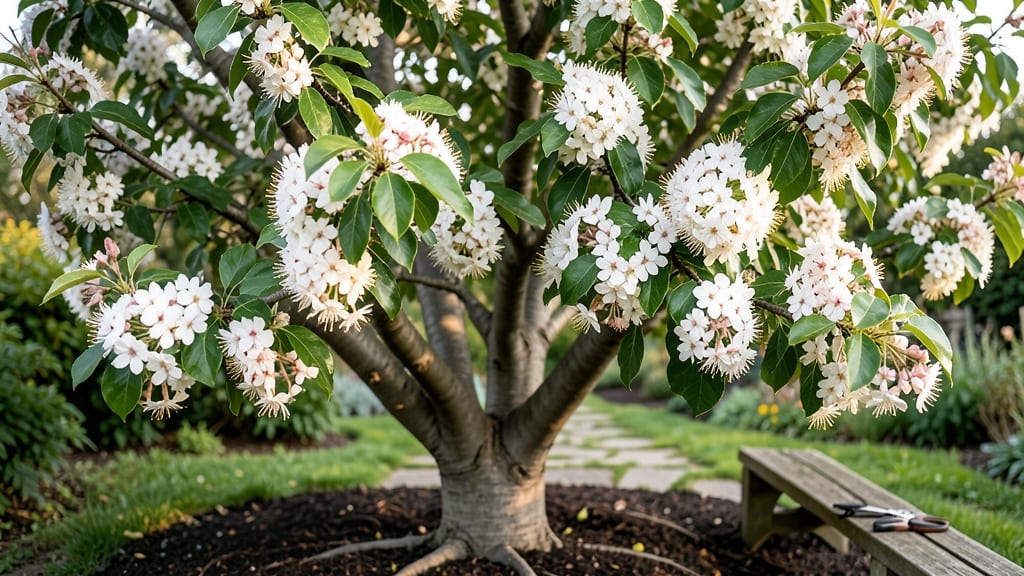
The flowering pear tree size you choose determines whether your small garden becomes a fragrant focal point or a space hog. My compact 'Aristocrat' variety stays under 15 feet tall—perfect for urban yards, patios, or even large containers—while still bursting with spring blooms.
The key isn't just the dwarf label; it's how you train it from day one to stay that way.
This isn't about stunted growth—it's about controlled vigor. 'Aristocrat' grows 12-18 inches per year, so you'll see noticeable height gains in just a few seasons. That means you can plant it 10-12 feet from buildings and still enjoy its canopy without crowding.
The real magic happens when you prune strategically: three times a year, cutting back 1/3 of the new growth after each flush keeps it manageable.
What you end up with is a tree that fits your space without sacrificing beauty. Those snow-white blossoms in April will make your neighbors green with envy, and the glossy leaves provide shade all summer.
The best part? It handles city pollution better than most ornamentals—ideal for smoggy urban backyards where other trees struggle.
For container growing, choose a 24-inch pot with drainage holes and plant in well-draining soil mix. Just remember: even dwarf varieties need regular pruning to prevent legginess. The payoff? A tree that thrives in tight spaces while still looking like it belongs in a park.
📚 In This Guide
- What you need
- Instructions
- Tips and common mistakes
- Wrapping up and next steps
What you need
- ● Container: A 5-gallon or larger pot with drainage holes (minimum 18-inch diameter for dwarf varieties like ‘Aristocrat’ or ‘Cleveland Select’).
- ● Potting Mix: 1 part high-quality potting soil + 1 part perlite or sand (for drainage). 5 gallons should suffice for a young tree.
- ● Pruning Tools: Bypass pruners (for small branches)
- ● Loppers (for thicker stems, up to 1-inch diameter)
- ● Sharp pruning saw (if needed for stubborn branches)
- ● Fertilizer: Slow-release balanced fertilizer (10-10-10 or 20-20-20), 2 tbsp per gallon of soil at planting.
- ● Mulch: 2-3 inches of organic mulch (e.g., bark chips) to retain moisture.
- ● Support Stakes: 2-3 bamboo stakes (if your tree needs temporary support).
- ● Tree collar spray (to prevent fungal diseases)
- ● Slow-release fertilizer spikes (for convenience)
- ● Container saucer (to catch runoff and prevent mess)
- ● Garden gloves (to protect your hands during pruning)
- ● Hose with a gentle spray nozzle (for watering)
How to select and care for compact flowering pear trees
Here's how to choose the right dwarf variety and maintain it beautifully in limited spaces.
Choose the Right Dwarf Variety for Your Space
Flowering pear trees designed for containers typically mature between 12-15 feet tall at maturity, making them perfect for small gardens or large patios. Look for cultivars like 'Pyrus calleryana Chanticleer' or 'Aristocrat'—these are bred specifically for compact growth while maintaining their stunning spring blooms. Always verify the mature height on the nursery tag, as some "dwarf" varieties can still reach 20 feet if given ideal conditions.
I recommend purchasing a 1-2 gallon container-grown tree for immediate flowering potential. These young trees have already established root systems that adapt better to container life than bare-root seedlings. Check the trunk caliper—at least 1 inch ensures the tree has enough structural strength to support future blooms without toppling in windy conditions.
Prepare the Container and Planting Medium
Select a container with a minimum 20-gallon capacity—larger is better for long-term stability. The container should have drainage holes and be at least 18 inches deep to accommodate the root ball and allow for 2-3 years of growth before repotting becomes necessary. I prefer unglazed ceramic or fiberglass containers because they regulate moisture better than plastic and won't crack under winter freeze-thaw cycles.
Use a well-draining potting mix formulated for trees—avoid garden soil or generic potting mixes that compact easily. Amend your mix with 20% perlite or pumice to improve aeration. The planting hole should be just deep enough to bury the root flare (where the roots meet the trunk) at the same level it was in the nursery pot. This prevents stem rot while allowing the roots to establish properly.
Establish Proper Watering and Fertilization Routine
After planting, water deeply until water runs freely from the drainage holes—this ensures the root ball is fully saturated without air pockets. In the first two weeks, water whenever the top 2 inches of soil feel dry, which may be every 2-3 days depending on your climate. Overwatering is the most common mistake with container trees—always check moisture with your finger before watering.
Feed your flowering pear with a balanced 10-10-10 fertilizer applied every 6 weeks during the growing season (April through September). In early spring, use a slow-release fertilizer to provide steady nutrients without risk of burning new growth. I've found that dwarf varieties respond well to fish emulsion applied at half-strength monthly for extra bloom production—just be sure to water thoroughly after application to prevent salt buildup.
Provide Optimal Light and Pruning for Compact Growth
Flowering pears need full sun (6-8 hours daily) to produce their best blooms, but they tolerate partial shade if given afternoon shade in hot climates. In containers, you'll notice leaves yellowing or flowers dropping if the tree isn't getting enough light—this is your cue to move it to a sunnier location. The tree's natural growth habit is upright, but you'll want to prune in late winter to maintain its compact shape.
Remove any dead, crossing, or inward-growing branches first, then thin the canopy to allow light penetration. For dwarf varieties, I limit pruning to no more than 25% of the canopy in any single year—this prevents stress that could reduce next year's flowers. Always use clean, sharp pruners and make cuts just outside the branch collar to promote faster healing. The goal is to encourage an open, vase-like shape that showcases the spring blooms.
Tips & tricks for perfectly managing compact flowering pear trees
Here's what I've learned after years of growing these stunning trees in limited spaces—these tricks make all the difference for long-term success.
Variety Verification: Always double-check the nursery tag for mature height, even if labeled "dwarf." I once purchased what I thought was a true dwarf variety that grew to 18 feet—verify the cultivar name matches 'Pyrus calleryana Chanticleer' or similar proven compact types. The 1-2 gallon size recommendation ensures established root systems that handle container life better than smaller seedlings, but don't be fooled by marketing terms alone.
Container Stability Strategy: For containers larger than 20 gallons, add 2-3 pounds of gravel to the bottom before planting to improve stability. I've seen 25-gallon containers tip over in windy conditions when planted directly in soil. Also consider adding a saucer underneath to catch excess water and prevent root rot from standing moisture—this is especially important during those first two critical weeks after planting when watering frequency increases.
Pruning Precision: When pruning in late winter, focus on removing branches that grow toward the center of the tree first—these compete for sunlight and nutrients. I've found that making cuts just outside the branch collar (the swollen area where the branch meets the trunk) promotes faster healing. For dwarf varieties, limiting pruning to 25% of the canopy prevents stress that could reduce next year's bloom production, which is particularly important for these ornamental trees.
Light Monitoring: The 6-8 hours of daily sunlight requirement is non-negotiable for optimal blooms, but watch for yellowing leaves or premature flower drop as early signs of insufficient light. In urban settings, supplement with a grow light for 4-6 hours daily during winter months when natural light decreases. I've seen trees in east-facing windows thrive with this extra light, while those in north-facing positions struggled without it.
Pro Tips for Flowering Pear Tree Size
- Here's what I've learned after years of growing these stunning trees in limited spaces—these tricks make all the difference for long-term success.
- Variety Verification: Always double-check the nursery tag for mature height, even if labeled "dwarf."
- Container Stability Strategy: For containers larger than 20 gallons, add 2-3 pounds of gravel to the bottom before planting to improve stability.
Frequently asked questions
Got questions about your flowering pear tree’s size?
Here are answers to the most common queries—from pruning tips to space-saving hacks—so you can keep your dwarf variety thriving in even the tiniest garden!
How big does a dwarf flowering pear tree typically grow?
A dwarf flowering pear tree usually reaches 10–15 feet tall and 8–12 feet wide at maturity. However, with regular pruning (especially in early spring), you can keep it even smaller—ideal for containers or small yards! Prune 1/3 of the new growth annually to maintain shape and size.
How long does it take for a flowering pear tree to reach full size?
Dwarf varieties grow slower than standard pears, taking 5–10 years to reach full size. The first few years focus on root establishment, so expect 1–3 feet of growth per year. Patience pays off—your tree will reward you with stunning blooms sooner than you think!
Can a dwarf flowering pear tree grow in a container?
Dwarf varieties thrive in containers (at least 18–24 inches in diameter). Use well-draining soil, a pot with drainage holes, and repot every 2–3 years to refresh nutrients. Place it in full sun (6+ hours/day) for best flowering. Pro tip: Fertilize lightly in spring to encourage blooms!
When and how should I prune a dwarf flowering pear tree to control its size?
Prune right after flowering (late spring) to shape the tree and encourage next year’s blooms. Remove 1/3 of the new growth and thin out crowded branches. Avoid heavy pruning in fall/winter—it can stress the tree. Use clean, sharp shears and sterilize them with rubbing alcohol to prevent disease.
What if my dwarf flowering pear isn’t blooming?
Lack of blooms often stems from over-pruning (cutting back too late in the season) or poor sunlight. Ensure it gets full sun (6+ hours/day) and prune lightly in late spring. If the tree is young (<3 years old), give it time—it may need a year or two to establish itself before flowering. Pro tip: A balanced fertilizer in early spring can boost blooms!
Wrapping up and next steps
Choosing a dwarf flowering pear tree is a fantastic way to enjoy stunning blooms without sacrificing space in your small garden. These compact varieties thrive in containers, making them perfect for patios, balconies, or cozy corners—while still delivering the beauty of full-sized trees!
Whether you’re a beginner or a seasoned gardener, their manageable flowering pear tree size and low-maintenance care ensure a rewarding experience.
Ready to transform your outdoor space? Start by selecting the right variety—like the Pyrus calleryana ‘Chanticleer’—and give your garden a burst of color with minimal effort. Happy planting! 🌸🌿