
Trees
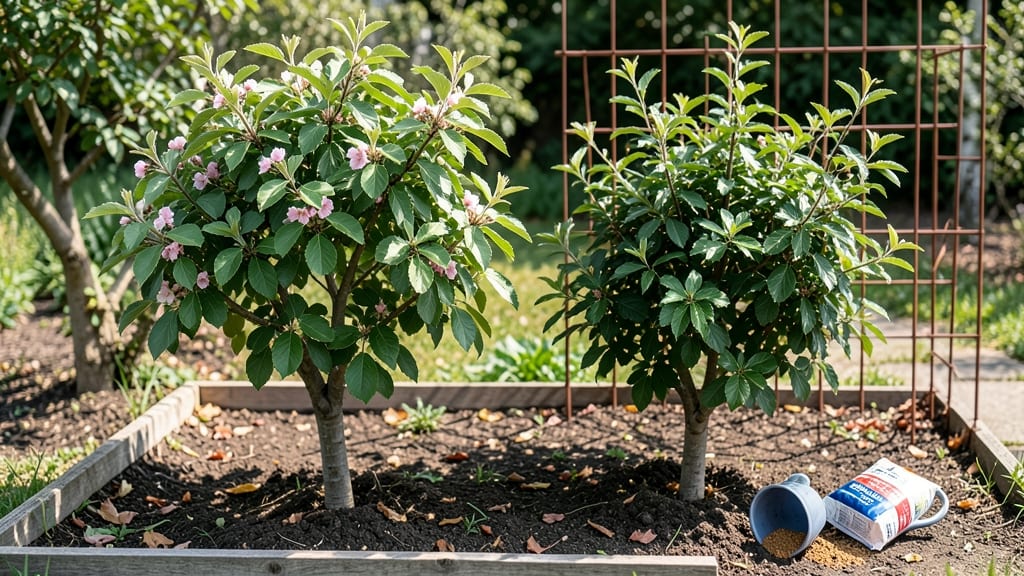
What does cherry trees look like in spring, with their snow-white blooms turning heads, but their true magic unfolds as they shift through seasons—from delicate petals to glossy leaves to fiery fall colors. 🌸 I’ve spent years admiring them. in parks and backyards, and there’s nothing quite like spotting one in full bloom, its branches heavy with blossoms that smell like spring itself.
Ornamental varieties like the Yoshino or Kwanzan cherry stand out with their cascading flowers, while fruit-bearing trees like the Bing or Rainier develop deep red or yellow cherries that add a pop of color in summer.
The bark tells its own story—smooth and silvery-gray when young, it develops deep furrows and a rugged texture as it matures, giving even winter trees character. Branches spread gracefully, often with a slightly weeping habit, especially in ornamental types, while fruit-bearing trees tend to be more upright.
Leaves are simple, oval-shaped, and serrated, turning brilliant shades of red or orange before dropping in fall, making them a year-round star in any landscape.
You’ll know you’ve picked the right spot when you see how they transform a garden—whether as a standalone specimen in a lawn, a border-lining beauty along a driveway, or a shade-providing giant in a backyard.
Their height (ranging from 20 to 40 feet at maturity) and spread mean they anchor a space, while their seasonal interest keeps things dynamic. Plant them where you’ll have room to admire their full potential, and they’ll repay you with decades of beauty.
Fair warning: their roots run deep, so give them space—at least 20 feet from foundations or sidewalks—and prepare for cleanup in spring when petals (and sometimes fruit) create a temporary mess.
But trust me, the trade-off is worth it for the joy of watching them grow from bare branches to a blushing canopy of color.
📚 In This Guide
- What you need
- Instructions
- Tips and common mistakes
- Wrapping up and next steps
What you need
- ● Camera or smartphone – For capturing close-ups of bark, branches, and blooms (a macro setting helps!).
- ● Field guidebook or app – A National Audubon Society Field Guide to Trees or a tree-identification app (like LeafSnap or PictureThis) for quick reference.
- ● Notebook & pen – To jot down observations like leaf shape, bloom color, and bark texture.
- ○ Gloves (optional but recommended) – Protect your hands from thorns (especially on Prunus serotina, aka black cherry) or rough bark.
- ○ Magnifying glass (optional) – For inspecting fine details like lenticels (tiny pores on bark) or leaf veins.
- ● Basic knowledge of tree anatomy – Familiarize yourself with terms like lenticels, pith, compound leaves, and terminal buds.
- ● Timing matters! – Visit in spring (for blooms), summer (for leaves), or winter (for bark) for the best clues.
- ● Location awareness – Cherry trees thrive in USDA Hardiness Zones 4–9; note your region to narrow down species.
Step-by-Step guide to identifying cherry trees by key features
Here's how to spot cherry trees in your landscape—no prior knowledge needed.
🌿 Step 1: Examine the Bark for Distinctive Patterns
Cherry tree bark is one of the easiest ways to identify them. Young trees have smooth, silvery-gray bark that looks almost polished. As they mature, the bark develops deep, irregular fissures that create a rugged, almost blocky texture. This isn't uniform—it's more like a patchwork of dark ridges and lighter patches.
Run your hand along the trunk if you're near one. You'll feel the rough, uneven surface that sets cherry bark apart from the smoother, more uniform bark of trees like maples or oaks. The fissures tend to run vertically but twist and turn unpredictably, creating a wild, almost artistic pattern.
🌱 Step 2: Look at the Branches and Leaf Arrangement
Cherry tree branches grow in a distinctive way—often spreading outward in a broad, rounded canopy. The leaves are arranged alternately along the branches, meaning each leaf grows from a single point on the stem rather than in pairs. This alternation creates a staggered, almost rhythmic pattern when you look up at the tree.
Young branches are slender and often have small, pointed buds that swell before spring blooms. Older branches develop a slightly zigzag pattern where the leaves attach. This isn't as pronounced as, say, a birch tree, but it's there if you look closely. The overall shape is what gardeners call "rounded" or "oval," never narrow or columnar.
☀️ Step 3: Check for Signature Blooms in Spring
The most unmistakable feature of cherry trees is their flowers. In early spring, before the leaves appear, cherry trees burst into clusters of pink or white blossoms. These aren't solitary flowers—they grow in tight, rounded clusters called racemes, creating a dramatic, almost cloud-like effect when the tree is in full bloom.
Sweet cherries (like the ones you eat) tend to have lighter pink or white flowers, while sour cherries (often used for pies) have deeper pink blooms. The flowers are fragrant, though the scent varies by variety. If you see these blooms, you're almost certainly looking at a cherry tree—few other trees produce such vibrant, early-season flowers.
🍒 Step 4: Identify Leaves and Fruit (When Present)
Cherry tree leaves are simple (not lobed or divided) and have a smooth, slightly serrated edge. They're about 3-6 inches long, with a pointed tip and a slightly elongated shape. The upper surface is a rich, deep green, while the underside is lighter, almost silvery. Hold a leaf up to the light—you'll see the veins are slightly curved and parallel, giving the leaf a distinctive "arched" look.
If the tree is mature, look for fruit. Sweet cherries are round and bright red when ripe, while sour cherries are often darker red or even blackish. The fruit grows singly along the branches, not in clusters like grapes. Even if the tree isn't fruiting, the leaf shape alone can be a dead giveaway—cherry leaves are unmistakable once you know what to look for.
Tips & tricks for identifying cherry trees like a pro
These little-known details will help you spot cherry trees with confidence—even when they're not in bloom.
Bark Texture Secret: In Step 1, when examining the bark, focus on the contrast between young and mature trees. Young bark feels almost silky smooth, but mature bark develops those signature deep fissures that look like cracked leather. Pro tip: If you run your fingers along the trunk and feel a rough, uneven surface with vertical ridges that twist unpredictably, you're definitely looking at a cherry tree. That blocky, patchwork texture is what sets it apart from other trees.
Leaf Inspection Technique: For Step 4, hold a leaf up to the light and look at the veins—cherry leaves have slightly curved, parallel veins that give them that distinctive "arched" look. Another trick: Flip the leaf over and notice how the underside is lighter and almost silvery. This two-toned coloration is a dead giveaway when comparing to other tree leaves. I always check this detail first because it's one of the most consistent features year-round.
Bloom Color Clues: In Step 3, pay attention to the flower color—sweet cherries have lighter pink or white blooms, while sour cherries (the ones used for pies) have deeper pink flowers. Here's what nobody tells you: The fragrance can also help! Sweet cherry blossoms often have a sweeter, more delicate scent compared to the slightly tart aroma of sour cherry flowers. This can be especially helpful when you're trying to identify trees in early spring before the leaves appear.
Pro Tips for What Does Cherry Trees Look Like
- These little-known details will help you spot cherry trees with confidence—even when they're not in bloom.
- Bark Texture Secret: In Step 1, when examining the bark, focus on the contrast between young and mature trees.
- Leaf Inspection Technique: For Step 4, hold a leaf up to the light and look at the veins—cherry leaves have slightly curved, parallel veins that give them that distinctive "arched" look.
Frequently asked questions
Got questions about cherry trees? You’re not alone! Here are some of the most common queries—plus quick answers to help you spot these stunning trees with confidence.
What do cherry tree leaves look like?
Cherry tree leaves are simple, oval-shaped, and smooth-edged, with a pointed tip. Sweet cherries (like Prunus avium) have toothed or serrated edges, while tart cherries (like Prunus cerasus) often have smoother, more rounded leaves. They’re usually 1–3 inches long and turn vibrant yellow, orange, or red in fall.
How can I tell the difference between a cherry tree and a plum tree?
Plum trees have shorter, broader leaves with a more rounded base, while cherry leaves are longer and more lance-shaped. Another clue? Cherry trees often have horizontal branches (like a "V" shape), while plums tend to grow upright with a denser canopy. Bonus tip: Plums also have thicker, darker bark with deeper grooves.
When do cherry trees bloom, and how long do the flowers last?
Cherry trees bloom in early spring (March–April), with pink, white, or pale pink flowers in clusters. Blooms last 1–2 weeks, depending on the variety and weather. Ornamental cherries (like Yoshino) are prized for their showy, fragrant blossoms, while fruit-bearing varieties focus on later-season blooms for pollination.
Do cherry trees have thorns?
Most fruit-bearing cherry trees (sweet or tart) have small, sharp thorns along their branches—especially on younger trees. Ornamental cherry trees (like Prunus serrulata) usually have fewer or no thorns, with smoother bark. Pro tip: If you’re planting near kids or pets, check the variety—some thornless cultivars exist!
What do cherry tree seeds look like?
Cherry tree seeds are the small, flat pits inside the fruit, often called "stones." They’re oval, hard, and brownish-gray, about ½ inch long. Warning: These pits contain cyanogenic glycosides (a natural toxin), so never eat them raw—roasting or cooking removes the danger. Fun fact: Growing a cherry tree from a pit is possible but slow!
How do I confirm if my tree is a cherry tree?
Cross-check these traits:
- Bark: Smooth and gray when young; develops shallow, scaly ridges as it ages.
- Branches: Often spreading or slightly weeping in ornamental types.
- Flowers: 5-petaled, clustered in spring.
- Fruit: If present, cherries grow in small, round clusters (sweet) or singularly (tart).
Still unsure? Snap a photo and compare it to local tree databases like UMN’s Tree Guide or consult a local nursery.
Wrapping up and next steps
Now that you’ve learned to spot cherry trees by their smooth bark, distinctive branches, and showstopping blooms, you’re ready to become a tree-identifying pro! 🌸 Whether you’re admiring a Prunus avium in spring or tracking a wild Prunus serotina in fall, these visual clues will help you confidently recognize them in your backyard, park, or even on a nature hike.
Ready to put your new knowledge to the test? Grab a notebook, snap a photo, or plan a walk—and see if you can spot a cherry tree in your area! Who knows? You might just uncover a hidden gem in your neighborhood. 🌳✨