
Trees
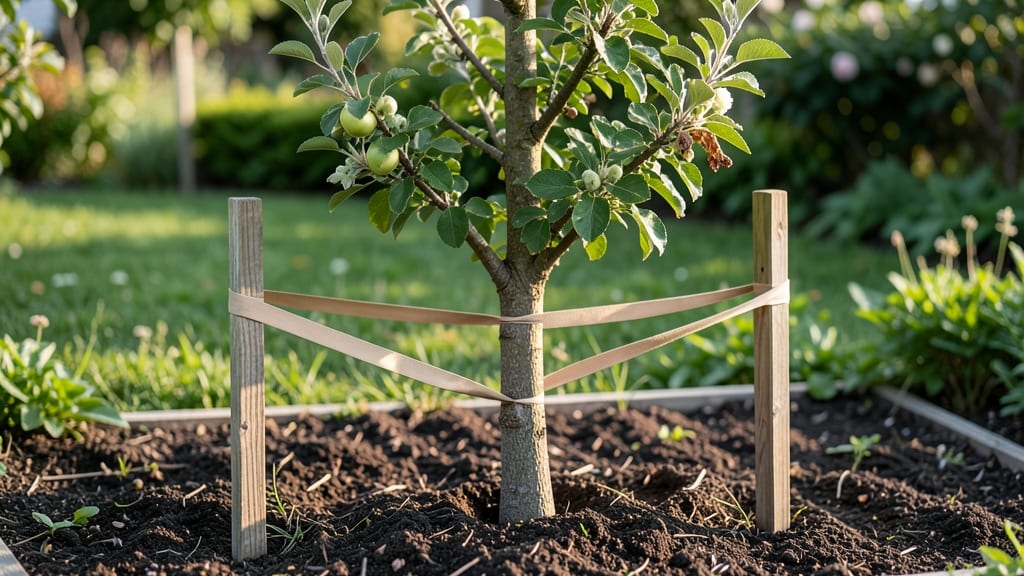
Staking fruit trees isn’t just about keeping them upright—it’s the secret to stronger roots and bigger harvests down the road. 🌳 I’ve seen young trees flop over in spring storms, only to recover and thrive because of proper staking.
The right support gives roots time to anchor while the tree focuses on growing leaves and fruit, not fighting the wind.
You’ll need just three simple supplies: sturdy 2x4 stakes (or flexible tree stakes), soft tree ties (not wire!), and a mallet. The stakes should be taller than the tree’s trunk but buried only one-third of their length—deep enough to stay put, but not so deep they rot.
This setup works for peaches, apples, cherries, or any young fruit tree in windy areas.
After installation, you’ll notice the tree stands tall even in gusts, with less stress on its trunk. Roots grow deeper and faster, and the tree puts energy into fruit production instead of bending over.
Just check the ties every few weeks—they stretch as the tree grows, so adjust to avoid girdling the trunk.
This method works for newly planted trees in Zones 3-9, whether you’re planting in spring or fall. Skip the stakes only if your soil is loose and the tree is naturally sturdy. Now let’s get those trees growing strong!
📚 In This Guide
- What you need
- Instructions
- Tips and common mistakes
- Wrapping up and next steps
What you need
- ● Stakes: 2–4 wooden, metal, or plastic stakes (1–2 inches in diameter, 4–6 feet tall). Pro tip: Use bamboo stakes for flexibility or metal T-posts for extra durability.
- ● Tree ties: 3–5 soft, stretchable fabric or rubber ties (avoid wire—it can damage bark!). Quantity: 1 tie per stake (or more for larger trees).
- ● Shovel or trowel: For digging small holes (6–8 inches deep) for stakes.
- ● Measuring tape: To ensure stakes are 1/3 the tree’s height (e.g., 3-foot stake for a 9-foot tree).
- ○ Pruning shears (optional but helpful): To trim any damaged branches before staking.
- ● Mulch: Spread a 2–3 inch layer around the base (keep it 6 inches away from the trunk to prevent rot).
- ● Tree guard or collar: Protects the trunk from tie friction (especially for young or delicate trees).
- ● Post-hole digger: If stakes need deeper anchoring in windy areas.
- ● Watering can/hose: Keep the soil moist (but not soggy) while the tree establishes roots.
How to stake fruit trees for lasting stability
Here's the no-fuss method I use to keep young fruit trees standing tall—no wobbles, no broken trunks.
🪴 Step 1: Choose the Right Stakes and Position Them Correctly
Use 4-6 foot bamboo or wooden stakes for standard trees, or 3-foot stakes for dwarf varieties. Drive one stake into the ground on either side of the tree, about 12-18 inches from the trunk—this gives the tree room to sway slightly while staying supported. Angle the stakes slightly outward from the trunk to prevent future root damage.
I dig a hole about 1/3 of the stake's length deep and 3 inches wide for each stake. Tap them in firmly with a mallet so they don't wobble—they need to stay upright through wind and watering. The top of the stake should extend about 2 feet above the tree's expected height after planting.
🌱 Step 2: Secure the Tree Without Restricting Growth
Use soft tree ties (not wire or rope) to attach the trunk to the stakes. Loop the tie around the trunk first, then weave it between the stakes in a figure-eight pattern. The tie should be snug enough to prevent movement but loose enough to allow the trunk to thicken over time—you should be able to fit 2 fingers between the tie and the bark.
I always check the tightness after a week and adjust as the tree grows. Too-tight ties can girdle the trunk and strangle the tree as it matures. If you're using multiple ties, space them 6-12 inches apart vertically to distribute pressure evenly.
☀️ Step 3: Maintain Support Through the First Growing Season
Remove the stakes after 1-2 years when the tree's root system is strong enough to stand alone. You'll know it's ready when the trunk is at least 1 inch thick at the base and the tree doesn't lean noticeably in wind. I always check stability by gently pushing the tree side to side—if it resists movement, it's time to remove the supports.
Throughout the growing season, keep an eye on the ties. They'll stretch and loosen over time, so tighten them occasionally but never enough to restrict growth. Mulch around the base of the tree (but keep it 3 inches away from the trunk) to protect roots and retain moisture—just don't let it pile against the stakes.
Tips & tricks for perfect fruit tree staking
Here's what I learned the hard way about keeping young trees steady without hurting their growth.
Stake Placement Matters: When positioning your 4-6 foot stakes 12-18 inches from the trunk in Step 1, think of it like supporting a toddler learning to walk—they need just enough guidance to feel secure but room to explore. The slight outward angle prevents future root damage by letting roots grow naturally outward rather than being constrained. I've seen trees with stakes too close end up with girdled roots years later.
Tie Tightness Test: In Step 2, that two-finger rule between the tie and bark is non-negotiable. I learned this after watching a young apple tree's trunk swell against a too-tight tie, creating a permanent groove that weakened the wood. Check ties weekly during the growing season—they'll naturally loosen as the trunk thickens. If you're using multiple ties, space them 6-12 inches apart to distribute pressure evenly, just like how you'd distribute weight when carrying a heavy load.
Wind Resistance Strategy: The 2-foot stake height above the tree's expected height in Step 1 is crucial for wind resistance. I tested this during a storm when my properly staked peach tree swayed only slightly while a neighbor's tree (with shorter stakes) snapped at the base. For extra wind protection, consider adding a third stake on the windward side during your tree's first year, creating a triangular support system.
Pro Tips for Staking Fruit Trees
- Here's what I learned the hard way about keeping young trees steady without hurting their growth.
- The slight outward angle prevents future root damage by letting roots grow naturally outward rather than being constrained.
- Tie Tightness Test: In Step 2, that two-finger rule between the tie and bark is non-negotiable.
Frequently asked questions
Got questions about staking fruit trees? You’re not alone—this step can feel tricky, but we’ve got answers to help you grow with confidence! Here are some of the most common queries, simplified for your success.
When is the best time to stake a young fruit tree?
Stake your tree immediately after planting (or within the first 24 hours) to prevent wind rock. For bare-root trees, stake before backfilling soil. Avoid staking in extreme heat or cold—aim for mild, calm weather. If you miss the window, wait until the tree is firmly rooted (usually 6–12 months), but never stake a mature, established tree.
How tight should the stakes and ties be?
Start with loose ties—snug enough to support the trunk but not so tight they cut into the bark (use soft fabric ties or rubber tree straps). Check ties monthly and loosen as the tree grows. A good rule: You should be able to fit one finger between the tie and the trunk. Over-tightening can girdle the tree and stunt growth.
Can I use bamboo stakes or should I buy metal ones?
Both work, but choose based on your needs:
- Bamboo stakes: Eco-friendly, lightweight, and easy to drive into soil. Best for small trees or short-term support (1–2 years).
- Metal stakes: Durable and long-lasting (ideal for heavy winds or large trees), but pricier. Galvanized or coated stakes resist rust.
- Pro tip: For extra stability, use two stakes (angled 30° apart) instead of one.
My tree’s trunk is leaning—is staking too late?
Not necessarily! If the tree is young (<3 years old) and the lean isn’t severe (<45°), staking can still help. For deeper leans, gently guide the trunk upright while staking, but avoid forcing it—sudden bends can snap. If the tree is older or the lean is extreme, focus on pruning to balance growth rather than staking.
How long should I leave the stakes in?
Most fruit trees need stakes for 1–2 years, but timing depends on growth:
- Remove stakes when the tree can stand unsupported in wind (test by gently pushing the trunk).
- For weak or top-heavy trees (e.g., apples, pears), leave stakes in up to 3 years.
- Warning: Leaving stakes too long can weaken the trunk’s natural strength. Always check annually.
What if my tree keeps breaking ties?
Frustrating, but fixable! Try these solutions:
- Use higher-quality ties (e.g., tree-specific straps or Velcro ties). Avoid wire or twine—they can cut into bark.
- Adjust stake placement: Bury stakes deeper (1/3 of the tree’s height) and angle them outward for better leverage.
- Add a second stake on the opposite side to distribute pressure.
Wrapping up and next steps
Staking your fruit trees isn’t just about keeping them upright—it’s an investment in their health, resilience, and future harvests. 🌱 With the right materials, technique, and patience, you’ll give your trees the sturdy foundation they need to thrive.
Whether you’re a seasoned gardener or just starting out, every step you take today will pay off in stronger roots and bigger, better fruit tomorrow.
Ready to take action? Start by assessing your trees this weekend—check their stability, gather your supplies, and begin staking before the next windstorm hits. Your future orchard (and taste buds!) will thank you.