Pruning
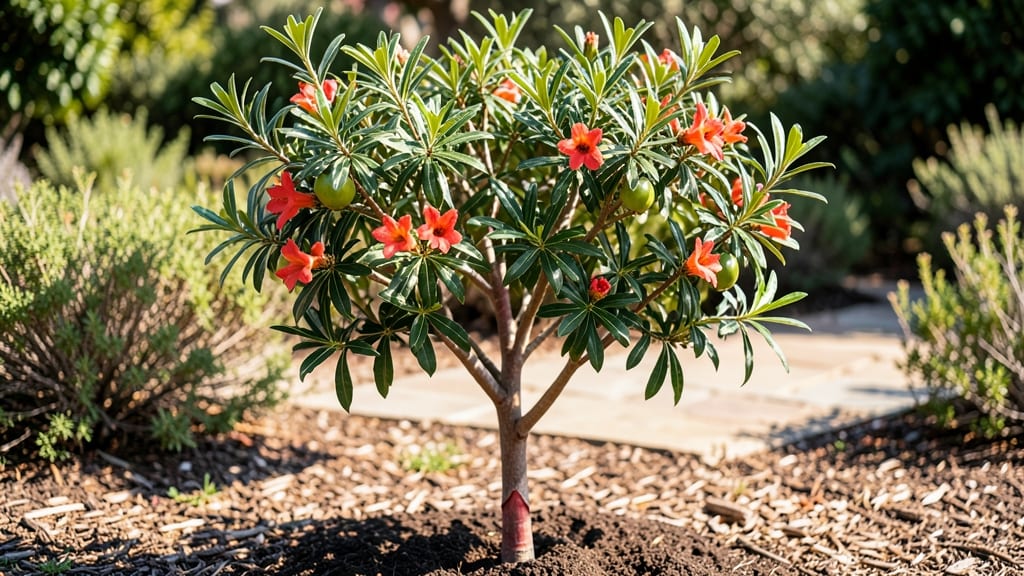
A young pomegranate tree needs pruning more than most people realize. 🌱 The first year sets the foundation for fruit production, and skipping it means weaker branches, fewer blooms, and a messy shape that’s hard to fix later.
I’ve pruned dozens of these trees—some grew into lush, productive bushes, while others stayed scraggly because I didn’t act early enough.
Start by removing any dead, crossing, or inward-growing branches with clean cuts just above a leaf node. Focus on opening the center to sunlight, which encourages stronger growth and better fruit set.
A sharp pair of pruners and a disinfectant spray are all you need—no fancy tools required. Even in winter, you can do light pruning to shape the tree before spring’s growth surge.
What you’ll end up with is a neat, open structure that supports heavy fruit loads without breaking. The tree will reward you with vibrant blooms by summer and plump pomegranates by fall.
Just remember: prune in stages, never more than 25% of the tree’s foliage at once, or you’ll stress it out.
This method works for container-grown trees too—just scale back the cuts. Whether you’re in a warm climate or a cooler zone, the same principles apply. Let’s get your young pomegranate tree on the right track for years of harvests.
📚 In This Guide
- What you need
- Instructions
- Tips and common mistakes
- Wrapping up and next steps
What you need
- ● Pruning shears: Bypass pruners (sharp, clean, and sterilized to prevent disease). Size: 6–8 inches for small branches.
- ● Loppers: For thicker branches (up to 2 inches in diameter). Look for: Ratcheting or bypass-style for precision.
- ● Hand saw: Folding pruning saw for branches over 2 inches. Tip: Choose a curved blade for clean cuts.
- ● Disinfectant: 70% isopropyl alcohol or bleach solution (1 part bleach to 9 parts water) to sterilize tools between cuts.
- ○ Pruning sealant: Optional but helpful for wounds larger than ½ inch (look for tree wound pruning paste).
- ● Gloves: Heavy-duty gardening gloves to protect from thorns and sap.
- ● Bucket or bag: For collecting pruned branches (or a compost bin if you’re eco-conscious!).
- ● Ladder or stool: If your tree is taller than 6 feet (safety first—never stand on shaky branches!).
- ○ Timing: Prune in late winter or early spring (just before buds swell) for best results. Optional: Light shaping in summer after fruiting.
- ● Weather: Choose a dry, overcast day to minimize stress on the tree.
- ● Tree age: Focus on 1–3 year-old trees for foundational pruning.
- ● Safety gear: Safety glasses (to shield from debris) and a first-aid kit (just in case!).
- ● 🔥 Sharpen your tools! Dull blades tear bark—always sharpen shears before starting.
- ● 🌡️ Sterilize between cuts if your tree has signs of disease (like oozing sap or spots).
- ● ✨ Mark your cuts: Use chalk or tape to outline where you’ll prune for a cleaner look.
How to prune a young pomegranate tree for strong growth
Here's the simple, year-round approach I use to keep my young pomegranates healthy and productive.
🌿 Step 1: Understand the Right Time to Prune
Pomegranates are different from most fruit trees—they don't need seasonal pruning like apples or peaches. Instead, prune your young tree year-round whenever you notice overgrowth, dead wood, or crossing branches. The key is to shape gradually, not all at once.
Spring is the best time to establish your tree's structure, but don't wait until summer heat arrives. I always make my first cuts in late winter or early spring when the tree is still dormant but before new growth begins. This gives your pomegranate the energy to recover quickly.
Watch for these visual cues: branches rubbing together, limbs growing inward, or any dead or diseased wood. These are your signals to prune immediately. The goal is to keep the tree open and airy, which prevents fungal diseases and makes fruit easier to harvest.
✂️ Step 2: Make Clean Cuts for Healthy Growth
Use sharp, clean pruning shears to make your cuts at a 45-degree angle, about ¼ inch above a bud or branch collar. Never leave stubs—this invites disease and weakens the tree. I always sterilize my tools with rubbing alcohol between cuts to prevent spreading any pathogens.
Start by removing any dead, diseased, or broken branches first. These are easy to spot—they'll be brown, brittle, or missing leaves. Next, look for "water sprouts," which are fast-growing vertical shoots that steal energy from fruit production. Cut these back to their point of origin.
For thicker branches, I use my pruning saw to make clean cuts without tearing the bark. Always cut just outside the branch collar where the branch meets the trunk. This ensures the wound heals properly and reduces the risk of infection.
🌱 Step 3: Shape for Airflow and Sunlight
Pomegranates need plenty of airflow and sunlight to produce fruit, so your pruning should open up the center of the tree. Remove any branches that grow inward or cross over others—these will rub together and create wounds. I aim to keep the tree's shape open and vase-like, with the main branches spreading outward.
Focus on the top of the tree first, then work your way down. You'll want to leave about 6-8 main branches on a young tree, spaced evenly around the trunk. This gives your pomegranate plenty of room to grow while keeping the fruit accessible for harvesting.
Here's the thing—don't over-prune. You're not trying to create a bonsai; you want a balanced, healthy tree. If you remove too much foliage at once, your pomegranate won't have enough leaves to photosynthesize and produce fruit. Aim to remove no more than 25% of the tree's total growth in any one session.
☀️ Step 4: Encourage Fruit Production
To boost fruit production, focus on the smaller branches where flowers and fruit develop. Prune back any overly long shoots to encourage branching. I like to cut just above a leaf bud that faces outward—this promotes new growth in the right direction.
After pruning, your tree will send out new shoots. These are your future fruit-bearing branches. Thin them out later in the season to leave the strongest, healthiest ones. You'll know you're doing it right when you see new leaves emerging within a few weeks of pruning.
Real talk: Pomegranates can be finicky about fruiting in their first few years. Don't panic if you don't see fruit right away. Your young tree is building its structure, and with proper pruning, it'll reward you with beautiful blooms and eventually fruit in 3-5 years.
Tips & tricks for pruning young pomegranate trees
Pruning a young pomegranate tree might seem intimidating, but these simple tricks will help you build a strong, fruit-bearing tree without stress.
Timing is Everything: I can't stress this enough—late winter or early spring is your golden window for the first cuts. This dormant period lets your tree recover quickly. If you must prune later, avoid extreme heat or cold. I've learned the hard way that summer pruning can stress the tree, especially in hot climates.
Tool Prep Makes All the Difference: Sterilizing your pruning shears between cuts is non-negotiable. I keep rubbing alcohol in a small spray bottle and wipe down tools after every 3-4 cuts. This prevents spreading fungal spores that can infect fresh wounds. Also, always use sharp tools—they make cleaner cuts that heal faster.
Visual Cues Over Rules: The instructions mention watching for branches rubbing together, but here's what nobody tells you: Look for "flagging" branches—those growing straight up with leaves only on one side. These often indicate hidden problems like root damage or pests. Cut these back to encourage healthier growth patterns.
The 25% Rule in Action: When you're shaping your tree, think of it like a haircut—you wouldn't shave your head bald! That 25% maximum removal guideline means if your tree has 100 branches, you're only removing 25. I mark branches with a piece of tape before cutting to visualize this limit. This prevents over-pruning, which stresses the tree and reduces fruit production.
Pro Tips for Young Pomegranate Tree
- Pruning a young pomegranate tree might seem intimidating, but these simple tricks will help you build a strong, fruit-bearing tree without stress.
- Timing is Everything: I can't stress this enough—late winter or early spring is your golden window for the first cuts.
- Tool Prep Makes All the Difference: Sterilizing your pruning shears between cuts is non-negotiable.
Frequently asked questions
Got questions about nurturing your young pomegranate tree? You’re not alone—here are the most common ones, answered for quick clarity!
How often should I prune a young pomegranate tree?
A young pomegranate tree (under 3 years old) benefits from light pruning in early spring (just before new growth) and minimal shaping in late winter. Avoid heavy cuts—focus on removing dead wood and encouraging an open center. Once established, prune once a year (dormant season) to maintain shape and fruit production.
When is the best time to prune for fruit production?
Prune your pomegranate tree in late winter or early spring (just before buds swell) to maximize fruit yield. This timing allows energy to flow into new growth and flower formation. Avoid summer pruning—it stresses the tree and can reduce fruit set. Pro tip: Thin out crowded branches to improve air circulation and sunlight exposure!
Can I prune a pomegranate tree in summer?
Summer pruning is not recommended for young pomegranate trees, as it can stimulate weak, water-sprout growth and stress the plant. If you must prune (e.g., to remove storm damage), do it early morning or late evening to minimize heat stress. Wait until fall or winter for routine maintenance.
What if my young pomegranate tree isn’t flowering?
Lack of flowers in young trees is normal—pomegranates often take 2–3 years to mature. Ensure it gets full sun (6+ hours/day) and well-draining soil. Prune to open the canopy and reduce competition. If the tree is healthy but still not flowering, consider light fertilizing in early spring with a balanced 10-10-10 formula.
How do I know if I’ve pruned too much?
Over-pruning shows up as stunted growth, yellowing leaves, or no new buds in spring. Young pomegranate trees are resilient, but avoid cutting more than 20–30% of the foliage at once. If you’ve pruned aggressively, reduce watering slightly and monitor for recovery—new growth should appear within 4–6 weeks.
Wrapping up and next steps
Growing a thriving young pomegranate tree is all about patience, precision, and a little love! By mastering the art of year-round pruning, you’ll not only shape its growth but also unlock its full fruiting potential.
Remember, healthy branches = happy harvests—so keep those tools sharp, your timing spot-on, and your eye out for signs of stress or disease.
Ready to take the next step? Start small: pick one season—like late winter or early spring—and practice your cuts with confidence. Before you know it, your tree will be bursting with vibrant blooms and juicy pomegranates! 🌱🍇 Grab your pruners and get growing!