
Pruning
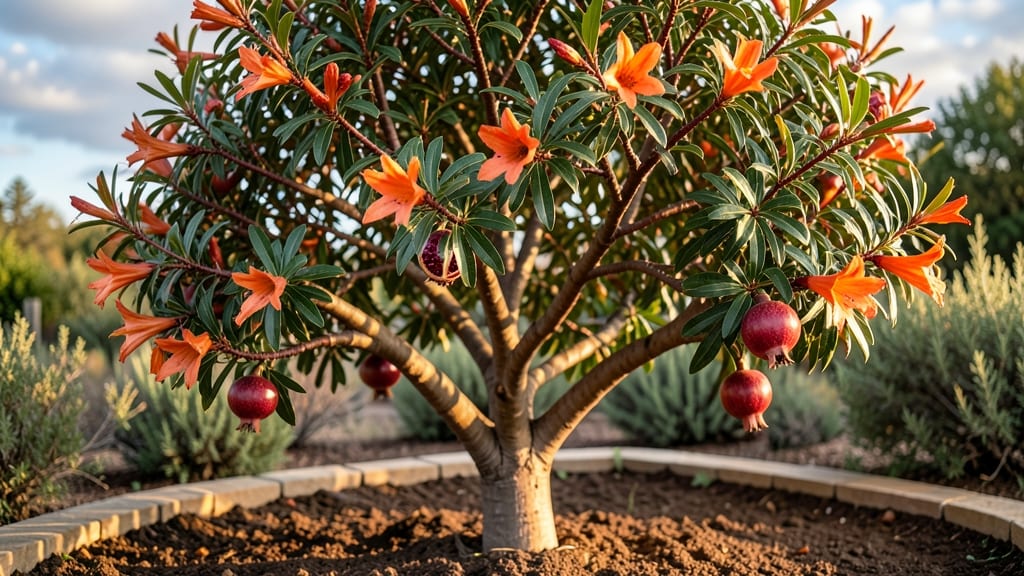
A pomegranate tree hedge turns your privacy screen into a living work of art—frost-hardy, fruit-bearing, and stunning in every season. I planted mine last spring after years of struggling with flimsy evergreens that lost their color by winter.
The first frost didn’t even faze them; their deep red bark and glossy leaves stayed vibrant while my neighbors’ screens turned brown and brittle.
These trees thrive in USDA Zones 7-11, making them perfect for colder climates where traditional hedges fail. Spacing them 10-15 feet apart creates a dense, natural barrier by year three, with mature heights of 15-20 feet—ideal for blocking views while adding year-round interest.
The real magic happens in fall when clusters of ruby-red fruit hang like jewels, and in winter when the bark’s peeling texture adds texture to bare branches.
Pruning is simple: just shape in late winter to encourage bushier growth, and harvest fruit in October-November for juicy seeds or fresh eating. Pair them with lavender or rosemary for a Mediterranean vibe, or let them stand alone as a bold statement hedge.
By next summer, you’ll have a screen that’s both functional and showstopping—no boring green walls here.
Whether you want a formal, clipped look or a wild, organic border, pomegranates adapt beautifully. The only downside? You’ll need to train young trees to avoid sprawling habits, but the payoff—edible fruit, four-season color, and unmatched privacy—makes it worth every minute. Let’s get your hedge growing!
📚 In This Guide
- What you need
- Instructions
- Tips and common mistakes
- Wrapping up and next steps
What you need
- ● Pomegranate trees: 3–5 Punica granatum saplings (dwarf varieties like 'Wonderful' or 'Eversweet' work best for hedges). Choose 1-year-old nursery-grown plants for faster establishment.
- ● Well-draining soil: Mix 60% native soil with 30% compost and 10% perlite or coarse sand to improve drainage (critical for pomegranates!).
- ● Organic mulch: 3–4 inches of pine bark, wood chips, or straw to retain moisture and regulate soil temperature.
- ● Slow-release fertilizer: 10-10-10 or 8-3-9 (apply 2–3 tablespoons per plant at planting and again in early spring).
- ● Drip irrigation or soaker hoses: 1/2-inch tubing with emitters spaced 12–18 inches apart for consistent watering.
- ● Stakes and twine: 4–6 ft wooden stakes and soft garden twine for temporary support during early growth.
- ● Pruning shears: Bypass pruners (for clean cuts on small branches).
- ● Hedge trimmers: Electric or manual (for shaping once the hedge reaches 3–4 feet tall).
- ● Shovel and trowel: Round-point shovel for digging holes and a hand trowel for transplanting.
- ● Measuring tape: To space plants 4–6 feet apart (closer for denser hedges).
- ● Gloves and safety glasses: Protect your hands and eyes during planting and pruning.
- ● Epsom salt: 1 tablespoon per plant (mixed into soil) to boost magnesium for vibrant foliage.
- ● Copper fungicide: Ready-to-use spray to prevent fungal diseases in humid climates.
- ● Decorative edging: Metal or stone borders to define the hedge’s shape.
- ● Frost cloth: Lightweight fabric for young plants in USDA Zones 7–8 during unexpected cold snaps.
- ● Pomegranate fruit cages: Wire mesh (for early-season protection from birds or pests).
Step-by-step guide to planting a frost-resistant pomegranate tree hedge
Here's how to create a stunning, low-maintenance privacy screen that thrives in cold climates and delivers vibrant blooms year-round.
🌱 Step 1: Select and Prepare Planting Sites
Choose a location with full sun exposure—at least 6-8 hours of direct sunlight daily. Pomegranate trees need this to develop strong branches and produce fruit. The site should also have well-draining soil; if yours is heavy clay, amend it with 2-3 inches of compost mixed into the top 12 inches of soil. Avoid low spots where water pools, as soggy roots lead to root rot.
Space your 4 pomegranate trees in a staggered formation, with each tree 8-10 feet apart. This spacing ensures proper airflow and allows branches to fill in naturally over time. Mark the planting spots with stakes or spray paint to avoid digging in the wrong place. If planting in a row, stagger the positions slightly to create a more natural, dense hedge appearance.
🪴 Step 2: Dig and Plant the Trees
Dig a hole twice as wide as the root ball but no deeper than the container’s depth. This encourages roots to spread horizontally rather than settling too low, which can suffocate them. Gently remove the tree from its container and loosen any circling roots with your fingers—this prevents girdling as the tree matures. Place the tree in the hole so the top of the root ball sits 1 inch above ground level to prevent waterlogging.
Backfill the hole with the native soil, pressing lightly to remove air pockets but avoiding compaction. Water deeply to settle the soil around the roots, then add a 2-inch layer of mulch (like wood chips or straw) around the base, keeping it 3 inches away from the trunk. Mulch helps retain moisture and regulates soil temperature, which is crucial for young trees in colder climates.
☀️ Step 3: Water and Fertilize for Establishment
Water each tree deeply twice a week for the first 4-6 weeks, ensuring the soil is moist 6 inches down. Pomegranate trees are drought-tolerant once established, but young trees need consistent moisture to develop strong root systems. Avoid overhead watering, which can spread disease; instead, use a soaker hose or drip irrigation at the base of the tree.
After the first month, apply a balanced, slow-release fertilizer (like 10-10-10) according to package instructions. This provides steady nutrients without burning young roots. In the following spring, switch to a low-nitrogen, high-phosphorus fertilizer (like 5-10-10) to encourage flowering and fruiting. Avoid high-nitrogen fertilizers, which promote leafy growth at the expense of blooms and fruit.
✂️ Step 4: Prune and Train for a Dense Hedge
Prune your pomegranate trees in late winter or early spring before new growth begins. Remove any dead, damaged, or crossing branches first, cutting back to the nearest outward-facing bud. Then, shape the tree by trimming back one-third of the previous year’s growth to encourage bushier growth. For a hedge, aim to keep the canopy 6-8 feet tall and 4-5 feet wide by selectively pruning longer branches.
Train the branches to grow outward by tying them to stakes or a lightweight trellis if needed. This creates a more uniform hedge structure and prevents branches from growing inward, which can lead to weak, shaded areas. Avoid heavy pruning in summer, as this can stress the tree and reduce flowering. Instead, do light maintenance pruning to remove suckers or stray branches throughout the growing season.
Tips & tricks for perfect pomegranate tree hedges
Creating a thriving frost-resistant hedge requires attention to detail from the start. Here's how to ensure your pomegranate trees grow into a lush, colorful privacy screen that stands up to cold climates.
Sunlight Strategy: While the instructions specify 6-8 hours of sunlight, I've found that pomegranate trees actually thrive with morning sun and afternoon shade in extremely hot climates. If your area gets intense afternoon sun, consider planting on the north side of structures to provide natural afternoon shade during summer months while still getting plenty of morning light for growth.
Soil Preparation Secret: The 2-3 inches of compost recommendation is excellent, but I always go one step further by adding a handful of mycorrhizal fungi to the planting hole. These beneficial fungi help the roots establish faster and create a stronger network for nutrient uptake. You can find them at garden centers in powder or granular form—just mix them into the bottom of the planting hole before adding your tree.
Watering Wisdom: Those first 4-6 weeks are critical for root establishment, but I've learned that watering depth matters just as much as frequency. Instead of just checking surface moisture, use a screwdriver to test soil moisture 6 inches down—this is where the roots will be growing. If it's dry at that depth, water again. This prevents shallow root systems that struggle in winter.
Pruning Precision: When trimming back one-third of last year's growth in Step 4, I recommend making cuts just above an outward-facing bud. This encourages new growth to fill out the hedge rather than growing inward. For a more formal hedge shape, use a string line to guide your cuts and maintain even height across all trees.
Pro Tips for Pomegranate Tree Hedge
- Creating a thriving frost-resistant hedge requires attention to detail from the start.
- Sunlight Strategy: While the instructions specify 6-8 hours of sunlight, I've found that pomegranate trees actually thrive with morning sun and afternoon shade in extremely hot climates.
- Soil Preparation Secret: The 2-3 inches of compost recommendation is excellent, but I always go one step further by adding a handful of mycorrhizal fungi to the planting hole.
Frequently asked questions
How cold can pomegranate trees tolerate in a hedge?
Most pomegranate varieties handle light frosts down to 15–20°F (-9 to -7°C), but young hedges (under 3 years) need winter protection like burlap wraps or mulch. Hardy types like ‘Wonderful’ or ‘Eversweet’ are your best bets for colder zones (USDA 7–10). For harsher winters, plant near a south-facing wall to absorb heat.
How long does it take for a pomegranate hedge to grow dense?
Expect 2–3 years for a lush, privacy-providing hedge when planted 3–4 feet apart. Prune lightly in early spring to encourage bushier growth, and fertilize with low-nitrogen fertilizer (like 5-10-10) to avoid leafy overgrowth. Patience pays off—mature hedges (5+ years) bloom year-round with vibrant flowers and fruit!
When and how should I prune a pomegranate hedge?
Prune twice a year: late winter (before buds swell) to shape the hedge, and right after fruiting (fall) to remove dead wood. Use clean, sharp shears to make 45-degree cuts just above a leaf node. Avoid heavy pruning—pomegranates thrive with 30–40% removal max per session.
Can I use other frost-resistant trees for a similar hedge?
Yes! If pomegranates aren’t ideal, try these alternatives:
- Russian olive (Elaeagnus angustifolia): Drought-tolerant, silvery foliage, and USDA 3–9 hardiness.
- Hawthorn (Crataegus spp.): Thorny (great for security!) and USDA 4–8 cold-hardy.
- Firethorn (Pyracantha): Bright berries, evergreen, and USDA 6–9.
What pests or diseases should I watch for in a pomegranate hedge?
Pomegranates are low-maintenance, but keep an eye out for:
- Aphids: Spray with water or neem oil if clusters appear on new growth.
- Whitefly: Yellow sticky traps help monitor infestations.
- Fungal spots: Improve airflow with light pruning and avoid overhead watering.
Wrapping up and next steps
A pomegranate tree hedge isn’t just a stunning, frost-resistant privacy screen—it’s a year-round investment in beauty, resilience, and even edible rewards! 🌿 With the right care, pruning, and placement, you’ll enjoy vibrant blooms, lush foliage, and delicious fruit for seasons to come.
Ready to transform your space? Start by sketching your hedge layout, gathering your tools, and planting with confidence. Whether you’re a seasoned gardener or a beginner, this low-maintenance hedge is a game-changer for any yard. Get growing today!