
Trees
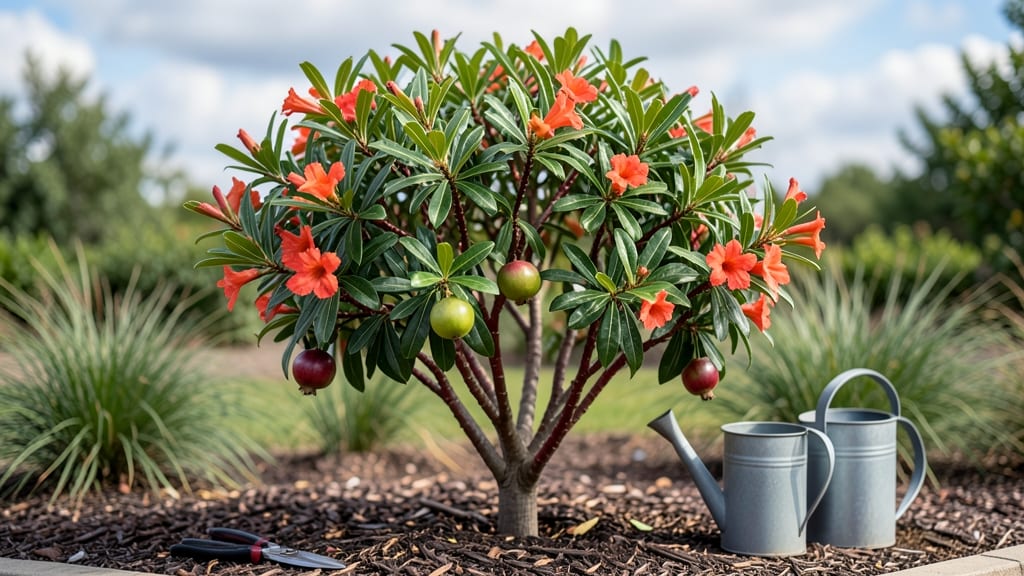
Growing a dwarf pomegranate tree in containers is easier than you think—no yard required. 🌱 I’ve grown these vibrant little fruit trees in pots for years, and their ruby-red jewels last from fall through winter, long after other harvests fade.
The key is matching their Mediterranean roots to your space, and I’ll show you exactly how.
These trees thrive in 5-gallon containers or larger, need just 6 hours of sun daily, and handle heat and drought once established. They’re perfect for patios, balconies, or even sunny windowsills—no fancy equipment needed.
The real magic? You’ll harvest fruit in 2-3 years, not the decade it takes with full-sized trees.
Expect glossy, dark green leaves year-round and clusters of 1-inch fruits that burst with juicy seeds. The flowers alone are a showstopper, with fiery red blooms that hum with bees. Plus, they’re surprisingly cold-hardy for a tropical fruit—just move containers indoors before 25°F nights to protect them.
Between you and me, the biggest challenge is patience—those first fruits take time. But once your tree is established, it’s nearly foolproof. Here’s how to set yours up for success without the guesswork.
📚 In This Guide
- What you need
- Instructions
- Tips and common mistakes
- Wrapping up and next steps
What you need
- ● Dwarf pomegranate tree (Punica granatum 'Nana') – Choose a healthy 1-3 gallon container-grown sapling from a trusted nursery.
- ● Container (15-25 gallons) – Ensure it has drainage holes. Terracotta or fabric grow bags work well.
- ● Well-draining potting mix – A blend of cactus/succulent mix (60%), perlite (20%), and compost (20%) is ideal.
- ● Slow-release fertilizer (10-10-10 or 8-3-9) – Apply 2-3 tablespoons at planting time.
- ○ Mulch (optional but helpful) – Use gravel or bark chips to retain moisture and deter weeds.
- ● Gloves – Protect your hands from thorns and rough bark.
- ● Trowel or small shovel – For planting and soil adjustments.
- ● Watering can or hose with a gentle spray nozzle – Avoid overwatering.
- ● Pruning shears – For shaping and maintaining the tree (sterilize with rubbing alcohol).
- ○ Support stake (optional) – Use a bamboo stake if the tree leans in windy areas.
- ● Sunlight spot (6+ hours daily) – Full sun is a must for fruiting!
Step-by-Step instructions for growing a thriving dwarf pomegranate tree
Here's the straightforward method I use to grow healthy, fruiting dwarf pomegranates in containers.
🪴 Step 1: Choose and Prepare the Right Container
Select a container that's at least 18-24 inches deep with drainage holes—dwarf pomegranates need room for strong roots. I prefer unglazed terra cotta pots because they breathe and prevent root rot. Place ¼-inch gravel at the bottom before adding soil to ensure proper drainage.
Your container should have a minimum 12-inch diameter for each tree (since you're growing 4). If using a larger pot for multiple trees, space them 6-8 inches apart at planting time. This gives roots room to establish without competing immediately.
🌱 Step 2: Plant Your Dwarf Pomegranate with Proper Soil Mix
Use a well-draining cactus/succulent mix combined with 20% perlite—this prevents waterlogging while providing nutrients. Fill the container to 2 inches below the rim, leaving space for mulch. Gently remove the tree from its nursery pot and loosen the roots if they're circling.
Place the tree in the center of the container and backfill with soil, pressing lightly to remove air pockets. Water immediately after planting until it drains from the bottom holes. The soil should feel moist but not soggy—pomegranates hate wet feet. Mulch with 1-2 inches of coarse bark to retain moisture and regulate temperature.
☀️ Step 3: Position for Maximum Sunlight and Temperature
Dwarf pomegranates need full sun (6-8+ hours daily)—place your containers where they'll get at least 6 hours of direct sunlight. A south or west-facing spot works best. If growing indoors, supplement with a grow light for 14-16 hours daily to prevent leggy growth.
Keep temperatures between 65-85°F—they tolerate heat well but won't fruit below 55°F. If nights dip below 50°F, move containers indoors or cover with frost cloth. The first year is about establishing roots, so focus on consistent moisture rather than heavy fruiting.
💧 Step 4: Water and Fertilize for Healthy Growth
Water deeply once a week (or when the top 2 inches of soil feel dry). Let excess water drain completely—pomegranates are drought-tolerant once established but need consistent moisture when young. Use a soaker hose or water at the base to avoid wetting leaves, which can cause fungal issues.
Fertilize every 4-6 weeks during growing season (spring-fall) with a balanced 10-10-10 or citrus-specific fertilizer. Reduce feeding in winter. You'll see new growth within 4-6 weeks—that's your sign the tree is thriving. Prune any leggy branches to encourage bushier growth and better fruiting.
✂️ Step 5: Prune and Support for Abundant Fruit
Prune in late winter or early spring before new growth begins. Remove dead, crossing, or weak branches first, then cut back any branches that grew excessively last year by ⅓. This opens the canopy for better air circulation and sunlight penetration—critical for fruit development.
For container-grown trees, you may need to stake taller branches to prevent them from breaking under fruit weight. Harvest when fruit turns deep red and feels heavy in your hand. The first year may yield little fruit—focus on establishing the tree, and you'll see a bounty in years 2-3.
Tips & tricks for perfect container-grown dwarf pomegranates
Let me share what I've learned after years of growing these vibrant little trees—these tricks make all the difference for container success.
Container Selection: Unglazed terra cotta isn't just my preference—it's essential. The porous material wicks away excess moisture, preventing the root rot that plagues many container growers. If you must use plastic, add extra drainage holes (I drill them myself) and use a larger container (24-inch depth) to compensate. The 6-8 inch spacing between trees in Step 1 gives roots critical elbow room—don't crowd them or you'll stifle growth.
Soil Mix Secrets: The 20% perlite in your cactus mix isn't arbitrary—it creates those tiny air pockets that pomegranate roots crave. After planting, press the soil gently but firmly around roots to eliminate air pockets, then water thoroughly. That first deep watering in Step 2 should run out the drainage holes completely—if it doesn't, you're not watering enough. I always check by lifting the pot after watering.
Lighting Strategy: Those 6-8 hours of sunlight in Step 3 are non-negotiable, but here's the pro move: rotate your containers weekly. Trees grow toward the light, and consistent rotation ensures even growth all around. For indoor growers, position your grow light 6 inches above the canopy and adjust the 14-16 hour schedule to match your daylight hours—this prevents that sad, leggy growth that kills container plants.
Fertilizer Timing: The 4-6 week feeding schedule works, but I've found citrus-specific fertilizers give better results than generic 10-10-10. After fertilizing, always water thoroughly to prevent salt buildup in the soil. And here's what nobody tells you: reduce feeding in winter by half—pomegranates are semi-dormant then, and too much fertilizer burns roots. Look for new growth within those 4-6 weeks as your sign everything's working.
Pro Tips for Dwarf Pomegranate Tree
- Let me share what I've learned after years of growing these vibrant little trees—these tricks make all the difference for container success.
- Container Selection: Unglazed terra cotta isn't just my preference—it's essential.
- Soil Mix Secrets: The 20% perlite in your cactus mix isn't arbitrary—it creates those tiny air pockets that pomegranate roots crave.
Frequently asked questions
Got questions about growing your own dwarf pomegranate tree?
You’re not alone! Here are answers to the most common queries—from planting to harvest and everything in between.
How long does it take for a dwarf pomegranate tree to bear fruit?
A healthy dwarf pomegranate tree typically starts producing fruit within 2–3 years of planting, though some varieties may take up to 4 years. Patience pays off—once established, these trees reward you with vibrant, juicy fruit for decades!
Can dwarf pomegranate trees survive winter in cold climates?
Dwarf pomegranates thrive in USDA Zones 7–11, but they’re sensitive to frost. In colder areas, grow them in large containers and move them indoors (or to a garage) when temperatures drop below 20°F (-7°C). A thick mulch layer also helps insulate roots.
How do I know when pomegranate fruit is ripe and ready to pick?
Ripe pomegranates are deep red or pink, feel heavy for their size, and have a slightly leathery skin. Gently squeeze the fruit—if it gives slightly, it’s ready! Avoid picking unripe fruit, as it won’t sweeten properly. Pro tip: Wait until fall for the best flavor.
What pests or diseases should I watch for with dwarf pomegranates?
Common issues include aphids, spider mites, and scale insects. Keep trees healthy with regular pruning and neem oil sprays. Overwatering can lead to root rot, so ensure pots have drainage holes. If leaves yellow or drop, check for pomegranate shot hole borer—remove affected branches promptly.
Can I grow a dwarf pomegranate tree in a pot indoors year-round?
While possible, dwarf pomegranates need bright sunlight (6+ hours daily) and warmth (60–80°F) to thrive indoors. Place them near a south-facing window or under grow lights. Expect slower growth and smaller fruit compared to outdoor trees. For best results, move them outside in spring/summer.
Wrapping up and next steps
Growing a dwarf pomegranate tree in containers is a rewarding way to enjoy year-round fruit without the space or upkeep of a full-sized tree! 🌱 From selecting the right variety to mastering pruning and pest control, this guide has covered everything you need to succeed.
Whether you're a beginner or a seasoned gardener, the sweet, tangy rewards of homegrown pomegranates are well worth the effort.
Now that you’re armed with the knowledge, it’s time to roll up your sleeves and get planting! Start small—choose your container, pick a healthy sapling, and follow the steps to nurture your tree.
Before you know it, you’ll be harvesting vibrant, juicy pomegranates straight from your patio or balcony. Happy growing! 🍇✨