
Pruning
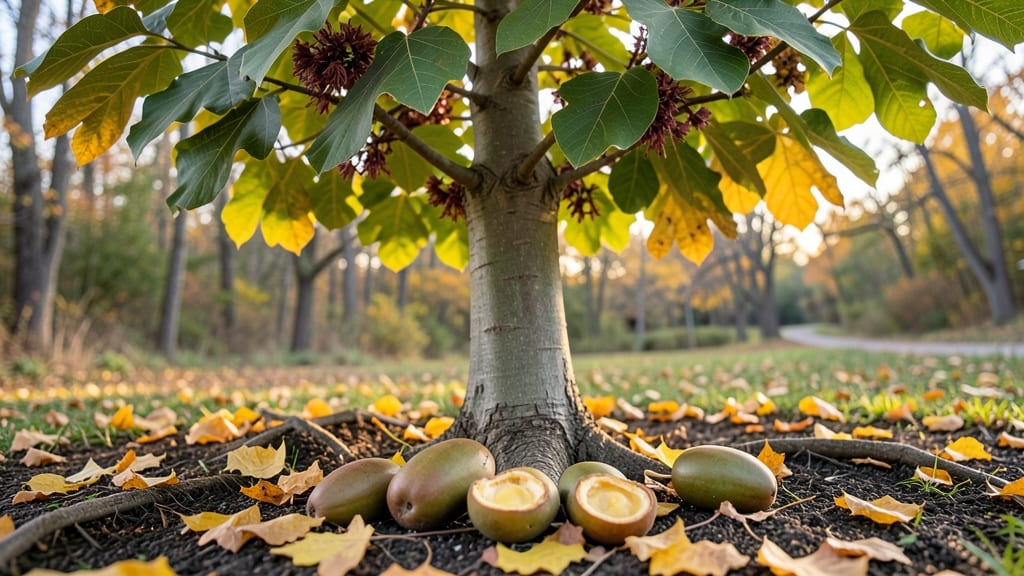
Fall pruning paw paw trees in the Pacific Northwest isn't just about trimming—it's about preparing them for winter's chill while maximizing next year's harvest. 🌿 The key is timing: prune after leaves drop but before hard frosts hit, usually between late November and early December.
This timing helps the tree heal before dormancy sets in.
Start by removing any dead, diseased, or crossing branches first—these are the tree's weak points. Then, thin out the canopy by cutting back about 20-30% of the smallest branches to improve airflow and sunlight penetration. This reduces winter moisture buildup and encourages stronger new growth in spring.
The result? A tree that wakes up in spring with fewer pests, better fruit production, and fewer broken branches from snow or ice. Your paw paws will thank you with sweeter, larger fruit next season—and you'll have one less winter chore to worry about.
Pro tip: Sterilize your pruners with rubbing alcohol between cuts to prevent spreading disease. And if your tree is young, hold off on heavy pruning—let it establish its structure first. The Pacific Northwest's wet winters mean proper pruning now saves headaches later.
📚 In This Guide
- What you need
- Instructions
- Tips and common mistakes
- Wrapping up and next steps
What you need
- ● Pruning shears: Bypass pruners (for cuts up to ¾ inch in diameter) – 1 pair (look for sharp, stainless-steel blades).
- ● Loppers: Bypass or anvil type (for branches 1–2 inches thick) – 1 pair (extendable handles recommended for tall trees).
- ● Pruning saw: Curved-tooth or folding saw (for branches 2+ inches thick) – 1 (with a comfortable grip).
- ● Gloves: Heavy-duty, cut-resistant (to protect from thorns and splinters) – 1 pair (consider nitrile-coated for grip).
- ● Safety glasses: ANSI-rated – 1 pair (to shield eyes from debris).
- ● Ladder: Sturdy, extendable aluminum (if tree exceeds 8 feet) – 1 (ensure it’s rated for your weight + tools).
- ● Disinfectant: 70% isopropyl alcohol or pruning sealant – small bottle (to sterilize tools between cuts and seal larger wounds).
- ● Heavy-duty trash bags: Contractor-grade, 30+ gallon – 2–3 bags (for hauling debris).
- ● Rake or grabbers: Long-handled – 1 (for sweeping up fallen leaves/branches).
- ● Pole saw: For high branches without a ladder.
- ● Tree wound dressing: (Controversial but useful for large cuts—avoid petroleum-based products).
- ● Work boots: With ankle support for stability.
- ● Sunscreen & hat: PNW weather can be deceivingly sunny!
- ● First-aid kit: Just in case of minor scrapes or thorn pricks.
Step-by-Step guide to pruning paw paw trees in fall for Pacific Northwest resilience
Here's how to prepare your paw paw trees for winter while keeping them strong and healthy.
✂️ Step 1: Remove Dead, Diseased, or Damaged Branches First
Start by inspecting your paw paw tree for branches that are clearly dead, diseased, or physically damaged. Look for branches with no leaves, brown or blackened bark, or signs of fungal growth like mold or cankers. These branches won't recover and can spread problems to healthy parts of the tree.
Use clean, sharp pruning shears to make cuts just outside the branch collar—the swollen area where the branch meets the trunk. Avoid leaving stubs, as they can invite decay. If a branch is thicker than 2 inches, use a pruning saw instead. I always sanitize my tools with rubbing alcohol between cuts to prevent spreading disease.
✂️ Step 2: Thin Out Crowded or Crossing Branches
Next, focus on improving airflow and sunlight penetration by removing branches that are rubbing against each other or growing inward toward the center of the tree. These crowded branches compete for resources and create conditions where moisture can get trapped, leading to rot or fungal issues.
Make your cuts at a 45-degree angle just outside the branch collar, ensuring you don’t leave any stubs. For larger branches, I like to use the "three-cut method" to avoid tearing the bark. Start with an undercut, then make a top cut, and finally remove the branch by twisting it gently. This keeps the tree stable while you work.
✂️ Step 3: Lightly Prune for Shape and Airflow
Paw paw trees benefit from light structural pruning in fall to maintain their natural shape and encourage strong growth. Focus on removing any branches that are growing in directions that disrupt the tree’s balanced form, such as those growing straight upward or outward at extreme angles.
Limit your pruning to no more than 20-25% of the tree’s foliage in a single session. This ensures the tree retains enough energy to recover before winter. I usually step back every few cuts to check the tree’s overall shape—this helps me avoid over-pruning, which can stress the tree unnecessarily.
⏰ Step 4: Finish Pruning Before the First Hard Frost
The key to fall pruning in the Pacific Northwest is timing. Complete all pruning at least 4-6 weeks before the first hard frost, typically by early to mid-October in most regions. This gives the tree enough time to heal over its wounds before winter dormancy sets in.
After pruning, rake up and dispose of any fallen leaves or debris from diseased branches to reduce the risk of reinfection next season. I also like to apply a thin layer of mulch around the base of the tree to insulate the roots and retain moisture. Avoid piling mulch directly against the trunk, as this can encourage rot.
Tips & tricks for perfect fall paw paw tree pruning
These straightforward tricks will help you prune your paw paw trees like a pro—keeping them healthy and frost-resistant for years to come.
Tool Sanitation: Between every cut, especially when removing diseased branches, wipe your pruning shears and saw with rubbing alcohol. I learned this the hard way after noticing new fungal spots appear where I’d previously cut healthy branches. A quick wipe between cuts prevents cross-contamination and keeps your tree disease-free. This is especially important in the Pacific Northwest’s damp climate.
Branch Collar Awareness: When making cuts in Step 1 and Step 2, focus on cutting just outside the branch collar—the swollen area where the branch meets the trunk. I see so many beginners leave stubs, which can trap moisture and lead to rot. The branch collar contains healing tissues that help the tree recover faster, so never cut into it. Use a clean, sharp tool to make precise cuts at the right angle.
Visual Shape Check: After removing 20-25% of the foliage in Step 3, step back and look at your tree from all angles. This helps you spot any remaining branches that might disrupt airflow or create an unbalanced shape. I usually do this after every few cuts—it’s amazing how much difference a few minutes of observation makes in achieving a natural, open canopy that lets sunlight reach all parts of the tree.
Timing Flexibility: While the 4-6 week window before hard frost is ideal, you can safely prune up to 2 weeks earlier if needed. Just be mindful that wounds will have slightly less time to heal before winter. I’ve found that pruning in late September still works well, especially if your region has mild winters. The key is to avoid pruning after the first frost—new growth won’t harden off properly before winter.
Pro Tips for Paw Paw Tree Fall
- These straightforward tricks will help you prune your paw paw trees like a pro—keeping them healthy and frost-resistant for years to come.
- Tool Sanitation: Between every cut, especially when removing diseased branches, wipe your pruning shears and saw with rubbing alcohol.
- Branch Collar Awareness: When making cuts in Step 1 and Step 2, focus on cutting just outside the branch collar—the swollen area where the branch meets the trunk.
Frequently asked questions
When is the exact best time to prune a paw paw tree in fall?
The ideal window is late October to mid-November, after leaves drop but before hard frosts hit (typically after Thanksgiving in the PNW). Pruning too early risks stressing the tree, while waiting too long can expose fresh cuts to winter diseases. Aim for 50–60°F days for cleaner cuts and faster healing.
Can I prune a paw paw tree in winter, or will it die?
Paw paw trees are semi-dormant in winter, but pruning during frozen soil or extreme cold (below 20°F) stresses the tree. If you must prune in winter, do it on a mild day (above 35°F) and avoid heavy cuts. However, fall pruning is always the gold standard for PNW climates.
What if my paw paw tree’s branches are already dead or broken from frost?
Dead or frost-damaged branches should be removed immediately—even in winter—to prevent disease or pests. Look for brown, brittle wood or branches without buds. Cut back to the collar (the swollen area where branches meet the trunk) using sterilized tools. Pro tip: If 50%+ of the tree is dead, it may not recover; consider consulting an arborist.
Are there alternatives to fall pruning if I missed the window?
Yes! You can do light maintenance pruning in early spring (March–April) to remove water sprouts or damaged limbs, but avoid heavy structural cuts. If you skipped fall pruning entirely, focus on corrective pruning in spring—just be patient, as paw paws respond slowly to major changes.
Will pruning in fall attract pests like borers or beetles?
Pruning opens the tree to pests, but the risk is low if you use sharp, sterilized tools and seal larger cuts with pruning sealant (optional for paw paws). To minimize threats, clean up debris promptly and avoid pruning during peak pest seasons (late summer). Healthy trees are less vulnerable, so proper technique is your best defense!
Wrapping up and next steps
Pruning your paw paw tree after frost isn’t just about aesthetics—it’s a lifeline for its health and productivity in the Pacific Northwest’s chilly climate. 🌿 By following the right techniques, you’ll encourage stronger growth, better fruit yields, and resilience against winter’s harshest blows.
Now that you’re armed with the knowledge, there’s no time like the present to grab those shears and give your tree the care it deserves!
🌱 Your Next Step:
- Mark your calendar for late winter or early spring—just as new buds begin to swell—and schedule your pruning session.
- Gather your tools (you’ve got the list!) and take a deep breath—you’ve got this!
- Share your progress! Snap a photo of your freshly pruned paw paw tree and tag us—we’d love to see your green thumbs in action. 📸