
Pruning
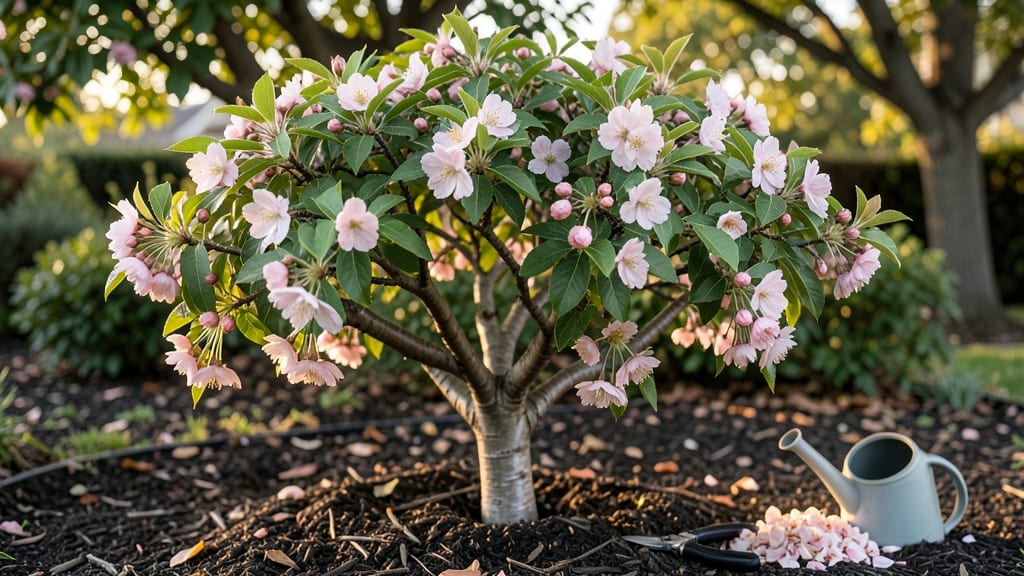
Transforming your Pacific Northwest yard with ornamental peach tree pruning starts with understanding how these trees handle frost while still delivering stunning spring blooms. I learned the hard way that aggressive cuts in winter can shock the tree—so timing and technique matter more than you'd think.
The key is shaping the tree in late winter when buds swell but before new growth begins, ensuring those delicate pink blossoms return year after year.
You’ll need sharp pruning shears, a ladder for taller branches, and a clear day to work—no one enjoys wrestling with slippery tools in the rain. Focus on removing dead wood first, then thin out crowded branches to improve airflow.
This isn’t just about aesthetics; it’s about preventing fungal diseases that thrive in damp PNW winters. A well-pruned tree blooms more heavily and resists pests better, which is exactly what you want for that showstopping spring display.
By summer’s end, you’ll see the difference: branches strong enough to support blossoms, sunlight reaching all parts of the canopy, and fewer leaves turning brown from overcrowding. The tree rewards your effort with vibrant pink blooms that last weeks longer than unpruned trees.
Plus, the fruit—if you choose a fruiting cultivar—will be larger and sweeter because the tree isn’t struggling to support weak branches.
This method works for both young trees and mature specimens, though older trees may need gradual pruning over a few seasons. Whether you’re dealing with a newly planted tree or one that’s been neglected, the principles stay the same: patience, precision, and a little seasonal timing.
Let’s get those branches in shape for next spring’s bloom bonanza.
📚 In This Guide
- What you need
- Instructions
- Tips and common mistakes
- Wrapping up and next steps
What you need
- ● Pruning shears: Bypass pruners (sharp, clean, and sterilized with rubbing alcohol to prevent disease). Size: 6–8 inches for small branches.
- ● Loppers: For thicker branches (½–1½ inches in diameter). Look for: Ratcheting or bypass style for precision.
- ○ Pruning saw: Curved-tooth saw for branches 1½+ inches thick. Optional: Lubricant to reduce friction.
- ● Gloves: Heavy-duty, cut-resistant gloves (e.g., mechanics’ gloves or gardening gloves with reinforced palms).
- ● Disinfectant: 70% isopropyl alcohol or bleach solution (1 part bleach : 9 parts water) to sterilize tools between cuts.
- ○ Sealing wax or pruning sealant: (Optional but recommended for PNW’s damp climate) to coat large cuts and prevent disease entry.
- ● Tarp or drop cloth: To catch debris and protect your workspace.
- ● Ladder or step stool: Sturdy and tall enough to reach the tree’s highest branches safely.
- ● Timing: Prune during dormant season (late winter/early spring, before buds swell) to minimize frost damage risk.
- ● Weather check: Choose a dry, calm day (avoid rainy or windy conditions to prevent stress on the tree).
- ● Safety gear: Safety glasses (to shield from debris) and long sleeves/pants (to protect from thorns and sap).
- ● Tree assessment: Inspect the tree for dead, diseased, or crossing branches before you start.
- ● Water & snacks: Hydration and energy are key—PNW pruning sessions can get messy and tiring!
- ● 🔥 Frost-resistant focus: Prioritize open-center pruning to improve airflow and reduce frost pockets in dense foliage.
- ● 🌡️ Temperature hack: If pruning during a warm spell in winter, avoid heavy cuts—wait for bud break to assess growth.
- ● ✨ Native companion plants: Consider planting rhubarb or currants nearby—they thrive in PNW climates and complement ornamental peaches!
Step-by-step guide for pruning your ornamental peach tree
Here's how to keep your tree healthy and blooming beautifully in Pacific Northwest winters.
Time Your Pruning for Maximum Frost Resistance
Prune your ornamental peach tree during late winter or early spring, just as buds begin to swell but before any new growth appears. This timing ensures the tree has time to heal before cold snaps hit. In the Pacific Northwest, aim for February or early March when daytime temperatures consistently stay above 40°F.
If you prune too early in winter, fresh cuts may not have time to callus before frost sets in, leaving the tree vulnerable to cold damage. On the other hand, pruning too late in spring risks removing flower buds that would have already formed. Watch for swollen but not yet open buds—that's your cue to begin.
Remove Dead, Damaged, or Crossing Branches First
Start by eliminating any dead, diseased, or broken branches using clean, sharp pruning shears. These branches won’t produce blooms and can harbor pests or diseases that spread to healthy wood. Cut back to the collateral bud (a side bud facing the direction you want the branch to grow) or to a healthy branch junction.
Next, remove branches that cross or rub against each other, as these create wounds that weaken the tree. Also, look for suckers (shoots growing from the base or trunk) and water sprouts (vertical shoots with no side branches). These compete with the main structure for energy and should be cut at the base. Use sterilized tools between cuts to prevent spreading disease.
Thin the Canopy for Better Airflow and Light Penetration
Step back and assess the tree’s overall shape. Your goal is to create an open, vase-like structure that allows sunlight and air to reach the center. Remove about 20-30% of the smallest branches—these are often the ones growing inward or downward. Focus on branches that are less than ½ inch in diameter, as these respond best to pruning.
Thinning the canopy prevents overcrowding, which can lead to fungal diseases and reduced flowering. Aim for a balanced shape where light can reach the inner branches. You’ll know you’ve done well when you can see sunlight filtering through the tree on a bright day. Avoid cutting back to stubs—always prune just outside a bud or branch collar to promote faster healing.
Shape the Tree for Optimal Bloom Display
Now it’s time to refine the tree’s form. Ornamental peach trees bloom best when they have a well-structured, open framework. Start by selecting 3-5 main scaffold branches that are evenly spaced around the trunk. These should be large, sturdy branches that form the tree’s skeleton.
Prune smaller branches that grow too close to the scaffold branches, leaving buds that face outward to encourage an open, airy growth habit. Avoid heavy pruning of the scaffold branches themselves—these are the tree’s backbone and should remain intact. If a scaffold branch is damaged, prune it back to a strong lateral branch or the trunk. Always make cuts at a 45-degree angle, just above an outward-facing bud.
Clean Up and Protect the Tree for Winter
After pruning, remove all debris from the work area, including fallen branches and clippings. Dispose of diseased wood immediately to prevent the spread of pathogens. Sterilize your pruning tools with rubbing alcohol or a 10% bleach solution to kill any lingering bacteria or fungi.
Apply a thin layer of arborist wound dressing to larger cuts (over ½ inch in diameter) to protect them from pests and disease. While wound dressing isn’t necessary for small cuts, it can help larger wounds heal faster in the damp Pacific Northwest climate. Finally, water the tree deeply to help it recover from the pruning stress, especially if the ground isn’t frozen.
Tips & tricks for perfect ornamental peach tree pruning
These practical insights will help you achieve a healthy, frost-resistant tree that blooms beautifully year after year in Pacific Northwest winters.
Timing is Everything: The February or early March window is critical because it gives your tree time to heal before spring growth begins. If you're unsure about the exact timing, check for swollen buds that haven't yet opened—this is your perfect cue. I've seen trees pruned too early suffer frost damage when new growth appears before cuts can properly heal. Remember, the goal is to have your tree fully healed by the time temperatures consistently stay above 40°F.
Tool Preparation Matters: Sterilizing your pruning tools between cuts is one of the most important steps to prevent disease spread. I learned this the hard way after seeing my tree develop fungal spots from contaminated shears. For larger cuts over ½ inch in diameter, using arborist wound dressing creates a protective barrier against pests and disease in our damp climate. This is especially important for trees in the Pacific Northwest where moisture levels remain high throughout the year.
Canopy Thinning Strategy: When thinning the canopy in Step 3, focus on removing branches that are less than ½ inch in diameter—these respond best to pruning and won't leave large wounds. I recommend removing about 20-30% of these smaller branches to create that open, vase-like structure. This not only improves airflow but also allows sunlight to reach the inner branches, which is crucial for even blooming. You'll know you've done well when you can see sunlight filtering through the tree on a bright day.
Shape with Purpose: In Step 4, when shaping your tree, always make cuts at a 45-degree angle just above an outward-facing bud. This technique encourages new growth in the direction you want while maintaining the tree's natural shape. I've found that selecting 3-5 main scaffold branches creates the perfect framework for future blooms. These branches should be large and sturdy, forming the tree's backbone that supports all future growth.
Pro Tips for Ornamental Peach Tree
- These practical insights will help you achieve a healthy, frost-resistant tree that blooms beautifully year after year in Pacific Northwest winters.
- Timing is Everything: The February or early March window is critical because it gives your tree time to heal before spring growth begins.
- Tool Preparation Matters: Sterilizing your pruning tools between cuts is one of the most important steps to prevent disease spread.
Frequently asked questions
Got questions about pruning your ornamental peach tree in the Pacific Northwest? You’re not alone!
Here are answers to the most common concerns—from frost prep to long-term care—so you can keep your tree thriving year after year.
When is the best time to prune my ornamental peach tree to avoid frost damage?
Prune your ornamental peach tree late winter or early spring (February–March in the PNW) when the tree is still dormant but before the first blooms appear. This timing helps prevent frost damage to fresh cuts and ensures healthy regrowth. Avoid pruning in fall, as late-season cuts can stimulate tender new growth that’s vulnerable to winter freezes.
How much can I safely prune off my ornamental peach tree?
Remove no more than 25–30% of the tree’s total branches in a single pruning session to avoid stress. Focus on:
- Dead, diseased, or crossing branches
- Suckers at the base
- Overcrowded growth inside the canopy
Will pruning help my ornamental peach tree survive PNW winters?
Pruning alone won’t make your tree frost-proof, but proper timing and technique improve resilience. Thin the canopy to allow sunlight and air circulation, which reduces moisture buildup (a frost risk). Additionally, avoid heavy pruning in late summer—it can stimulate weak growth that’s more susceptible to cold. For extra protection, wrap the trunk with burlap if your tree is young or newly planted.
Can I use the same pruning tools for my ornamental peach tree as for fruit-bearing peach trees?
Yes! Use sterilized tools (rubbing alcohol or bleach solution) to prevent spreading diseases like bacterial leaf spot or peach leaf curl. However, avoid using tools that were recently on fruit-bearing trees if they’re heavily infected—some pathogens (like Xylella fastidiosa) can persist. For ornamental trees, focus on clean, sharp bypass pruners and a saw for larger branches.
What’s a good alternative if my ornamental peach tree keeps dying back in the PNW?
If your peach tree struggles with frost or disease, consider these hardier PNW-friendly alternatives with similar ornamental value:
- Flowering cherry (Prunus serrulata) – Cold-hardy, stunning spring blooms, and minimal pruning needs.
- Serviceberry (Amelanchier) – Tolerates frost, produces edible berries, and has beautiful fall foliage.
- Japanese maple (Acer palmatum) – Drought-tolerant once established, with stunning seasonal color.
My ornamental peach tree’s leaves are yellowing after pruning—what’s wrong?
Yellowing leaves post-pruning are usually normal stress, especially if you pruned in late summer or the tree lost a lot of foliage. However, check for:
- Overwatering (soggy soil = root rot)
- Nutrient deficiency (apply balanced fertilizer in early spring)
- Pests like aphids or spider mites (spray with neem oil if needed)
Wrapping up and next steps
Pruning your ornamental peach tree in the Pacific Northwest doesn’t have to be intimidating—it’s all about timing, technique, and a little patience! 🌸 By following the right steps, you’ll encourage vibrant blooms, strong growth, and resilience against frost.
Whether you’re a seasoned gardener or just starting, your tree will thank you with stunning spring displays.
Ready to take the next step? Grab your pruners, mark your calendar for late winter or early spring, and give your tree the care it deserves. Happy pruning—your future blooms will be worth every snip! 🌿✂️