Orchid Care
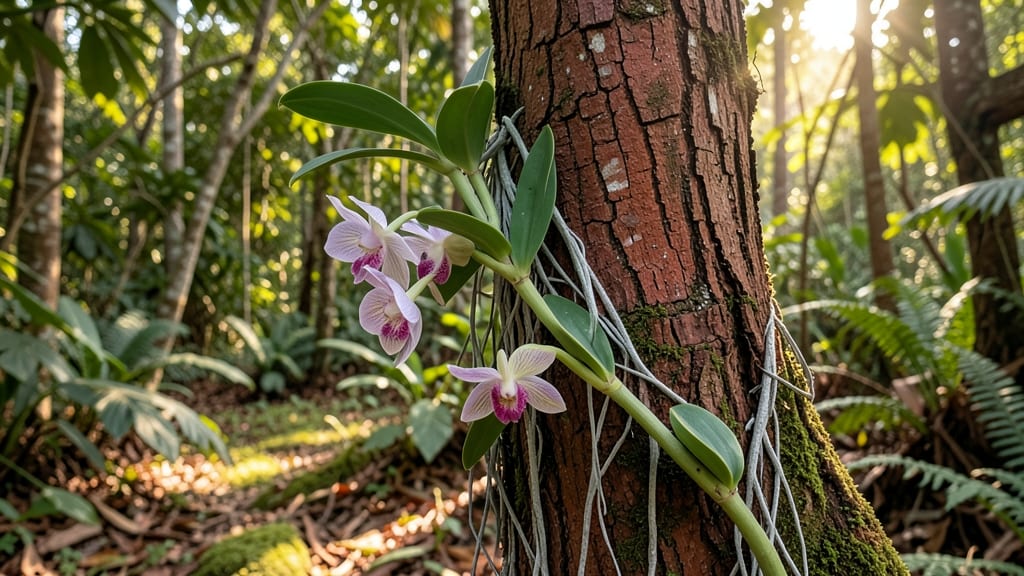
Growing orchids on trees in Hawaii turns your yard into a living jungle canopy. 🌿 The trade winds, high humidity, and year-round warmth create the perfect conditions for orchids like Vandas and Dendrobiums to thrive when mounted on suitable trees like mango or ficus.
My first attempt with a Vanda on a mango tree produced blooms within eight months—something I never saw in my cooler climate.
The key is choosing the right tree and mounting method. You’ll need a mature, sturdy tree with rough bark for orchids to cling to, plus a spot that gets bright, indirect light. Avoid dense foliage that blocks airflow—orchids need to breathe just as much as they need to drink.
My go-to setup uses a simple tie-down method with orchid mounting strips, and it’s held up for years.
What you’ll end up with is a stunning vertical garden that blooms year-round. Imagine cascading flowers in shades of pink, purple, and white swaying in the breeze, all while requiring minimal care.
The trade winds do most of the work by keeping the orchids cool and preventing pests. You’ll spend less time fussing and more time admiring your living art.
This method works for any tropical climate, not just Hawaii. Whether you’re on Oahu, Maui, or even in Florida, the principles stay the same—just adjust for local rainfall and sun intensity. Let’s get those orchids growing!
📚 In This Guide
- What you need
- Instructions
- Tips and common mistakes
- Wrapping up and next steps
What you need
- ● Orchid Species: Choose Vanda, Dendrobium, or Phalaenopsis varieties (Hawaii-friendly!). Tree or Mounting Base: Mature ficus, mango, or banyan tree (at least 3–5 feet tall, sturdy branches). Orchid Mounts: 2–3 cork bark slabs (1–2 inches thick, 6–12 inches wide) or tree fern plaques (for humidity-loving species).
- ● Potting Mix (if not mounting): 1–2 bags of orchid bark mix (fine to medium-grade, no soil or peat). Pot or Basket: 1–2 slotted plastic or woven coconut pots (4–6 inches in diameter) with drainage holes. Fertilizer: 1 bottle of balanced orchid fertilizer (20-20-20 or 10-10-10, diluted to half-strength). Watering Can: 1 spray mister (for gentle hydration) + 1 watering can with a narrow spout. Support Tools: 1 roll of orchid ties (soft, stretchy, or nylon) or plastic-coated wire. 1–2 bamboo stakes (for support if needed).
How to cultivate a thriving orchid canopy in Hawaiian trees
Turn your tropical backyard into a lush orchid paradise using these time-tested methods.
🌿 Step 1: Select the Right Tree Host
Choose a mature, healthy tree with a sturdy trunk and spreading branches—mango, breadfruit, or coconut trees work beautifully in Hawaii’s climate. Look for one with a diameter of at least 12 inches at chest height, as thinner trunks can’t support the weight of orchids over time. I always check for smooth bark and minimal moss or lichen buildup, as these can harbor pests or rot.
Position yourself near the tree base and run your hands along the trunk to feel for natural crevices or ridges—these are perfect mounting spots. Avoid areas with direct ant trails or standing water, as both can harm your orchids. If your tree lacks natural nooks, use orchid clips or nylon straps (from your supplies) to secure mounts temporarily until roots establish.
🌱 Step 2: Prepare and Mount Your Orchids
Soak your orchids in lukewarm water for 10-15 minutes before mounting—this rehydrates the roots and helps them cling to the tree. I like to gently squeeze the rhizomes to ensure they’re plump but not waterlogged. For Vanda or Dendrobium orchids, use orchid clips to attach them to branches, spacing them 6-12 inches apart to allow airflow.
For mounting on tree bark, wrap the rhizomes around a natural crevice and secure them with soft nylon ties (never wire—it can cut into the plant). The roots will eventually grip the bark as they grow. Here’s the thing—don’t bury the roots in soil unless you’re using a tree-mounted pot system (which works well in windy areas). The goal is partial exposure to air and light, which mimics their natural epiphytic habitat.
☀️ Step 3: Position for Optimal Light and Airflow
Hawaii’s bright, indirect light is ideal for orchids, but direct midday sun can scorch leaves. Aim for morning sun and afternoon shade, especially in Kona or Maui, where UV levels are intense. You’ll know your orchids are getting the right light when the leaves stay bright green with no yellowing or brown spots—a sign of too much sun.
Ensure good airflow around the mounts by pruning nearby dense foliage that could trap moisture. I like to rotate the orchids every few months so all sides get even light exposure. This prevents lopsided growth and keeps the plants compact. In windy coastal areas, secure mounts more tightly to avoid damage—nylon ties work best for flexibility and strength.
💧 Step 4: Water and Fertilize for Canopy Success
Water your orchids 2-3 times weekly during Hawaii’s dry season (spring to early summer), but reduce to once weekly during the wetter months. The key is even moisture without soggy roots—I mist the mounts in the morning and let excess water drain away. If your tree is in a rainy microclimate, you might only need to water every 10-14 days, as natural rainfall often suffices.
Feed your orchids with a balanced orchid fertilizer (20-20-20 or 10-10-10) diluted to half-strength every 4-6 weeks during the growing season (spring to fall). I skip fertilizing in winter when growth slows. Over-fertilizing burns roots, so always follow the label and rinse the mounts with plain water afterward to prevent salt buildup.
✂️ Step 5: Prune and Maintain for Long-Term Growth
Prune spent flower spikes by cutting them back to the second or third node from the base—this encourages new blooms and keeps the plant tidy. I use sterilized pruning shears to avoid spreading disease. If a mount looks overcrowded or roots are growing excessively, gently separate some pseudobulbs and remount them nearby. This prevents competition for nutrients and light.
Check your orchids monthly for pests like scale or mealybugs, especially in shaded areas where humidity lingers. A soapy water spray (1 tsp mild dish soap per gallon of water) usually does the trick—just spray the undersides of leaves where pests hide. With proper care, your orchid canopy will bloom year-round, turning your Hawaiian tree into a stunning, fragrant centerpiece.
Tips & tricks for perfect orchid canopy in Hawaiian trees
Here's what nobody tells you about creating a thriving orchid canopy in Hawaii's unique climate—these tricks make all the difference.
Tree Selection Wisdom: In Step 1, when evaluating trees, pay special attention to the bark texture—rough bark provides more surface area for roots to grip. I've found that mango trees with slightly textured bark give orchids the best initial hold, while smooth coconut trunks require more frequent nylon tie adjustments. Avoid trees with deep grooves that could trap water against the bark, creating rot-prone conditions.
The Soaking Secret: That 10-15 minute lukewarm soak in Step 2 isn't just about hydration—it's about preparing the rhizomes for attachment. After soaking, I always run my fingers along the roots to feel for any mushy spots. If you find any, trim them away with sterilized scissors before mounting, as they'll only attract pests later. This simple check prevents future problems before they start.
Mounting Position Strategy: For Step 2's mounting, I recommend placing orchids on the south or southeast side of the tree trunk to maximize morning sun exposure while avoiding harsh afternoon rays. In windy coastal areas, secure mounts with two nylon ties per orchid—one at the top and one at the base—to prevent them from flapping in strong trade winds. The extra stability helps roots establish faster.
Light Rotation Technique: When you rotate orchids every few months (Step 3), I suggest marking their original position with a small piece of colored tape on the tree. This helps you track which side gets the most sun and ensures you're giving all sides equal exposure. I've seen orchids develop uneven growth when rotation isn't consistent—this simple marking system solves that problem completely.
Pro Tips for Orchod On Tree Hawaii
- Here's what nobody tells you about creating a thriving orchid canopy in Hawaii's unique climate—these tricks make all the difference.
- Tree Selection Wisdom: In Step 1, when evaluating trees, pay special attention to the bark texture—rough bark provides more surface area for roots to grip.
- The Soaking Secret: That 10-15 minute lukewarm soak in Step 2 isn't just about hydration—it's about preparing the rhizomes for attachment.
Frequently asked questions
Can orchids really grow on trees in Hawaii without harming them?
Orchids like Dendrobium or Vanda are epiphytes, meaning they cling to trees for support—not nutrients. They use the tree as a host, absorbing moisture and sunlight from the air. Just ensure the tree is healthy (no deep roots or bark damage) and use orchid clips or ties to secure the plant gently.
How long does it take for orchids to establish on a tree?
Patience is key! Most orchids take 3–6 months to root securely onto a tree, depending on humidity, sunlight, and species. In Hawaii’s tropical climate, this process speeds up—just keep them well-watered (but not soggy) and monitor for new growth. Vandas often bloom faster (6–12 months), while Cattleyas may take 1–2 years.
What if my orchid on a tree isn’t getting enough rain?
Hawaii’s trade winds help, but supplemental watering is often needed. Mist orchids daily in dry spells or use a spray bottle to mimic dew. For larger trees, a drip irrigation system can target the orchid’s roots. Avoid overhead watering—it can rot leaves. Pro tip: Water in the morning so foliage dries quickly.
Are there orchid alternatives for tree-growing in Hawaii?
Yes! If orchids seem tricky, try these low-maintenance epiphytes:
- Hoya (wax plants): Drought-tolerant and fragrant.
- Anthurium: Thrives in shade and loves humidity.
- Peperomia: Compact and great for beginners.
- Tillandsia (air plants): Need zero soil—just a tree branch!
Why are my orchid leaves turning yellow or spotted?
Common culprits in Hawaii’s climate:
- Overwatering: Yellow leaves = root rot. Let the tree bark dry between waterings.
- Pests: Watch for scale insects or mealybugs (common in humidity). Treat with neem oil or insecticidal soap.
- Sunburn: White/yellow spots? Move to partial shade (Hawaii’s sun is intense!).
- Nutrient deficiency: Feed with balanced orchid fertilizer (diluted) every 2–4 weeks.
Wrapping up and next steps
Growing orchids on trees in Hawaii’s lush, tropical climate isn’t just possible—it’s a rewarding way to embrace nature’s beauty while keeping your plants thriving! 🌺 With the right tree species, proper mounting techniques, and a little patience, you’ll soon enjoy vibrant blooms that harmonize with the island’s stunning landscapes.
Whether you’re a beginner or a seasoned gardener, this method offers a low-maintenance yet visually stunning alternative to traditional potting.
Ready to take the next step? Start by choosing your orchid and tree, then gather your supplies—your tropical oasis is just a few simple steps away! 🌴✨