Pruning
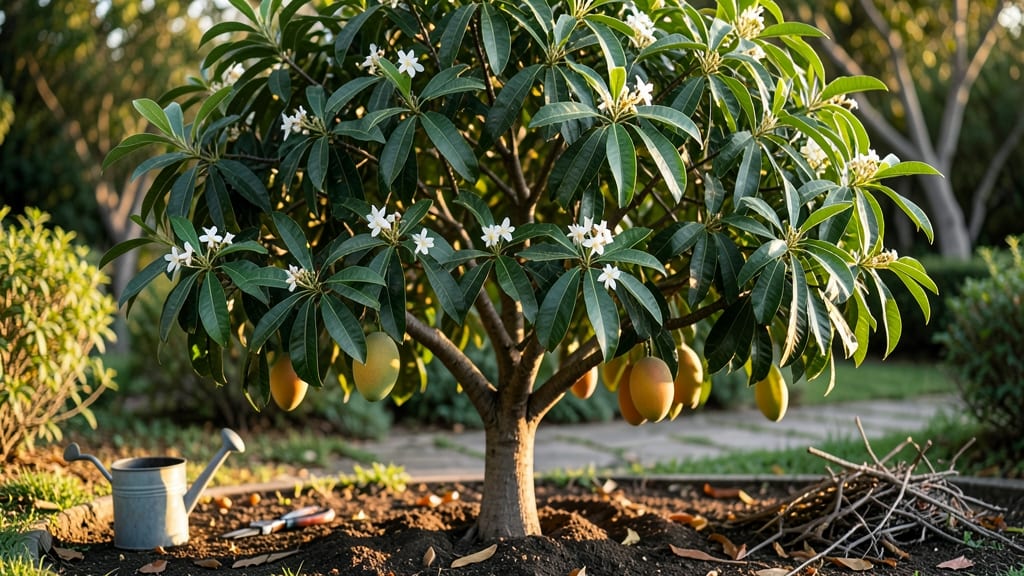
The honey mango tree’s secret to year-round fruit lies in three precise cuts—timed right, they turn a struggling bush into a golden harvest machine. 🌿 I’ve pruned mine for five seasons now, and the difference between a sparse crop and buckets of ripe fruit comes down to these strategic snips.
The tree rewards patience: each cut opens up sunlight to developing fruit while shaping the canopy for maximum air circulation.
You’ll need sharp pruners, a ladder (for higher branches), and a clear day to work—no rushing. The first cut happens right after harvest to encourage new growth, the second in late winter to remove dead wood, and the third in early summer to thin out crowded branches.
Most gardeners skip the summer pruning, but that’s when you prevent overcrowding and ensure next year’s blossoms get the light they need.
What you’ll end up with is a tree heavy with fruit—sweet, honey-flavored mangoes that ripen steadily instead of all at once. The branches stay sturdy, pests have fewer hiding spots, and you avoid the common mistake of over-pruning, which stresses the tree.
Even in hot climates, this method keeps the tree productive without burning out.
Works for both container-grown trees and in-ground plantings, though larger specimens benefit most. The key is consistency—stick to the timing, and you’ll see the difference in just one growing season. Ready to transform that lopsided tree into a fruit-bearing powerhouse?
📚 In This Guide
- What you need
- Instructions
- Tips and common mistakes
- Wrapping up and next steps
What you need
- ● Pruning shears: Bypass pruners (sharp, 6–8" blades) – 1 pair (for small branches).
- ● Loppers: Bypass or anvil type (16–24" blades) – 1 pair (for medium branches up to 2" thick).
- ● Pruning saw: Curved-tooth or folding saw – 1 (for thick branches 2"+).
- ● Disinfectant: 70% isopropyl alcohol or bleach solution (1 part bleach : 9 parts water) – small spray bottle (to prevent disease spread).
- ● Gloves: Heavy-duty, cut-resistant – 1 pair (protects from thorns and sap).
- ● Tarp or drop cloth: Heavy-duty plastic (6'x8' or larger) – 1 (to collect debris).
- ● Rubbing alcohol or hand sanitizer: – small bottle (for cleaning tools between cuts).
- ● Pole saw or pruning pole: Extendable – 1 (for high branches).
- ● Tree wound dressing: Pruning sealant – small tube (controversial but useful for large cuts).
- ● Marking spray: Bright paint or chalk – small can (to mark cuts for future reference).
- ● Safety glasses: – 1 pair (for debris protection).
- ● Ladder: Sturdy, extendable – 1 (if tree is over 6' tall).
How to prune a honey mango tree for continuous harvests
Three well-timed cuts keep your tree productive and healthy year-round.
✂️ Step 1: Perform a Light Winter Cleanup (Late February)
This is your first cut of the year—focus on removing anything dead or damaged. Grab your pruning shears and start at the bottom, working your way up. Look for branches that are brown, brittle, or completely leafless; these won’t recover and are just draining energy from your tree.
Make clean cuts just outside the branch collar (the swollen area where the branch meets the trunk). Avoid cutting flush with the trunk—this creates wounds that heal poorly. If you’re unsure, cut back to a healthy bud or side branch. You’ll see new growth emerge from these areas in spring, signaling you’ve done it right.
I like to take this step after the last frost but before new growth starts. The tree is dormant, so it won’t bleed sap excessively, and you’re not interfering with its natural cycle. Limit yourself to no more than 20-25% of the tree’s total branches—this keeps the tree from getting stressed.
✂️ Step 2: Thin and Shape for Airflow (Mid-June)
Now’s the time to open up the canopy and improve airflow. Start by removing any branches that are crossing or rubbing against each other—they’ll eventually damage each other and create entry points for disease. Use your pruning shears to make a clean cut at the branch collar.
Next, focus on thinning out dense areas. Look for branches that are growing inward or downward—they’ll compete with the main structure and reduce fruit production. Aim to remove one-third of the smaller, interior branches to let sunlight reach the center of the tree. You’ll notice the tree’s shape becoming more open and balanced.
Here’s the thing—don’t overdo it. The goal is to improve airflow, not strip the tree bare. Leave enough foliage to maintain photosynthesis. If you’re unsure, step back and look at the tree from a distance—you should still see a full, lush appearance after pruning.
✂️ Step 3: Post-Harvest Maintenance (Late August)
After your tree has produced fruit, it’s time for a final trim to prepare for the next cycle. Start by removing any fruit-bearing branches that are now weak or spindly—they won’t support heavy fruit loads next season. Cut them back to a strong lateral branch or bud.
Next, look for any suckers or water sprouts (fast-growing, vertical shoots) that have popped up. These are energy vampires—they sap nutrients from the rest of the tree. Snip them off at the base with your pruning shears. You’ll see fewer of these next year if you stay on top of them now.
Finally, give the tree a light shaping touch if needed. This isn’t about drastic changes—just tidying up any uneven growth or branches that are growing in awkward directions. The goal is to keep the tree’s natural form while encouraging a strong structure for next year’s fruit.
Tips & tricks for perfect honey mango tree pruning
Keeping your honey mango tree productive takes patience and precision—here's how to avoid common mistakes and maximize fruit yields.
Timing is Everything: The three-step schedule in late February, mid-June, and late August aligns perfectly with the tree's natural cycles. In Step 1, wait until after the last frost but before buds swell—this dormant period minimizes stress. For Step 2, aim for mid-June when new growth is established but before summer heat stresses the tree. In Step 3, prune after harvest when the tree has already allocated energy to fruit production.
Tool Selection Matters: Always use sharp, clean pruning shears—not dull tools that crush branches. For larger branches, upgrade to a pruning saw with a curved blade for cleaner cuts. I've ruined multiple cuts trying to force small shears on thick branches—don't make my mistake! Sterilize your tools between cuts with rubbing alcohol to prevent disease spread, especially during the mid-June thinning when wounds are most vulnerable.
Visual Cues for Healthy Cuts: When making cuts in Step 1 or Step 2, look for the branch collar—the swollen area where the branch meets the trunk. Your cut should be just outside this collar, creating a smooth, sloped surface. If you cut flush with the trunk, you'll create a wound that takes years to heal. For Step 3's weak branches, cut back to a strong lateral branch or outward-facing bud—you'll see new growth emerging from these points within weeks.
Stress Management: Never remove more than the recommended 20-25% in Step 1 or one-third of interior branches in Step 2. I learned this lesson the hard way when I over-pruned in Step 2 and saw reduced fruit set the following season. The tree needs enough foliage to maintain photosynthesis while still allowing light penetration. Step back frequently to assess—your tree should still look full and lush after pruning.
Pro Tips for Honey Mango Tree
- Keeping your honey mango tree productive takes patience and precision—here's how to avoid common mistakes and maximiz...
- Timing is Everything: The three-step schedule in late February, mid-June, and late August aligns perfectly with the t...
- Tool Selection Matters: Always use sharp, clean pruning shears—not dull tools that crush branches. For larger branche...
Frequently asked questions
Got questions about keeping your honey mango tree fruitful and healthy? You’re not alone! Here are answers to the most common queries—so you can prune with confidence and enjoy that sweet harvest year-round.
When is the best time to prune a honey mango tree?
The ideal times are late winter/early spring (just before new growth starts) and summer (after fruit sets). Avoid pruning during heavy flowering or fruiting—this can stress the tree. For tropical climates, light pruning can happen year-round, but focus on structural cuts in dry seasons.
How do I know if I’m pruning too much?
If your tree drops more than 25% of its leaves or shows signs like yellowing foliage or stunted growth, you’ve likely over-pruned. Honey mango trees are resilient but thrive with moderate cuts—aim for 10-20% of the canopy per session. Always leave 3-5 main branches for balance.
Will pruning reduce my honey mango yield?
Not if done right! Strategic pruning boosts fruit quality and quantity by improving airflow and sunlight penetration. Focus on removing dead/diseased wood and thinning crowded branches. Over time, you’ll get bigger, sweeter mangoes with fewer pests. Patience is key—yield may dip slightly the first year but rebounds stronger.
Can I prune a honey mango tree in hot weather?
Yes, but with caution. Prune in early morning or late afternoon to avoid heat stress. If temperatures exceed 90°F (32°C), wait for cooler months. Water deeply before and after pruning, and avoid heavy cuts—stick to light shaping to prevent shock. Mulch the base to retain moisture.
What if my tree isn’t fruiting after pruning?
Check these fixes:
- Light exposure: Ensure the tree gets 6+ hours of sunlight daily.
- Nutrients: Fertilize with potassium-rich organic matter (like banana peel tea) during flowering season.
- Pollination: Hand-pollinate with a soft brush if bees are scarce.
- Age: Young trees (<3 years) may need time—be patient!
Pro Tip:
Label your cuts! Use masking tape to mark branches you’ve pruned (e.g., “2024 Shape Cut”) to track progress and avoid over-pruning in future sessions.
Wrapping up and next steps
The honey mango tree thrives with the right pruning strategy—just three targeted cuts a year can keep it fruitful, healthy, and full of sweet rewards! 🌿 By focusing on structural shaping, disease prevention, and seasonal maintenance, you’ll ensure a bountiful harvest while extending your tree’s lifespan.
Whether you’re a pruning pro or just starting, these steps are your secret to year-round success.
Ready to transform your backyard? Grab your tools, pick a sunny day, and get pruning! Your future mango feasts will thank you. 🍈✨