
Pruning
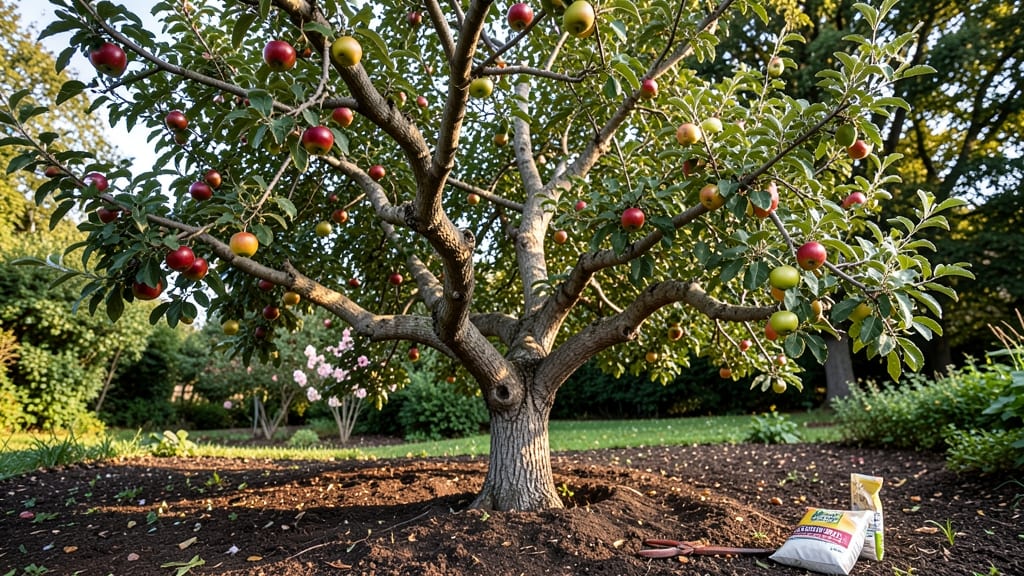
Planting a large apple tree in your yard isn’t just about fruit—it’s about creating a living legacy that feeds your family for decades. 🌳 I’ve watched my own tree grow from a sapling to a sturdy shade provider, and the key to its success was starting with the right soil and space.
Most people underestimate how much room those roots need, but a well-planted tree means fewer struggles later with weak branches or poor harvests.
The foundation starts with 6 feet of clear space around the trunk and soil rich in organic matter. I mix in composted manure and a slow-release fertilizer at planting time—this gives the tree a head start on nutrients.
Pruning young trees in late winter isn’t just about shaping; it’s about teaching the branches to grow strong and spread evenly. My tree now produces 100+ pounds of fruit annually, and it all starts with these early choices.
Year-round care keeps that harvest coming. Summer means watering deep and mulching thick, while winter pruning removes dead wood before buds swell. The secret? Consistent maintenance—not just when you notice problems.
I’ve seen trees wither because owners ignored early signs of stress, but with this approach, your tree will reward you with crisp apples and sturdy branches for generations.
Whether you’re planting in spring or fall, the principles stay the same. Choose a disease-resistant variety for your climate, and don’t rush the process—strong trees take time. The payoff? A backyard that’s not just beautiful, but productive, for decades to come.
📚 In This Guide
- What you need
- Instructions
- Tips and common mistakes
- Wrapping up and next steps
What you need
- ● Apple tree sapling or bare-root tree: Choose a dwarf, semi-dwarf, or standard-size variety (e.g., Honeycrisp, Granny Smith, or Fuji).
- ● Ensure it’s disease-resistant (e.g., fire blight or apple scab-resistant).
- ● Well-draining soil: Aim for a mix of loamy soil with a pH of 6.0–7.0.
- ● Organic compost or fertilizer: 5-10-10 NPK ratio (or compost tea for organic growers).
- ● Mulch: Wood chips or straw (2–4 inches thick) to retain moisture.
- ● Drip irrigation system or hose with a gentle spray nozzle.
- ● Pruning tools: Sharp bypass pruners (for small branches).
- ● Lopper shears (for thicker branches).
- ● Pruning saw (for large branches 1–2 inches in diameter).
- ○ Grafting tools (optional but helpful): Grafting knife or whip-and-tongue graft kit if propagating from cuttings.
- ● Tree supports: Stakes and ties (for young trees) or a strong trellis system.
- ● Protective gear: Gloves, safety goggles, and long sleeves (for thorny varieties).
- ● ✅ Sunlight: Full sun (6–8+ hours daily) for optimal growth.
- ● ✅ Space: 12–20 feet between trees (depending on variety).
- ● ✅ Water access: Consistent moisture, especially during flowering and fruiting seasons.
- ● ✅ Patience: Large apple trees take 3–5 years to bear fruit!
How to plant and maintain a thriving large apple tree
Here's the straightforward approach I've used to grow sturdy, productive apple trees that last decades.
🌱 Step 1: Choose the Perfect Location and Planting Time
Apple trees need full sun exposure—at least 6-8 hours daily—so pick a spot with open sky to the south. Avoid low areas where cold air settles, as frost can damage blossoms. Spring is ideal for planting, but you can also do it in early fall if your climate has mild winters.
Dig a hole twice as wide as the root ball but only as deep as the container the tree came in. This prevents burying the graft union too deep, which can cause disease. Loosen the roots gently if they're circling the root ball—this encourages outward growth instead of strangling the tree.
🌿 Step 2: Prepare Soil and Plant with Proper Support
Mix the native soil with 2-3 inches of compost at the bottom of the hole to improve drainage and fertility. Apple trees prefer slightly acidic soil (pH 6.0-7.0), so test your soil before planting. If needed, add sulfur or lime to adjust the pH.
Place the tree in the hole so the graft union (the bump near the base) sits 2-3 inches above soil level. This protects it from rot while allowing the roots to establish. Backfill with the soil mix, tamping lightly as you go to remove air pockets. Water deeply to settle the soil around the roots.
☀️ Step 3: Water Deeply and Mulch for Long-Term Health
After planting, water the tree once a week for the first month, providing 10-15 gallons each time. This encourages deep root growth. Avoid wetting the leaves or fruit to prevent fungal diseases like apple scab. Use a soaker hose or drip irrigation for targeted watering.
Spread 3-4 inches of organic mulch (like wood chips or straw) around the base, keeping it 6 inches away from the trunk. Mulch retains moisture, regulates soil temperature, and suppresses weeds. Refresh the mulch annually, but never pile it against the trunk—this can cause rot.
✂️ Step 4: Prune for Strength and Fruit Production
Prune your apple tree in late winter or early spring before buds swell. Remove dead, diseased, or crossing branches first to improve airflow. Cut back water sprouts (vertical shoots) to redirect energy into fruit production. Aim to keep the tree open-centered, with light penetrating the interior.
Use clean, sharp pruners to make cuts just outside the branch collar (the swollen area where the branch meets the trunk). Avoid leaving stubs, as they invite decay. Thin out crowded branches to 6-8 inches apart—this prevents overcrowding and improves fruit size and quality.
🪴 Step 5: Fertilize and Monitor for Pests/Diseases
Apply a balanced fertilizer (10-10-10 or similar) in early spring when new growth begins. Follow package instructions for amounts—over-fertilizing can burn roots. Apple trees also benefit from organic matter, like composted manure or leaf mold, worked into the soil annually.
Watch for common pests like aphids, codling moths, and apple maggots. Use horticultural oil or neem oil for early infestations, and row covers during bloom to protect against insects. For fungal diseases, apply copper fungicide preventatively in wet climates. Regularly inspect leaves and fruit for signs of trouble.
Tips & tricks for perfect large apple tree care
Here's what nobody tells you about growing a thriving fruit tree that actually produces year after year.
Location Insight: That 6-8 hours of daily sun is non-negotiable—apple trees won't fruit well with less. I've seen trees in partial shade produce tiny, sour apples. If your yard has limited sun, consider a dwarf variety that can be grown in containers and moved to sunnier spots during winter. The south-facing exposure is crucial because it warms up faster in spring, giving blossoms a head start before frost.
Soil Prep Secret: The 2-3 inches of compost at planting isn't just about nutrients—it's about creating the perfect air-to-soil ratio around those roots. I like to mix in a handful of mycorrhizal fungi powder with the compost. This beneficial fungus forms a symbiotic relationship with your tree's roots, helping them absorb water and nutrients more efficiently. Think of it as giving your tree a built-in root system upgrade.
Watering Wisdom: Those first 10-15 gallons per week might seem like a lot, but young trees need deep watering to establish strong root systems. I've seen many gardeners water lightly every day instead, which encourages shallow roots that struggle when drought hits. Water slowly at the base using a soaker hose—this prevents runoff and ensures water penetrates deep. The goal is to wet the soil down to 12-18 inches, not just the top few inches.
Pruning Pro Tip: When thinning branches to 6-8 inches apart, aim for an open vase shape rather than a dense center. This isn't just about airflow—it's about sunlight penetration. The inner branches need that light to produce fruit. I like to prune in stages: first remove the dead/diseased wood, then thin out crowded branches, and finally shape the tree. Always make clean cuts just outside the branch collar to prevent infection. And here's a little-known trick: paint the cuts with tree wound pruning sealant to reduce moisture loss and infection risk.
Pro Tips for Large Apple Tree
- Here's what nobody tells you about growing a thriving fruit tree that actually produces year after year.
- Location Insight: That 6-8 hours of daily sun is non-negotiable—apple trees won't fruit well with less.
- Soil Prep Secret: The 2-3 inches of compost at planting isn't just about nutrients—it's about creating the perfect air-to-soil ratio around those roots.
Frequently asked questions
Got questions about growing and maintaining a large apple tree?
You’re not alone! Here are some of the most common queries—plus straightforward answers to help you keep your tree thriving and productive.
How often should I prune a large apple tree?
Prune your large apple tree once a year, ideally in late winter or early spring (before buds swell). This timing promotes healthy growth and prevents disease. For established trees, focus on removing dead, crossing, or overcrowded branches. Pro tip: Avoid heavy pruning in fall—it can invite pests and fungal infections.
When will my large apple tree start producing fruit?
Patience is key! Most large apple trees take 3–5 years to bear fruit after planting, though dwarf varieties may fruit sooner (1–2 years). Factors like variety, soil quality, and sunlight play a role. Choose disease-resistant cultivars like ‘Honeycrisp’ or ‘Gala’ for faster, reliable harvests.
Why are my apple tree branches breaking under fruit weight?
Weak branches often result from overloaded fruit or poor pruning. Thin out excess fruit clusters to reduce weight, and prune to improve airflow and structural strength. Use tree ties or spreaders for heavy branches, and consider cabling for long-term support.
Can I grow a large apple tree in a small yard or container?
Large apple trees (like ‘Granny Smith’) need space, but dwarf or semi-dwarf varieties (e.g., ‘Columnar’ or ‘Spindle Bush’) thrive in containers or tight spaces. Ensure the container is at least 20 gallons with drainage, and provide full sun (6+ hours/day). Rootstock choice matters—ask a nursery for compact options!
How do I prevent pests (like aphids or borers) in my apple tree?
Start with preventative care: Prune for airflow, remove fallen fruit, and apply organic neem oil or insecticidal soap early in the season. For borers, wrap the trunk with tree banding tape to trap adults. Monitor for signs like sawdust-like frass or oozing sap—act fast to protect your tree!
Wrapping up and next steps
Growing a large apple tree is a rewarding journey that combines patience, care, and a little horticultural know-how. By mastering pruning techniques, understanding seasonal needs, and strengthening branches, you can enjoy a bountiful, year-round harvest that’s both beautiful and productive. 🍏✨
Now that you’re equipped with the secrets to fostering a robust tree, it’s time to roll up your sleeves and get started! Pick a sunny spot, gather your tools, and begin your pruning plan today. With consistency and love, your apple tree will thrive—and so will your fruit basket!