
Pruning
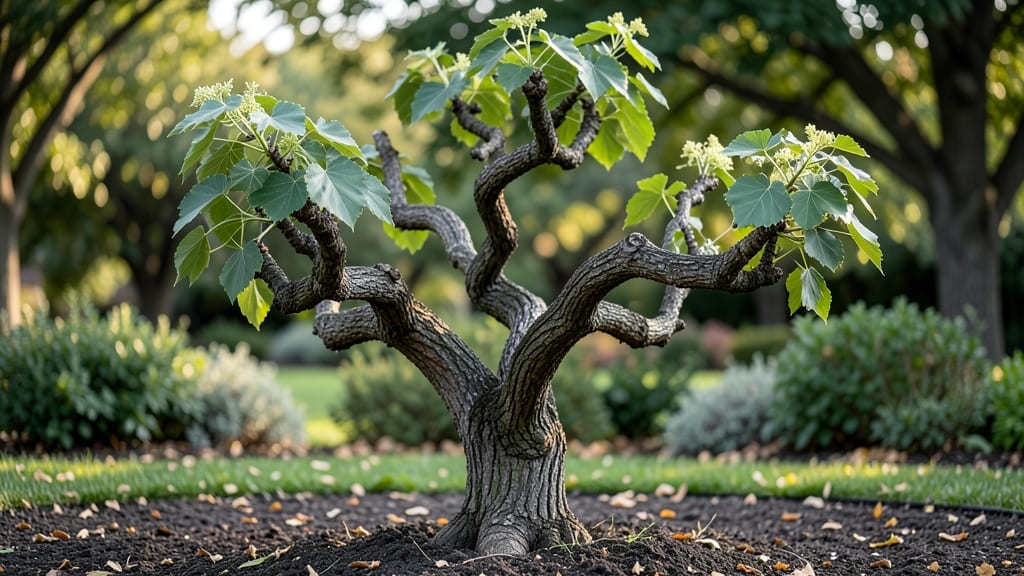
The contorted mulberry tree (Morus alba 'Tortuosa') turns your garden into a living sculpture with its sinuous trunk and delicate foliage. 🌿 I’ve grown mine for five years now, and it’s become the centerpiece of my shade garden—no pruning required after the first year.
The branches twist naturally, creating an architectural focal point that looks stunning year-round, whether draped in spring blossoms or winter’s bare, gnarled limbs.
This tree thrives with minimal fuss: plant it in well-draining soil, give it morning sun and afternoon shade, and water deeply once a week. Unlike other mulberries, it doesn’t produce invasive fruit, making it perfect for urban gardens or small yards.
My 10-foot specimen stays compact without intervention, proving that beauty doesn’t always demand high maintenance.
By late summer, you’ll notice the foliage turning golden—an unexpected bonus—and the twisted branches will cast intricate shadows on your patio. The best part? It’s deer-resistant and handles drought better than most ornamental trees. Once established, it’s practically self-sufficient, rewarding you with drama without the upkeep.
Whether you’re planting a single specimen or using it as a privacy screen, this tree adapts to almost any landscape. In colder zones, just mulch well in winter to protect its roots. Ready to add a living masterpiece that grows on its own terms?
📚 In This Guide
- What you need
- Instructions
- Tips and common mistakes
- Wrapping up and next steps
What you need
- ● Pruning shears: Bypass pruners (for small branches, 1/4"–3/8" cutting capacity)
- ● Loppers: For thicker branches (3/8"–1.5" cutting capacity)
- ○ Pruning saw: Curved-tooth saw for stubborn, larger limbs (optional but handy)
- ● Gloves: Heavy-duty, cut-resistant gloves (protects from thorns and sap)
- ● Disinfectant: 70% isopropyl alcohol or pruning sealant (to prevent disease spread)
- ○ Pruning paint/sealant: (optional) For sealing large cuts (>2" diameter)
- ● Ladder or step stool: (if tree is >6 ft tall)
- ● Trash bags: For collecting debris (1–2 large bags)
- ● Weather check: Prune on a dry, calm day (avoid wind or rain)
- ● Safety glasses: Protects eyes from debris
- ● Long sleeves/pants: Mulberry sap can irritate skin
- ○ First-aid kit: (optional but smart) For minor cuts or scrapes
- ● Water & snacks: (pro tip) Hydration breaks keep you energized!
Step-by-step guide to planting and caring for a contorted mulberry tree
Here's how to get started with this stunning, low-maintenance landscape star.
🌱 Step 1: Choose the Perfect Planting Site
Contorted mulberry thrives in full sun to partial shade, but the more sunlight it gets, the more dramatic its twisted branches become. Look for a spot with at least 6 hours of direct sun daily—this is where the tree's signature contorted growth really shines. I always pick a location with good air circulation to prevent fungal issues, especially in humid climates.
Check the soil pH before planting—contorted mulberries prefer slightly acidic to neutral soil (6.1-7.5). If your soil is heavy clay or very sandy, amend it with 2-3 inches of compost mixed into the top 12 inches of soil. The tree's roots will thank you for the improved drainage and nutrients.
🪴 Step 2: Plant at the Right Depth and Stake for Support
Dig a hole twice as wide as the root ball but only as deep—planting too deeply can suffocate the roots. Gently remove the tree from its container and loosen any circling roots with your fingers. This prevents root girdling as the tree matures.
Place the tree in the hole so the top of the root ball sits 1-2 inches above ground level. The graft union (if present) should remain above soil line. Backfill with native soil, tamping lightly every 2 inches to remove air pockets. Water deeply to settle the soil, then add 2-3 inches of mulch around the base, keeping it 3 inches away from the trunk.
☀️ Step 3: Water Consistently During Establishment
For the first 2 months, water your contorted mulberry deeply 2-3 times per week—enough to moisten the soil 12-18 inches deep. You'll know you've watered enough when the soil feels damp but not soggy at that depth. Overwatering can lead to root rot, especially in heavy soils.
After the initial establishment period, reduce watering to once per week unless your area experiences extreme heat or drought. The tree's contorted branches help it conserve moisture, but young specimens still need consistent hydration. Watch for wilting leaves—they're your signal to water more frequently.
✂️ Step 4: Prune Strategically for Year-Round Interest
Contorted mulberry requires minimal pruning, but you can shape it lightly in late winter or early spring before new growth begins. Remove any dead, diseased, or crossing branches using clean, sharp pruners. I always make cuts just outside the branch collar to promote faster healing.
To enhance the tree's natural contorted form, you can gently tie young branches into desired positions using soft plant ties. Never force branches—let them grow naturally while guiding them with minimal intervention. The tree's unique shape develops over time, so patience is key.
Tips & tricks for perfect contorted mulberry tree planting
Real talk: The secret to a showstopping contorted mulberry isn't complicated—it's about the little details that make all the difference.
Sunlight Strategy: While the instructions mention 6 hours of sun, I recommend positioning your tree where it gets morning sun and afternoon shade in hot climates. The dramatic twisting happens best with consistent light exposure, but afternoon shade prevents leaf scorch—especially in regions with intense summer heat. Think of it as giving your tree the perfect balance between drama and durability.
Root Ball Rescue: When removing your contorted mulberry from its container, I learned the hard way that circling roots can strangle growth. Use your fingers to gently separate any roots that have wrapped around the container's edge—this prevents girdling as the tree matures. Pro tip: If you notice severe root circling, make two or three vertical cuts on the bottom of the root ball to encourage outward growth.
Mulch Magic: That 2-3 inches of mulch around your tree isn't just decoration—it's a moisture shield and temperature regulator. I always use organic mulch like shredded bark or wood chips, keeping it 3 inches away from the trunk to prevent rot. For extra protection in winter, add an additional 2 inches of mulch after the first frost to insulate roots during cold snaps.
Watering Wisdom: The 2-3 times per week during establishment might seem like a lot, but here's what nobody tells you—water deeply enough that the soil stays damp 12-18 inches down. I use a soil probe or long screwdriver to check moisture levels. If it comes out dry, you need to water again. This deep watering encourages strong root development that supports those stunning contorted branches.
Pro Tips for Contorted Mulberry Tree
- Real talk: The secret to a showstopping contorted mulberry isn't complicated—it's about the little details that make all the difference.
- Sunlight Strategy: While the instructions mention 6 hours of sun, I recommend positioning your tree where it gets morning sun and afternoon shade in hot climates.
- Root Ball Rescue: When removing your contorted mulberry from its container, I learned the hard way that circling roots can strangle growth.
Frequently asked questions
Got questions about the contorted mulberry tree? You’re not alone! This unique tree is prized for its striking shape and low-maintenance care, but it’s natural to wonder about its quirks. Below, we’ve answered the most common questions to help you nurture your tree with confidence.
How do I encourage my contorted mulberry tree to grow in a more twisted shape?
A contorted mulberry’s gnarled form is genetic, but you can enhance it by avoiding heavy pruning. Instead, gently guide branches with soft ties (like tree tape) during early growth to accentuate its natural twists. Avoid cutting healthy growth—this tree thrives on its wild, sculptural look! For dramatic results, plant it in well-draining soil and full sun, which intensifies its contorted habit.
When is the best time to prune a contorted mulberry tree?
Prune late winter or early spring (before buds swell) to avoid stressing the tree. Remove only dead, diseased, or crossing branches—never more than 10-15% of the canopy at once. This tree’s beauty lies in its unrefined structure, so minimal trimming preserves its charm. Never prune in fall, as it can stimulate late-season growth vulnerable to frost damage.
Can I grow a contorted mulberry tree in a container?
Yes! While they’re typically grown in the ground, contorted mulberries adapt well to large containers (15+ gallons) with drainage holes. Use a fast-draining potting mix (like 60% soil, 30% perlite, 10% compost) and repot every 2–3 years. Keep it in full sun and water deeply when the top inch of soil dries out. Just know: container-grown trees may grow slower and need occasional root pruning.
Are contorted mulberry trees messy? Do they drop fruit or leaves?
Not as messy as other mulberries! While they produce edible (but tart) berries, they’re less prolific than standard mulberries. The fruit is small and often falls in late summer, but it’s rarely a nuisance. Leaves turn golden-yellow in fall and drop cleanly. For minimal cleanup, rake occasionally—this tree’s low-litter habit is one of its perks!
Why are my contorted mulberry tree’s leaves yellowing or wilting?
Yellowing leaves often signal overwatering or poor drainage. Let the soil dry between waterings, and ensure your tree’s planted in well-draining soil. Wilting can also mean underwatering or root stress—check for compacted soil or roots circling in containers. If pests (like spider mites) are to blame, hose off leaves with water or use neem oil for a gentle treatment.
What are some great alternatives if I want a twisted tree but not mulberry?
If you love the contorted look but want variety, try these low-maintenance options:
- Japanese Snowbell (Styrax japonicus) – Delicate flowers and natural twists.
- Corkscrew Willow (Salix matsudana ‘Tortuosa’) – Dramatic spiraled branches.
- Contorted Filbert (Corylus avellana ‘Contorta’) – Silver bark and zigzag growth.
- Dwarf Korean Lilac (Syringa meyeri ‘Palibin’) – Compact and uniquely shaped.
Wrapping up and next steps
The contorted mulberry tree is a stunning, low-maintenance addition to any garden, offering year-round charm with its twisted branches and vibrant foliage—all while requiring minimal pruning. Whether you're a seasoned gardener or a beginner, its resilience and beauty make it a standout choice for effortless landscaping. 🌿
Ready to transform your outdoor space? Start by planting one today and enjoy its unique allure with confidence—your future self (and your garden!) will thank you.