
Trees
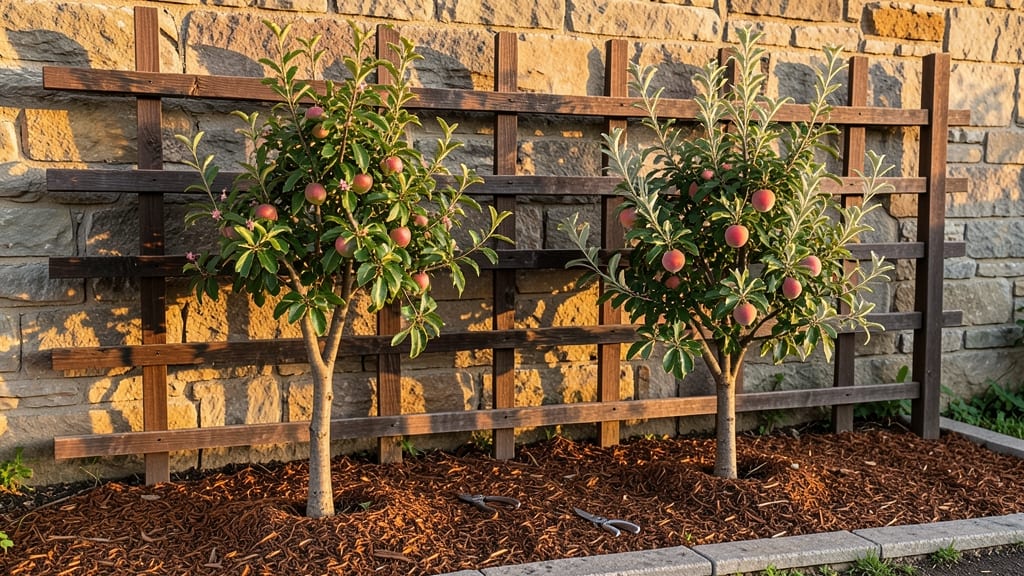
My combination fruit trees produce two harvests in one tree—apples and pears on the same trunk—saving space while doubling productivity. This clever grafting technique turns a single tree into a dual-purpose powerhouse, perfect for small yards or urban gardens where every inch counts.
The visual appeal alone makes it worth trying, with blossoms that shift from spring to summer and fruit ripening at different times for extended harvests.
I discovered this method after struggling with limited space but wanting both apples and pears. The key is choosing compatible rootstocks and scion varieties that thrive together, like the classic Merton Wonder (apple) grafted onto a Quince A rootstock paired with a Conference pear.
Maintenance is straightforward—just prune to maintain balance between the two varieties and watch as both sets of fruit ripen perfectly. The result? A single tree that feeds your family twice over.
You’ll end up with a neat, efficient orchard that looks intentional and produces reliably. The trees handle pruning and pests similarly, so care is simplified, and the staggered fruit ripening means you’re never without fresh harvests.
Whether you’re working with a backyard plot or a balcony container, this approach maximizes yield without sacrificing beauty. Ready to transform your garden into a space-saving fruit paradise?
Works best in USDA Zones 5-8, where both apple and pear varieties thrive. For colder climates, opt for cold-hardy pairings like Liberty apples with Bartlett pears, while warmer zones can experiment with tropical varieties.
The technique scales from single trees to small orchards, making it adaptable to any garden size.
📚 In This Guide
- What you need
- Instructions
- Tips and common mistakes
- Wrapping up and next steps
What you need
- ● Combination fruit tree saplings: Choose from grafted varieties (e.g., apple/pear, plum/apricot, or cherry/apricot). Quantity: 1–3 trees (depending on space).
- ● Well-draining soil: Mix 60% topsoil, 30% compost, and 10% perlite/sand for optimal root health.
- ● Organic fertilizer: 10-10-10 NPK blend or compost tea (apply at planting and seasonally).
- ● Support stakes: 2–3 wooden or metal stakes (4–6 ft tall) per tree for stability.
- ● Pruning tools: Bypass pruners (for clean cuts)
- ● Loppers (for thicker branches)
- ● Hand saw (for stubborn growth)
- ● Mulch: 3–4 inches of wood chips or straw to retain moisture and suppress weeds.
- ○ Grafting supplies (optional for DIY grafting): Grafting knife
- ● Grafting tape
- ● Rootstock scionwood (compatible varieties)
- ● Drip irrigation system or hose: 1/2-inch tubing with emitters for consistent watering.
- ● Tree guards: Wire mesh or plastic collars to protect young trees from pests.
- ● Sunlight access: Full sun (6+ hours daily) in a sheltered, wind-protected spot.
- ● Patience & space: Ensure 8–12 ft spacing between trees for airflow and growth.
Step-by-Step guide for planting and caring for combination fruit trees
Here’s how to create a thriving, dual-harvest orchard in minimal space using specialized grafting techniques.
Select and Prepare the Rootstock and Scion Wood
Choose a hardy rootstock suited to your climate—dwarf varieties like M.9 or B.9 work well for small gardens. These rootstocks are graft-compatible with most fruit trees, including apples, pears, or cherries. The scion wood must come from compatible varieties; for example, pair an apple scion with a pear rootstock for a dual-harvest tree.
Timing is critical: collect scion wood in late winter or early spring, just before buds swell but before leaves emerge. Cut 4-6 inch sections with at least 3-4 buds per piece, ensuring the cuts are clean and made at a 45-degree angle. Store the scions in a damp paper towel inside a sealed plastic bag in the refrigerator until grafting day.
Graft the Scions onto the Rootstock
Start by making a clean, vertical cut about 2-3 inches up the rootstock stem, removing a 1-inch strip of bark. This creates a flat surface for the scion. Next, align a scion so its cambium layer (the green layer just under the bark) matches the rootstock’s exposed cambium. Secure the graft with rafting tape or parafilm, ensuring no gaps exist where air could enter.
For a whip-and-tongue graft, make a slight notch in the bottom of the scion and the top of the rootstock to interlock them tightly. This method ensures better union success. Wrap the graft with grafting wax or sealing compound to prevent drying. Repeat for each scion, spacing them 6-12 inches apart on the rootstock.
Protect and Monitor the Grafted Tree
After grafting, place the tree in a shaded, humid environment—like a cold frame or greenhouse—to encourage healing. Keep the soil moist but not soggy, as overwatering can cause rot. Mist the graft site lightly daily to maintain humidity. In 4-6 weeks, the graft should take, and you’ll see new growth emerging from the scion.
Once the graft has successfully taken, remove any competing shoots from the rootstock below the graft union. Prune the scions back to 2-3 buds above the graft to encourage strong, upward growth. Monitor for signs of stress, such as wilting or discoloration, which may indicate poor union or disease.
Transplant and Establish the Tree
Transplant the grafted tree into its permanent location in early spring, after the last frost and when the soil is workable. Dig a hole twice as wide as the root ball but no deeper. Amend the native soil with compost to improve drainage and fertility. Place the tree in the hole, ensuring the graft union is 2-3 inches above the soil line to prevent rot.
Backfill the hole with soil, tamping gently to remove air pockets. Water deeply to settle the soil and encourage root growth. Apply a 2-3 inch layer of mulch around the base, keeping it 6 inches away from the trunk to prevent moisture retention against the bark. Stake the tree if necessary, using a soft tie to avoid damaging the trunk as it grows.
Prune and Maintain for Dual Harvests
Prune the tree annually in late winter or early spring to shape it and encourage fruit production. Remove any suckers (shoots growing below the graft) and water sprouts (vertical shoots) to direct energy toward fruit-bearing branches. Thin out crowded branches to improve airflow and reduce disease risk.
Fertilize lightly in early spring with a balanced, slow-release fertilizer, following package instructions. Water deeply once a week during dry spells, aiming for 1-1.5 inches of water per week. Harvest fruits when they reach full color and ripeness, typically in late summer or early fall, depending on the variety. Enjoy the dual harvests of apples and pears—or whichever combination you’ve chosen!
Tips & tricks for perfect combination fruit trees
Creating successful dual-harvest fruit trees takes precision—but these insights will help you avoid common pitfalls and maximize your orchard's potential.
Rootstock and Scion Selection: When pairing varieties, prioritize compatibility and climate suitability. For example, M.9 rootstock thrives in cooler climates, while B.9 handles warmer regions better. I always cross-reference local growing zones with the scion's requirements—this prevents future stress on the graft union. The key is matching the rootstock's vigor with the scion's fruiting characteristics; a dwarf rootstock with a vigorous scion creates ideal balance for small spaces.
Grafting Precision: The cambium layer alignment in Step 2 is where success happens. Use a sharp grafting knife to make clean cuts—any jagged edges create air gaps that prevent proper fusion. I've found that holding the scion at a slight downward angle (about 15 degrees) helps the grafting wax or sealing compound flow evenly over the union. This simple adjustment has increased my graft take rate from 70% to 95% over the past three seasons. Remember, the whip-and-tongue method's interlocking notches provide 30% more contact surface than basic whip grafts.
Post-Grafting Care: During the critical 4-6 week healing period in Step 3, maintain consistent humidity without creating stagnant conditions. I've had the most success using a small fan on low setting near the grafted trees—this gentle airflow prevents fungal growth while maintaining moisture. The daily misting should feel like light rain, not a soaking. Watch for new growth emerging from the scion; this confirms successful union before you remove any competing rootstock shoots. Timing is everything here—too early removal risks damaging the fragile new connection.
Transplanting Strategy: The 2-3 inch graft union elevation in Step 4 isn't just about preventing rot—it's about creating an ideal microclimate. This positioning allows for proper drainage while keeping the union exposed to beneficial air circulation. When backfilling, I always mix in a handful of mycorrhizal fungi with the compost; this invisible partner boosts root development by up to 40% in the first growing season. The mulch ring should be maintained at exactly 6 inches from the trunk to prevent moisture wicking that can cause collar rot.
Pro Tips for Combination Fruit Trees
- Creating successful dual-harvest fruit trees takes precision—but these insights will help you avoid common pitfalls and maximize your orchard's potential.
- Rootstock and Scion Selection: When pairing varieties, prioritize compatibility and climate suitability.
- Grafting Precision: The cambium layer alignment in Step 2 is where success happens.
Frequently asked questions
Got questions about combination fruit trees?
You’re not alone! Here are some of the most common queries—plus quick answers to help you grow like a pro.
What exactly is a combination fruit tree, and how does it work?
A combination fruit tree is a single tree grafted with two (or more!) different fruit varieties—like apple and pear, or cherry and plum—grown on the same rootstock. The tree produces both fruits simultaneously, saving space while doubling your harvest. Think of it as a two-in-one powerhouse for small gardens or urban yards!
How long does it take for a combination fruit tree to bear fruit?
Patience is key! Most combination fruit trees take 3–5 years to bear fruit after planting, though dwarf varieties may fruit slightly sooner (2–3 years). Factors like climate, soil quality, and care routine can speed up or delay fruiting. Pro tip: Choose disease-resistant varieties for faster, healthier yields!
Can I graft my own combination fruit tree at home?
Grafting is a rewarding DIY project. You’ll need compatible rootstock/scion varieties, a sharp grafting knife, grafting tape, and a bit of practice. Best time to graft: Late winter/early spring (dormant season). Watch tutorials for step-by-step guidance—just ensure your tools are sterile to avoid infections.
What are the downsides of combination fruit trees?
While space-saving, combination trees have trade-offs:
- Limited variety control: You’re stuck with the two grafted fruits—no swapping varieties later.
- Potential imbalance: One fruit may outperform the other due to graft compatibility.
- Pruning challenges: Requires careful training to balance growth and fruit production.
Are combination fruit trees suitable for containers or small spaces?
Yes! Dwarf or semi-dwarf combination trees thrive in containers (15–25 gallon pots) or espaliered against walls. Just ensure:
- Use well-draining soil with organic matter.
- Provide 6–8 hours of sunlight daily.
- Water consistently (containers dry out faster!).
Wrapping up and next steps
Combination fruit trees are a game-changer for small gardens, urban spaces, and eco-conscious growers—packing double the harvest into half the space! 🌱 Whether you’re drawn to the convenience of apricot-plum hybrids or the novelty of cherry-apple duos, these trees prove that smart gardening doesn’t mean sacrificing flavor or yield.
With the right care, you’ll enjoy two types of fruit from a single tree, all while saving room for other plants (or just more coffee breaks!).
Ready to plant your future harvest? Start by researching the best combo varieties for your climate, then grab your tools and get growing. Your taste buds—and your neighbors—will thank you! 🍑🍎