
Pruning
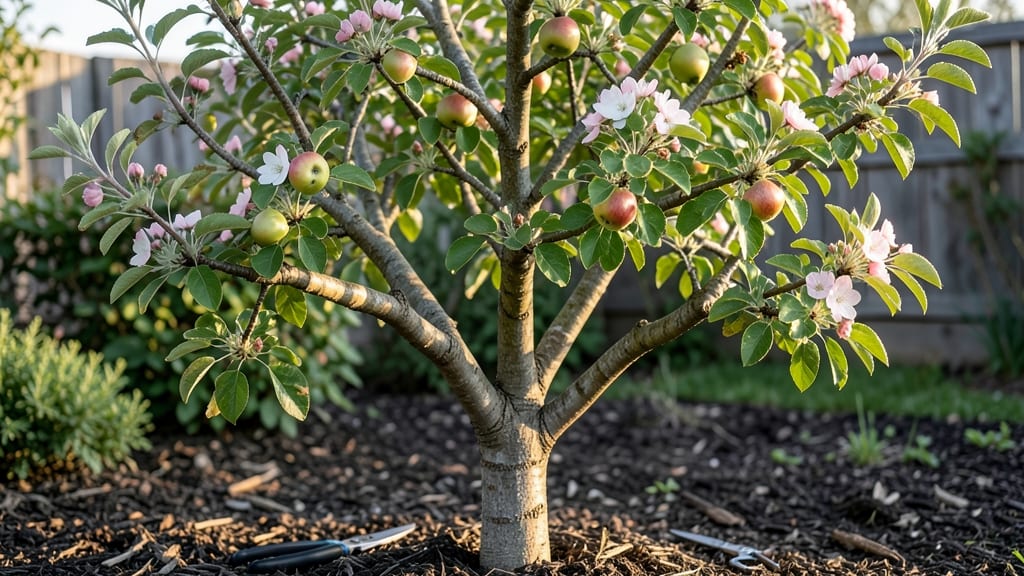
Imagine stumbling upon a surprise apple tree in your own backyard—its delicate blossoms peeking over a fence or its glossy leaves framing your patio. 🌿 These dwarf varieties turn small spaces into magical orchards without the commitment of full-size trees.
My first "hidden" apple tree now anchors my tiny courtyard, producing enough fruit for jam and a few grateful neighbors.
The secret lies in choosing the right variety—like 'Columnar' or 'Sentinel' apples—that grow just 6–12 feet tall, perfect for containers or tight corners. You’ll need well-draining soil, a sunny spot, and a sturdy trellis if you’re growing vertically.
The real magic happens when you pair it with climbing roses or fragrant herbs—their combined scents turn an ordinary corner into a fragrant surprise.
By midsummer, you’ll be harvesting crisp, sweet apples that taste like childhood memories. The tree’s compact size means no ladder needed, just easy picking from a chair or stool.
This isn’t just a tree—it’s a conversation starter, a shade provider, and a year-round focal point that keeps evolving with the seasons.
Whether you’re tucking it into a raised bed or training it along a fence, dwarf apple trees prove that big rewards fit in small spaces. Let’s make your garden the neighborhood’s best-kept secret—one bite at a time.
📚 In This Guide
- What you need
- Instructions
- Tips and common mistakes
- Wrapping up and next steps
What you need
- ● Dwarf apple tree sapling: Choose a columnar or spindle variety (e.g., ‘Columnar Red Delicious’ or ‘Spindle Liberty’). 1-3 plants (depending on space).
- ○ 5-gallon grow bag or container: 1-2 bags, with drainage holes (minimum 18" deep, 12" wide). Optional: Fabric grow bags for flexibility.
- ● High-quality potting mix: 1 bag (40 lbs). Use a blend designed for fruit trees or mix 60% compost, 30% peat moss, and 10% perlite.
- ● Slow-release fertilizer: 1 lb of 10-10-10 or organic citrus blend (for micronutrients).
- ● Mulch: 2-3 cubic feet of wood chips or straw to retain moisture.
- ● Pruning shears: 1 pair (bypass pruners, sharp and sanitized).
- ● Hand pruners or loppers: 1 set for thicker branches (if needed).
- ○ Grafting tools (optional): 1 grafting knife and grafting tape if propagating from cuttings.
- ● Gloves: 1 pair of gardening gloves (to protect from thorns).
- ● Watering can or hose with nozzle: 1 (with a gentle spray setting to avoid soil erosion).
- ● pH test kit: 1 (to check soil acidity; ideal range: 6.0–6.5).
- ● Support stake or trellis: 1-2 stakes (3–4 ft tall) or a small A-frame trellis for columnar varieties.
- ● Sunlight: 6+ hours of direct sun daily (south-facing spot ideal).
- ● Space: 3–6 ft apart for dwarf trees (or 1–2 ft for columnar varieties).
- ○ Water access: Nearby drip irrigation or a self-watering system (optional but helpful).
- ● Pollination plan: 2+ compatible varieties if growing from seed (or buy a self-pollinating dwarf tree).
Step-by-Step guide to planting and caring for dwarf apple trees
Small spaces can still grow fruit—here's how to make it happen with precision.
🌱 Step 1: Choose the Right Location and Prepare the Soil
Dwarf apple trees thrive in full sun—at least 6-8 hours daily—so pick a spot with no shade from walls or taller plants. I always test the soil first: dig a 6-inch deep hole and check drainage. If water pools after 30 minutes, amend with 2-3 inches of compost to improve aeration.
Dwarf varieties need well-draining, slightly acidic soil (pH 6.0-6.5). Mix 1 cup of bone meal into the planting hole to provide phosphorus for root development. Avoid fresh manure—it can burn tender roots. Real talk: if your soil is heavy clay, blend in 5 gallons of potting mix to lighten it up.
🪴 Step 2: Plant at the Correct Depth and Stake for Support
Dig a hole twice as wide as the root ball but no deeper—dwarf trees sit 1-2 inches higher than their container level. Gently remove the tree from its pot and loosen any circling roots with your fingers. Place it in the hole so the graft union (the bump near the base) sits 2-3 inches above soil level—this prevents rot.
Backfill with native soil mixed with 1 gallon of compost, tamping lightly to remove air pockets. Water deeply until moisture reaches 6 inches down. Install a 4-foot stake at a 45-degree angle and tie the trunk loosely with soft tree tie material—too tight now, and you’ll strangle growth later.
☀️ Step 3: Water and Fertilize for Strong Early Growth
Water deeply 2-3 times per week for the first month, aiming for 1 gallon per tree each time. You’ll know you’re doing it right when the soil feels moist 3 inches down—not soggy, not dry. Dwarf trees have shallow roots, so consistency is key. I set a reminder on my phone because I’ve forgotten more than once.
After 4-6 weeks, apply a balanced 10-10-10 fertilizer at half strength. Dwarf varieties grow fast but need low-nitrogen care to avoid weak wood. Spread ½ cup of fertilizer around the drip line (not touching the trunk) and water it in. Repeat every 6-8 weeks through summer, but cut off by September to encourage dormancy.
✂️ Step 4: Prune for Shape and Disease Prevention
Prune in late winter (just before buds swell) to remove dead, crossing, or inward-growing branches. Use clean, sharp pruners and cut at a 45-degree angle just above an outward-facing bud. I always sanitize my tools with rubbing alcohol between cuts—disease spreads fast in small orchards.
Thin the canopy to let light penetrate the center. Aim for an open-center shape with 5-7 main branches spaced evenly. Avoid heavy pruning—dwarf trees recover slower than standard varieties. Watch for suckers (shoots at the base) and remove them immediately—they drain energy from fruit production.
🍎 Step 5: Pollinate and Protect for a Bountiful Harvest
Most dwarf apple trees need cross-pollination, so plant two compatible varieties (check tags for compatibility). If space is tight, hand-pollinate with a soft paintbrush in spring when flowers open. I do this on warm, dry mornings—humidity makes the process messy.
Protect young trees with frost cloth if your zone gets below 25°F. Mulch with 2 inches of wood chips in a 3-inch ring around the trunk to retain moisture and regulate temperature. Thin fruit in June to 6-8 inches apart—this ensures larger, sweeter apples. You’ll see the difference in flavor immediately.
Tips & tricks for perfect small-space orchards
Here's what nobody tells you—these details make all the difference with dwarf apple trees.
Sunlight Strategy: While 6-8 hours of sun is ideal, aim for the southern exposure if possible. South-facing spots get maximum sunlight intensity, which is especially critical for dwarf varieties that produce fruit more aggressively than standard trees. I've seen trees in east-facing positions struggle with uneven ripening—watch for color differences on opposite sides of the fruit.
Drainage Test: That 30-minute water test in Step 1 is non-negotiable. Poor drainage causes root rot, which is deadly for dwarf trees. If your soil fails, consider raised beds—elevating the tree just 6 inches can transform heavy clay into ideal growing conditions. The difference in root health after one season is dramatic.
Fertilizer Timing: The 4-6 week mark for your first fertilizer application is perfect timing. This gives roots time to establish before adding nutrients. I use a slow-release fertilizer instead of the 10-10-10 to avoid overfeeding. Spread it in a donut shape around the drip line—never touch the trunk—to prevent chemical burns on tender bark.
Pruning Precision: When shaping your open-center form, count those main branches carefully. I've seen beginners create too many scaffold branches (more than 7), which creates a crowded center that blocks light. Each branch should be spaced about 6-8 inches apart at the trunk—this spacing prevents future rubbing injuries between branches.
Pro Tips for Surprise Apple Tree
- Here's what nobody tells you—these details make all the difference with dwarf apple trees.
- Sunlight Strategy: While 6-8 hours of sun is ideal, aim for the southern exposure if possible.
- Drainage Test: That 30-minute water test in Step 1 is non-negotiable.
Frequently asked questions
Got questions about your surprise apple tree? You’re not alone! Here are answers to the most common queries—from planting to pruning—so you can grow confidently in even the tiniest space.
Can I grow a dwarf apple tree in a container?
Dwarf varieties thrive in containers (5+ gallons) with well-draining soil. Just ensure the pot has drainage holes and replant every 3–4 years to refresh nutrients. Place it in full sun (6+ hours daily) and water deeply when the top inch of soil feels dry. Pro tip: Use a self-watering pot to keep roots happy during dry spells!
How long does it take for a dwarf apple tree to bear fruit?
Patience pays off! Most dwarf apple trees start producing fruit in 2–4 years with proper care. Choose early-bearing varieties like ‘Liberty’ or ‘Zestar!’ for faster rewards. Keep pruning young trees to encourage strong growth and fruiting spurs. Fun fact: Some dwarf trees (like ‘Columnar’ types) may fruit even sooner—sometimes in just 1–2 years!
Do dwarf apple trees need winter protection?
Yes, especially in colder climates (zones 4–6). Wrap the trunk with tree guard or burlap to prevent sunscald and rodent damage. Mulch the base with 3–4 inches of organic mulch (like straw) to insulate roots. For potted trees, move them to a sheltered spot or use frost blankets if temps drop below 10°F. Pro tip: Water trees thoroughly before winter to prevent drought stress!
What should I do if my dwarf apple tree isn’t fruiting?
Don’t panic! Check these fixes:
- Pollination: Plant two compatible dwarf varieties (even in containers) or hand-pollinate with a paintbrush.
- Pruning: Thin out dense branches to improve airflow and sunlight.
- Fertilizer: Test soil and add balanced fruit-tree fertilizer in early spring.
- Age: Some trees need 3–5 years to mature.
Are there low-maintenance dwarf apple tree alternatives?
Yes! Try these hassle-free picks:
Variety
Why It’s Great
‘Columnar’ (e.g., ‘Urban Apple’)
Grows like a bush (6–8 ft tall), self-pollinating, and disease-resistant.
‘Liberty’
Disease-resistant, cold-hardy, and produces sweet-tart fruit with minimal spraying.
‘Zestar!’ (Red or Golden)
Compact, self-pollinating, and thrives in containers—perfect for urban gardens!
Wrapping up and next steps
A surprise apple tree in your small space isn’t just possible—it’s a rewarding adventure! 🌳 By choosing dwarf varieties and mastering pruning, you’ve unlocked the secret to a thriving orchard without the fuss.
Whether you’re a beginner or a green thumb, your patience and care will soon be rewarded with fresh, homegrown apples.
Now that you’re armed with the right tools and knowledge, take the next step—plant that tree and watch it grow! Start small, stay consistent, and soon, you’ll be harvesting apples that taste like summer in every bite. Happy gardening! 🍏✨