
Pruning
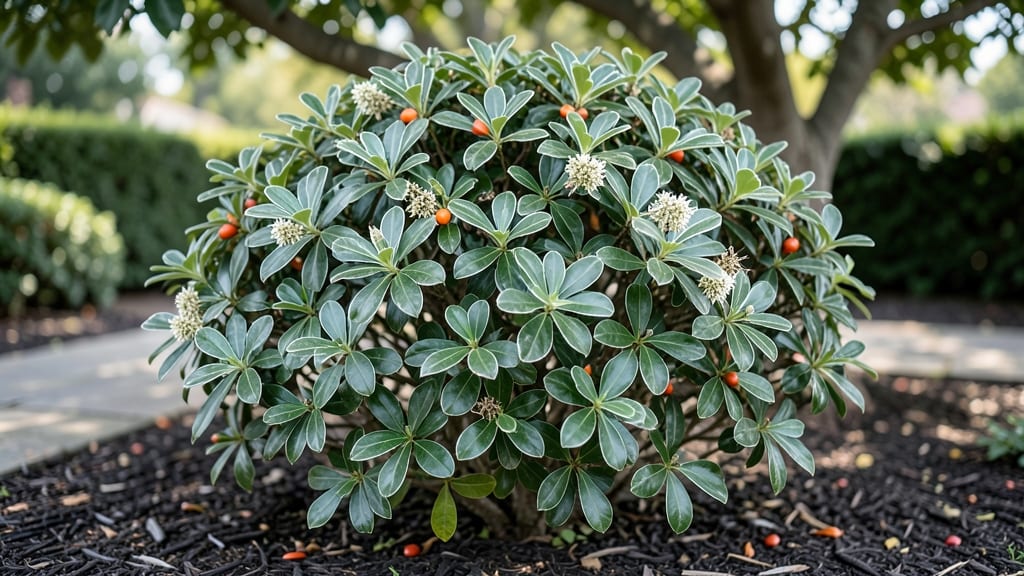
The Pittosporum 'Silver Sheen' tree thrives when you prune it right—year-round—because its silvery-blue foliage stays lush even after frost. I’ve shaped mine into a small, sculptural tree, and the difference between a neglected bush and a polished specimen is all in the cuts.
The key is timing: light trims in spring encourage fresh growth, while winter pruning prevents frost damage by shaping the canopy before cold snaps hit.
This evergreen handles pruning like a pro, but there’s a method to avoid over-thinning. Grab your shears and focus on removing dead branches first, then shape the outer edges to maintain that silver sheen glow.
The tree’s natural density means you won’t need heavy pruning often—just a 10-15% trim annually keeps it looking intentional. And here’s the best part: it blooms in spring with fragrant white flowers, so your pruning work pays off in both form and fragrance.
What you’ll end up with is a tree that stays compact, glossy, and frost-resistant through winter. The silvery foliage contrasts beautifully with dark evergreens or blooming shrubs, making it a standout in any landscape.
Plus, it’s tough enough for coastal gardens, urban courtyards, or even as a container specimen. Ready to give it that polished look? Let’s get started.
For those in colder zones, a light winter pruning in late winter (before new growth starts) prevents frost damage to tender shoots. And if you’re growing it in a container, prune just after flowering to keep it manageable.
The tree’s adaptability means it works in hedges, topiaries, or as a single accent—your call. Just remember: less is more with this one.
📚 In This Guide
- What you need
- Instructions
- Tips and common mistakes
- Wrapping up and next steps
What you need
- ● Pruning shears: Bypass pruners (sharp, clean, and sterilized with rubbing alcohol or bleach to prevent disease). Specs: 6–8" blades for medium branches.
- ● Hand pruners: For smaller stems and twigs (avoid dull tools—they crush instead of cleanly cut).
- ● Loppers: For thicker branches (up to 2" diameter). Specs: Bypass or anvil (but bypass is gentler).
- ● Pruning saw: For stubborn, woody branches (>2" thick). Specs: Curved blade for precision.
- ● Gloves: Heavy-duty gardening gloves (protects from thorns and sap).
- ● Disinfectant: 1-part bleach to 9-parts water (for sterilizing tools between cuts).
- ○ Pruning sealant: Optional but helpful for large cuts (>½") to prevent disease. Specs: Tree wound paint or beeswax-based sealant.
- ● Bucket or bag: For collecting pruned branches (line with a plastic bag for easy disposal).
- ● Ladder or step stool: If your tree is taller than 6 feet (ensure it’s stable and non-slip).
- ● Marking twine or flags: For identifying branches to remove (especially in layered or formal pruning).
- ● Safety goggles: Protects eyes from debris.
- ● Knee pads: For comfort during ground-level pruning.
- ● Sharpener: A file or honing tool to keep blades razor-sharp.
- ● Compost bin: For repurposing small clippings (great for mulch!).
- ● Camera or sketchbook: To document your tree’s shape before/after pruning.
How to prune a Pittosporum Silver Sheen tree for year-round health
Here’s my go-to method for keeping this glossy evergreen thriving through every season.
Assess Growth and Plan Your Cuts
Start by examining the tree for dead, crossing, or overcrowded branches—these are your first targets. Pittosporum Silver Sheen grows best with good airflow, so remove any branches that rub against others or grow inward. I like to do this in early spring before new growth starts, but light pruning can happen anytime the tree isn’t flowering.
Look for yellowing leaves or bare stems—these indicate dying branches that need cutting back to healthy wood. Use sharp pruners to make clean cuts just above a leaf node or outward-facing bud. Avoid leaving stubs, as they can invite disease. If you’re unsure which branches to keep, step back and imagine the tree’s natural shape—this helps guide your cuts.
Shape and Thin for Airflow
Once you’ve removed the dead or damaged branches, focus on thinning out the canopy to let light and air reach the inner foliage. Pittosporum Silver Sheen can get dense, so aim to reduce the center by about 20-30% to prevent fungal issues. I start at the top and work my way down, cutting back branches that are growing too close together.
For a more formal look, you can lightly shape the outer edges with small, precise cuts—just enough to maintain a rounded silhouette. Avoid heavy shearing, as this can stress the tree and reduce its natural resilience. If you’re pruning after a frost, wait until new growth appears before making any structural cuts.
Light Pruning for Frost Resilience
In late winter or early spring, give the tree a light trim to encourage fresh, vigorous growth. Focus on water sprouts—those fast-growing, upright shoots that pop up in clusters. These saplings drain energy from the main structure, so snip them off at the base. A Pittosporum Silver Sheen can handle up to 25% of its foliage removed in one session without stress.
If your tree has been hit by frost, wait until new buds swell before pruning. Frost-damaged branches will look brown and brittle—cut these back to the nearest healthy growth. Avoid pruning in hot, dry weather, as this can shock the tree. Early morning or late afternoon is the best time to work.
Clean Up and Monitor for Recovery
After pruning, sterilize your tools with rubbing alcohol to prevent spreading disease. Remove all clippings from the base of the tree to keep the area tidy and reduce pests. Pittosporum Silver Sheen recovers quickly, so you’ll see new growth within 4-6 weeks if the cuts were made correctly.
Water the tree deeply after pruning to help it recover, especially if you’ve made larger cuts. Keep an eye on the pruned areas for sap oozing or unusual discoloration—this could signal stress or infection. If you notice any issues, apply a fungicide and avoid pruning until the tree stabilizes.
Tips & tricks for pruning Pittosporum Silver Sheen trees
These simple strategies will help you prune with confidence and keep your Pittosporum Silver Sheen thriving year after year.
Tool Preparation: Before you start, make sure your pruners are sharp and clean. Dull blades can crush branches, causing more damage than the cut itself. I like to sharpen my pruners with a file or replace the blades every couple of years. Sterilizing with rubbing alcohol between cuts also prevents spreading disease from one branch to another.
Seasonal Timing Insight: While early spring is ideal for major pruning, don't overlook late summer as a second opportunity. In Step 1, if you missed the spring window, late summer pruning still works well—just avoid cutting back into old wood that's already hardened off for the season. The key is always to prune when new growth is about to begin or actively growing.
Visual Pruning Guide: When shaping in Step 2, imagine the tree as a rounded dome. The outer edges should follow a natural curve rather than sharp angles. For a more formal look, make small cuts along the outer edge, but never remove more than 25% of the foliage in one session. This 25% guideline applies whether you're doing a major trim or light maintenance.
Frost Damage Recovery: If your tree suffered frost damage, wait until you see new buds swelling before pruning in Step 3. These buds indicate where healthy growth will emerge. Cut back to just above the first set of healthy buds—this gives your tree the best chance to recover. Avoid pruning during hot weather, as the tree will be under more stress from both the pruning and the heat.
Pro Tips for Pittosporum Silver Sheen Tree
- These simple strategies will help you prune with confidence and keep your Pittosporum Silver Sheen thriving year after year.
- Tool Preparation: Before you start, make sure your pruners are sharp and clean.
- Seasonal Timing Insight: While early spring is ideal for major pruning, don't overlook late summer as a second opportunity.
Frequently asked questions
Can I prune my Pittosporum Silver Sheen in winter?
Yes, but with caution! This tree is frost-tolerant, but avoid heavy pruning during hard freezes (below 20°F/-7°C). Light shaping in late winter (after frost risk passes) is ideal—focus on removing dead or crossing branches. Pro tip: Wait until early spring for major cuts to encourage fresh growth.
How often should I prune my Pittosporum Silver Sheen?
Prune lightly 2–3 times a year: once in late winter (to shape), again after flowering (summer), and a final touch-up in early fall. Avoid over-pruning—this tree thrives with minimal intervention. Goal: Remove no more than 1/3 of the foliage annually to maintain its dense, silvery form.
What’s the best alternative if my Silver Sheen struggles in cold climates?
If your zone dips below USDA Zone 7b, consider frost-hardy alternatives like Pittosporum tobira ‘Wheeler’s Dwarf’ or Pittosporum ‘Tom Thumb’. For silver foliage, Abelia ‘Kaleidoscope’ or Caryopteris × clandonensis are also great low-maintenance picks. Check: Your local nursery for cold-tested varieties!
Why are my leaves turning brown after pruning?
Brown edges or tips often mean over-pruning or underwatering. Scale back cuts and water deeply (1–2 inches per week). If browning persists, check for spider mites (common in dry conditions) or fungal issues—treat with neem oil if needed. Remember: Silver Sheen prefers well-draining soil and morning sun.
Can I propagate cuttings from my Silver Sheen?
Take 4–6 inch semi-hardwood cuttings in late spring/early summer, dip in rooting hormone, and plant in a mix of perlite and peat. Keep humidity high (use a plastic bag) and place in bright, indirect light. Roots typically form in 6–8 weeks. Bonus: This is a great way to share your tree with friends!
Wrapping up and next steps
The Pittosporum Silver Sheen is a stunning addition to any landscape, offering year-round beauty with minimal effort—thanks to its frost-resistant foliage and adaptable nature. By mastering the art of seasonal pruning, you’ll keep its silvery-green leaves lush and encourage vibrant growth.
Whether you’re trimming for shape, health, or blooms, consistency is key!
Ready to elevate your garden? Grab your tools and schedule your next pruning session—your Pittosporum will thank you with glowing, healthy foliage all year round! 🌿✨