
Pruning
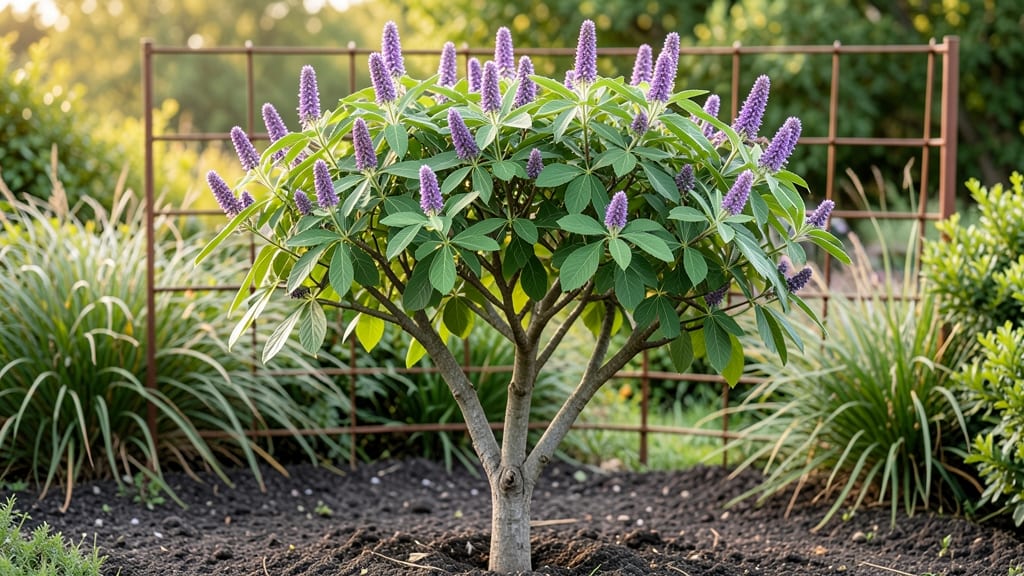
A single-trunk vitex tree transforms your landscape into a frost-proof statement piece that thrives year-round. 🌿 I’ve spent years perfecting the pruning technique that keeps mine tall, sturdy, and free of the wild, multi-stemmed mess others get—it’s all about timing and the right cuts.
The key isn’t just trimming back; it’s shaping the growth habit from the start to avoid that bushy, unruly look. Vitex handles pruning like a champ, but you’ll need sharp loppers, a clear day, and a plan for late winter (just before buds swell) and summer (after flowering).
Most gardeners skip the summer cut, which is where the single-trunk magic happens—you’re not just cleaning up, you’re directing how the plant grows. Think of it like training a young athlete: consistent, gentle guidance prevents bad habits.
By following this method, you’ll end up with a sleek, 10-foot-tall tree that blooms reliably from summer through fall, with silvery foliage that stays attractive even in winter. The best part? It’s drought-tolerant once established, so once you’ve got the pruning down, it’s low-maintenance luxury. Ready to shape yours?
Here’s the secret weapon: three pruning sessions a year, each with a specific goal. Late winter is for structural shaping—remove any competing trunks at the base while the plant’s dormant.
Summer’s about lightening the load: cut back about one-third of the oldest stems to encourage fresh growth and bigger blooms next season. And don’t forget to sterilize your tools between cuts to avoid spreading disease.
Common mistakes? Pruning too late in spring (which encourages rampant new growth) or going too heavy-handed (which stresses the plant). Start small—your first year’s focus should be removing suckers at the base and thinning out crowded branches.
Over time, you’ll train the tree to grow as a single, elegant leader, not a clump. Patience pays off with a vitex that’s the envy of the neighborhood.
📚 In This Guide
- What you need
- Instructions
- Tips and common mistakes
- Wrapping up and next steps
What you need
- ● Pruning shears: Bypass pruners (sharp, 8- to 10-inch blades) for clean cuts on small branches.
- ● Loppers: 20- to 24-inch loppers for thicker branches (up to 1.5 inches in diameter).
- ● Pruning saw: Curved-tooth saw for branches thicker than 2 inches.
- ● Disinfectant: 70% isopropyl alcohol or bleach solution (1 part bleach to 9 parts water) to sterilize tools between cuts.
- ● Gloves: Heavy-duty, cut-resistant gloves (size medium or large).
- ● Safety glasses: ANSI-rated for eye protection.
- ● Ladder or step stool: Sturdy, non-slip (height based on tree size).
- ● Heavy-duty trash bags: 30+ gallon for debris disposal.
- ● Rake: Bow rake (for clearing fallen leaves/branches).
- ○ Tree wound dressing (optional but helpful): Pruning sealant (for cuts larger than 0.5 inches).
- ● Extension pole pruners: For high branches without a ladder.
- ● Work gloves with grip: For extra comfort during long sessions.
- ● Spray bottle with water: To dampen dusty cuts and reduce stress on the tree.
- ● Notebook & pen: To sketch a quick pruning plan before you start.
- ● Mulch: Shredded bark or wood chips (2–4 inches deep) to protect the base after pruning.
Step-by-step guide for pruning a single-trunk vitex tree
Here's how to shape a strong, frost-hardy vitex with clean cuts and seasonal timing.
✂️ Step 1: Late Winter Pruning for Structural Health
Start in late February or early March before new growth begins, when the tree is still dormant. This is the most critical cut—you're shaping the framework for the entire year. Remove 30-40% of the previous year's growth, focusing on dead, crossing, or inward-growing branches first. Use clean, sharp pruning shears to make cuts just above outward-facing buds.
Look for branches thinner than a pencil—these are typically water sprouts that compete with the main structure. Remove them entirely at the base. For thicker branches, cut back to a strong lateral branch or the main trunk. The goal is to open the center of the tree to improve airflow and sunlight penetration, which prevents fungal diseases like powdery mildew.
Here's the thing—vitex responds well to hard pruning, but don't overdo it. If you remove more than 50% of the canopy, you risk stressing the tree. I always leave at least three strong branches spaced evenly around the trunk to maintain balance. After pruning, give the tree a light watering to help it recover from the shock.
☀️ Step 2: Summer Light Pruning for Shape and Airflow
Between June and August, perform light maintenance pruning to refine the shape and encourage bushier growth. This isn't about major cuts—think of it as tidying up. Remove any suckers (shoots growing from the base or trunk) immediately, as they drain energy from the main trunk. Also, trim back any branches that are growing too close together or rubbing against each other.
Watch for leggy growth—long, thin branches with sparse foliage. These often grow on the outer edges of the tree, reaching for sunlight. Cut these back by one-third to encourage denser, more compact growth. Always cut just above a leaf node or bud that faces outward. You'll see new shoots emerge from these nodes in 4-6 weeks, filling out the tree's form.
Real talk: This is where most people go wrong. They skip summer pruning and end up with a messy, overgrown tree by fall. A little attention now means less aggressive pruning in winter and a healthier tree overall. Use sterilized pruners after each cut to prevent spreading disease between branches.
⏰ Step 3: Fall Cleanup for Frost Preparation
In October or November, before the first hard frost, do a final cleanup to prepare the tree for winter. Remove all dead, diseased, or weak branches—these are entry points for pests and pathogens. Thin out the canopy by 10-15% to reduce snow load, which can break branches in heavy winter storms. Focus on the outer edges of the tree to maintain an open center.
Look for seed heads—vitex produces them abundantly, and while they're pretty, they can weigh down branches. Trim these back to 2-3 inches above the base. This encourages fresh growth in spring and keeps the tree looking tidy. Avoid heavy pruning now, as new growth won't harden off before winter. The tree needs time to slow its growth and prepare for dormancy.
This is the moment that matters: After pruning, apply a 2-3 inch layer of mulch around the base of the tree (but not touching the trunk) to insulate the roots. Vitex is frost-resistant, but young trees or newly pruned ones benefit from this extra protection. Water deeply once a month during dry fall periods to keep the roots hydrated.
🌿 Step 4: Spring Growth Monitoring and Adjustments
In early spring, as new leaves emerge, do a quick inspection of your pruning work. You'll notice if any branches died over winter (they'll appear brown and brittle) or if new shoots are growing in unwanted places. Remove any water sprouts or suckers that appear at the base or along the trunk. These are signs of stress or over-pruning in previous years.
If you see excessive dieback (more than 20% of the canopy), hold off on heavy pruning and focus on fertilizing and watering to encourage recovery. Vitex is resilient, but it won't bounce back from severe damage. For healthy trees, a light pruning in spring to shape and refine is all you need. This is also the time to train young trees—guide the main trunk upward and remove competing leaders to maintain a single-trunk form.
Don't skip this (I learned the hard way). Skipping spring checks can lead to pests or diseases going unnoticed until they're out of control. A quick monthly walk-around in spring ensures your tree stays strong and frost-resistant year after year. With consistent pruning, your vitex will develop a compact, single-trunk shape that's both beautiful and hardy.
Tips & tricks for perfect single-trunk vitex pruning
Mastering the art of pruning a single-trunk vitex means understanding the delicate balance between shaping and stressing your tree.
Seasonal Timing is Everything: The late winter pruning window (late February to early March) is non-negotiable for structural health. This dormant period allows the tree to heal cleanly without diverting energy to new growth. I've seen gardeners miss this window and end up with stressed trees that struggle to recover. Mark your calendar—vitex's growth cycle begins earlier than many realize, especially in warmer climates where spring arrives sooner.
The 30-40% Rule for Winter Pruning: When shaping your vitex in winter, never exceed removing 40% of last year's growth—this is where most over-pruning mistakes happen. Focus on removing dead branches first, then thin out crossing branches to create that crucial open center. The goal is to maintain a balanced structure while preventing fungal diseases. Pro tip: Use a string line to visualize the perfect branch spacing before making cuts—this ensures even distribution around the trunk.
Summer Pruning Secrets: During June-August, watch for those leggy growths reaching for sunlight—they're begging to be trimmed back by one-third. These branches often appear on the outer edges and can make your tree look unkempt. The key is to cut just above outward-facing buds—this encourages new growth in the right direction. I've noticed that making these cuts in the morning allows the tree to recover better during the day's heat.
Mulching Matters in Fall: That 2-3 inch layer of mulch isn't just decoration—it's winter protection. Apply it after your fall cleanup, keeping it 2-3 inches away from the trunk to prevent rot. For newly pruned trees, consider adding a thick layer of straw mulch which provides extra insulation. This simple step can mean the difference between a tree that survives winter and one that thrives through it.
Pro Tips for Single Trunk Vitex Tree
- Mastering the art of pruning a single-trunk vitex means understanding the delicate balance between shaping and stressing your tree.
- Seasonal Timing is Everything: The late winter pruning window (late February to early March) is non-negotiable for structural health.
- The 30-40% Rule for Winter Pruning: When shaping your vitex in winter, never exceed removing 40% of last year's growth—this is where most over-pruning mistakes happen.
Frequently asked questions
Got questions about growing and maintaining a single-trunk vitex tree? You’re not alone! Here are answers to the most common queries—from pruning tips to frost resilience and beyond.
When is the best time to prune a single-trunk vitex tree for year-round growth?
The ideal time to prune vitex is late winter or early spring (just before new growth starts) to encourage dense, frost-resistant foliage. For light shaping, prune after flowering in summer—but avoid heavy cuts then. Pro tip: Never prune in fall, as new growth won’t harden off before winter .
How cold-hardy is vitex, and do I need to protect it from frost?
Most vitex varieties (like Vitex agnus-castus) tolerate USDA Zones 5–9, surviving temperatures down to -15°F (-26°C). However, young trees or tender new growth may need burlap wraps or mulch in harsh winters. Prune back lightly in spring if frost damage occurs—new shoots will fill in!
How do I maintain a single trunk if vitex naturally grows multi-stemmed?
To encourage a single trunk, prune aggressively in the first year, removing all but the strongest central stem. Use a clean cut just above a leaf node, and stake the trunk for support. In subsequent years, prune lower branches to redirect energy upward. Patience is key! It may take 2–3 years to refine.
Can I grow vitex in containers, and how does pruning differ?
Yes! Vitex thrives in large containers (15+ gallons) with well-draining soil. Pruning rules stay the same, but container-grown trees need annual root pruning to prevent overcrowding. In winter, move pots to a sheltered spot or wrap the container in insulation for extra frost protection.
Why is my vitex tree not flowering, even after pruning?
Lack of flowers often stems from over-pruning (cutting too late in the season) or poor sunlight (vitex needs 6+ hours of sun daily). Ensure you’re pruning before bud break and fertilize lightly in spring with balanced 10-10-10. If the tree is young, give it 2–3 years to mature before expecting blooms.
Are there frost-resistant alternatives to vitex for colder climates?
If your zone is below 5, consider these hardy substitutes:
- Butterfly bush (Buddleia davidii) – Zones 5–9, drought-tolerant, and attracts pollinators.
- Russian sage (Perovskia atriplicifolia) – Zones 4–9, silvery foliage, and thrives in poor soil.
- Oakleaf hydrangea (Hydrangea quercifolia) – Zones 5–9, stunning fall color, and low-maintenance.
Wrapping up and next steps
Mastering the art of pruning a single-trunk Vitex tree unlocks year-round beauty and resilience—no frost can dim its charm! With the right tools, timing, and techniques, you’ve got everything you need to cultivate a stunning, healthy specimen that thrives in every season. 🌿✨
Now that you’re armed with knowledge, roll up your sleeves and get pruning! Start small, observe your tree’s growth, and adjust your approach as needed. Before you know it, your Vitex will be the showstopper of your garden—and you’ll be the proud gardener behind it.