
Pruning
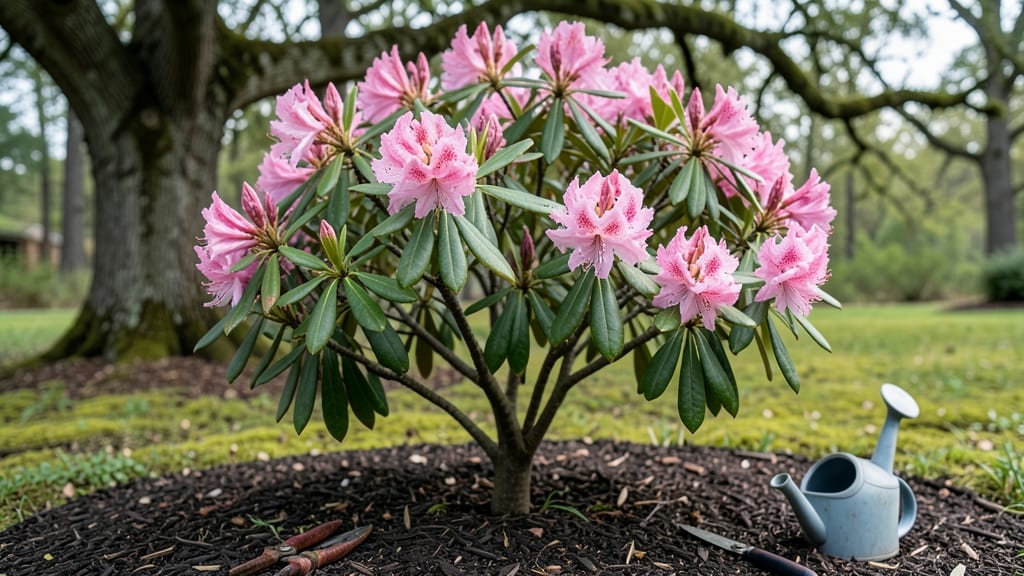
Pruning your pink rhododendron tree in late winter unlocks the secret to frost-resistant blooms that steal the show every spring. ✨ I’ve watched my own tree go from sparse, weak growth to a lush, flowering powerhouse—all by mastering the timing and technique of winter pruning.
The key is working right after the worst frost passes but before new buds swell—usually in February or March depending on your zone. Grab your pruners and focus on three things: removing dead or crossing branches, thinning out crowded growth, and shaping the tree to let light reach the center.
It only takes 20-30 minutes for most trees, and the payoff is blooms that arrive earlier and last longer.
You’ll notice a dramatic difference by late spring: thicker foliage, more abundant flowers, and a stronger structure that handles snow and wind better. The tree rewards careful pruning with vibrant pink blooms that attract pollinators and brighten shady corners of the yard.
Works for both container-grown rhododendrons and established landscape trees. The same principles apply whether you’re tidying up a small patio plant or shaping a 10-foot specimen. Let’s get those branches looking intentional!
📚 In This Guide
- What you need
- Instructions
- Tips and common mistakes
- Wrapping up and next steps
What you need
- ● Pruning shears: Bypass shears (for small branches, sharp and clean—sterilize with rubbing alcohol between cuts).
- ● Loppers: 6–8-inch bypass loppers (for thicker branches, 2–4 inches in diameter).
- ● Pruning saw: Curved-tooth saw (for branches over 4 inches thick—avoid rust!).
- ● Gloves: Heavy-duty gardening gloves (protects from thorns and sap).
- ● Disinfectant: 70% isopropyl alcohol or bleach solution (1 part bleach to 9 parts water) to sterilize tools between cuts.
- ○ Pruning sealant: Optional but helpful for large cuts (e.g., Tanglefoot Tree Wound Pruning Seal).
- ● Ladder or step stool: Sturdy and non-slip (if your tree is over 6 feet tall).
- ● Trash bags: Heavy-duty (for collecting pruned branches—check local composting rules!).
- ● Weather check: Prune on a dry, frost-free day (late winter, before buds swell).
- ● Safety glasses: Protects eyes from debris (especially when using a saw!).
- ● Long sleeves/pants: Protective clothing to avoid scratches from branches.
- ● First-aid kit: Bandages and antiseptic wipes (just in case!).
- ● Water & snacks: Hydration breaks keep you energized for the task! 💧
- ● Marking spray: Fluorescent paint to mark branches for removal (great for complex pruning).
- ● Extension pole: For high branches (if you don’t want to climb).
- ● Camera or sketchbook: Document your tree’s shape before and after pruning!
- ● Mulch: Shredded bark or pine needles (to protect roots post-pruning).
Step-by-step guide to pruning pink rhododendrons for frost-resistant blooms
Late winter's the perfect time to shape your rhododendron—here's how to do it right.
✂️ Step 1: Gather Tools and Assess the Tree
Start with clean, sharp pruning shears and a sturdy ladder if your tree exceeds 6 feet tall. I always sanitize my tools with rubbing alcohol before cutting—this prevents spreading fungal diseases that thrive on rhododendron's tender new growth. Look for dead, crossing, or overcrowded branches first; these are your priority targets.
Examine the tree's natural shape from all sides. Pink rhododendrons often grow with a slightly weeping habit, so preserve that graceful form. Mark branches that are rubbing against each other with a piece of twine—these will create wounds that invite pests. The goal here is to open the center for better airflow and light penetration, which builds frost resistance.
✂️ Step 2: Remove Dead and Problematic Growth
Cut out any dead wood—it'll be dry, brittle, and won't snap when bent. Make your cuts just outside the branch collar (that swollen area where the branch meets the trunk). Avoid leaving stubs, as they invite rot. For crossing branches, remove the smaller one entirely to maintain the tree's natural balance.
Next, target overly dense areas where light can't penetrate. Thin out branches that grow inward by cutting them back to their origin point. I like to step back every few cuts to visualize the tree's new shape—this prevents over-pruning. Remember, rhododendrons bloom on old wood, so never remove more than one-third of the tree's total growth in a single season.
✂️ Step 3: Shape for Airflow and Frost Resistance
Now focus on creating an open center by selectively removing branches that grow straight up or inward. These are the branches that trap cold air and prevent proper air circulation. Cut back these stems to a healthy lateral branch or bud that faces outward. The goal is to create a vase-like shape that allows sunlight to reach all parts of the tree.
Pay special attention to the lower branches—these often get shaded by the canopy. If they're weak or leggy, prune them back to encourage stronger growth from the base. This not only improves the tree's structure but also helps it withstand late frosts better. After shaping, the tree should look balanced from all angles, with no branches growing directly toward the center.
✂️ Step 4: Clean Up and Fertilize for Spring Growth
Once all cuts are made, gather the pruned branches and dispose of them properly—don't leave them near the tree, as they can harbor pests. I like to mulch around the base with 2-3 inches of organic mulch to protect the roots from temperature swings. This also helps retain moisture during late winter's unpredictable weather.
Apply a balanced, acid-loving fertilizer (like a 10-10-10 formula) around the root zone in early spring, once new growth begins. Avoid fertilizing immediately after pruning—wait until you see new leaf buds swell in late winter or early spring. This timing ensures the tree uses its energy for healing rather than producing foliage too early.
Tips & tricks for perfect pink rhododendron pruning
Here's what I've learned after shaping dozens of these graceful trees—details that make all the difference for frost-resistant blooms.
Tool Prep Matters: Beyond sanitizing your pruning shears with rubbing alcohol, I recommend wiping them down with a bleach solution (1 part bleach to 9 parts water) for stubborn fungal spores. Let them air dry completely before use. This extra step is especially important if you've pruned other plants recently—rhododendrons are particularly vulnerable to fungal infections through open wounds. I also keep a small spray bottle of 70% isopropyl alcohol handy for quick disinfection between cuts on large trees.
Visualize the Final Shape: Before making any cuts, step back and study your tree's natural growth pattern. Pink rhododendrons often develop a graceful weeping habit, so preserve that elegant silhouette. I sketch a rough outline on paper first—this helps me visualize how removing specific branches will affect the overall form. Focus on creating an open center that resembles an inverted cone; this shape allows sunlight to penetrate all the way to the inner branches, which is crucial for frost resistance. Think of it as sculpting rather than just cutting—every removal should serve a purpose in the final composition.
Pruning Technique for Frost Resistance: When shaping branches in Step 3, always cut back to an outward-facing bud or lateral branch. This ensures new growth will develop away from the center, maintaining that crucial open structure. I make a point to avoid cutting flush with the trunk—leave about 1/8 inch of stem beyond the branch collar. This small detail prevents water from pooling in the wound, reducing the risk of rot and disease. For branches thicker than your thumb, I use a three-cut method to avoid tearing the bark.
Post-Pruning Care Timeline: The timing of your spring fertilization is more critical than most gardeners realize. After pruning, wait until you see those tiny leaf buds begin to swell—this usually happens in late winter when daytime temperatures consistently reach the 50s°F. I've found that applying the 10-10-10 fertilizer too early can stimulate premature growth that gets damaged by late frosts. Once you see those buds, apply your fertilizer and then water deeply to help the tree establish new roots before the growing season kicks into high gear.
Pro Tips for Pink Rhododendron Tree
- Here's what I've learned after shaping dozens of these graceful trees—details that make all the difference for frost-resistant blooms.
- Tool Prep Matters: Beyond sanitizing your pruning shears with rubbing alcohol, I recommend wiping them down with a bleach solution (1 part bleach to 9 parts water) for stubborn fungal spores.
- Visualize the Final Shape: Before making any cuts, step back and study your tree's natural growth pattern.
Frequently asked questions
Got questions about pruning your pink rhododendron tree for frost-resistant blooms? Here are some of the most common queries—and their answers—to help you get it right!
When is the exact best time to prune my pink rhododendron?
The ideal window is late winter (February–early March), just as buds begin to swell but before new growth starts. This timing ensures you don’t cut off next year’s flowers while avoiding frost damage. If you miss this, wait until after blooming (late spring), but avoid heavy pruning then—it may reduce next year’s flowers.
Can I prune my pink rhododendron if frost is still expected?
Yes, but only if the forecast predicts a short-term cold snap (2–3 days). Prune on a mild, sunny day to minimize stress. Avoid pruning during prolonged freezes (<32°F/0°C for weeks), as new cuts are more vulnerable to frost damage. If unsure, wait until the danger of frost has passed!
How much can I trim back my pink rhododendron without killing it?
Never remove more than ⅓ of the plant’s total growth in one season. For shaping, focus on dead, crossing, or overcrowded branches first. If your tree is leggy, you can trim up to half the oldest stems to encourage new, vibrant growth—but avoid heavy cuts on young trees (<3 years old).
What if my pink rhododendron doesn’t bloom after pruning?
Lack of blooms usually means you pruned too late (after buds formed) or cut back flowering stems. Rhododendrons bloom on old wood, so always prune above a set of buds (never flush with the stem). If it’s been a few years, give it time—new stems may take 1–2 seasons to produce flowers. Pro tip: Fertilize lightly in early spring with acidic, rhododendron-specific food to encourage blooms.
Are there frost-resistant alternatives to pink rhododendrons?
If you love pink blooms but worry about frost, consider these hardy alternatives:
- Rhododendron ‘PJM’ (Elite) – Zones 3–8, deep pink flowers, extremely cold-tolerant.
- Weigela (e.g., ‘Wine & Roses’) – Zones 4–8, pink blooms, thrives in colder climates.
- Azalea ‘Girard’s Pink’ – Zones 5–9, early spring blooms, handles light frost.
- Pieris japonica (Andromeda) – Zones 5–8, pink spring flowers, evergreen and tough.
Wrapping up and next steps
The pink rhododendron tree is a stunning addition to any garden, and with the right late-winter pruning techniques, you can ensure vibrant blooms year after year—even in frost-prone climates! By following these steps, you’ll promote healthy growth, prevent disease, and keep your tree looking its best. 🌸
Ready to give your rhododendron the care it deserves? Grab your pruners and start planning your late-winter pruning session—your tree (and your future blooms!) will thank you. Happy gardening!