
Trees
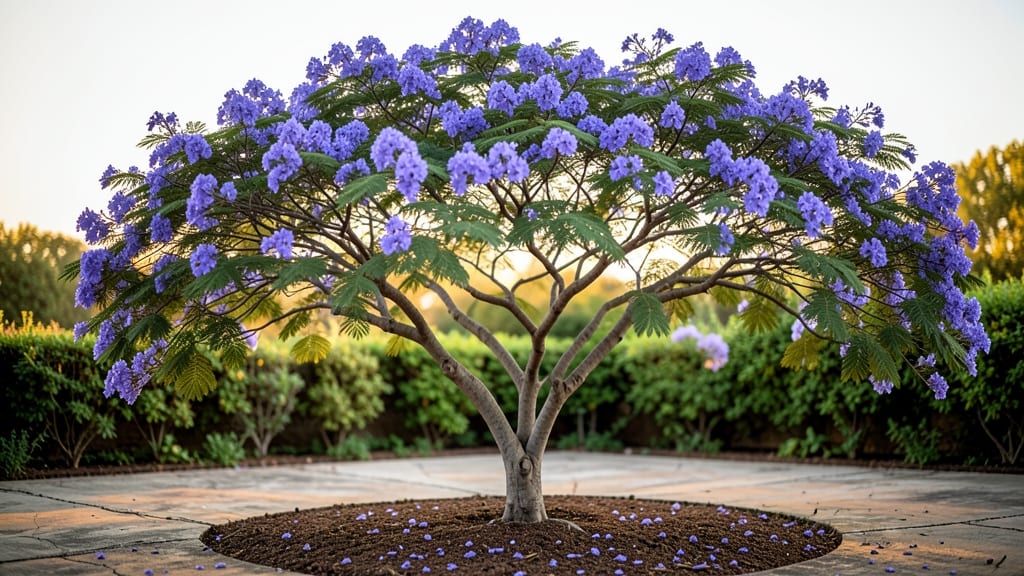
The photos of jacaranda trees I’ve collected over the years prove how these dreamy lavender-purple canopies turn Pacific Northwest landscapes into fairy-tale scenes—softening the urban with their living watercolor magic. edges of Portland with its cascading flower clusters.
These trees aren't just beautiful; they're the ultimate shade providers with a side of drama, perfect for front yards, city parks, or even as a striking focal point in small urban spaces.
Their magic isn't just in spring when they burst into color—jacarandas offer year-round interest. Summer brings lush green foliage that creates dappled shade, while winter reveals elegant, feathery branches that add architectural interest to any landscape.
They pair beautifully with drought-tolerant ground covers like lavender or ornamental grasses, creating a layered look that's both functional and stunning.
What makes them special is how they elevate any space—whether you want to soften a city street corner, create a romantic garden entrance, or simply add a splash of color to your backyard.
The flowers attract pollinators, and their dense canopy provides relief from summer sun while keeping your outdoor spaces cooler. Plus, they're surprisingly adaptable, thriving in both urban and suburban settings as long as they get full sun.
From their cultural significance as symbols of resilience to their practical benefits for shade and beauty, jacarandas are more than just pretty trees—they're a statement piece for any landscape.
Let's explore how you can incorporate their magic into your own outdoor spaces, whether you're working with a small yard or a sprawling park setting.
📚 In This Guide
- What you need
- Instructions
- Tips and common mistakes
- Wrapping up and next steps
What you need
- ● Camera: DSLR, mirrorless, or a high-quality smartphone (e.g., iPhone 13+, Google Pixel 7+, or Samsung Galaxy S22+).
- ● Lens (if using a DSLR/mirrorless): Wide-angle lens (16-35mm) for capturing the full canopy.
- ● Telephoto lens (70-200mm) for close-ups of flowers or bark details.
- ● Tripod: Lightweight but sturdy (e.g., Manfrotto Pixi or Joby GorillaPod) for long exposures or low-light shots.
- ● Remote shutter release: Wireless or cable-based (e.g., Vello ShutterBoss) to avoid camera shake.
- ● Polarizing filter: Reduces glare and enhances color saturation in bright sunlight.
- ● ND (Neutral Density) filter: For long-exposure shots during golden hour.
- ● Reflector (5-in-1): Adjusts lighting for shadowed areas under the canopy.
- ● Portable power bank: Ensures your phone or camera stays charged during long shoots.
- ● Memory cards (32GB+): Fast SD cards (UHS-II) for high-resolution RAW files.
- ● Backpack or camera bag: Water-resistant and spacious (e.g., Peak Design Everyday Backpack).
- ● Best time to shoot: Late spring (May–June) when jacarandas are in full bloom.
- ● Golden hour: Plan shoots for sunrise (6–8 AM) or sunset (7–9 PM) for soft, magical lighting.
- ● Location scouting: Research jacaranda hotspots in the PNW (e.g., Portland’s Washington Park, Seattle’s Discovery Park).
- ● Weather check: Overcast days can diffuse harsh light—ideal for moody shots!
- ● Permits (if needed): Some parks require permits for commercial photography.
How to capture stunning jacaranda tree photos in the Pacific Northwest
This is how I photograph jacaranda trees at their peak—when their lavender-purple blooms create a dreamy Pacific Northwest canopy.
Scout Locations for Optimal Light and Blooms
Jacarandas thrive in full sun, so I target open spaces where their branches spread unobstructed. In the Pacific Northwest, late spring to early summer (May-June) is prime time—wait until you see at least 70% of the canopy in full bloom before shooting. Early morning light (just after sunrise) or late afternoon (before 7 PM) creates the softest hues and minimizes harsh shadows.
Check for neighboring trees or buildings that might frame your shot naturally. I often scout locations a day ahead to note the best angles. Avoid overcast days—their muted light washes out the vibrant purple tones. If clouds roll in, I wait for a break in the weather or return another day.
Adjust Camera Settings for Vibrant Canopy Colors
Use a wide-angle lens (16-35mm) to capture the full grandeur of the tree. Set your camera to aperture priority mode (Av/A) with an f-stop between f/8 and f/11 for sharpness across the entire frame. This depth of field ensures both the foreground and distant blooms stay in focus.
For color accuracy, shoot in RAW format and set your white balance to shade or cloudy to enhance the purple tones. I typically use an ISO range of 100-400 to keep noise minimal. If shooting handheld, use a tripod or monopod—jacarandas are massive, and you’ll need stability for wide-angle shots.
Frame the Shot for Dramatic Canopy Effects
Position yourself 10-15 feet away from the tree trunk to include both the base and the full spread of blooms. Look for leading lines—paths, sidewalks, or branches that guide the viewer’s eye into the image. I often shoot from a low angle (squatting or lying down) to emphasize the height and density of the canopy.
Include a foreground element like a bench, sidewalk crack, or even your own shadow to add depth. This technique creates a sense of scale and makes the viewer feel immersed in the scene. Avoid placing the horizon line in the center—compose your shot with the rule of thirds for a more balanced look.
Capture Close-Ups of Individual Blooms and Textures
Switch to a macro lens (50-105mm) for close-up shots of the jacaranda flowers. Focus on 3-5 blooms clustered together to show their delicate, star-shaped petals and the way they cascade from the branches. Use a shallow depth of field (f/2.8-f/4) to blur the background and draw attention to the texture of the petals.
Shoot from slightly below the blooms to create a natural upward angle that makes them appear more dynamic. Pay attention to the light hitting the flowers—side lighting (when the sun is at a 45-degree angle) highlights the intricate details of the petals and creates beautiful backlighting effects. I often shoot these close-ups in the golden hour for the warmest tones.
Edit for Enhanced Lavender-Purple Tones
In post-processing, I use Lightroom or Photoshop to boost the purple hues without oversaturating the image. Start by adjusting the white balance to cool tones (around 6000-7000K) to enhance the lavender tones. Use the HSL panel to increase saturation in the purple and blue ranges while keeping greens and browns natural.
Apply a slight vignette to darken the edges of the image, which draws the viewer’s eye toward the center of the canopy. I also use the clarity slider (around +10-15) to add subtle texture to the blooms without making them look grainy. Finally, sharpen the image slightly to make the petals and foliage pop while keeping the overall look soft and dreamy.
Tips & tricks for perfect jacaranda tree photography
These pro techniques will help you elevate your jacaranda photos from good to breathtaking—especially in the Pacific Northwest's signature lavender light.
Lighting is Everything: The golden hours (just after sunrise or before 7 PM) are non-negotiable for jacaranda photography. I've found that shooting during these windows creates that dreamy, ethereal quality the Pacific Northwest is famous for. If you're photographing in May-June, plan your shoots for these times—it's when the light interacts most beautifully with the lavender blooms. For overcast days, wait for a break in the clouds or return when the sun is out; the muted light can wash out those vibrant purple tones.
Composition Secrets: When framing your wide-angle shots in Step 3, I recommend including a foreground element that contrasts with the softness of the blooms. A weathered bench, a sidewalk crack, or even your own shadow can add depth and scale. The rule of thirds works wonders here—position your horizon line along one of the grid intersections rather than dead center. This creates a more dynamic composition that guides the viewer's eye naturally through the image.
Macro Lens Technique: For those delicate close-ups in Step 4, focus on clusters of 3-5 blooms rather than single flowers. This creates a more natural look that shows how the flowers cascade from the branches. When shooting at f/2.8-f/4, be patient—jacaranda petals are delicate, and slight movements can ruin the shot. I often use a remote shutter release to eliminate any camera shake. The slight upward angle you're instructed to use isn't just about perspective; it also helps showcase the natural shape of the petals and creates a more dynamic composition.
Editing Enhancements: While editing in Step 5, I've found that subtle adjustments make all the difference. The cool white balance (6000-7000K) is particularly important for Pacific Northwest photography—it helps neutralize any green cast from surrounding foliage while enhancing those lavender tones. When using the HSL panel, I recommend starting with a modest increase in purple saturation (around +10-15) and then fine-tuning. The clarity slider should be used judiciously—too much can make the blooms look artificial, while just the right amount adds texture without losing that dreamy quality.
Pro Tips for Photos Of Jacaranda Trees
- These pro techniques will help you elevate your jacaranda photos from good to breathtaking—especially in the Pacific Northwest's signature lavender light.
- Lighting is Everything: The golden hours (just after sunrise or before 7 PM) are non-negotiable for jacaranda photography.
- Composition Secrets: When framing your wide-angle shots in Step 3, I recommend including a foreground element that contrasts with the softness of the blooms.
Frequently asked questions
When is the best time to see jacaranda trees in bloom?
The jacaranda trees in the Pacific Northwest typically bloom in late spring to early summer, usually between May and June. The exact timing can vary slightly depending on the region’s climate, so check local weather forecasts or gardening groups for updates. Early mornings or late afternoons offer the softest light for photos!
What’s the best camera setting for jacaranda tree photos?
For vibrant jacaranda blooms, use these settings as a starting point:
- Aperture: f/8 to f/11 for sharpness and depth of field.
- Shutter speed: 1/200s or faster to avoid motion blur from wind.
- ISO: Keep it 100-400 to minimize noise (unless shooting in low light).
- White balance: Daylight or Cloudy to preserve true purple hues.
Can I find jacaranda trees outside the Pacific Northwest?
Yes! While the Pacific Northwest is famous for its jacaranda displays, you can also find them in California, Arizona, and Florida, as well as in urban landscapes worldwide (like Sydney or Buenos Aires). Check local botanical gardens or parks—they often have stunning specimens. If you’re traveling, plan your trip around their late spring blooming season!
Why do my jacaranda photos look dull or washed out?
Dull photos often happen due to overcast lighting or incorrect white balance. Try these fixes:
If you love jacaranda’s lavender-purple magic, try these Pacific Northwest-friendly alternatives:
Avoid shooting at midday when the sun is harshest!
Are there alternatives to jacaranda trees for purple blooms?
Each offers unique textures and colors for your photos!
Wrapping up and next steps
Jacaranda trees aren’t just stunning—they’re a celebration of nature’s artistry, especially in the Pacific Northwest’s dreamy lavender-purple skies. Whether you’re a photographer, a gardener, or simply someone who loves beauty, these trees offer endless inspiration for your next shot or garden project. 🌸
Ready to bring this magic into your life? Start by exploring local nurseries, planning your perfect shot, or even sketching your dream jacaranda garden! The world’s most beautiful canopies are waiting for you—go capture or cultivate them today.