
Pruning
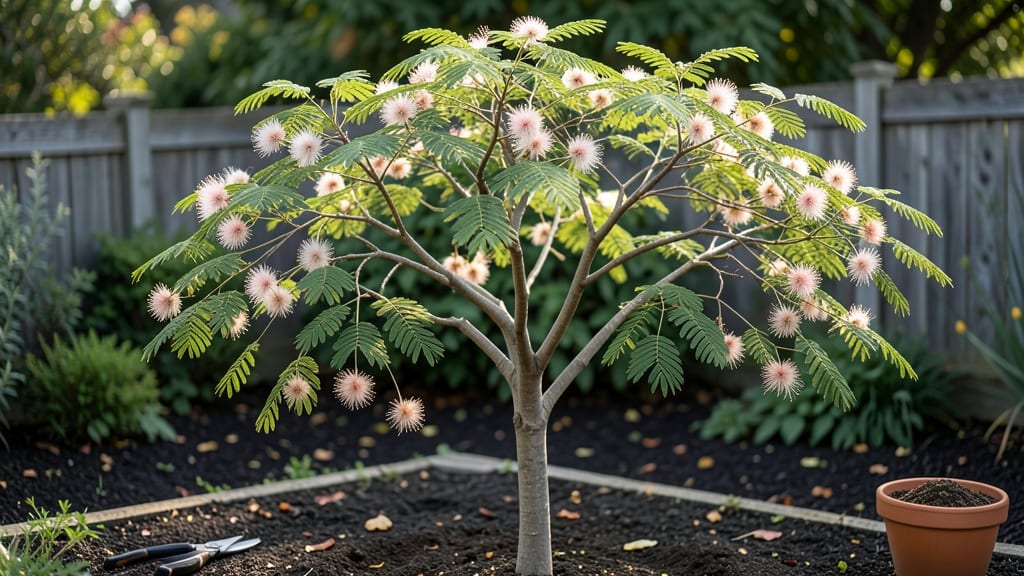
The Missouri mimosa tree (Albizia julibrissin) turns your yard into a pink, fluffy dream every spring—until you realize its fern-like branches need seasonal pruning to stay healthy.
I planted mine five years ago after seeing it thrive in a neighbor’s yard, and now it’s the star of my landscape, but only because I learned these three pruning tricks that keep it lush without letting it get out of control.
This tree loves full sun and well-draining soil, but it’s surprisingly tough—it handles Missouri’s hot summers and cold winters down to 10°F without flinching. The real secret?
Pruning in late winter, early summer, and fall to control its aggressive growth while keeping those iconic pink puffball flowers coming back year after year. Most people skip the summer trim, which is when it really pays off.
By the time spring rolls around, you’ll have a canopy that’s disease-resistant, pest-deterring, and covered in blooms from May through July. The fern-like foliage stays vibrant all season, and the tree’s natural shape makes it perfect for privacy screens or shade spots.
Just don’t let it seed—this one spreads fast if you’re not careful.
Whether you’re dealing with a young sapling or an established tree, these pruning steps work for any size. The key is timing: cut back 25% of the oldest branches in winter, shape it lightly in summer, and clean up dead growth in fall.
Your mimosa will thank you with years of effortless beauty—and so will your neighbors.
📚 In This Guide
- What you need
- Instructions
- Tips and common mistakes
- Wrapping up and next steps
What you need
- ● Pruning shears: Bypass shears (for small branches, 6–8 inches long) or loppers (for thicker branches, 8–12 inches). Sharpness is key!
- ● Pruning saw: Curved-tooth saw (for branches 2+ inches thick). Look for a folding design for easy storage.
- ● Gloves: Heavy-duty, cut-resistant gloves (e.g., Mechanix or leather) to protect against thorns and sap.
- ● Ladder: Extension ladder (20–30 ft, aluminum or fiberglass) with non-slip feet and a sturdy platform for stability.
- ● Disinfectant: 70% isopropyl alcohol or rubbing alcohol to sterilize tools between cuts (prevents disease spread).
- ● Heavy-duty trash bags: 30+ gallon bags for debris (Missosa trees shed a lot of leaves and seed pods!).
- ● Work boots: Steel-toe or composite-toe boots with ankle support (thorns + uneven terrain = ouch!).
- ● Pole saw: For high branches (16–24 ft reach) if your ladder doesn’t suffice.
- ● Tree wound dressing: Pruning sealant (controversial but useful for large cuts >2 inches).
- ● Safety harness: If pruning very tall trees (15+ ft), pair with a professional-grade harness.
- ● Work apron: With pockets for tools and a thorn-proof mesh panel.
- ● Water & snacks: Hydration breaks are non-negotiable—Missouri summers are no joke!
- ● Weather: Choose a dry, calm day (avoid wind or rain). Early morning or late afternoon is ideal.
- ● Safety briefing: Clear the area of people, pets, and structures within a 30-foot radius.
- ● Tool sharpening: Hone blades before starting—dull tools tear wood, inviting disease.
- ● Tree health check: Inspect for pests (e.g., spider mites) or disease (e.g., powdery mildew) before pruning.
Step-by-step guide for pruning your Missouri mimosa tree
Here's how to shape your tree for year-round beauty without stressing the plant.
✂️ Step 1: Late Winter Cleanup Pruning (February-March)
This is the most critical pruning time for your Missouri mimosa. Wait until after the last frost but before buds begin to swell—typically February to early March in most climates. Start by removing any dead, diseased, or crossing branches first. These are easy to spot as they’ll be brown, brittle, or growing into the center of the tree.
Next, look for water sprouts—those fast-growing, vertical shoots that pop up along the trunk or branches. These saplings steal energy from your tree. Use sharp pruning shears to cut them back to the main branch or trunk they’re growing from. Make your cuts just outside the branch collar where it meets the trunk—this prevents unsightly stubs and encourages faster healing.
For larger branches, use three-cut pruning technique to avoid tearing the bark. First, make an under-cut about 6 inches out from the branch collar. Then, cut through the branch about 2 inches further out. Finally, remove the remaining stub by cutting just outside the under-cut. This method prevents the branch from splitting as you remove it.
✂️ Step 2: Light Summer Pruning (June-July)
After the spring flush of growth, your mimosa will look full and lush—but that’s when you can do light shaping. The goal here isn’t to remove much, but to encourage airflow and sunlight penetration. Focus on trimming back any branches that are growing too densely or rubbing against each other.
Use hand pruners for smaller branches and loppers for thicker ones. Cut just above a leaf node or outward-facing bud to promote new growth in the right direction. Avoid heavy pruning now—this can stress the tree and reduce its ability to handle winter cold. Instead, think of this as a maintenance trim to keep the canopy balanced.
Watch for pest damage during this time. If you see signs of aphids or spider mites (yellowing leaves, sticky residue, or fine webs), prune out heavily infested branches immediately. Dispose of these clippings in a sealed bag to prevent spreading pests to other plants.
✂️ Step 3: Post-Bloom Thinning (August-September)
The Missouri mimosa puts on a stunning summer display with its fluffy pink blooms, but that’s also when you should thin out some of the older growth. After the flowers fade but before late September, remove about 20-30% of the oldest branches from the tree. These are usually the thicker, woodier stems near the base of the canopy.
Thinning older branches does two things: it opens up the canopy for better light penetration and encourages new, younger growth that’s more vigorous. When you remove these branches, you’re essentially rejuvenating the tree for next year’s blooms. Cut back to a strong lateral branch or the main trunk—never leave a stub.
This is also the time to shape the tree if needed. If your mimosa has grown too wide or leggy, you can shorten some of the longer branches by one-third to encourage bushier growth. Just remember: never remove more than 25% of the canopy in one season—this can shock the tree and reduce its cold hardiness.
Tips & tricks for pruning your Missouri mimosa tree
These seasonal pruning strategies will keep your Missouri mimosa thriving for years to come.
Timing is Everything: The February-March window for late winter cleanup is critical because it allows the tree to heal before spring growth begins. If you miss this window, wait until late fall after leaves drop—just avoid pruning when buds are swelling or flowers are open. I once waited too long and noticed new growth struggling to emerge through old cuts, so don't delay beyond early March!
Tool Selection Matters: For the three-cut technique on larger branches, use bypass pruners for clean cuts. I recommend Felco F-2 pruners—they make precise cuts that heal faster. For thicker branches, loppers with 8-10 inch handles give you better leverage. Always sterilize your tools between cuts with rubbing alcohol to prevent spreading disease between branches.
Seasonal Focus: Summer pruning should be minimal—just enough to maintain airflow. I've seen mimosa trees stressed by aggressive summer cuts that remove too much leaf surface area. Focus on removing only branches that are crossing or rubbing, and never remove more than 10% of the canopy in summer. The tree needs its foliage to build energy for winter.
Post-Bloom Strategy: When thinning older branches in August-September, target those thicker stems near the base that are over 3 inches in diameter. These are the ones that compete with younger growth. I like to remove about 25% of these older branches each year in rotation—this prevents sudden shock to the tree while still encouraging new growth. Always cut back to a strong lateral branch or the main trunk to maintain structural integrity.
Pro Tips for Missouri Mimosa Tree
- These seasonal pruning strategies will keep your Missouri mimosa thriving for years to come.
- Timing is Everything: The February-March window for late winter cleanup is critical because it allows the tree to heal before spring growth begins.
- Tool Selection Matters: For the three-cut technique on larger branches, use bypass pruners for clean cuts.
Frequently asked questions
Got questions about growing and maintaining your Missouri mimosa tree? Here are some of the most common queries—and their answers—to help you keep this stunning tree thriving year-round.
How cold-hardy is the Missouri mimosa tree?
The Missouri mimosa (Albizia julibrissin) is one of the most cold-resistant mimosa varieties, tolerating USDA zones 5-9. It can survive brief dips to -15°F (-26°C), though young trees or tender new growth may need winter protection like mulch or burlap wraps in extreme cold snaps. Pro tip: Plant in well-drained soil to prevent frost heave damage.
When is the best time to prune a Missouri mimosa?
The ideal time to prune is late winter or early spring (before buds swell), but you can also do light pruning in summer after flowering to shape the tree. Avoid heavy pruning in fall—it stimulates new growth that won’t harden off before winter. 3-season pruning trick: Thin out dead wood in winter, shape in spring, and trim for airflow in summer.
Why are my Missouri mimosa leaves turning yellow or dropping?
Yellowing leaves (chlorosis) often signal iron deficiency or overwatering. Mimosa trees hate soggy roots—ensure soil drains well. Dropping leaves in fall/winter is normal, but sudden leaf loss in summer could mean heat stress or pests (like spider mites). Check for webbing on undersides and treat with neem oil if needed.
Can I grow a Missouri mimosa in a container?
While possible, mimosa trees grow 15-30 feet tall and have aggressive roots, making containers challenging. If you must pot it, use a large (20+ gallon) container with drainage holes and repot every 2-3 years. Warning: Container-grown mimosas may struggle with stunted growth or root-bound stress. Plant in the ground for best results!
How do I remove large branches without harming the tree?
Use clean, sharp pruners or a saw for cuts larger than 2 inches. Make the first cut 1-2 feet out from the trunk (undercut), then saw downward to avoid bark tears. Seal larger wounds (>4 inches) with pruning sealant to prevent disease. Timing tip: Prune on a dry day to reduce sap bleeding.
| Quick Troubleshooting Guide |
|---|
| Problem: No flowers |
| Solution: Mimosas need full sun (6+ hours/day) and well-draining soil. Over-fertilizing with nitrogen can also reduce blooms. Try a balanced 10-10-10 fertilizer in early spring. |
| Problem: Pests (aphids, borers) |
| Solution: Spray with soapy water for soft-bodied pests or apply beneficial nematodes for borers. Encourage natural predators like ladybugs by planting companion flowers. |
Wrapping up and next steps
The Missouri Mimosa Tree is a standout choice for gardeners seeking a low-maintenance, cold-hardy beauty that thrives in Missouri’s climate. With its vibrant blooms, air-purifying benefits, and simple pruning tricks, it’s a win-win for both aesthetics and sustainability.
Whether you’re a seasoned gardener or just starting, this resilient tree offers year-round interest with minimal effort.
Ready to transform your landscape? Grab your pruning shears, mark your calendar for those seasonal cuts, and watch your mimosa tree flourish! 🌿✨