
Pruning
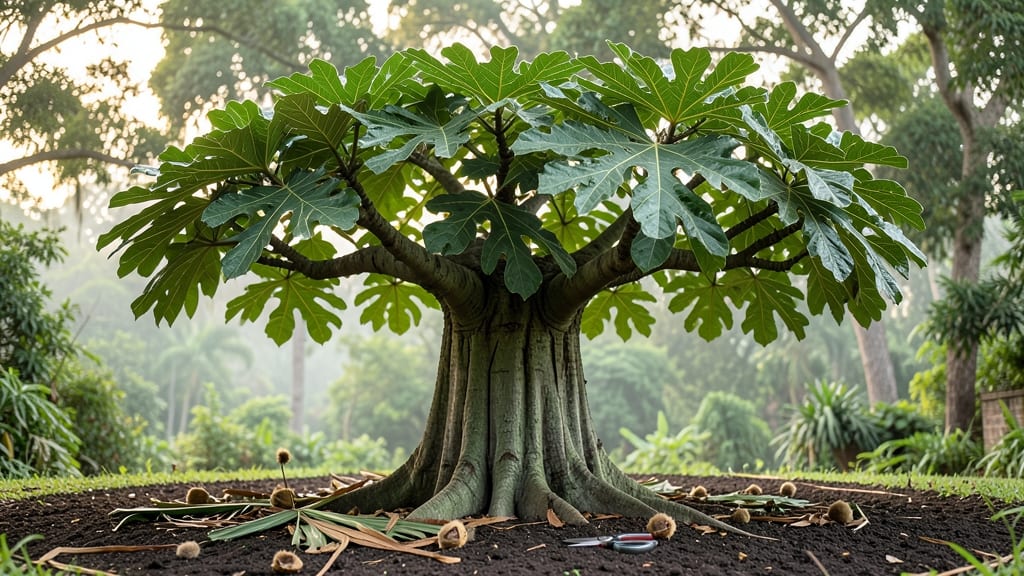
Growing a kapok tree in Florida means fast, towering shade in just a few years—if you prune it right from day one. 🌿 I’ve watched these trees go from 6-foot saplings to 30-foot giants in under a decade when given the right care, especially in our humid climate.
The secret isn’t just water or soil—it’s understanding how Florida’s heat and storms shape their growth.
Kapok trees thrive in our sandy, well-draining soils and need full sun, but they’re surprisingly adaptable. They handle hurricanes better than most tropical trees because of their flexible trunks, though you’ll want to prune damaged branches immediately after storms.
The key to that fast, full canopy is year-round light pruning—removing dead wood in winter and shaping in summer to encourage dense growth.
You’ll end up with a tree that provides year-round shade, attracts birds, and even produces those signature kapok seed pods. The trade-off? They grow fast—so plan your pruning schedule carefully to keep them manageable.
With the right approach, your kapok tree will outpace most Florida natives in both height and resilience.
Works for coastal yards, urban landscapes, or even large containers if you’re short on space. Here’s how to keep it thriving through Florida’s extremes—without losing your sanity (or your yard to unchecked growth).
📚 In This Guide
- What you need
- Instructions
- Tips and common mistakes
- Wrapping up and next steps
What you need
- ● Pruning shears: Bypass pruners (for cuts up to ½ inch thick). Recommended: Felco F-2 or similar (sharp, ergonomic, and rust-resistant).
- ● Loppers: For branches ¾–2 inches thick. Opt for ratchet-style loppers (e.g., Corona Ratchet) for ease on thick kapok branches.
- ● Pruning saw: A bow saw or pruning saw (8–10 inches) for branches over 2 inches in diameter. Pro tip: 💡 Use a clean, sharp blade to avoid tearing bark.
- ● Ladder: Extension ladder (20–30 feet, aluminum or fiberglass) if your kapok tree exceeds 15 feet. Safety first: 🔥 Use stabilizers and never overreach!
- ● Disinfectant: 70% isopropyl alcohol or a pruning sealant (e.g., Tanglefoot Tree Wound Pruning Sealer) to prevent disease.
- ● Gloves: Heavy-duty gardening gloves (nitrile-coated for grip and protection).
- ● Safety gear: Safety glasses (ANSI-rated)
- ● Long sleeves/pants (lightweight, breathable fabric)
- ● Ear protection (if using a chainsaw for large branches)
- ● Heavy-duty trash bags: 30–50 gallon size for debris removal.
- ● Measuring tape: 25-foot tape for assessing branch thickness and height.
- ● Chainsaw: For branches over 3 inches thick (e.g., Stihl MS 200 or similar). Note: Only use if experienced!
- ● Pole saw: Extendable saw (10–15 feet) for high branches without a ladder.
- ○ Tree wound dressing: Optional for large cuts (e.g., Tanglefoot Tree Wound Paint). Controversial but useful for: 🌡️ Florida’s humid climate (reduces fungal entry).
- ● Marking spray: Bright paint (e.g., pink or yellow) to mark cuts before pruning.
- ● First-aid kit: For minor cuts or stings (kapok trees can have thorns!)
- ● Weather check: Prune on a dry, overcast day (avoid rain for 24 hours before/after).
- ● Know your kapok tree: Identify dead, diseased, or crossing branches before starting. Pro tip: ✨ Snap a photo of the canopy first for reference!
- ● Local regulations: Check Florida’s urban forestry guidelines if pruning near power lines or in HOAs.
- ● Helper: A second person for large branches or ladder support.
How to prune a kapok tree for rapid canopy expansion in Florida’s climate
Here’s the pruning strategy I’ve used to transform sparse kapok trees into lush, fast-growing shade providers—without stressing the tree.
🌿 Step 1: Assess the Tree’s Growth Habit and Pruning Windows
Kapok trees (Ceiba pentandra) thrive in Florida’s warm climate but respond best to year-round light pruning rather than heavy seasonal cuts. Start by examining the tree’s structure: healthy branches grow at 45-degree angles from the trunk, while weak or crossing limbs should be removed first. I prune in three key periods: early spring (March) for structural shaping, late summer (August) to encourage new growth before winter, and lightly in winter (January) to remove dead wood.
Look for water sprouts—fast-growing vertical shoots that drain energy. These are prime candidates for removal. The goal is to open the canopy to sunlight while maintaining the tree’s natural vase shape. Use sharp, clean pruners to avoid tearing bark, which invites disease in Florida’s humid air.
✂️ Step 2: Remove Dead, Diseased, or Weak Branches First
Start at the outermost branches and work inward. Dead wood is easy to spot—it’s gray, brittle, and doesn’t bend. Diseased branches may have black spots, oozing sap, or fungal growth. Cut these back to the collateral bud (a side bud just below the branch collar) to promote healing. If a branch is larger than 2 inches in diameter, make the cut just outside the branch collar to prevent bark tearing.
For weak or crossing branches, remove the smaller of the two. This prevents future rubbing, which can create wounds. I always step back after each cut to visualize the tree’s new shape—kapoks grow fast, so gaps fill in quickly. Avoid removing more than 25% of the canopy in a single session, or you’ll shock the tree.
☀️ Step 3: Thin the Canopy for Sunlight Penetration and Airflow
Kapok trees need full sun but benefit from selective thinning to prevent fungal issues. Focus on branches that are too dense—look for clusters where leaves block sunlight from reaching the lower canopy. Aim to remove every third branch in dense areas, starting from the bottom up. This encourages new growth lower down, creating a fuller tree faster.
Use the "third cut" rule: if a branch is thicker than 1/3 the trunk’s diameter, make the cut in three stages over two years to avoid stress. For thinner branches, cut all the way back to the trunk or a lateral bud. Always prune just above a bud that faces outward—this directs growth away from the trunk, improving airflow and reducing humidity-related stress.
🌱 Step 4: Encourage New Growth with Strategic Cuts
To accelerate canopy expansion, head back (shorten) the tips of vigorous branches by 1/3 to 1/2 their length. This triggers bushier growth from lateral buds below the cut. I target branches that are less than 1 year old—they’re more responsive to pruning. Avoid cutting into old wood, as kapoks struggle to regenerate from mature branches.
After pruning, apply a wound sealant (like tree paint) only to cuts larger than 1 inch in diameter. For smaller cuts, let the tree seal naturally—Florida’s humidity is enough to promote callusing. Water the base deeply after pruning to reduce shock, but avoid overwatering, which can rot fresh cuts.
⏰ Step 5: Monitor and Adjust for Florida’s Microclimates
Kapok trees in coastal Florida (high humidity) need more frequent pruning to prevent fungal diseases, while those in inland areas (drier) can handle slightly longer intervals. Check the tree monthly for new water sprouts or dead branches—kapoks grow 2-3 feet per year, so pruning every 4-6 weeks keeps them in check.
Watch for new leaf growth within 2-4 weeks of pruning—that’s your signal the tree is recovering. If leaves yellow or drop, you’ve pruned too aggressively. Adjust future cuts to 10-15% of the canopy per session instead. In Florida’s heat, prune early in the morning to reduce stress on the tree.
Tips & tricks for perfect kapok tree pruning in Florida
Here's what I've learned after years of transforming Florida kapoks into rapid-growth shade giants.
Pruning Timing Secret: Florida's climate lets you prune year-round, but those three key periods—March, August, and January—are non-negotiable. March's warm days kickstart new growth, August's heat helps the tree recover before winter, and January's cooler temps prevent stress. I've seen trees pruned outside these windows struggle with uneven regrowth, especially in coastal humidity.
Branch Selection Technique: When thinning in Step 3, focus on removing branches that grow straight up or inward—they create dense clusters that block sunlight. I use the "third branch rule": in any dense cluster, remove every third branch starting from the bottom. This opens up the canopy while maintaining structural integrity. The outward-facing buds you cut above will guide new growth away from the trunk, creating a naturally balanced shape.
Tool Maintenance Strategy: Your pruners are your most important tool—keep them razor-sharp to make clean cuts that heal properly. I clean mine with rubbing alcohol after each use to prevent fungal spread in Florida's damp air. For branches over 2 inches thick, use a pruning saw with a fine-toothed blade to avoid tearing. Dull tools create jagged wounds that invite disease, especially in our humid climate.
Recovery Monitoring: After pruning, watch for new leaf growth within 2-4 weeks—that's your confirmation the tree is recovering well. If you see yellowing leaves or excessive leaf drop, you've likely pruned too aggressively. In coastal areas, I reduce cuts to just 10-15% of the canopy per session to prevent shock. The 25% limit in Step 2 is your safety net, but Florida's humidity means you can often get away with even less.
Pro Tips for Kapok Tree Florida
- Here's what I've learned after years of transforming Florida kapoks into rapid-growth shade giants.
- Pruning Timing Secret: Florida's climate lets you prune year-round, but those three key periods—March, August, and January—are non-negotiable.
- Branch Selection Technique: When thinning in Step 3, focus on removing branches that grow straight up or inward—they create dense clusters that block sunlight.
Frequently asked questions
Got questions about growing and pruning kapok trees (Ceiba pentandra) in Florida? You’re not alone! Here are some of the most common queries—plus straightforward answers to help you cultivate a thriving, lush canopy year-round.
Can kapok trees thrive in Florida’s climate, or do they need special care?
Kapok trees are highly adaptable to Florida’s tropical and subtropical zones (USDA Hardiness Zones 10–11). They love heat, humidity, and even occasional drought—but they hate waterlogged soil. Ensure well-draining soil and occasional deep watering (1–2 times/week in dry spells). Mulch helps retain moisture while protecting roots from Florida’s intense sun.
How long does it take for a kapok tree to reach full canopy size?
Patience pays off! Kapok trees grow fast—expect 3–6 feet per year under ideal conditions. A full, dense canopy (30–50 feet tall) typically takes 5–10 years, but aggressive pruning (like year-round shaping) can accelerate growth and density. Young trees benefit from light pruning to encourage branching early.
When’s the best time to prune a kapok tree in Florida?
Unlike seasonal trees, kapok trees can be pruned year-round in Florida—but timing matters! Focus on:
- Dry season (Dec–Apr): Ideal for major pruning to reduce stress during Florida’s wetter months.
- Avoid heavy pruning in summer: High heat + humidity = slower recovery. Stick to light trimming.
- Post-hurricane cleanup: Remove dead/damaged branches immediately to prevent disease.
Pro tip: Prune in the early morning to minimize stress on the tree.
What’s the best alternative if kapok trees are hard to find?
If kapok trees aren’t locally available, consider these Florida-friendly fast-growing alternatives for shade and canopy:
| Tree | Growth Rate | Pruning Needs |
|---|---|---|
| Gumbo Limbo (Bursera simaruba) | 2–3 ft/year | Low-maintenance; prune to shape |
| Royal Poinciana (Delonix regia) | 3–5 ft/year | Prune aggressively to control size |
| Melaleuca (Melaleuca quinquenervia) | 3–4 ft/year | Minimal pruning; remove dead wood |
All three are drought-tolerant and love Florida’s climate!
Why are my kapok tree’s leaves yellowing or dropping?
Yellowing leaves (chlorosis) or excessive leaf drop usually signal one of these issues:
- Overwatering: Kapok trees hate soggy roots. Let soil dry between waterings.
- Nutrient deficiency: Florida’s sandy soil lacks nutrients. Fertilize with balanced 6-6-6 in spring.
- Pests (e.g., kapok scale): Inspect branches for sticky residue or tiny bumps. Treat with neem oil or insecticidal soap.
- Sunburn: Young trees need gradual acclimation to full sun.
Act fast—most issues are reversible with proper care!
Wrapping up and next steps
Growing a kapok tree in Florida is a rewarding journey—especially when you master the art of year-round pruning for that lush, fast-growing canopy! 🌿 With the right tools, timing, and techniques, you’ll transform your yard into a tropical oasis while keeping your tree healthy and thriving.
Remember, consistency is key, so don’t hesitate to experiment and adapt to your tree’s unique needs.
Ready to take the next step? Start small: pick one season to focus on, like winter pruning for structure or summer shaping for density. Before you know it, your kapok tree will be the star of your Florida landscape! 🌟