
Pruning
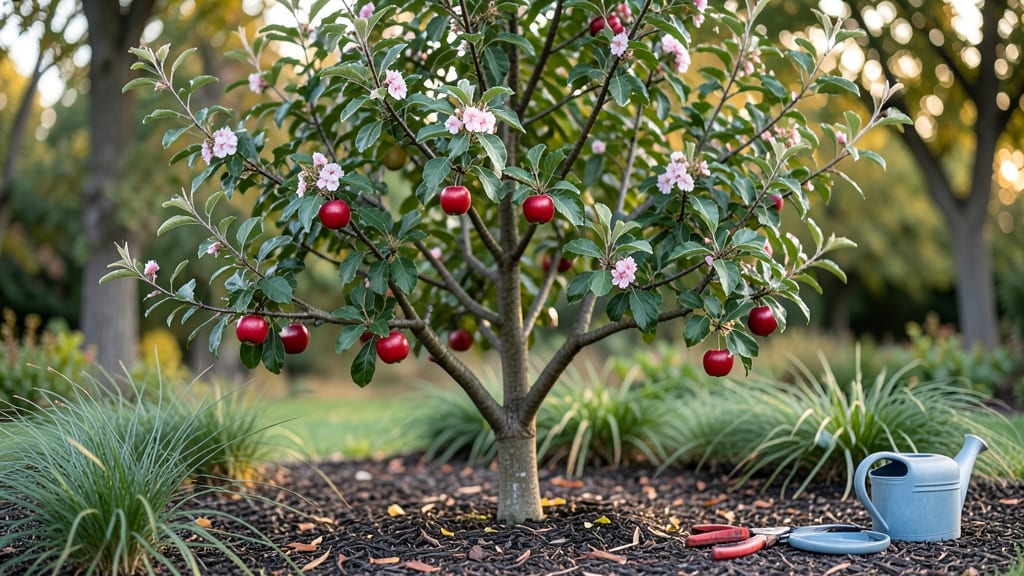
Pruning your Java apple tree (Syzygium samarangense) in late winter isn’t just about shaping—it’s about survival when Pacific Northwest frosts threaten to turn your tropical tree into a sad, brittle skeleton. 🌿 I’ve watched this exact thing happen when I skipped the winter cuts, and let me tell you, the difference between a thriving tree and a frost-damaged mess comes down to timing, technique, and a few strategic snips.
The key is working before buds swell but after the coldest nights have passed—usually February or early March in most of the PNW. You’ll need sharp pruners, a ladder (unless your tree is still small), and a clear day to avoid spreading fungal spores. The goal?
Open the canopy to let sunlight warm the center while removing dead wood that frosts love to exploit. Think of it like giving your tree a winter coat adjustment—too thick, and it can’t breathe; too thin, and it gets chilled to the core.
What you’ll end up with is a tree that bursts into vibrant green by spring, with fewer frost scars and more energy for fruit production. Those signature square-shaped Java apples? They’ll form better when the tree isn’t struggling to recover from winter damage.
Plus, the structure becomes easier to manage year after year—no more wrestling with tangled branches during harvest season.
This method works just as well for young trees as mature ones, though the scale changes. If you’re in a colder microclimate (like the Cascades foothills), you might need to delay pruning until late March—but never wait until buds break, or you’ll sacrifice next year’s crop.
Ready to give your tree the winter care it deserves?
📚 In This Guide
- What you need
- Instructions
- Tips and common mistakes
- Wrapping up and next steps
What you need
- ○ Pruning shears: Bypass pruners (sharp, 6–8 inch blades) for cuts under ½ inch in diameter. Anvil pruners (for thicker branches) are optional but handy.
- ● Loppers: Bypass-style (20–24 inch handles) for branches ½–2 inches thick.
- ● Pruning saw: Curved-tooth (for branches >2 inches thick; 18–24 inch blade).
- ● Disinfectant: 70% isopropyl alcohol or bleach solution (1 part bleach:9 parts water) to sterilize tools between cuts.
- ● Gloves: Heavy-duty, cut-resistant (e.g., leather or reinforced fabric) to protect hands from thorns and rough bark.
- ● Ladder: Sturdy, extendable (12–16 feet tall) with a non-slip base for taller trees.
- ● Tarp or drop cloth: 10x12 feet to collect debris and protect lawn/soil.
- ● Rake: Bow or leaf rake for clearing pruned branches post-cutting.
- ● Weather check: Prune on a dry, calm day (40–50°F ideal) to avoid frost or rain within 24 hours.
- ● Safety glasses: ANSI-rated to shield eyes from debris.
- ● Long sleeves/pants: Lightweight, long-sleeve layers to protect against scratches and sun exposure.
- ● First-aid kit: Include antiseptic wipes, bandages, and tweezers for minor injuries.
- ● Pruning sealant: Tree wound dressing (e.g., Tanglefoot Tree Wound Pruning Sealer) for cuts >½ inch—controversial but useful in wet climates.
- ● Marking spray: Bright paint or chalk to tag branches for removal (helpful for complex cuts).
- ○ Tree growth regulator: Dormant oil spray (optional post-pruning to prevent pests).
- ● Camera/phone: Take before/after photos to track your Java apple tree’s progress!
Step-by-step guide for pruning Java apple trees in late winter
Here's my foolproof method for shaping your tree while protecting it from PNW frosts.
✂️ Step 1: Time Your Cuts for Frost Protection
Prune your Java apple tree between late February and early March—just as buds begin to swell but before new growth starts. This timing ensures the tree has time to heal cuts before spring frosts hit. The Pacific Northwest's unpredictable cold snaps can damage fresh wounds, so waiting until after the last frost date (usually around March 15) gives your tree the best chance to recover.
Check the forecast for a 3-5 day dry spell before pruning. Wet conditions make cuts more vulnerable to disease, and you don't want rainwater sitting on fresh pruning wounds. If you see buds starting to open but haven't pruned yet, hold off—waiting a few days is better than cutting too early.
🌿 Step 2: Remove Dead, Diseased, and Crossing Branches First
Start by removing any dead, broken, or diseased branches—these are the easiest to spot and should always go first. Dead wood looks gray or brown, snaps easily when bent, and often has no leaves or buds. Diseased branches may have black spots, oozing sap, or unusual growth patterns. Cut these out completely, even if it means removing larger limbs—disease spreads quickly in Java apple trees.
Next, look for crossing branches or those growing directly toward the center of the tree. These compete for sunlight and nutrients, weakening the tree's structure. Use your pruning shears to make a clean cut just outside the branch collar—the swollen area where the branch meets the trunk. Avoid leaving stubs, as they invite rot and pests. If a branch is thicker than ½ inch, use your pruning saw instead.
✂️ Step 3: Thin the Canopy for Better Airflow
Java apple trees thrive with an open canopy that allows sunlight to reach the center. Aim to remove 20-30% of the tree's total branches, focusing on the outer limbs first. Start at the top and work your way down, cutting back branches that are growing inward or downward. These limbs block light and air, creating a humid environment that encourages fungal diseases like apple scab.
Look for branches that are rubbing against each other—these will eventually create wounds where bacteria and fungi can enter. Cut the smaller of the two branches at its point of origin. For thicker branches, make your cut at a 45-degree angle, slanting away from the branch collar. This helps rainwater shed quickly, reducing the risk of rot. Step back occasionally to visualize the tree's shape—you want an open, vase-like structure that lets light penetrate evenly.
☀️ Step 4: Shape for Sun Exposure and Frost Hardiness
Java apple trees in the Pacific Northwest benefit from a rounded, slightly dome-shaped canopy. This shape allows sunlight to warm the trunk and branches during cold snaps, reducing frost damage. Start by shortening the longest branches by about ⅓ of their length, cutting just above an outward-facing bud. This encourages bushier growth and stronger structure.
Pay special attention to branches growing directly upward—they're more vulnerable to frost and can become weak points. Instead, encourage horizontal growth by cutting back these vertical shoots to a side bud that's growing outward. Avoid cutting into the branch collar, as this can damage the tree's healing tissue. After each cut, wipe your tools with rubbing alcohol to prevent the spread of disease between branches.
🌱 Step 5: Clean Up and Protect the Tree
Once all your cuts are made, gather the pruned branches and remove them from the area. Leaving them on the ground invites pests and diseases back into the tree. If possible, shred the branches and use them as mulch elsewhere in your garden—or dispose of them in yard waste. Never burn pruned wood, as it can spread fungal spores into the air.
After pruning, apply a thin layer of mulch (about 2-3 inches deep) around the base of the tree, keeping it 6 inches away from the trunk. This helps retain moisture and insulate roots during late-winter frosts. Water the tree deeply if the soil feels dry to the touch, but avoid overwatering—Java apple trees prefer well-draining soil and can suffer from root rot if soggy. Finally, consider applying a dormant oil spray to smother overwintering pests like scale or mites before they become active.
Tips & tricks for perfect late-winter Java apple tree pruning
Late-winter pruning can make all the difference in your Java apple tree's health and fruit production. Here's what I've learned from years of shaping trees in the Pacific Northwest.
Timing is Everything: The late February to early March window is critical because it gives your tree time to heal before spring frosts arrive. If you're unsure about the last frost date, check your local agricultural extension service—they'll have the most accurate data for your specific microclimate. I always set a reminder for March 1st as my final cutoff date, just to be safe. Remember, the buds should be swelling but not yet opening when you prune.
Tool Sanitation Matters: Between each cut, especially when dealing with diseased branches, wipe your pruning shears with rubbing alcohol. I keep a small bottle of 70% isopropyl alcohol in my tool belt—it's quick, effective, and prevents cross-contamination between branches. This simple step can save your tree from spreading diseases like fire blight or apple scab. Don't skip this, even if the branches look healthy!
Visualize the Canopy: Step back every 10-15 minutes to assess your progress. The goal is that open, vase-like shape that lets sunlight reach the center. In Step 3, when you're thinning branches, imagine light rays coming from all directions—this helps you decide which branches to keep and which to remove. I like to sketch a rough diagram before starting, marking the branches I plan to cut. This prevents over-pruning and helps you maintain that crucial 20-30% reduction guideline.
Mulch Right After Pruning: That 2-3 inch layer of mulch isn't just for looks—it's essential for protecting your tree's roots during late-winter frosts. I always use shredded bark or wood chips because they break down slowly and improve soil structure over time. Keep it 6 inches away from the trunk to prevent rot, and avoid piling it too high against the trunk. This final step completes the frost protection circle you've been working toward since Step 1.
Pro Tips for Java Apple Tree
- Late-winter pruning can make all the difference in your Java apple tree's health and fruit production.
- Timing is Everything: The late February to early March window is critical because it gives your tree time to heal before spring frosts arrive.
- Tool Sanitation Matters: Between each cut, especially when dealing with diseased branches, wipe your pruning shears with rubbing alcohol.
Frequently asked questions
Got questions about pruning your Java apple tree in the Pacific Northwest? Here are some of the most common concerns—plus practical answers to keep your tree thriving through frost and beyond.
When is the exact best time to prune a Java apple tree in late winter?
The ideal window is mid-February to early March in the PNW, once the worst frosts have passed but before buds swell. Prune too early, and you risk cold damage to fresh cuts; too late, and you’ll encourage new growth that can’t harden off before spring. Check your local frost dates for precision!
Will pruning in late winter help my Java apple tree survive frost better?
Pruning in late winter opens the canopy to sunlight and air circulation, reducing frost pockets where ice can form. It also removes weak, frost-susceptible branches. Just avoid heavy cuts—focus on structural shaping and deadwood removal to balance growth and resilience.
What’s the difference between pruning a Java apple tree vs. other apple varieties?
Java apple trees (Malus sieboldii) are more frost-tolerant than standard apples, so they need less aggressive pruning. Avoid over-thinning—Java apples thrive with a dense, rounded shape. Prioritize removing crossing branches and water sprouts, which are common in this variety.
My Java apple tree’s branches are bleeding sap after pruning—is this normal?
Yes! Heavy sap flow (called bleeding) is common in late-winter pruning, especially in young trees. It’s harmless and stops once buds break. To minimize it, prune on dry, cool days (not warm ones) and use sealant on large cuts over ½-inch thick. No sealant? A dab of pruning paint works too!
Can I prune a Java apple tree in early spring instead of late winter?
You can, but it’s not ideal. Spring pruning risks late frosts damaging new growth. If you must, wait until after the last frost date (typically late April in the PNW) and focus on light shaping—no major structural cuts. Late winter pruning still wins for frost survival!
What tools do I really need for Java apple tree pruning (beyond basics)?
Beyond pruners and loppers, grab:
- A sharp bypass pruner (for clean cuts under ½-inch).
- Rubbing alcohol (to sterilize tools between cuts and prevent disease).
- A pruning saw for thick branches (Java apples can get woody!).
- Optional: Tree wound dressing (only for cuts over 2 inches—controversial but useful in wet PNW climates).
Wrapping up and next steps
Pruning your Java apple tree in late winter isn’t just about shaping—it’s a lifeline for Pacific Northwest frost resilience and future fruitfulness. 🌱 By following the right techniques, you’ll boost airflow, strengthen branches, and set the stage for a bountiful harvest.
Now that you’re armed with the tools, timing, and tips, there’s no better time to grab your pruners and get to work!
Next step? Mark your calendar for late February or early March—when buds swell but before new growth begins—and start pruning with confidence. Your tree (and future apple pies!) will thank you. 🍏✨