
Pruning
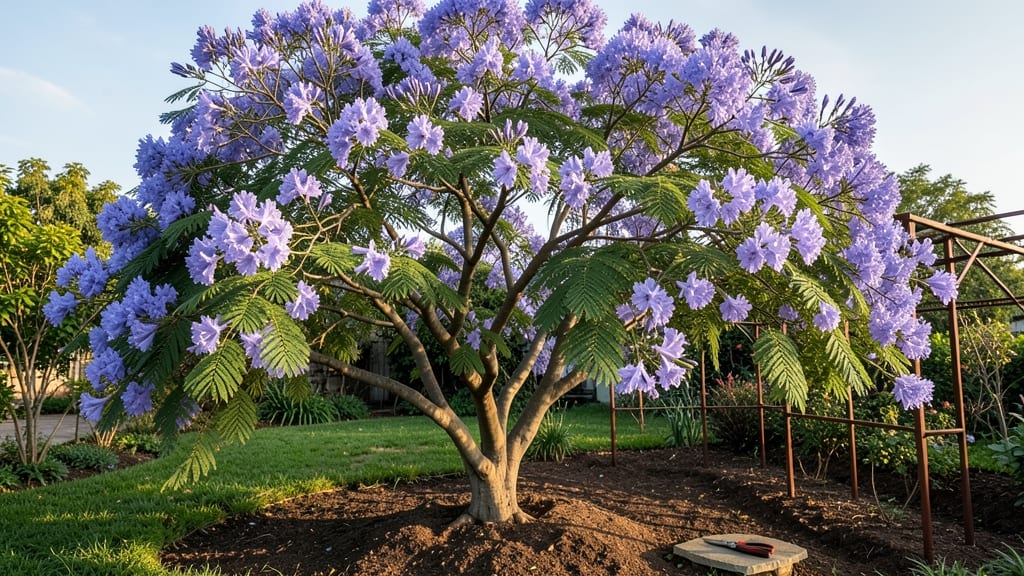
Houston’s late-winter pruning transforms your jacaranda into a springtime showstopper—those iconic purple blooms arrive thicker and more vibrant than ever. 🌸 I’ve watched my tree go from sparse, leggy branches to a canopy bursting with color, all by making just a few strategic cuts in February.
The key? Timing it right when the tree’s still dormant but before new growth starts.
You’ll need sharp pruning shears, a ladder (for higher branches), and about 30 minutes of focused work. Houston’s warm winters mean jacarandas stay semi-active, so prune on a cool morning when the tree’s less stressed.
Focus on removing dead wood first, then thin out crowded branches to improve airflow—this prevents fungal issues that Houston’s humidity loves to exploit. The goal is to shape the tree while encouraging next year’s blooms.
What you’ll end up with is a tree that blooms earlier, harder, and longer than ever before. Imagine your front yard exploding with purple clouds by March, attracting hummingbirds and making neighbors green with envy.
The pruning scars heal quickly in Houston’s climate, and within weeks, you’ll see fresh green shoots pushing out where you made cuts.
This method works for both young trees and mature specimens, though older jacarandas may need more aggressive shaping. Just avoid heavy pruning after blooms appear—you’ll sacrifice next year’s flowers.
With Houston’s heat and humidity, your tree will reward you with bold, reliable blooms for decades if you stick to this schedule.
📚 In This Guide
- What you need
- Instructions
- Tips and common mistakes
- Wrapping up and next steps
What you need
- ● Pruning shears – Bypass pruners (sharp, 6-8" blade) for clean cuts on small branches.
- ● Loppers – Bypass or anvil type (18-24" handle) for thicker branches (1-2" diameter).
- ● Pruning saw – Curved-tooth saw for branches over 2" in diameter (avoid tearing bark).
- ● Garden gloves – Heavy-duty, cut-resistant (e.g., Mechanix or Wolverine) to protect hands from thorns and sap.
- ● Disinfectant (70% isopropyl alcohol or bleach solution) – 1 part bleach to 9 parts water to sterilize tools between cuts (prevents disease spread).
- ● Heavy-duty trash bags or bucket – For collecting pruned branches and debris.
- ● Ladder (extension or step ladder) – Sturdy, non-slip (12-16' height, depending on tree size). Safety first!
- ○ Pruning sealant (optional but helpful) – Tree wound dressing (e.g., Tanglefoot Tree Wound Pruning Seal) for cuts larger than ½".
- ● Hand pruners – For precision trimming on very small branches or deadheading.
- ● Safety glasses – To shield eyes from debris or sap splashes.
- ● Work boots or closed-toe shoes – For stability and protection.
- ● Tree tie or zip ties – If you need to temporarily support branches during pruning.
- ● Hose or spray bottle – To clean tools or rinse sap off hands post-pruning.
Step-by-step guide for pruning jacaranda trees in Houston
Here's how to shape your tree for maximum spring blooms—timing and technique matter most.
✂️ Step 1: Wait for the Right Time to Prune
Houston's late winter is ideal for jacaranda pruning—target the 2-3 weeks before your area's last frost date. In Houston, this typically falls in mid-February to early March. Pruning too early risks frost damage to fresh cuts, while waiting too long delays spring flowering.
Look for dormant branches with no visible buds or leaves—this confirms the tree's natural resting phase. If you see any green shoots, wait another week. Jacarandas bloom on old wood, so removing growth too late means sacrificing next year's flowers.
🌿 Step 2: Assess and Remove Dead or Weak Wood
Start by removing any dead, diseased, or crossing branches—these compete with healthy growth. Use clean, sharp pruners to make 45-degree cuts just outside the branch collar (the swollen area where the branch meets the trunk). Never leave stubs, as they invite rot.
Next, identify weak or spindly branches growing inward or upward. These rarely produce flowers and create dense canopies that block sunlight. Thin these out first, cutting back to a strong lateral branch or the trunk. Houston's humidity means cuts heal faster than in drier climates, so don't hesitate to make bold removals.
☀️ Step 3: Shape for Sunlight and Airflow
Jacarandas thrive with open, airy canopies that let sunlight reach inner branches. Step back and visualize the tree's natural shape—aim for a rounded, vase-like form that encourages upward growth. Remove branches that grow straight up or downward, as these create weak structures.
Focus on outer branches first, cutting back to 1/3 of their length to stimulate bushier growth. Avoid heavy pruning of young trees—limit removals to 10-15% of the canopy to prevent stress. Houston's heat can overwhelm a tree if you prune too aggressively.
⏰ Step 4: Clean Up and Monitor Recovery
After pruning, sterilize your tools with rubbing alcohol to prevent spreading disease between cuts. Collect and dispose of all debris—leaving branches on the ground attracts pests and fungi. If your tree has large wounds (>1 inch wide), seal them with tree wound pruning sealant to speed healing.
Water deeply once a week for the first month post-pruning to help the tree recover. You'll see new growth emerge in 4-6 weeks, signaling successful pruning. If buds appear but don't bloom by spring, your tree may need more sunlight—consider thinning nearby vegetation.
Tips & tricks for perfect jacaranda pruning in Houston
Here's what I've learned after years of working with Houston's jacarandas—these tricks will help you avoid common mistakes and maximize those stunning spring blooms.
Timing is Everything: That 2-3 week window before Houston's last frost isn't just arbitrary—it's when the tree's natural dormancy period ends but before new growth begins. I've seen firsthand how pruning too early can leave fresh cuts vulnerable to frost damage, while waiting too long means sacrificing next year's flowers. Check your local frost dates and mark your calendar for mid-February to early March. If you spot any green shoots, wait another week—the tree isn't ready yet.
The 45-Degree Cut Secret: When making those critical cuts in Step 2, the 45-degree angle isn't just about aesthetics—it's about proper healing. Cutting just outside the branch collar (that swollen area where the branch meets the trunk) creates a natural barrier that prevents water from pooling and causing rot. I've made this mistake before and ended up with unsightly wounds that took years to heal. Use clean, sharp pruners and make your cuts precisely—it makes all the difference.
Houston's Humidity Advantage: Our local climate actually works in our favor when pruning jacarandas. The humidity helps cuts heal faster than in drier regions, so you can be more aggressive with your pruning. Don't be afraid to remove those weak, spindly branches growing inward—they'll never produce flowers anyway. Just remember to sterilize your tools between cuts to prevent spreading disease in our warm, moist environment.
Visualizing the Vase Shape: Before you start cutting, step back and really look at your tree's natural form. Jacarandas thrive with that open, airy vase shape that lets sunlight reach all branches. Focus on outer branches first, cutting back to 1/3 of their length to encourage bushier growth. I always visualize removing branches that grow straight up or downward—they create weak structures that can't support heavy blooms. For young trees, limit removals to just 10-15% of the canopy to prevent stress.
Pro Tips for Jacaranda Tree Houston
- Here's what I've learned after years of working with Houston's jacarandas—these tricks will help you avoid common mistakes and maximize those stunning spring blooms.
- Timing is Everything: That 2-3 week window before Houston's last frost isn't just arbitrary—it's when the tree's natural dormancy period ends but before new growth begins.
- The 45-Degree Cut Secret: When making those critical cuts in Step 2, the 45-degree angle isn't just about aesthetics—it's about proper healing.
Frequently asked questions
Got questions about pruning your jacaranda tree in Houston? You’re not alone!
Here are answers to the most common concerns—from timing to tools—to help you prep for stunning spring blooms.
When is the exact best time to prune my jacaranda in Houston?
The ideal window is late winter (February–early March), right after the last frost but before new growth sprouts. Houston’s mild winters usually mean late February is perfect. Avoid pruning after buds swell or during summer—this stresses the tree and reduces blooms. Pro tip: Check your local frost dates to time it precisely!
Do I need special tools to prune a jacaranda tree?
Basic tools suffice! Grab clean, sharp pruners (for small branches), loppers (for thicker limbs), and a pruning saw if branches exceed 2 inches in diameter. Sterilize tools with rubbing alcohol to prevent disease. Skip hedge trimmers—they tear bark, inviting pests. For safety, wear gloves and eye protection!
Will pruning my jacaranda hurt its ability to bloom?
Not if done right! Pruning encourages more vibrant blooms by removing crowded or dead branches. Focus on open-center pruning: Cut back about 1/3 of the oldest wood to stimulate new growth. Just avoid heavy pruning in summer—it can delay or reduce flowering. Thin out dense areas to improve airflow and light penetration.
What if Houston’s rain or storms delay my pruning?
Don’t stress! If rain or storms push your timeline into early March, prune as soon as conditions dry out. Jacarandas are resilient, but avoid pruning during wet weather—it can spread fungal diseases. If you miss the window, aim for early spring (April), though blooms may be slightly less abundant. Time is flexible, but act before buds break!
Are there alternatives if my jacaranda is too large to prune safely?
Yes! For massive trees, consider professional arborists with experience in jacarandas. They’ll use drop crotch cuts or pollarding techniques to manage height without harming the tree. If DIY isn’t an option, hire someone before the blooming season starts. Many Houston arborists specialize in native trees—ask for references!
| Quick Troubleshooting |
|---|
|
Problem: My jacaranda has no buds after pruning. Fix: It may need more sunlight or balanced fertilizer (low nitrogen). Avoid over-pruning—keep 30–50% of the canopy intact. |
|
Problem: Branches are dying back post-prune. Fix: Sterilize tools and make clean cuts at a 45° angle. If dieback persists, check for borers or fungal issues—Houston’s humidity can worsen these. |
Wrapping up and next steps
The jacaranda tree in Houston is a stunning centerpiece that rewards your care with vibrant purple blooms—but timing and technique are everything! 🌸 By mastering late-winter pruning, you’ll encourage healthier growth and even more dramatic spring displays.
Now that you’re armed with the right tools, tips, and answers, there’s no better time to roll up your sleeves and transform your tree.
Ready to take action? Mark your calendar for late February or early March, grab your pruners, and give your jacaranda the love it deserves. Your future spring blooms—and your neighbors’ envy—will thank you!