
How To
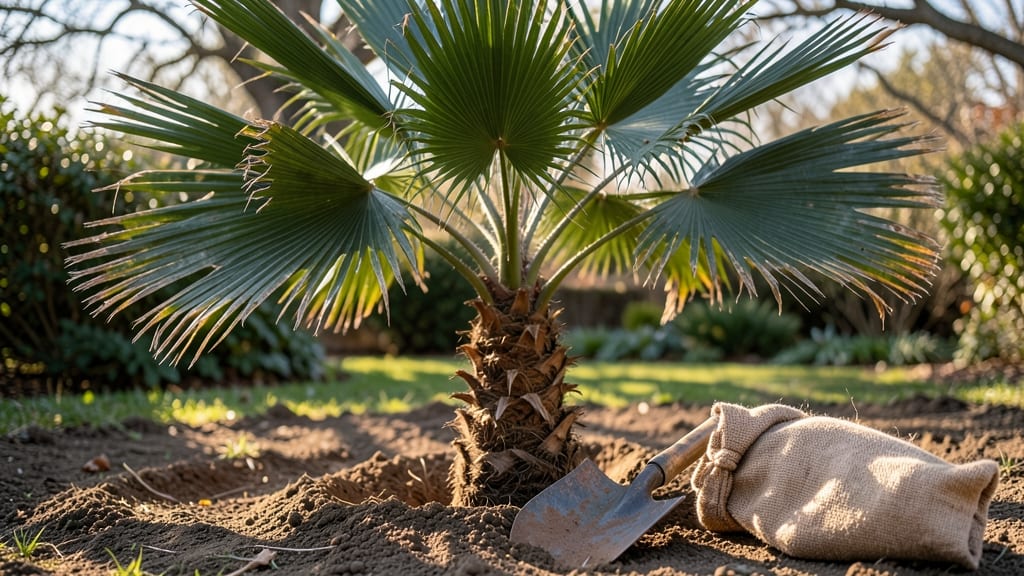
Transplanting palm trees without killing them starts with knowing the right time and technique. 🌴 I’ve moved everything from delicate dwarf palms to towering Canary Island palms—and the difference between success and failure often comes down to preparation, not brute strength.
The key is minimizing root shock by handling the plant carefully and giving it the perfect new home.
Timing matters most: spring or early fall when temperatures are mild and the tree isn’t under stress from heat or drought. Dig a hole twice as wide as the root ball but no deeper, then loosen the roots gently before easing the palm into place.
Water deeply right after planting, and keep the soil moist (not soggy) for the first 6-8 weeks—this is when roots establish or fail.
📚 In This Guide
- What you need
- Instructions
- Tips and common mistakes
- Wrapping up and next steps
What you need
- ● Shovel or spade: A heavy-duty digging shovel (18–24 inches wide) for mature palms or a hand trowel for smaller pots.
- ● Pruning shears or handsaw: To trim roots or fronds that may be damaged or overgrown.
- ● Wheelbarrow or tarp: For transporting soil and debris (4x6 ft minimum).
- ● Garden hose or watering can: With a spray nozzle for gentle hydration.
- ● Burlap or landscape fabric: To secure the root ball (2–3 ft wide, depending on palm size).
- ● Stakes and twine: For supporting the palm during transplanting (2–4 stakes, 1/4-inch twine).
- ● Gloves: Heavy-duty work gloves to protect your hands from thorns and rough roots.
- ● Mulch: Organic mulch (3–4 inches deep) like pine bark or wood chips.
- ● Transplanting fertilizer: A balanced, slow-release fertilizer (e.g., 6-6-6 or 8-3-9 ratio).
- ● Root stimulator: A mycorrhizal inoculant or rooting hormone to boost recovery.
- ● Soil amendments: Peat moss or coconut coir to improve drainage in heavy clay soils.
- ● Anti-transpirant spray: To reduce stress on the palm post-transplant.
- ● Post-hole digger: If planting in hard-packed ground for the new hole.
- ● Safety gear: Eye protection (for debris) and knee pads (for comfort).
Step-by-Step instructions for transplanting palm trees
Here's the method I've used successfully with mature palms—minimizing shock and maximizing survival.
🌿 Step 1: Prepare the New Planting Site
Choose a location with well-draining soil and full sun exposure—palms thrive where they get at least 6 hours of direct sunlight daily. Test the soil by digging a 12-inch deep hole; if water pools after 10 minutes, amend with 2-3 inches of coarse sand or gravel to improve drainage.
Dig a hole twice as wide as the palm's root ball but no deeper. The top of the root ball should sit 1-2 inches above ground level—this prevents water from pooling around the trunk and causing rot. I always mark the original soil line with a pencil before digging to ensure proper placement later.
🪴 Step 2: Dig and Prepare the Palm for Transplanting
Water the palm deeply 2-3 days before transplanting to reduce stress. On moving day, dig a wide trench around the root ball—12-18 inches away—using a sharp spade. Cut straight down to avoid tearing roots. For larger palms, I use a pruning saw to sever thick roots cleanly.
Lift the palm carefully by its root ball, not the trunk. Wrap the root ball in burlap or a tarp to protect roots during transport. If transplanting in hot weather, cover the root ball with damp burlap to keep it cool and hydrated. The goal is to minimize root exposure—every minute counts for survival.
☀️ Step 3: Plant and Stabilize the Palm
Lower the palm into the prepared hole, ensuring the root ball sits level with the surrounding soil. Backfill with the native soil mixed with 1 part compost to replenish nutrients lost during transplanting. Tamp the soil gently around the edges to eliminate air pockets but avoid compacting it too firmly.
Create a water basin around the base by mounding soil slightly higher than the surrounding area. This directs water straight to the roots during irrigation. For young or newly transplanted palms, I install 3-4 wooden stakes around the trunk and secure them with soft ties to prevent wind damage until roots establish.
💧 Step 4: Water and Monitor Post-Transplant
Water deeply immediately after planting—10-15 gallons for mature palms—to settle the soil and eliminate air gaps. Continue watering every 2-3 days for the first 4 weeks, then taper to once weekly once new growth appears. Overwatering is the biggest mistake—palms prefer dry soil between waterings once established.
Apply a layer of 2-3 inches of mulch (wood chips or bark) around the base, keeping it 6 inches away from the trunk to prevent rot. Monitor the palm for yellowing fronds (a sign of stress) or wilting leaves (indicating underwatering). Most palms show signs of recovery within 6-8 weeks if cared for properly.
Tips & tricks for transplanting palm trees
Common mistakes can turn a simple transplant into a stressful experience—here's how to avoid them and ensure your palm thrives.
Soil Drainage is Non-Negotiable: The 10-minute water test in Step 1 is critical—if water pools, you're risking root rot. For heavy clay soils, mix in 4-6 inches of coarse sand or gravel instead of just 2-3 inches. I've seen palms fail within weeks because homeowners skipped this step, thinking "a little extra water won't hurt." It absolutely will. For container-grown palms, pre-drill drainage holes in the bottom if you're repotting.
The Root Ball Protection Hack: When wrapping the root ball in Step 2, use two layers of burlap for extra protection during transport. The damp burlap trick works wonders in hot weather, but I recommend adding a third layer of wet newspaper underneath for even more moisture retention. This prevents roots from drying out completely during the move—something that can happen faster than you'd think, especially in direct sunlight.
Staking Strategy for Stability: Those 3-4 wooden stakes in Step 3 should be positioned 12-18 inches away from the trunk and buried half their length into the soil. Use soft plant ties or old t-shirts (not wire!) to secure them—wire can cut into the trunk as it grows. I've seen staking fail when people either don't bury stakes deep enough (they topple) or use tight ties that restrict trunk growth. Check stakes every 2-3 weeks and loosen ties as the palm grows.
Post-Transplant Watering Schedule: The 10-15 gallons immediately after planting might seem like a lot, but it's essential to eliminate air pockets around the roots. For the first 4 weeks, I recommend using a soaker hose set to deliver water slowly at the base rather than pouring from above. This prevents soil erosion and ensures water penetrates deeply. After the initial 4 weeks, reduce to weekly watering only if the soil feels completely dry 2 inches below the surface—stick your finger in to check.
Pro Tips for Transplant Palm Trees
- Common mistakes can turn a simple transplant into a stressful experience—here's how to avoid them and ensure your palm thrives.
- Soil Drainage is Non-Negotiable: The 10-minute water test in Step 1 is critical—if water pools, you're risking root rot.
- The Root Ball Protection Hack: When wrapping the root ball in Step 2, use two layers of burlap for extra protection during transport.
Frequently asked questions
Got questions about transplanting palm trees? You’re not alone! Here are answers to the most common concerns to help you feel confident before digging in.
When is the best time to transplant palm trees?
Transplant your palm tree during its dormant season—typically late fall or early spring (before new growth starts). Avoid extreme heat or frost, as these can stress the plant. Young palms adapt easier than mature ones, so act quickly if you’re moving them!
Can I transplant a palm tree in full sun or shade?
Palms thrive in full sun, but if your new spot has partial shade, choose a slow-growing variety like the Areca or Dwarf Palmetto. Avoid deep shade—it weakens the tree and slows recovery. Gradually acclimate shade-loving palms to sun over weeks to prevent leaf scorch.
How often should I water a newly transplanted palm tree?
Water deeply every 2–3 days for the first 2 weeks, then taper to once a week (adjust for soil type). Overwatering suffocates roots, while underwatering stresses the tree. Check soil moisture 2 inches down—if dry, it’s time to hydrate! Mulch helps retain moisture.
What if my palm tree’s leaves turn yellow after transplanting?
Yellowing leaves are normal due to transplant shock, but if it persists beyond 3–4 weeks, check for root rot (soggy soil) or nutrient deficiency. Trim dead fronds and fertilize lightly with a balanced palm fertilizer (like 8-2-12) to boost recovery.
Are there alternatives to digging up a large palm tree?
Yes! For mature palms, consider topping (pruning the crown) to reduce size before transplanting, or hire a pro for air spading—a gentler method that lifts roots without full excavation. Smaller palms (under 10 feet) are easier to DIY; larger ones may need a crane!
Wrapping up and next steps
Transplanting palm trees can feel daunting, but with the right prep, patience, and care, your new greenery will thrive in its fresh home! 🌱 The key is minimizing stress by digging carefully, watering consistently, and protecting from sunburn—plus, choosing the perfect season and location makes all the difference.
You’ve got this!
Ready to take the next step? Monitor your palm closely for the first few weeks, adjust watering as needed, and watch it grow stronger every day. Need more tips? Explore our guide on post-transplant palm care to keep your tropical beauty flourishing!