
Pruning
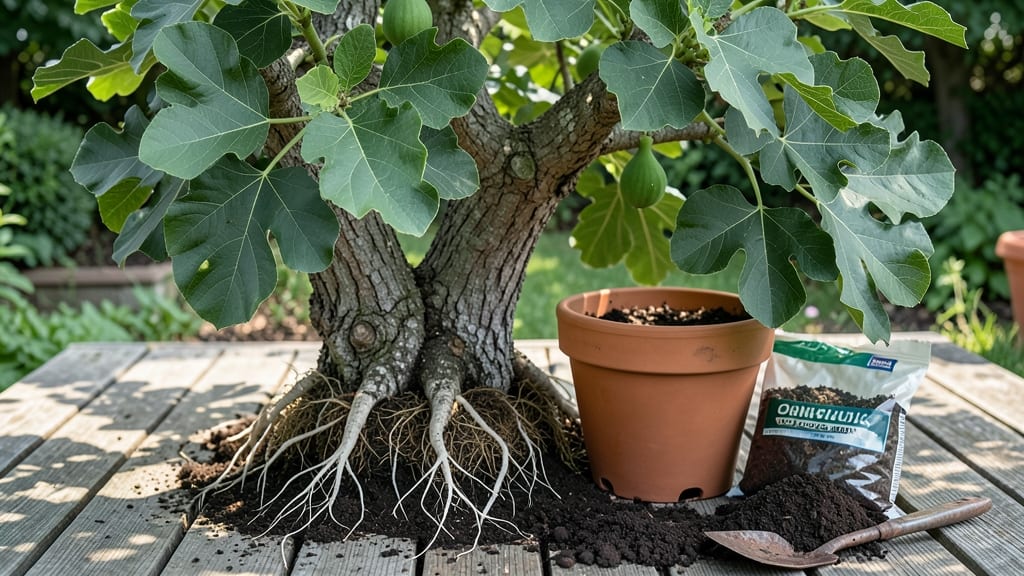
Repotting your fig tree isn’t just about bigger pots—it’s about giving those roots the space to breathe and grow strong. I’ve learned the hard way that cramped roots mean stunted growth, and a tree that looks happy on top but struggles below.
The best time to repot is early spring, when new growth signals the tree’s ready for a change, and you’ll see the difference in just a few weeks.
You’ll need a pot just 2 inches larger in diameter than the current one, fresh well-draining soil mix, and a few basic tools: gloves, a trowel, and maybe some root stimulator if you’re feeling fancy.
The key is to handle those roots gently—fig trees are tough, but they don’t like rough treatment. I’ve even repotted mine in my kitchen with just these supplies and a little patience.
Once you’ve loosened the roots and settled the tree into its new home, keep the soil lightly moist but not soggy for the first two weeks. You’ll notice fresh leaves appearing within a month, and by summer, your fig tree will be thriving like never before.
The secret? Timing, gentle handling, and the right soil—no magic involved.
This method works for both container-grown figs and those in the ground, though potted trees need repotting every 2-3 years. Whether you’re dealing with a small dwarf variety or a sprawling standard, the principles stay the same. Let’s get those roots happy and growing!
📚 In This Guide
- What you need
- Instructions
- Tips and common mistakes
- Wrapping up and next steps
What you need
- ● New pot: 1–2 inches larger in diameter than the current pot (ensure it has drainage holes!). Pro tip: Terracotta or ceramic pots work best for airflow.
- ● High-quality potting mix: 1 bag (1–2 cubic feet) of well-draining, fig-tree-friendly soil (e.g., cactus/succulent mix + perlite/pumice for aeration).
- ● Drainage layer: Small gravel, lava rocks, or broken pottery (1–2 inches thick) to prevent root rot.
- ● Gloves: 1 pair (thick gardening gloves to protect from thorns and sap).
- ● Pruning shears: 1 pair (sterilized with rubbing alcohol).
- ● Watering can: 1 with a narrow spout for gentle watering.
- ● Root stimulator: 1 small bottle (e.g., mycorrhizal fungi or seaweed extract) to boost root health.
- ● Mulch: 1 bag (orchid bark or pine needles) to retain moisture post-repotting.
- ● Support stake: 1 bamboo or wooden stake (if your fig tree is top-heavy or leggy).
- ● Hose with nozzle: For rinsing off old soil or cleaning tools.
Step-by-Step instructions for repotting a fig tree
Here's how I handle repotting figs without shocking their roots.
Choose the Right Time and New Container
Spring is ideal—right after new growth begins. Avoid winter or extreme heat. Pick a pot 2-3 inches wider than the current one, with drainage holes. Clay pots work best for figs because they breathe, but plastic holds moisture longer if you live in a dry climate.
Check the current pot's drainage. If water pools at the bottom, upgrade to a container with better holes. I like to test fit by placing the old pot inside the new one—there should be 1-2 inches of space around the root ball for growth.
Prepare the Fig Tree and New Pot
Water the fig 1-2 days before repotting so the roots are moist but not soggy. This makes handling easier and reduces root damage. Remove the tree gently, tapping the sides of the pot if needed. Don’t force it—fig roots are brittle and can snap if pulled.
Cut any circling or tangled roots with sterilized scissors. These roots strangle the plant over time. Loosen the outer roots slightly with your fingers to encourage outward growth in the new pot. Fill the bottom 1 inch of the new container with fresh potting mix—figs prefer well-draining, sandy soil.
Repot and Settle the Tree
Place the fig in the center of the new pot, ensuring the top of the root ball sits ½ inch below the rim. Fill in around the sides with potting mix, pressing lightly to remove air pockets. Stop when the soil level matches the old pot—figs hate having their crown buried too deep.
Water thoroughly until it drains from the bottom. Let it sit for 3-5 days before fertilizing. This gives the roots time to adjust. Place the tree in bright, indirect light for the first week—direct sun can stress newly repotted figs.
Monitor and Encourage Recovery
Watch for new growth in 4-6 weeks—that’s your sign the tree is settling in. If leaves yellow, it’s usually overwatering; brown edges mean underwatering. Figs are drought-tolerant once established, but they’ll need deep watering every 7-10 days during the first month after repotting.
After two weeks, you can resume regular care. I like to add a slow-release fertilizer at this stage to support the extra energy needed for root expansion. Keep the tree in its new pot for at least a year before considering another repot—figs prefer being slightly root-bound.
Tips & tricks for repotting a fig tree
Repotting your fig tree doesn't have to be stressful—these simple tricks will help you avoid common mistakes and keep your plant thriving.
Timing is Everything: The 1-2 days of pre-watering before repotting is crucial. This ensures roots are moist enough to handle without being waterlogged. I've learned the hard way that skipping this step leads to brittle roots that break easily during removal. Water again right after repotting to settle the soil and encourage new root growth.
Root Care Matters: When you see those circling roots in Step 2, don't just trim them—give them a good inspection. These roots can actually strangle your fig over time by growing in circles around the root ball. Use sterilized scissors to make clean cuts, and try to loosen the outer roots gently with your fingers. This encourages outward growth into the new soil.
Soil Level Check: That ½-inch below the rim measurement in Step 3 is more important than you might think. Figs hate having their crown buried too deep, which can lead to rot. Use a pencil or chopstick as a guide when placing your tree in the new pot. The top of the root ball should sit exactly at this level—no higher, no lower.
Recovery Period: The 3-5 day wait before fertilizing after repotting gives your fig's roots time to establish themselves in the new environment. During this period, keep the tree in bright, indirect light and monitor the soil moisture closely. Figs are drought-tolerant once established, but newly repotted trees need consistent moisture to recover properly.
Pro Tips for Repot Fig Tree
- Repotting your fig tree doesn't have to be stressful—these simple tricks will help you avoid common mistakes and keep your plant thriving.
- Timing is Everything: The 1-2 days of pre-watering before repotting is crucial.
- Root Care Matters: When you see those circling roots in Step 2, don't just trim them—give them a good inspection.
Frequently asked questions
Got questions about repotting your fig tree? You’re not alone! Here are answers to the most common concerns—from timing to troubleshooting—to keep your tree happy and healthy.
When is the best time to repot a fig tree?
The ideal time is early spring (before new growth starts) or late winter. Avoid repotting in summer or fall—your tree will struggle with stress during dormancy or extreme heat. If you spot root-bound signs (roots circling the pot or emerging from drainage holes), act fast!
How do I know if my fig tree needs repotting?
Watch for these red flags:
- Roots growing in circles or bursting through the pot’s bottom.
- Water drains too quickly (roots fill the pot, leaving no room for soil).
- Stunted growth or yellowing leaves despite proper care.
Can I repot a fig tree in any season?
While possible, avoid repotting in summer (heat stress) or deep winter (dormancy). If you must repot outside these windows, choose a cool, overcast day and keep the tree in partial shade for 1–2 weeks post-repotting to aid recovery.
What if my fig tree looks stressed after repotting?
Stress is normal! Expect leaf drop or wilting for 1–2 weeks. To help:
- Water lightly (keep soil moist but not soggy).
- Avoid direct sun for 7–10 days.
- Hold off on fertilizing for 4–6 weeks.
What’s the best pot size for a repotted fig tree?
Choose a pot 2–3 inches larger in diameter than the current one. Fig trees hate overly spacious pots, which cause soil to stay wet too long. Use a pot with drainage holes and terracotta (breathable material) for best results.
What if my fig tree’s roots are rotten or mushy?
Root rot is serious! Trim all brown/black, mushy roots with sterilized scissors, then repot in fresh, well-draining soil. Add a fungicide (like neem oil) to prevent reinfection. Keep the tree in bright, indirect light and water sparingly until new roots grow.
Wrapping up and next steps
Repotting your fig tree doesn’t have to be stressful—it’s all about timing, technique, and tender care! 🌱 With the right tools, a little patience, and the steps outlined above, you’ll give your tree the fresh start it deserves.
Watch as its roots spread confidently into new soil, and its leaves burst with renewed vigor.
Ready to take the next step? Mark your calendar for the ideal repotting window (spring or early fall) and gather your supplies. Your fig tree—and your green thumb—will thank you! 🌿✨