
Pruning
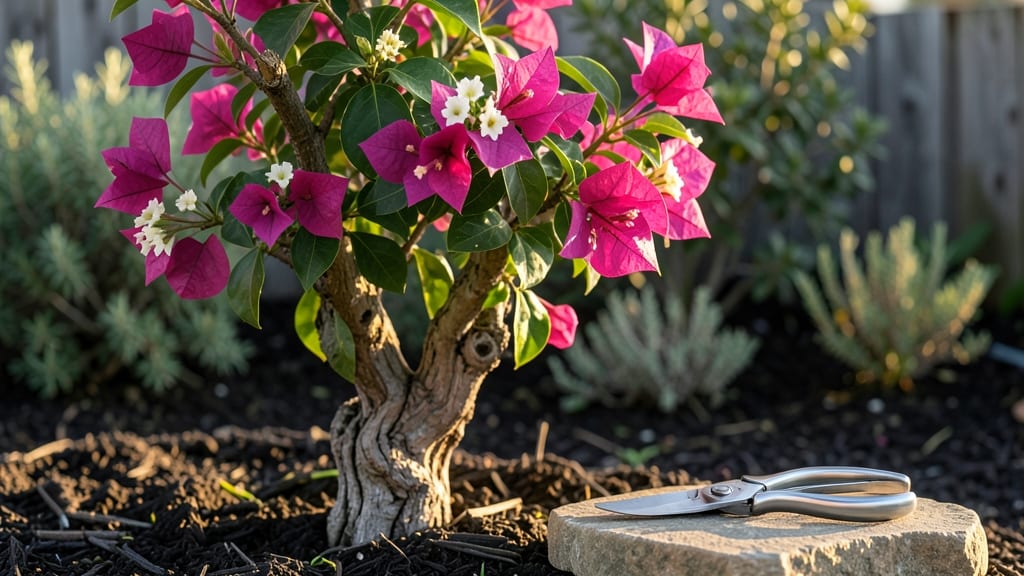
Learn how to prune bougainvillea into a tree—this simple technique will give you a bold trunk, strong branches, and vibrant blooms all year. I’ve shaped mine into a small, sculpted tree that stands like a living centerpiece, and the key is in the pruning.
Most people trim bougainvillea like a shrub, but this method trains it to grow upward like a tree, with a strong central leader and layered branches.
The secret lies in two pruning sessions a year: once in late winter (before new growth) to shape the trunk, and again in early summer to encourage branching.
You’ll need sharp bypass pruners, a sturdy stake for support, and a little patience—this isn’t a quick fix, but the results are worth it. Start with a young plant or a well-established one you’re willing to reshape, and within a season, you’ll see that thick, woody trunk taking shape.
What you’ll end up with is a compact, tree-shaped bougainvillea that blooms continuously from spring through fall, with vibrant magenta or purple flowers cascading from its branches. The trunk thickens over time, and the structure becomes sturdy enough to support its own weight—no more floppy vines.
Plus, the blooms last longer because the plant isn’t competing with too many weak stems.
This method works best in warm climates (zones 9-11), but with proper winter protection, you can adapt it for cooler areas. The pruning itself takes about 30 minutes per session, and the maintenance is minimal once the shape is established.
Ready to turn that sprawling vine into a showstopper? Let’s get started.
📚 In This Guide
- What you need
- Instructions
- Tips and common mistakes
- Wrapping up and next steps
What you need
- ● Pruning shears: Sharp, bypass-type shears (4–6 inches) for clean cuts on smaller stems.
- ● Loppers: Bypass or anvil-type (8–12 inches) for thicker branches (½–1½ inches).
- ● Pruning saw: A curved-tooth saw for branches thicker than 1½ inches.
- ● Rubbing alcohol (70% or higher): 1 small bottle (4 oz) to sterilize tools between cuts.
- ● Garden gloves: Heavy-duty, cut-resistant gloves (1 pair) to protect hands from thorns.
- ● Twine or zip ties: 1–2 rolls (¼-inch width) to secure branches during shaping.
- ○ Pruning sealant (optional but helpful): 1 small tube (2 oz) for large cuts to prevent disease.
- ● Ladder or sturdy stool: If your bougainvillea is taller than 6 feet.
- ● Disposable pruning bags: 1–2 bags to collect trimmings for compost.
- ● Plant tie or soft wire: For temporary support while branches heal.
- ● Spray bottle with water: To mist cuts and reduce stress on the plant.
- ● Notebook & pen: To sketch your desired tree shape before pruning.
Step-by-step instructions for pruning bougainvillea into a tree
Here's how to transform your sprawling bougainvillea into a stunning, blooming tree shape.
Choose the Right Time and Tools
Prune bougainvillea in late winter or early spring, just before new growth begins. This timing ensures you cut back before the plant puts energy into new shoots and blooms. Use sharp, clean pruners or loppers—dull tools crush stems and invite disease. I always sterilize my tools with rubbing alcohol between cuts to prevent spreading any potential infections.
Select a central leader—the main vertical stem you want to grow upward. Look for the strongest, most upright shoot in the center of the plant. If your bougainvillea is already mature, you may need to train a new leader by pruning competing stems back to encourage one dominant trunk.
Shape the Trunk and Main Branches
Start by removing any weak or crossing branches from the main trunk. Cut these back to their point of origin using a clean, angled cut just above an outward-facing bud. This encourages outward growth and prevents future congestion. The goal is to create a single, clear trunk that's at least 12-18 inches tall before branching begins.
Once your trunk reaches the desired height, select 3-4 strong lateral branches to become your main scaffold. These should be evenly spaced around the trunk, about 6-8 inches apart. Prune any competing branches back hard—cut them to within ½ inch of the trunk. This aggressive pruning forces the plant to focus energy on the branches you’ve chosen to develop.
Develop the Canopy and Encourage Blooms
After establishing your main branches, focus on shaping the canopy. Prune side shoots to encourage a rounded, tree-like form. Cut back any shoots that grow inward or cross over others—these will compete for sunlight and weaken the overall structure. Leave 2-3 smaller branches on each main scaffold to create a natural, layered look.
Here’s the thing—bougainvillea blooms on old wood, so avoid over-pruning established branches. Instead, trim back one-third of the current season’s growth on mature branches to promote new flowering shoots. You’ll see vibrant blooms return within 6-8 weeks of pruning, provided the plant gets full sun and consistent watering.
Maintain and Refine Throughout the Year
After the initial pruning, monitor your bougainvillea regularly. In late summer, give it a light trim to shape the canopy and remove any dead or diseased branches. Pinch back new growth to encourage bushier, more compact growth. This keeps the tree shape tight and prevents leggy, unruly branches.
Fertilize lightly in spring with a balanced, 10-10-10 formula to support new growth. Avoid heavy feeding in summer, as this can lead to excessive foliage at the expense of blooms. Water deeply once a week during dry spells, but let the soil dry slightly between waterings—bougainvillea is drought-tolerant once established.
Tips & tricks for perfectly pruned bougainvillea trees
Transforming your bougainvillea into a tree shape takes patience and precision—but these insider tricks will help you avoid common pitfalls and create a stunning, blooming focal point.
Timing is Everything: Late winter or early spring is non-negotiable for pruning bougainvillea. This timing ensures you cut back before the plant directs energy into new growth, which could disrupt your tree shape. If you miss this window, you might see leggy growth or delayed blooming. I’ve learned the hard way—pruning too early can shock the plant, while waiting too long means you’ll be cutting back next year’s blooms.
The Central Leader Secret: When selecting your central leader, look for the strongest vertical stem that’s already growing upward. If your bougainvillea is mature, you may need to prune competing stems back aggressively to encourage one dominant trunk. This step is critical—if you don’t establish a clear leader early, you’ll end up with a multi-trunked shrub instead of a tree. Think of it like training a young sapling to grow straight and strong.
Pruning Angles Matter: Always make clean, angled cuts just above an outward-facing bud when shaping branches. This technique encourages new growth in the direction you want, creating a fuller, more balanced tree shape. I’ve seen too many pruning jobs where cuts were made too close to the trunk or at the wrong angle, leading to weak regrowth or unsightly stubs. A sharp pair of pruners and a little practice go a long way.
Bloom Encouragement: Remember, bougainvillea blooms on old wood, so avoid over-pruning established branches. Instead, trim back just one-third of the current season’s growth on mature branches to stimulate new flowering shoots. This balance is key—too much pruning can reduce blooms, while too little leaves your tree looking unkempt. Within 6-8 weeks, you’ll be rewarded with vibrant blooms if you’ve given your plant full sun and consistent watering.
Pro Tips for Prune Bougainvillea Into A Tree
- Transforming your bougainvillea into a tree shape takes patience and precision—but these insider tricks will help you avoid common pitfalls and create a stunning, blooming focal point.
- Timing is Everything: Late winter or early spring is non-negotiable for pruning bougainvillea.
- The Central Leader Secret: When selecting your central leader, look for the strongest vertical stem that’s already growing upward.
Frequently asked questions
Got questions about turning your bougainvillea into a stunning tree shape? Here are some of the most common concerns—and their answers—to help you prune like a pro!
When is the best time to prune bougainvillea into a tree shape?
The ideal time is late winter or early spring, just before new growth begins. This timing ensures your plant has energy to recover and bloom vigorously. Avoid pruning in fall or during flowering seasons—you’ll sacrifice those gorgeous blooms! For tropical climates, prune after heavy rains or storms to restore shape.
How much can I cut back without harming the plant?
You can safely prune up to ⅓ of the plant’s total growth in one session, but avoid overdoing it. For a tree shape, focus on selective pruning—cut back long, leggy branches to encourage a thicker trunk and fuller canopy. Thin out crowded stems to improve airflow and sunlight penetration. Never remove more than 50% in a single year!
Will pruning my bougainvillea into a tree reduce its flowers?
Not if done correctly! Bougainvillea blooms on new growth, so strategic pruning actually stimulates more flowers. When you shape it into a tree, you’re encouraging dense, bushy growth where blooms thrive. Just avoid heavy pruning during the blooming season—save it for off-seasons to keep those vibrant bracts coming year-round.
What should I do if my bougainvillea looks sad after pruning?
Don’t panic—it’s normal for bougainvillea to temporarily slow down after pruning. Give it time to recover (2–4 weeks) and ensure it gets:
- Full sun (6+ hours daily)
- Well-draining soil (avoid soggy roots!)
- Balanced fertilizer (low nitrogen, high phosphorus/potassium)
- Consistent watering (let soil dry slightly between waterings)
Can I prune bougainvillea into a tree shape in containers?
Container-grown bougainvillea responds even better to pruning because you have full control over its shape and growth. Use the same techniques as outdoor plants, but:
- Choose a sturdy container (at least 15–20 gallons for mature plants).
- Prune slightly more aggressively to encourage compact growth.
- Fertilize regularly (every 4–6 weeks in growing season).
- Rotate the pot occasionally for even sunlight exposure.
Wrapping up and next steps
Transforming your bougainvillea into a stunning tree-shaped masterpiece is totally within reach—just follow the right techniques and a little patience! 🌿 With the right tools, timing, and pruning know-how, you’ll enjoy a year-round burst of vibrant blooms while keeping your plant healthy and thriving.
The key? Start small, stay consistent, and embrace the creative process—your green thumb will shine brighter than those colorful flowers!
Ready to take the next step? Grab your pruners, pick a sunny spot, and give your bougainvillea the love it deserves! 🌸 Whether you’re a pruning pro or a beginner, every trim brings you closer to that dream tree shape. Happy pruning!