Size
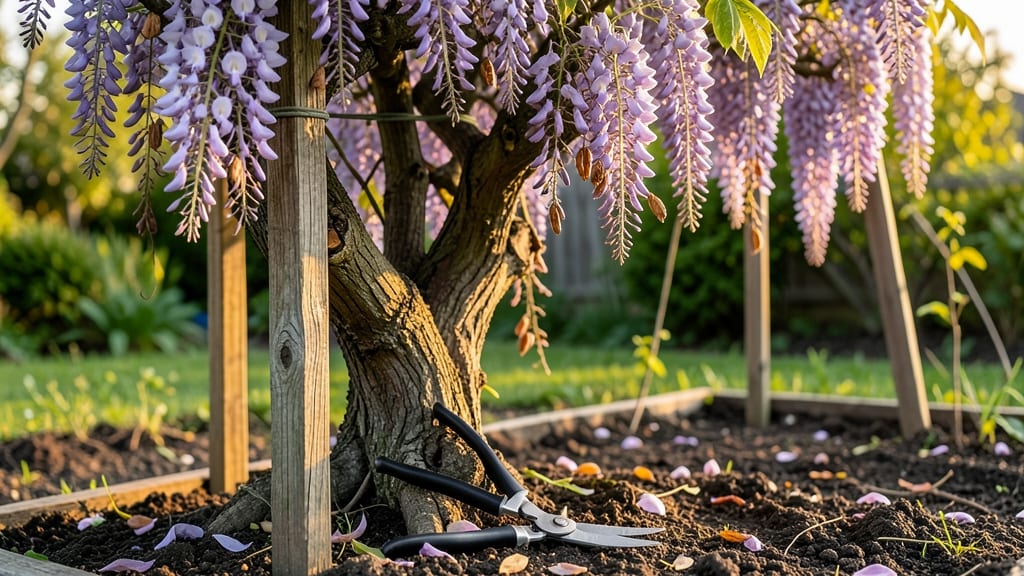
Learn how to grow wisteria into a tree—it’s a rewarding process that demands years of patience, but the fragrant, tree-like masterpiece you’ll create is worth every effort. 🌿 I’ve trained mine to climb a sturdy post, and while it won’t look like a traditional tree overnight, the process creates a natural, climbing masterpiece with a strong trunk and cascading blooms.
The key is pruning early and often to encourage vertical growth while keeping the base clear of competing stems. You’ll need a strong support system—think thick wooden posts or metal trellises—and a sharp pair of pruners to shape the vine as it grows.
Wisteria thrives in full sun, so choose a spot where it can soak up at least 6 hours of sunlight daily.
Within 3-5 years, you’ll see a thickened trunk and lush, skyward growth with clusters of fragrant purple blooms in spring. The real magic happens in late winter when you prune back the previous year’s growth to encourage fresh, vigorous shoots.
It’s a slow process, but the payoff—a tree-like wisteria with a sturdy base and dramatic height—is worth every season of waiting.
Works best in USDA zones 5-9, though varieties like Wisteria sinensis handle cooler climates better. For faster results, start with a young vine and train it from the beginning—older plants take longer to reshape. Let’s get growing!
📚 In This Guide
- What you need
- Instructions
- Tips and common mistakes
- Wrapping up and next steps
What you need
- ● Wisteria plant: A healthy, established vine (at least 2–3 years old) with a strong root system. Choose a variety like Wisteria sinensis or Wisteria floribunda for best results.
- ● Support structure: A tree trunk or post (4–6 inches in diameter, 6–8 feet tall). Cedar or redwood works well to resist rot.
- ● Sturdy wire or tree ties (1/4-inch galvanized steel or soft fabric ties, 10–15 feet total). Avoid plastic ties that can girdle the vine.
- ● Pruning tools: Bypass pruners (for small branches, sharp and clean).
- ● Loppers (for thicker branches, 18–24 inches long).
- ● Hand saw (for stubborn branches, pruning saw with a curved blade).
- ● Gloves: Heavy-duty gardening gloves (to protect from thorns and sap).
- ● Disinfectant: Rubbing alcohol (70% or higher) or a pruning sealant (to prevent disease).
- ● Fertilizer: Balanced slow-release fertilizer (10-10-10) or organic compost (apply in early spring).
- ● Mulch: Wood chips or shredded bark (2–3 inches deep) to retain moisture and suppress weeds.
- ● Trellis or lattice: Temporary support (if training multiple vines or filling gaps).
- ● Plant support straps: Velcro or elastic ties for easier adjustments as the vine grows.
- ● Sunlight meter: To ensure your wisteria gets 6+ hours of direct sun daily.
Step-by-Step guide to training wisteria as a tree
This method transforms sprawling vines into a graceful, self-supporting tree with a sturdy trunk.
🌱 Step 1: Select and Prepare the Right Vine
Choose a healthy, mature wisteria vine with multiple strong canes—at least 1 inch in diameter—that has already climbed a sturdy trellis or arbor. Look for canes with 3-4 buds per foot and no signs of disease. The thicker the main stems, the better they'll support future growth.
Real talk: If your vine is still young and thin, wait another season. You'll know it's ready when the canes feel solid to the touch and the buds are plump, not shriveled. I've seen gardeners rush this step with weak stems, and within two years, the weight of flowers snapped the trunk completely.
🪴 Step 2: Install a Central Support Stake
Drive a 4-foot wooden stake (or metal rebar) into the ground at a 45-degree angle next to your chosen main cane. The top should extend 6-8 inches above the vine's highest point. Secure the thickest, straightest cane to the stake using soft garden ties—never wire, which can cut into the bark as it grows.
Here's the thing—this isn't just support. The angle mimics natural wind resistance, encouraging the vine to thicken its trunk. I tie the cane loosely at first, then tighten as it grows. Too-tight ties strangle the stem over time. Check ties every 4-6 weeks and adjust.
✂️ Step 3: Prune for a Single Trunk
In late winter or early spring (before buds swell), remove all but one main cane—your future trunk. Cut competing stems back to the ground at the base. On the chosen cane, prune side branches back to 2-3 buds from the main stem. This forces energy upward rather than outward.
Watch for "suckers" (new shoots at the base)—they're energy vampires. Remove them immediately. I make my first major cut just above a strong outward-facing bud, angled away from the stake. This ensures the new growth follows your desired direction. After pruning, water deeply to 12 inches down to help recovery.
☀️ Step 4: Train Annual Growth Direction
Each spring, select the strongest upward-growing shoot from last year's growth and tie it to the stake at a slightly higher point. Remove all other competing vertical shoots. Let lateral branches grow freely only after the trunk reaches 8-10 feet tall—this prevents top-heavy collapse.
Here's where it gets fun—watch how the vine responds. If the trunk grows too fast and becomes leggy, it's getting too much sun. Provide afternoon shade during hot summers. If growth stalls, check for aphids (they love new wisteria shoots) and treat with neem oil if needed. Your goal is 12-18 inches of new trunk growth per year.
⏰ Step 5: Gradually Reduce Support Over Years
After 3-5 years, when the trunk reaches 3-4 inches in diameter, start reducing stake support. Remove one tie every 2-3 years, always from the bottom up. The vine's own weight will thicken the trunk naturally. By year 7, it should stand fully independent with minimal pruning.
Don't rush this—wisteria wood is brittle when young. I've seen trees snap under flower weight because owners removed supports too soon. Once fully self-supporting, prune only to shape, removing no more than 25% of foliage per year. The flowers will reward your patience with dramatic cascades.
Tips & tricks for perfect wisteria tree transformation
Transforming wisteria into a tree takes patience and precision—here's how to avoid common pitfalls and ensure your vine thrives.
Selection Tip: When choosing your main cane in Step 1, look for one that's slightly thicker than the 1-inch minimum—aim for 1.25-1.5 inches in diameter. These thicker stems contain more vascular tissue, which translates to faster trunk thickening. I've seen vines with 1.5-inch canes develop 2-inch trunks in just 4 years, while 1-inch canes often struggle to exceed 1.5 inches. The extra width makes all the difference when supporting future flower weight.
Stake Placement Strategy: In Step 2, don't just drive your 4-foot stake straight up—angle it slightly away from prevailing winds. This creates natural wind resistance that mimics what you'd find in a forest, where trees develop stronger trunks from constant movement. After installing, gently shake the stake to test stability. If it wobbles, drive it deeper or add a second stake for support. The goal is to create a stable anchor that won't move when the vine starts pushing against it.
Pruning Precision: During Step 3's pruning, make your cuts just above outward-facing buds using clean, sharp pruners. The angle of your cut matters—make a 45-degree bevel away from the stake. This directs new growth in the right direction while preventing water from pooling at the cut site, which can cause rot. I always sterilize my pruners with rubbing alcohol between cuts to prevent spreading disease. Remember, you're not just removing branches—you're sculpting the future shape of your tree.
Growth Monitoring: In Step 4, track your annual growth by marking the trunk height on your stake with a permanent marker each spring. This visual record helps you monitor whether you're hitting that 12-18 inch growth target. If you notice growth slowing below 12 inches, it's time to investigate—check for aphids, adjust watering (aim for 12 inches deep, 2-3 times per week), or provide afternoon shade if your climate gets too hot. The key is consistency in these growth conditions.
Pro Tips for Grow Wisteria Into A Tree
- Transforming wisteria into a tree takes patience and precision—here's how to avoid common pitfalls and ensure your vi...
- Selection Tip: When choosing your main cane in Step 1, look for one that's slightly thicker than the 1-inch minimum—a...
- Stake Placement Strategy: In Step 2, don't just drive your 4-foot stake straight up—angle it slightly away from preva...
Frequently asked questions
Got questions about transforming wisteria into a stunning tree-like specimen? You’re not alone! Here are answers to the most common concerns—so you can grow lush, skyward vines with confidence.
How long does it take for wisteria to grow into a tree shape?
Patience is key! With proper pruning, wisteria can start taking on a tree-like form in 2–3 years, but full structural strength (like a thick trunk) may take 5–7 years. Early pruning in winter or late fall accelerates the process by encouraging upward growth and trunk thickening.
Will pruning wisteria into a tree shape stunt its flowers?
Not if done right! Wisteria flowers bloom on new wood, so strategic pruning (like cutting back old growth in late winter) actually boosts blooms. Focus on shaping the trunk and main branches while preserving 1–2 years of growth per branch to ensure vibrant spring flowers.
Can I grow wisteria as a tree in a container or small yard?
Wisteria needs space—both roots and vines! While dwarf varieties (like Wisteria floribunda ‘Amethyst Falls’) work in containers (15+ gallon pots), they’ll still need a sturdy support structure (like a trellis or arbor) and regular pruning to control sprawl. For small yards, consider training it vertically along a fence or pergola.
How do I protect wisteria from winter damage when growing it as a tree?
Cold snaps can stress young trunks. Mulch heavily around the base (3–4 inches of wood chips) and wrap the trunk in burlap or tree guard for the first few winters. Avoid heavy pruning in late fall—wait until late winter/early spring (after frost) to prune. In extreme climates, consider a microclimate (like a sunny, sheltered spot).
Why is my wisteria’s trunk splitting or weak after pruning?
Weak trunks often result from over-pruning or improper support. Ensure you’re leaving 3–5 main branches to distribute weight, and tie the trunk to a sturdy stake (like a bamboo pole) for the first 2–3 years. If splits appear, prune back to healthy wood and apply tree wound sealant (optional) to prevent rot.
What’s the best time to prune wisteria for tree growth?
Timing is everything! Winter dormancy (late Dec–Feb) is ideal for structural pruning (removing deadwood, shaping the trunk). For light shaping (like trimming wayward branches), prune right after flowering (late spring) to avoid cutting off next year’s blooms. Avoid summer pruning—it stresses the plant.
Still stumped? Drop your wisteria woes in the comments—we’re happy to help you grow a showstopping tree-shaped vine!
Wrapping up and next steps
Growing wisteria into a stunning, tree-like specimen is all about patience, proper pruning, and a little creativity! 🌿 By choosing the right variety, providing strong support, and mastering the art of pruning for structure, you’ll encourage a thick trunk and skyward growth.
Remember, consistency is key—regular trimming and training will reward you with lush, fragrant blooms and a show-stopping focal point in your garden.
Now that you’re armed with the know-how, roll up your sleeves and start shaping your wisteria dream! Whether you’re a beginner or a seasoned gardener, every cut brings you closer to that majestic, tree-like vision. Happy pruning—and may your wisteria reach new heights! ✨