
Pruning
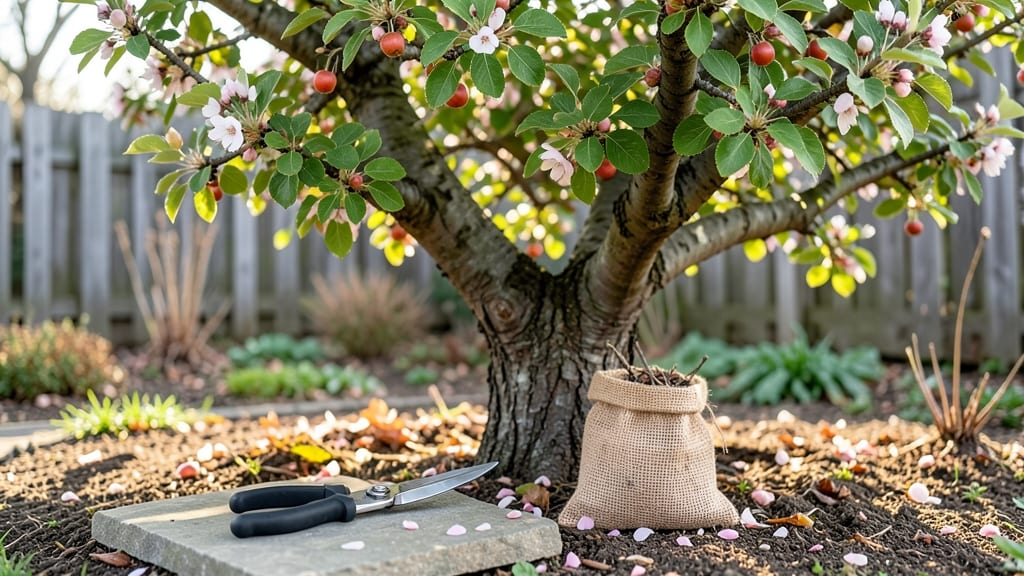
Pruning a crabapple tree transforms it from a tangled mess to a showstopper in your yard. 🌿 I’ve watched these trees go from scraggly to stunning after just one proper pruning session—it’s the difference between a few sad blooms and a canopy bursting with color.
The key is timing, technique, and knowing which branches to keep (or cut).
You’ll need sharp pruners, a ladder, and a clear day to avoid stressing the tree. Late winter or early spring is the sweet spot—before buds swell but after the worst cold snaps. Start by removing dead or crossing branches first; they’re the easiest wins and clear space for the rest.
Think of it like giving your tree a haircut—less is more, and you want to encourage airflow and sunlight to reach the center.
After you’re done, your tree will reward you with healthier branches, more abundant blooms, and fewer pests sneaking in. The shape stays balanced, and new growth will emerge within weeks, greener and stronger than before.
Just avoid over-pruning—never take more than 25% of the canopy in one go, or you’ll shock the tree.
This works for both young trees you’re shaping and mature ones needing rejuvenation. Whether you’re pruning a 10-year-old or a century-old crabapple, the same principles apply. Let’s get those branches looking their best!
📚 In This Guide
- What you need
- Instructions
- Tips and common mistakes
- Wrapping up and next steps
What you need
- ● Bypass pruners – Sharp, clean, and disinfected (alcohol or bleach wipe works). Choose a 5-inch blade for smaller branches.
- ● Loppers – For branches ½ to 1½ inches thick. Look for bypass-style (not anvil) for cleaner cuts.
- ● Pruning saw – A curved-tooth saw for branches thicker than 1½ inches. Avoid cheap saws—they can tear wood.
- ● Gloves – Heavy-duty gardening gloves (preferably nitrile-coated) to protect from thorns and sap.
- ● Disinfectant – 70% isopropyl alcohol or a 10% bleach solution to clean tools between cuts and prevent disease spread.
- ○ Pruning sealant – Optional but helpful for large cuts (>2 inches) to prevent decay. Use a latex-based sealant.
- ● Ladder or step stool – If your tree is taller than 6 feet. Choose a stable, extendable ladder with non-slip feet.
- ● Heavy-duty trash bags – For collecting pruned branches and diseased wood.
- ● Notebook & pen – To sketch a simple pruning map of your cuts before you start.
- ● Weather check – Prune on a dry, calm day (avoid wind or rain). Early morning or late afternoon is ideal.
- ● First-aid kit – Just in case! Crabapple thorns are sharp.
- ● Eye protection – Safety goggles to shield from debris.
- ● Long sleeves & pants – Protect against scratches and sap irritation.
- ● Water & snacks – Pruning can take time, so stay hydrated!
Step-by-step guide for pruning a crabapple tree
Here’s how to keep your tree thriving with clean, confident cuts.
✂️ Step 1: Gather Tools and Assess the Tree
Start with sharp, clean tools—bypass pruners for branches up to ½ inch thick and a pruning saw for thicker limbs. I always disinfect blades with rubbing alcohol to prevent spreading disease between cuts. Before you begin, scan the tree for dead, crossing, or diseased branches. These are your first targets—they’re the easiest to spot and remove.
Look for branches that rub against each other or grow inward. These compete for sunlight and can create weak spots where pests or disease enter. Mark these with flagging tape if you’re unsure—you’ll thank yourself later when you don’t accidentally prune healthy growth. The goal here is to open the canopy so air and light reach the center of the tree.
✂️ Step 2: Remove Dead, Diseased, or Damaged Wood
Cut out any branches that are brown, brittle, or hollow—these are dead and won’t regrow. Make your cuts just outside the branch collar, the swollen area where the branch meets the trunk. This ensures the tree can seal the wound naturally. If a branch is diseased (look for oozing sap, fungal growth, or discolored leaves), sterilize your tools between cuts to avoid spreading pathogens.
I always remove suckers—those vigorous shoots growing from the base or trunk—first. They drain energy from the tree and create a messy, unkempt look. Use sharp pruners to make clean cuts at the base. If a branch is broken but still attached, remove it entirely unless it’s a large limb that could cause damage if it falls. In that case, cut it into smaller sections and dispose of them properly.
✂️ Step 3: Thin the Canopy for Better Airflow
Now focus on thinning the tree’s interior. Remove branches that cross or grow inward to reduce rubbing and improve light penetration. Aim to create an open, vase-like shape—this prevents future issues like fungal diseases that thrive in dark, damp centers. Start at the outer edges and work your way in, removing about 20-25% of the tree’s foliage in total. Over-pruning stresses the tree, so don’t go overboard.
Watch for water sprouts—fast-growing, vertical shoots that pop up along branches or the trunk. These are energy vampires and should be cut back to a lateral bud or branch. You’ll notice them as thin, upright stems with no leaves or tiny, sparse foliage. A quick snip here saves the tree from unnecessary strain. Always step back occasionally to visualize the tree’s shape—this helps you see what still needs attention.
✂️ Step 4: Shape for Balance and Structure
Now it’s time to refine the tree’s form. Crabapples respond well to a natural, slightly rounded shape, but avoid over-pruning the top—this can lead to a weak, top-heavy tree. Focus on removing branches that grow straight up or downward, as these are more prone to breaking in storms. Instead, encourage a balanced, outward growth pattern by cutting just above a lateral bud that faces the direction you want the branch to grow.
If the tree has a dominant central leader (the main upward-growing branch), preserve it unless it’s damaged. Side branches should be spaced evenly, with no two branches growing too close together. This spacing prevents future crowding and makes future pruning easier. After each cut, wipe your tools clean to avoid spreading sap or disease between branches.
✂️ Step 5: Clean Up and Monitor Recovery
Once you’ve finished pruning, collect and dispose of all debris—burning is best if the tree had disease, but a sealed trash bin works for healthy prunings. Avoid leaving clippings on the ground, as they can harbor pests or fungi. Now’s also a great time to apply a wound sealant (optional but helpful for larger cuts) to protect the tree from invading pathogens. I skip it on small cuts, as the tree’s natural healing process works fine without it.
Water the tree deeply after pruning to help it recover, especially if you’ve done significant cutting. Monitor the tree over the next few weeks for signs of stress, like wilting or yellowing leaves. If you see new shoots sprouting from old cuts, that’s a good sign—the tree is healing. Avoid heavy pruning in late summer or fall, as this can stimulate new growth that won’t harden off before winter. Spring is the best time to prune crabapples for optimal recovery.
Tips & tricks for perfect crabapple tree pruning
Between us, pruning a crabapple tree can feel overwhelming—but these practical tips will help you avoid common mistakes and keep your tree thriving for years. The key is working with the tree's natural growth patterns while preventing stress.
Tool Prep is Non-Negotiable: I can't stress this enough—your tools make all the difference. Before you begin, sharpen your bypass pruners so they cut cleanly through branches up to ½ inch thick. Dull blades tear wood, which invites disease. For thicker branches, a pruning saw with a fine-tooth blade prevents splintering. I keep rubbing alcohol and paper towels handy to disinfect between cuts, especially when dealing with diseased branches. This simple step prevents spreading pathogens throughout your tree.
Visualize the Canopy First: In Step 3, when you're thinning the canopy, step back every 10 minutes to visualize the tree's shape. You want an open, vase-like structure that allows sunlight to reach the center. Look for branches that grow inward or cross each other—these are your priority targets. I've learned the hard way that removing too much at once (more than 25% of foliage) stresses the tree. Think of it like giving your tree a spa day—you want to refresh, not overhaul.
Bud Direction Matters: When shaping in Step 4, pay attention to where lateral buds face. Cut just above a bud that points in the direction you want new growth to go. This simple technique encourages outward growth rather than inward. For example, if you want a branch to grow downward, look for a bud facing downward before making your cut. This might seem minor, but it makes a huge difference in your tree's long-term structure and health.
Post-Pruning Care Prevents Problems: After finishing in Step 5, don't just walk away. Water deeply to help the tree recover, especially if you removed significant branches. I monitor my trees for two weeks after pruning, watching for new shoots at the cut sites—this is a good sign of healing. If you notice wilting or yellowing leaves, it might mean you pruned too aggressively. Remember, crabapples are resilient but not indestructible!
Pro Tips for Prune A Crabapple Tree
- Between us, pruning a crabapple tree can feel overwhelming—but these practical tips will help you avoid common mistakes and keep your tree thriving for years.
- Tool Prep is Non-Negotiable: I can't stress this enough—your tools make all the difference.
- Visualize the Canopy First: In Step 3, when you're thinning the canopy, step back every 10 minutes to visualize the tree's shape.
Frequently asked questions
Got questions about pruning your crabapple tree? You’re not alone! Here are some of the most common concerns—and their simple solutions—to keep your tree thriving.
When is the best time to prune a crabapple tree?
The ideal time is late winter or early spring (just before buds swell) to avoid disease spread. Avoid pruning in fall, as wounds may not heal before winter. For minor shaping, summer pruning is fine, but never prune during wet or freezing conditions.
How much can I prune off without harming the tree?
Remove no more than 25% of the tree’s canopy in a single session. Over-pruning stresses the tree and can lead to weak growth or disease. For mature trees, spread pruning over 2–3 years if needed. Think “light cuts, not drastic changes.”
What should I do if my crabapple tree starts bleeding sap after pruning?
Sap bleeding is normal but can attract pests. To minimize it, prune on dry days and use sharp tools to make clean cuts. Seal larger wounds (over ½ inch) with pruning sealant (optional for small cuts). Avoid painting all cuts—it can trap moisture and cause rot.
Can I prune a crabapple tree in summer instead of winter?
Yes! Summer pruning (after flowering) is great for removing suckers, water sprouts, or dead branches. However, avoid heavy pruning in late summer—it can stimulate new growth that won’t harden off before winter. Focus on light shaping and maintenance.
What if my crabapple tree has dead branches but no leaves yet?
Check for deadwood in late winter before buds break. Dead branches are brown inside (tap them—they’ll sound hollow). Remove them immediately to prevent disease. If unsure, wait until spring when foliage reveals healthy vs. dying branches.
Do I need to sterilize my pruners between cuts?
Absolutely!
Sterilize with rubbing alcohol or a 10% bleach solution between trees to prevent spreading fungal diseases (like fire blight) or bacterial infections. Wipe blades clean after each cut, especially if pruning diseased branches.
Wrapping up and next steps
Pruning your crabapple tree doesn’t have to be intimidating—with the right tools, timing, and technique, you’ll encourage vibrant blooms, robust growth, and a stunning shape. Remember to prioritize safety, clean cuts, and seasonal care to keep your tree thriving for years.
Now that you’re armed with knowledge, grab those pruners and give your tree the TLC it deserves! 🌳✨
For extra peace of mind, consider consulting a local arborist if your tree has complex needs—or simply schedule a follow-up pruning session in a few years to maintain its beauty.