
Planting
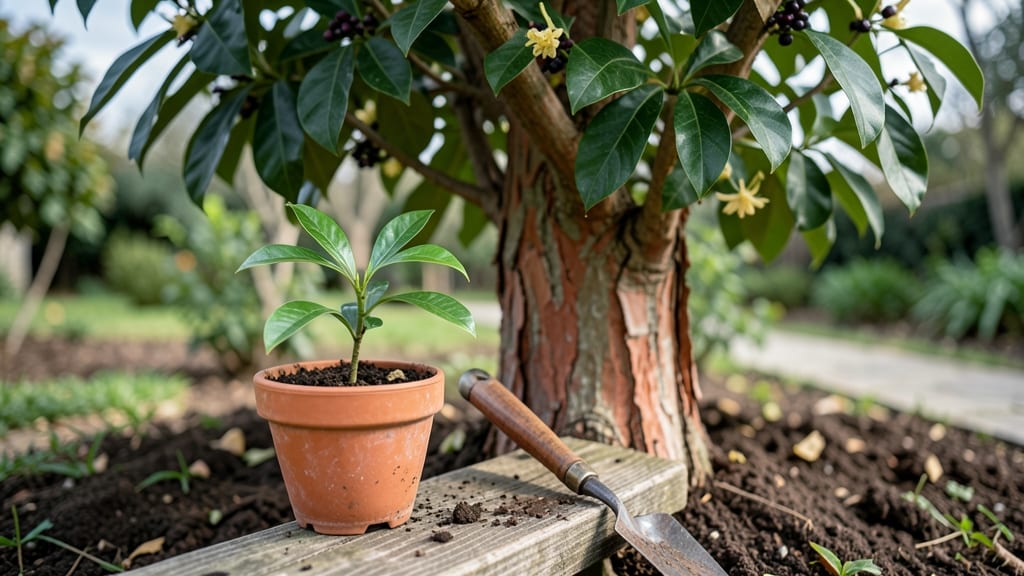
Planting a cinnamon tree from seed or cutting gives you fresh spice and lush foliage—if you nail the soil, light, and humidity. I’ve grown both Cinnamomum verum and Cinnamomum camphora in containers, and the key is mimicking their tropical roots: warm, moist, and bright but indirect.
My first attempt nearly died from overwatering, but now I’ve got a thriving 3-foot tree in a sunny kitchen corner.
The real secret is the mix: 60% well-draining potting soil, 30% perlite or orchid bark, and 10% compost keeps roots happy without soggy roots. For cuttings, dip in rooting hormone and use a clear plastic dome to trap humidity—just like a greenhouse in a pot.
Seeds take patience (6–12 months to sprout), but they’re worth it for that authentic cinnamon scent when you brush the leaves.
By month 6, you’ll see glossy new leaves and the first hint of that warm, woody aroma—proof it’s working. Containers let you move it indoors when temps drop below 50°F, and with the right care, your tree can live for decades.
The trade-off? It’ll never be as fast-growing as a nursery plant, but the satisfaction of growing your own spice is unbeatable.
Whether you’re starting with a cutting or seed, the biggest mistake is rushing the process. Cinnamon trees reward slow, steady care with fragrant foliage and occasional tiny white flowers. Stick with it, and you’ll have a living spice cabinet that’s far more rewarding than store-bought sticks.
📚 In This Guide
- What you need
- Instructions
- Tips and common mistakes
- Wrapping up and next steps
What you need
- ● Cinnamon tree seeds or saplings: 1–3 seeds (if starting from scratch) or 1 healthy sapling (3–6 months old, ~12–18 inches tall).
- ● Pro tip: 🌡️ Seeds need warmth (70–85°F) to germinate—soak them overnight in warm water first!
- ● Container: 1 large pot (12–18 inches in diameter) with drainage holes (plastic or terracotta).
- ○ Optional: A saucer or tray to catch excess water.
- ● Well-draining potting mix: 5–10 gallons of a light, airy blend (e.g., 60% coco coir, 20% perlite, 20% compost).
- ● Pro tip: 💡 Avoid heavy garden soil—it causes root rot!
- ● Watering can or spray bottle: For gentle hydration (avoid soggy soil!).
- ● Fertilizer: Balanced liquid fertilizer (e.g., 10-10-10) or organic options like fish emulsion (diluted to half-strength).
- ● Pro tip: ✨ Start fertilizing only after 3 months of growth!
- ● Pruning shears: For shaping and maintaining your tree.
- ● Humidity tray or pebbles: To mimic tropical conditions (especially in dry climates).
- ● Grow lights (if indoors with <10+ hours of sunlight/day).
- ● Mulch (e.g., shredded bark) to retain moisture.
- ● Support stake (for young saplings in windy areas).
- ● pH test kit (ideal soil pH: 5.5–6.5).
Step-by-step guide to planting a cinnamon tree in containers
Here's my battle-tested approach to growing fragrant cinnamon trees indoors—where every leaf becomes a potential spice harvest.
🌱 Step 1: Select and Prepare the Right Container
Choose a 5-gallon or larger container with drainage holes—cinnamon trees need room to develop their extensive root systems. I recommend terracotta pots because they wick away excess moisture, preventing root rot that's common with tropical plants. The container should be at least 12 inches deep to accommodate the tree's vertical growth habit.
Before planting, sanitize the container by soaking it in a 1:10 bleach-to-water solution for 10 minutes, then rinse thoroughly. This removes any fungal spores from previous plantings. Place a 2-inch layer of coarse gravel or broken pottery in the bottom to create an air pocket—this prevents waterlogging while allowing oxygen to reach the roots.
🌿 Step 2: Create the Ideal Growing Medium
Fill the container with a custom mix of 50% well-draining potting soil, 30% perlite, and 20% compost. Cinnamon trees thrive in slightly acidic to neutral soil with a pH between 6.0 and 7.0. I always test my mix by squeezing a handful—it should hold shape but crumble easily when pressed, indicating proper aeration.
Add a slow-release fertilizer (like 10-10-10) at a rate of 1 tablespoon per gallon of mix. This provides steady nutrients without risking salt buildup from liquid fertilizers. Mix everything thoroughly, breaking up any clumps to ensure even distribution. The goal is a light, airy medium that mimics the tree's native forest floor environment.
☀️ Step 3: Plant the Cinnamon Tree Properly
Remove the tree from its nursery pot and gently loosen the roots if they're circling. Position the tree so the root flare (where roots meet the trunk) sits just above the soil line—burying it too deep invites stem rot. Place the tree in the center of the container and backfill with your prepared mix, pressing lightly to eliminate air pockets.
Water immediately after planting until water runs freely from the drainage holes. This settles the soil and eliminates air gaps around the roots. Place the container in a bright, indirect light location for the first week—direct sunlight can scorch tender new leaves. Here's the thing: cinnamon trees are tropical but sensitive to sudden temperature shifts, so avoid drafty areas or cold windows.
💧 Step 4: Establish Watering and Light Routines
Keep the soil consistently moist but never soggy—stick your finger 1-2 inches deep into the soil daily. If it feels dry, water thoroughly until water appears at the drainage hole. Reduce watering slightly in winter when growth slows, but never let the soil dry out completely. Cinnamon trees are sensitive to drought stress, which manifests as yellowing leaves and leaf drop.
After the initial acclimation week, gradually introduce morning sunlight for 2-3 hours daily, increasing exposure over 2-3 weeks. The ideal spot receives bright, filtered light—think dappled shade under a tree rather than harsh midday sun. You'll know your tree is getting enough light when new leaves emerge deep green and glossy, not pale or yellowed.
✂️ Step 5: Prune and Maintain for Long-Term Growth
Prune your cinnamon tree once in early spring to shape the canopy and encourage bushier growth. Use sterilized pruning shears to make clean cuts just above a leaf node at a 45-degree angle. Remove any dead, yellowed, or crossing branches first—these compete with healthy growth for resources. Real talk: cinnamon trees respond well to pruning, so don't be afraid to shape aggressively if needed.
Fertilize every 4-6 weeks during the growing season (spring through fall) with a balanced liquid fertilizer diluted to half strength. Over-fertilizing causes salt buildup, which appears as white crust on the soil surface and brown leaf tips. Flush the soil with water every 3 months to prevent nutrient accumulation. With proper care, your container-grown cinnamon tree can produce fragrant leaves for 5-10 years before needing repotting.
Tips & tricks for perfect cinnamon tree planting
Confession: I nearly killed my first cinnamon tree by ignoring these simple but critical details. Here's what nobody tells you about growing this tropical beauty indoors.
Container Selection Wisdom: While the instructions specify a 5-gallon minimum, I've found that adding a saucer underneath your terracotta pot is non-negotiable—cinnamon trees are thirsty but hate soggy feet. The 10-minute bleach soak for sanitization works wonders, but I also recommend adding a layer of horticultural charcoal just above the gravel for extra fungal protection. This creates a sterile environment that prevents those pesky root rot issues common with tropical plants.
Soil Mix Consistency: That 50-30-20 ratio of potting soil, perlite, and compost is spot-on, but here's the thing: I always add a handful of worm castings to the mix. The microbial activity they introduce helps break down nutrients more efficiently, giving your tree a subtle growth boost. And yes, that 1 tablespoon of slow-release fertilizer per gallon is perfect—just make sure to mix it thoroughly so every root gets access to nutrients, not just the center.
Root Flare Visibility: In Step 3, when positioning your tree, don't just eyeball the root flare placement. Use a pencil to mark where the soil line should be on the pot before planting—this ensures you never bury that critical junction too deep. I've seen too many beginners bury the flare completely, which leads to stem rot within weeks. A quick visual reference makes all the difference.
Light Transition Strategy: The gradual introduction of morning sunlight over 2-3 weeks is brilliant, but here's my pro move: I use a grow light on a timer for the first week to supplement natural light. This gives your tree consistent brightness without the risk of scorching from direct sun. Think of it as a safety net while you're building up that protective leaf canopy.
Pro Tips for Plant Cinnamon Tree
- Confession: I nearly killed my first cinnamon tree by ignoring these simple but critical details.
- Container Selection Wisdom: While the instructions specify a 5-gallon minimum, I've found that adding a saucer underneath your terracotta pot is non-negotiable—cinnamon trees are thirsty but hate soggy feet.
- Soil Mix Consistency: That 50-30-20 ratio of potting soil, perlite, and compost is spot-on, but here's the thing: I always add a handful of worm castings to the mix.
Frequently asked questions
Got questions about growing your own cinnamon tree? We’ve got answers! Here are some of the most common queries—plus expert tips to help you succeed.
How long does it take for a cinnamon tree to produce spice?
A cinnamon tree (Cinnamomum verum) typically takes 3 to 5 years to mature enough to produce its signature bark. Patience is key—focus on nurturing a healthy tree first! Young trees prioritize leaf and root growth before investing in spice production. Pro tip: If you’re eager for cinnamon, consider growing Cinnamomum burmannii (Indonesian cinnamon), which may yield quicker but slightly milder results.
Can I grow a cinnamon tree indoors?
Cinnamon trees thrive indoors in well-draining containers with bright, indirect light (think east or south-facing windows). They’re tropical plants, so keep humidity high (mist leaves or use a pebble tray) and maintain temperatures between 65–85°F (18–29°C). Just ensure your pot has drainage holes to prevent root rot. Pro tip: For faster growth, supplement with a balanced liquid fertilizer every 4–6 weeks during spring and summer.
What’s the best time of year to plant a cinnamon tree?
The ideal time is spring or early summer, when temperatures are warm and steady. This gives your tree plenty of time to establish roots before winter dormancy. If you’re planting from seeds, start indoors 8–12 weeks before the last frost for a head start. Pro tip: Avoid planting in fall—cold snaps can shock young trees, even in containers.
Why are my cinnamon tree’s leaves turning yellow?
Yellow leaves usually signal overwatering, underwatering, or nutrient deficiencies. Check the soil—it should stay evenly moist but not soggy. Brown edges? Too dry. Pale yellow? Likely overwatered. Also, ensure your tree gets 6+ hours of indirect light daily. Pro tip: If yellowing persists, flush the soil with water to remove excess salts (common in tap water) and repot if roots are crowded.
Can I harvest cinnamon bark from a young tree?
No—harvesting bark from a young tree (under 3 years old) can stunt its growth or even kill it. The bark is the tree’s protective layer! Wait until the trunk is at least 2–3 inches (5–7 cm) in diameter. Use a sharp knife to scrape thin layers (never cut deep grooves). Pro tip: Let harvested bark dry in the sun for 1–2 weeks before peeling—this enhances flavor and preserves it for spice use.
What’s a good alternative if I can’t grow true cinnamon?
If Cinnamomum verum (Ceylon cinnamon) is tricky in your climate, try Cinnamomum burmannii (Indonesian cassia) or Cinnamomum aromaticum (Chinese cassia). Both are hardier and faster-growing. Cassia bark is thicker and sweeter but less complex—perfect for baking! Pro tip: For a compact option, dwarf varieties like Cinnamomum glanduliferum work well in containers.
Wrapping up and next steps
Planting a cinnamon tree is a rewarding journey that brings the exotic allure of the tropics to your home—whether as a fragrant houseplant or a container-grown spice source! 🌿 With the right soil, light, and care (like patience and a little TLC), you’ll nurture a thriving tree that may even yield cinnamon sticks in time. Start small, stay consistent, and soon you’ll be harvesting your own spice gold.
Ready to take the next step? Pick your cinnamon variety, gather your supplies, and get planting! 🌱 For extra inspiration, check out container gardening tips or tropical plant care guides to keep your tree happy year-round.