
Planting
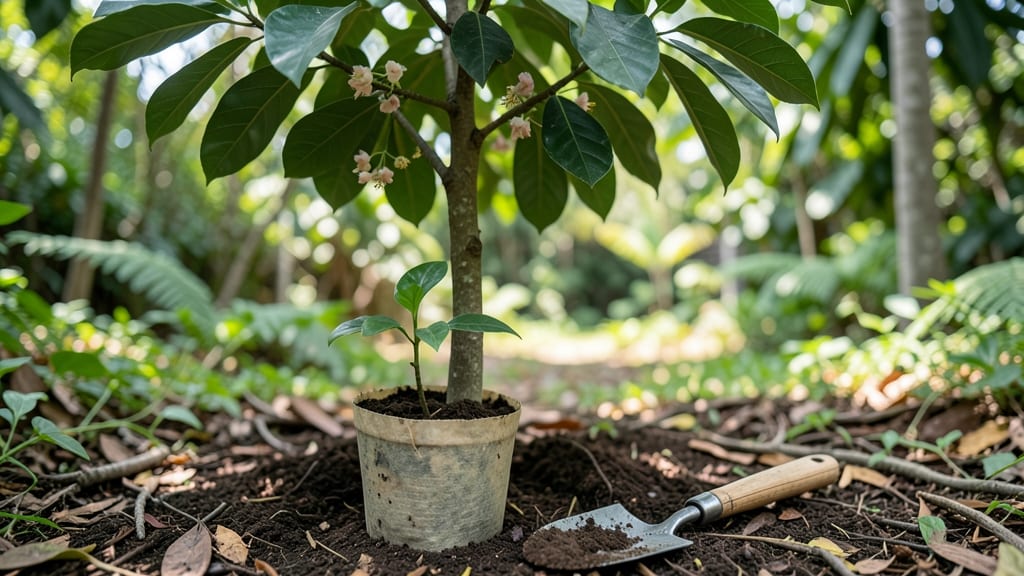
Planting a cacao tree (Theobroma cacao) means bringing a piece of the Amazon rainforest to your backyard—if you’ve got the right climate and patience. 🌿 These tropical giants thrive where temperatures stay between 68°F and 86°F and humidity hovers near 80%, making them a bold project for subtropical zones or greenhouses elsewhere.
The key to success starts with soil: cacao demands well-draining, slightly acidic (pH 5.0–6.5) loam rich in organic matter. I’ve seen beginners overwater or plant too deep, both deadly mistakes—roots need oxygen, not soggy soil. A 5-gallon container works for starters, but mature trees need 20+ feet of canopy space.
By summer’s end, you’ll have a thriving sapling with glossy leaves if you mimic its natural shade (think 50% sunlight max). The first harvest takes 3–5 years, but the journey—pruning, pollinating by hand, protecting from pests—feels like tending a living treasure.
Here’s how to begin without killing it in the first month.
Whether you’re in Florida or a greenhouse in Maine, cacao rewards those who replicate its jungle home. We’ll cover shade strategies, pollination secrets, and how to spot early signs of stress before they become crises. Ready to grow chocolate from seed?
📚 In This Guide
- What you need
- Instructions
- Tips and common mistakes
- Wrapping up and next steps
What you need
- ● Cacao seeds or saplings: Seeds: 5–10 (fermented and dried for best results)
- ● Saplings: 1–3 (ensure they’re disease-resistant and well-rooted)
- ● High-quality potting mix: Well-draining, slightly acidic soil (pH 5.5–6.5)
- ● Mix of peat moss, coconut coir, and perlite (1:1:1 ratio)
- ○ Optional: Add compost or worm castings for nutrients
- ● Containers: Seedlings: 4–6 inch pots (biodegradable preferred)
- ● Mature saplings: 10–12 inch pots or direct planting in tropical climates
- ● Tools: Trowel or small shovel
- ● Pruning shears (sterilized)
- ● Spray bottle (for misting)
- ● Garden gloves (to protect from sap)
- ● Climate: Tropical or subtropical (68–86°F year-round; no frost)
- ● Sunlight: Partial shade (50–70% sunlight) or dappled light
- ● Humidity: 70–80% (use a humidity tray or misting system if indoors)
- ● Water: Consistent moisture (keep soil damp but not soggy)
- ● Shade cloth (for young seedlings)
- ● Drip irrigation system (for consistent watering)
- ● Fertilizer: Balanced organic fertilizer (e.g., 10-10-10 or compost tea)
- ● Mulch (straw or wood chips to retain moisture)
- ● Pollination aid (small brush or bee-friendly garden)
Step-by-Step instructions for planting a cacao tree at home
Here's how to nurture a cacao tree from seed to sapling—with patience and the right conditions.
🌱 Step 1: Germinate Seeds in a Warm, Humid Environment
Cacao seeds need warmth and high humidity to sprout. Place the seeds in a moistened paper towel or peat moss inside a sealed plastic bag. Keep them in a spot where temperatures stay between 75-85°F—a sunny windowsill or under a heat mat works best. Check daily for moisture; the towel should stay damp but not soggy.
Germination can take 2-4 weeks, but don’t rush it. If you see mold, remove the seeds and start fresh—they need airflow to prevent rot. Once the radicle (tiny white root) appears, it’s time to plant. Here’s the thing—cacao seeds are sensitive, so handle them gently to avoid damaging the emerging root.
🪴 Step 2: Plant in Well-Draining, Acidic Soil
Fill a 6-inch pot with a mix of 50% peat moss and 50% perlite to ensure drainage. Cacao roots hate waterlogged soil, so avoid garden soil—it compacts and suffocates roots. Gently place the germinated seed ½ inch deep, with the radicle pointing downward. Press the soil lightly around it to secure the seed without compacting.
Water lightly until the soil is moist but not drenched. Place the pot in a shaded, humid spot (like a greenhouse or under a plastic cover) to mimic the tree’s tropical habitat. Keep humidity above 70%—a spray bottle or humidity tray helps. You’ll know it’s working when the first true leaves (not the initial seed leaves) appear in 4-6 weeks.
☀️ Step 3: Transition to Indirect Light Gradually
Once the sapling has 3-4 true leaves, introduce it to bright, indirect light for 2-3 hours daily, then increase exposure over 2 weeks. Direct sun burns young leaves, so avoid placing it in full sunlight yet. A grow light on a 12-hour cycle works well if natural light is insufficient.
Rotate the pot quarter-turn weekly to prevent the sapling from leaning toward the light. You’ll notice stronger stems and deeper green leaves as it adjusts. When the sapling reaches 6 inches tall, it’s ready for its first repotting into a 12-inch container with richer, slightly acidic soil (pH 5.5-6.5).
💧 Step 4: Maintain Consistent Moisture and Fertility
Water when the top inch of soil feels dry—cacao trees prefer even moisture but not soggy roots. Use rainwater or distilled water if possible, as tap water minerals can disrupt soil acidity. Fertilize lightly every 4-6 weeks with a balanced, organic fertilizer (like fish emulsion) diluted to half strength.
Watch for yellowing leaves—this usually means overwatering or nutrient deficiency. If leaves curl, the air is too dry. Increase humidity with a pebble tray or misting. With patience, your sapling will grow 4-6 inches per year, ready for outdoor planting in 3-5 years—if you live in a USDA Zone 10-12 climate.
Tips & tricks for planting a cacao tree at home
These tropical canopy secrets will help you nurture a thriving cacao tree from seed to sapling.
Temperature Matters: Maintaining that 75-85°F range during germination is critical—cacao seeds won't sprout if it's too cold. I've found that placing the sealed bag near a sunny window with a heat mat underneath creates the perfect microclimate. If your home runs cooler, consider using a small greenhouse or even a repurposed aquarium with a low-wattage heat lamp. The key is consistency—fluctuations can shock the delicate seeds.
Soil Science: That 50% peat moss/50% perlite mix isn't just about drainage—it mimics the airy, nutrient-poor soil cacao trees thrive in naturally. After planting, I like to add a thin layer of orchid bark on top (optional) to further improve aeration. This prevents the compacting that kills cacao roots. Remember, you're replicating the forest floor environment where wild cacao grows.
Light Transition Strategy: The gradual 2-3 hours daily light increase in Step 3 is where most beginners fail. I recommend using a timer for your grow light—set it to 12 hours on/12 hours off once you've reached full indirect light exposure. This mimics the natural day-night cycle and prevents leaf scorch. Watch for leaves that look glassy or translucent—they're getting too much sun too quickly.
Humidity Hack: Maintaining 70%+ humidity can be tricky without specialized equipment. My solution? Place the pot on a tray filled with pebbles and water, then cover the whole setup with a clear plastic dome (like a large glass bowl). This creates a self-sustaining humid environment. Just remember to remove the cover for 10 minutes daily to prevent fungal issues—cacao needs airflow too.
Pro Tips for Plant A Cacao Tree
- These tropical canopy secrets will help you nurture a thriving cacao tree from seed to sapling.
- Temperature Matters: Maintaining that 75-85°F range during germination is critical—cacao seeds won't sprout if it's too cold.
- Soil Science: That 50% peat moss/50% perlite mix isn't just about drainage—it mimics the airy, nutrient-poor soil cacao trees thrive in naturally.
Frequently asked questions
Got questions about growing your own cacao tree? You’re not alone—planting cacao can feel like unlocking a tropical treasure chest! Here are answers to the most common queries to help you grow with confidence.
How long does it take for a cacao tree to bear fruit?
A cacao tree typically takes 3–5 years to produce its first pods, depending on climate, care, and variety. Patience is key—think of it as nurturing a long-term investment in chocolatey rewards! Young trees focus on root and trunk growth before flowering.
Can cacao trees survive in cold climates?
No—cacao trees (Theobroma cacao) are tropical and thrive in USDA Zones 10–12 (65–85°F year-round). If you’re outside this range, try growing them in containers and overwinter them indoors near a sunny window. For colder regions, consider cacao hybrids or related plants like Theobroma bicolor (cupuaçu).
What pests or diseases should I watch for?
Cacao trees are vulnerable to mealybugs, capsid bugs, and fungal infections like black pod rot. Preventative care is key: prune for airflow, use neem oil sprays, and keep soil moist but not soggy. Remove infected pods immediately to stop spread.
Do cacao trees need cross-pollination?
Yes! Most cacao varieties are self-incompatible, meaning you’ll need at least two trees of different varieties for pollination (and pods). Bees and midges do the work naturally, but in greenhouses, you may need to hand-pollinate with a soft brush.
Can I grow cacao from store-bought chocolate?
Nope—store-bought chocolate won’t sprout! You’ll need fresh cacao seeds (the white nibs inside pods) or a grafted sapling from a nursery. Save seeds from organic, fair-trade chocolate bars (like those with “organic” or “direct trade” labels) for a fun (but less reliable) experiment.
Pro Tip:
If you’re unsure about your local climate, start with dwarf cacao varieties (like Scavina or Trinitario)—they’re hardier and perfect for containers!
Wrapping up and next steps
Planting your own cacao tree is a rewarding journey—one that connects you to ancient traditions and the lush, tropical world of chocolate! 🌿 With the right location, soil, and care, you’ve got everything you need to nurture a thriving tree.
Remember, patience is key: cacao trees take time to bear fruit, but the process itself is deeply satisfying.
Now that you’re ready to dig in, why not start small? Try growing a few saplings in pots first to refine your technique before committing to a full orchard. Happy planting—and may your future cacao harvest be as rich as it is sweet! 🍫✨