
Pruning
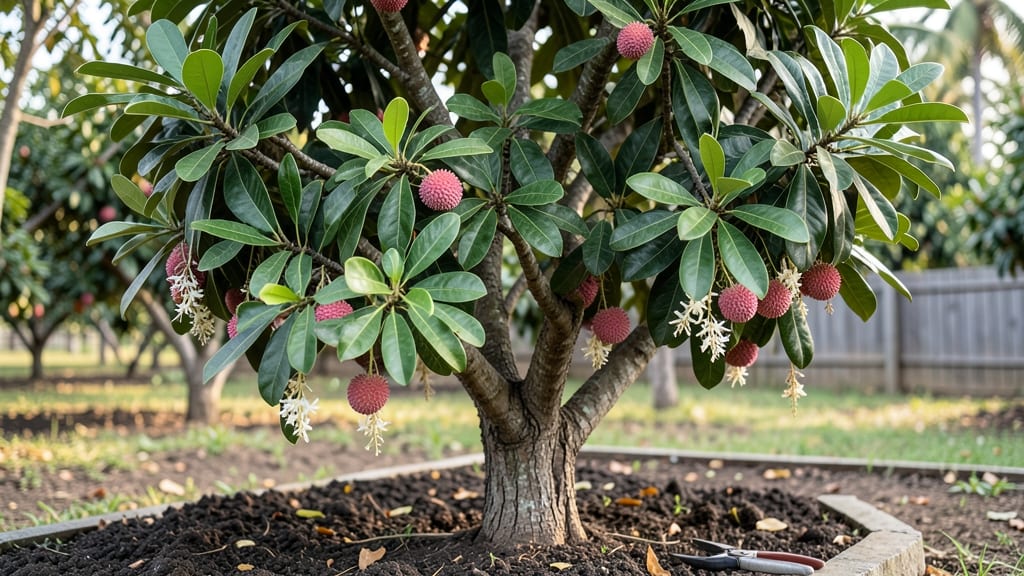
A full grown lychee tree in your yard isn’t just a dream—it’s a fragrant, sweet reality for subtropical gardeners willing to put in the right care. 🌿 I’ve grown mine for five years now, and that first harvest of juicy, aromatic fruit in early summer still makes my neighbors do a double-take.
The key isn’t just patience; it’s understanding how these tropical trees adapt to containers and cooler climates with the right tricks.
These trees can reach 15-25 feet tall outdoors, but in containers, you’ll keep them 8-12 feet with strategic pruning. They thrive in USDA zones 10-12, but with winter protection (like moving pots indoors or using frost cloth), you can push them into zones 9-10.
The real secret? Mimicking their native humidity—mist leaves regularly, and use a well-draining potting mix with 30% perlite to prevent root rot. My tree produces 50-100 fruit per season once established, and each one tastes like candy with a floral twist.
Pruning isn’t just about shaping—it’s about airflow and fruit production. Cut back one-third of new growth after harvest to encourage branching, and remove any suckers at the base. The fruit itself takes 90-120 days to ripen, so timing matters: plant in spring for summer harvests.
With the right container (at least 15 gallons for mature trees), you’ll enjoy year-round greenery and seasonal fruit that outshines anything you’d find in a grocery store.
Here’s the catch: lychees hate cold drafts and sudden temperature drops. If you’re in zone 9 or cooler, plan to bring pots indoors when temps dip below 40°F.
The payoff? A tree that keeps producing for decades with minimal effort once it’s settled in. Ready to turn your patio into a tropical oasis?
📚 In This Guide
- What you need
- Instructions
- Tips and common mistakes
- Wrapping up and next steps
What you need
- ● Container: At least 15-gallon (for dwarf varieties) or 30+ gallons (for standard trees). Use a deep, wide pot with drainage holes (e.g., fabric grow bags or ceramic/terracotta pots).
- ● Well-draining soil: Mix 50% premium potting soil (e.g., Miracle-Gro) with 30% perlite and 20% coconut coir or orchid bark for aeration.
- ● Lychee tree: Purchase a 1-3 year old sapling (dwarf varieties like ‘Brewer’ or ‘Wai Chee’ work best for containers). Check for healthy roots and no pests.
- ● Fertilizer: Slow-release granular fertilizer (e.g., 10-10-10 NPK) – 1 tbsp per gallon of soil at planting.
- ● Liquid fertilizer (e.g., fish emulsion or seaweed extract) – monthly during growing season.
- ● Pruning tools: Bypass pruners (for clean cuts on 1/4” branches).
- ● Loppers (for thicker branches up to 1”).
- ● Sterilizing alcohol (to wipe tools between cuts and prevent disease).
- ● Support: Stake or trellis (for young trees to prevent toppling in wind).
- ● Mulch: Pine bark or straw (2-3” layer) to retain moisture and regulate soil temp.
- ● Drip irrigation system (for consistent watering, especially in hot climates).
- ● Grow lights (if indoors or in low-light areas—LED full-spectrum bulbs work best).
- ● Pest control: Neem oil (for aphids or scale insects).
- ● Horticultural oil (for spider mites).
- ● Winter protection: Frost cloth or bubble wrap (for trees in USDA Zones 9-11 only).
Step-by-step guide for growing a mature lychee tree in containers
Here's how to maintain a thriving tropical fruit tree indoors or outdoors.
🪴 Step 1: Select and Prepare the Right Container
Choose a container with a minimum 24-inch diameter and depth to accommodate mature roots—lychee trees need space to replicate their natural growth habits. I use unglazed clay pots because they allow excess moisture to evaporate through the walls, which prevents root rot in tropical species. Ensure the container has 4-6 drainage holes spaced evenly around the base.
Line the bottom with a 2-inch layer of coarse gravel to create an air pocket and improve drainage. This prevents waterlogging, which is deadly for lychee roots. If your container lacks sufficient depth, consider a self-watering system with a reservoir—lychees hate soggy conditions but need consistent moisture in their native tropical climate.
☀️ Step 2: Create the Ideal Growing Environment
Lychee trees require full sun exposure—at least 6-8 hours of direct sunlight daily. If growing indoors, position near a south-facing window or supplement with a 150-watt LED grow light kept 12-18 inches above the canopy. The light should mimic tropical conditions with 12-14 hours of daylight year-round.
Maintain temperatures between 65-85°F—lychees are tropical and won't tolerate cold drafts. If you live in a cooler climate, grow the tree in a sunroom or greenhouse during winter. Use a thermometer to monitor soil temperature—roots need to stay above 60°F to thrive. Humidity is critical; aim for 60-80% relative humidity by misting leaves daily or using a humidifier near the plant.
🌿 Step 3: Maintain Soil and Watering for Optimal Growth
Use a well-draining, slightly acidic potting mix (pH 5.5-6.5) blended with 30% perlite or orchid bark to improve aeration. Lychee trees are sensitive to compacted soil, so avoid heavy garden soil. I repot every 2-3 years using a 2-inch larger container to accommodate root growth, pruning any circling roots gently with sterilized shears.
Water deeply 2-3 times per week, allowing the top 2 inches of soil to dry between waterings. Overwatering is the #1 killer of container-grown lychees—check by sticking your finger into the soil. If it feels damp below 1 inch, wait before watering again. In summer, you may need daily watering, but always ensure excess water drains freely.
✂️ Step 4: Prune and Fertilize for Fruit Production
Prune in late winter or early spring to shape the tree and encourage fruiting. Remove any dead, diseased, or crossing branches first, then thin the canopy to allow light penetration. Lychees produce fruit on new wood, so avoid heavy pruning—focus on light shaping to maintain an open structure. Use sterilized pruning shears to make clean cuts just above a leaf node.
Fertilize every 4-6 weeks during the growing season (spring through fall) with a balanced citrus/lychee fertilizer (high in potassium and magnesium). I use a 20-10-20 formula diluted to half-strength to avoid burning roots. Reduce fertilization in winter when the tree enters its dormant phase. Watch for yellowing leaves—this often signals magnesium deficiency, which responds well to Epsom salt treatments (1 tablespoon per gallon of water, applied monthly).
Tips & tricks for perfect year-round lychee tree growth
Real talk: Growing a full-sized lychee tree in containers isn't just about following steps—it's about creating the perfect tropical microclimate. Here's what nobody tells you about keeping your tree thriving.
Container Selection: The 24-inch minimum diameter isn't just a suggestion—it's non-negotiable for mature root systems. I've seen lychees in smaller pots develop root-bound stress within months, leading to stunted growth. If you're working with limited space, consider a fabric grow bag with built-in drainage instead of rigid plastic, which allows for better root expansion and air circulation. The key is mimicking the tree's natural ability to spread in tropical soils.
Lighting Strategy: Those 6-8 hours of direct sunlight are critical, but quality matters more than quantity. If you're supplementing with grow lights, position them so the light source covers the entire canopy evenly—lychees develop uneven growth when shaded from one direction. I've found that moving the light source 6 inches closer during winter (when daylight is shorter) helps maintain consistent growth patterns. The 12-14 hours of daylight requirement is about simulating the tree's natural tropical environment, not just adding extra light hours.
Temperature Management: The 65-85°F range is your sweet spot, but don't overlook the soil temperature requirement of staying above 60°F—this is where most container growers fail. In cooler climates, I've had success using a small greenhouse tent over the container during winter nights, combined with a portable space heater set to maintain just above 60°F. The critical factor is preventing temperature fluctuations—lychees hate sudden drops that mimic their native monsoon patterns.
Pruning Technique: When shaping your tree in late winter, focus on creating an open vase shape rather than a dense canopy. Lychees produce fruit on new wood, so you want sunlight to penetrate all the way to the center. I make my cuts just above a leaf node at a 45-degree angle to prevent water pooling, which can lead to fungal issues. The key is to prune lightly but consistently—heavy pruning can shock the tree and delay fruiting for a full season.
Pro Tips for Full Grown Lychee Tree
- Real talk: Growing a full-sized lychee tree in containers isn't just about following steps—it's about creating the perfect tropical microclimate.
- Container Selection: The 24-inch minimum diameter isn't just a suggestion—it's non-negotiable for mature root systems.
- Lighting Strategy: Those 6-8 hours of direct sunlight are critical, but quality matters more than quantity.
Frequently asked questions
How long does it take for a lychee tree to bear fruit in a container?
A lychee tree typically takes 3–5 years to bear fruit, even in containers—though dwarf varieties (like ‘Tai So’ or ‘Wai Chee’) may fruit in 2–3 years with proper care. Patience is key! Ensure it gets full sun (6+ hours daily), well-draining soil, and regular feeding with citrus/acid-loving plant fertilizer to speed up fruiting.
Can a container-grown lychee tree survive winter?
Lychee trees are tropical/subtropical and need protection if temps drop below 30°F (-1°C). Move potted trees indoors (near a sunny window) or wrap the pot in bubble wrap and insulate with straw. If outdoors, use a frost cloth or grow them in USDA Zones 10–11 year-round. Avoid sudden cold snaps—they stress the tree!
What’s the best container size for a full-grown lychee tree?
A mature lychee tree needs a minimum 20–24" diameter pot (or larger) with drainage holes to prevent root rot. Deeper is better—24–36" depth supports root growth. Use lightweight, breathable fabric pots or ceramic for better aeration. Pro tip: Repot every 2–3 years in spring to refresh soil and prevent root binding.
Why isn’t my container lychee tree fruiting?
Common culprits include insufficient sunlight (lychees need 6+ hours of direct sun), poor pollination (hand-pollinate with a soft brush if no bees visit), or nutrient deficiencies (test soil pH—ideal range is 5.0–6.5). Overwatering or root-bound pots can also stunt growth. Try calcium nitrate or potassium-rich fertilizer during flowering season (spring).
Are there lychee tree alternatives for colder climates?
If lychees are too finicky, try these low-maintenance, container-friendly alternatives:
- Longan tree (similar fruit, slightly hardier)
- Loquat tree (bears fruit in Zones 7–10)
- Pomegranate (drought-tolerant, cold-resistant)
- Dwarf citrus (e.g., calamondin) (compact, fragrant blooms)
Wrapping up and next steps
Growing a full-grown lychee tree in a container is a rewarding journey that brings exotic flavors to your doorstep—even in small spaces! With the right pruning techniques, soil care, and seasonal adjustments, you can enjoy year-round harvests of sweet, fragrant fruit.
Whether you’re a seasoned gardener or a curious beginner, this guide equips you with everything you need to nurture a thriving lychee tree.
Now that you’re armed with pruning know-how and answers to common questions, take the next step: start shaping your tree today! Grab your shears, observe your plant’s growth, and watch as it flourishes—one delicious lychee at a time. 🌱✨