
Pruning
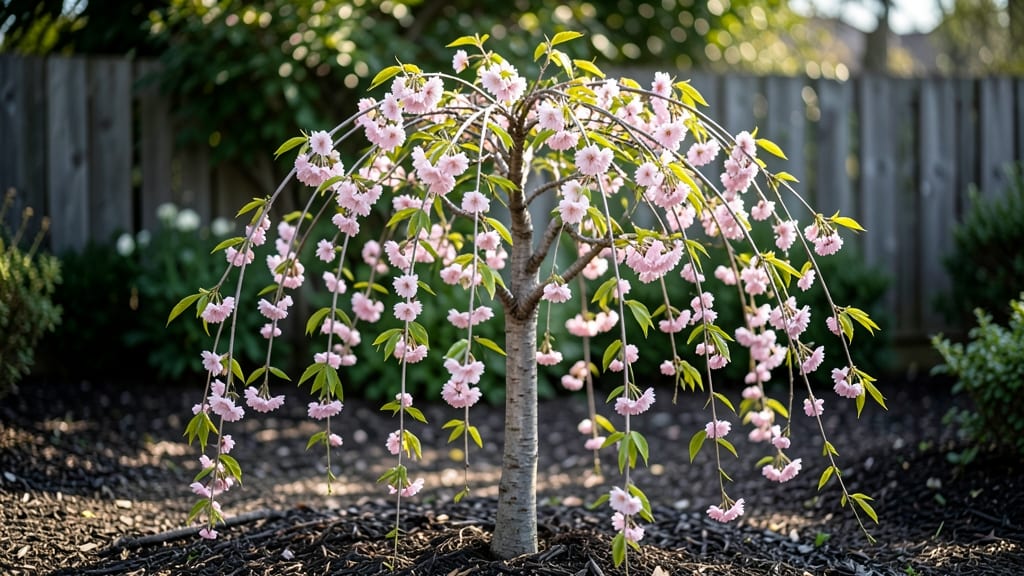
The dwarf weeping cherry tree size makes it ideal for small yards, staying under 10 feet tall with a 12-foot spread—far more manageable than its standard counterparts. Unlike their towering cousins, these graceful beauties cascade like living waterfalls without taking over the landscape.
The key difference? Their controlled growth habit means you can plant them closer to patios or walkways without sacrificing that dreamy, weeping silhouette.
This compact size makes them ideal for urban gardens, courtyard plantings, or even large containers. I’ve seen them thrive in 6-foot-wide garden beds with just 8 feet of clearance overhead, leaving plenty of room for companion plants like hostas or ferns.
The real magic happens when you prune strategically—light shaping in early spring keeps them from spreading too wide while maintaining that elegant, fountain-like form.
You’ll end up with a tree that fits your space beautifully while still making a statement. The delicate pink blossoms in spring and subtle fall color create year-round interest without the bulk.
Plus, their smaller size means less cleanup—no ladders needed for pruning or harvesting fruit (if you choose a fruiting variety).
Pair them with low-growing perennials or ground covers to define their base, and you’ve got a low-maintenance focal point that works in almost any landscape. The precision comes from understanding their natural growth patterns and giving them just enough room to shine.
📚 In This Guide
- What you need
- Instructions
- Tips and common mistakes
- Wrapping up and next steps
What you need
- ● Bypass pruning shears – Sharp, clean, and 5-7 inch blades for clean cuts on small branches.
- ● Loppers – 8-10 inch blades for thicker branches (up to 1.5 inches in diameter).
- ● Hand pruners (felco or anvil type) – For fine-tuning and delicate cuts.
- ● Disinfectant (70% isopropyl alcohol or pruning sealant) – To sterilize tools and prevent disease spread.
- ● Garden gloves – Thick, cut-resistant to protect your hands from thorns and sharp tools.
- ○ Pruning saw (optional but helpful) – For thick, stubborn branches (if needed beyond loppers).
- ● 5-gallon bucket or trash bag – To collect pruned branches and debris.
- ● Pruning paint or wound dressing – For sealing larger cuts (if your tree requires it).
- ● Extension pole pruners – If your tree is taller than 6 feet and hard to reach.
- ● Tree tie or zip ties – For supporting weak branches if needed.
- ● Magnifying glass – Helps spot small buds and precise cuts on delicate branches.
- ● Notebook & pencil – To sketch your pruning plan before starting.
Step-by-step guide to maintaining a dwarf weeping cherry tree's compact form
Here’s how to keep your tree’s graceful shape while controlling its mature size—without sacrificing its stunning floral display.
Understand the Tree’s Natural Growth Habits and Size Limits
A dwarf weeping cherry typically matures between 12 and 20 feet tall, but its spread can reach 10 to 15 feet if unpruned. The key to compact elegance lies in recognizing when growth exceeds your desired dimensions. Most cultivars like Prunus subhirtella 'Pendula' grow 12 to 18 inches per year in ideal conditions, so annual pruning is essential to maintain a 6 to 10-foot height if that’s your goal.
Observe the tree’s branch structure in late winter before buds swell. Look for water sprouts (vigorous vertical shoots) and overly long lateral branches—these are your first targets. The tree’s natural weeping habit means branches will naturally droop, but without guidance, they’ll stretch toward the ground. Prune no more than 25% of the canopy annually to avoid shocking the tree.
Time Pruning for Optimal Healing and Floral Display
Prune late winter to early spring, just as buds begin to swell but before flowers appear. This timing ensures you remove unwanted growth while preserving next year’s blossoms. Avoid pruning in fall or early winter, as fresh cuts may not heal before cold snaps, leaving the tree vulnerable to disease.
If you must prune after flowering, do so immediately after bloom to avoid removing next year’s flower buds, which form on old wood. Use sterilized, sharp pruners to make clean cuts just outside the bud union (the swollen area where the branch meets the trunk). This encourages stronger regrowth and maintains the tree’s natural form.
Structural Pruning to Control Height and Spread
Start by removing dead, diseased, or crossing branches—these compete with healthy growth and disrupt the tree’s elegant silhouette. Focus on vertical water sprouts first; these shoots grow rapidly and detract from the weeping effect. Cut them back to a bud or lateral branch at a 45-degree angle to promote healing and direct growth where you want it.
For height control, target the uppermost branches that exceed your desired height. Prune these back to a strong lateral branch or outward-facing bud. Avoid "topping" (cutting the main trunk flat), as this encourages dense, weak growth. Instead, make cuts just above a bud that faces outward to encourage a more open, graceful structure. Step back frequently to visualize the tree’s balance—your goal is to preserve its natural weeping habit while refining its proportions.
Refine the Canopy for Density and Shape
Thin out the innermost branches to improve airflow and light penetration, which reduces disease risk and encourages stronger growth. Aim to remove 10 to 20% of the smallest, weakest branches in the center of the canopy. This opens up the tree’s structure, making it easier to admire its delicate blossoms and lacy foliage.
To enhance the weeping effect, selectively prune long, downward-growing branches that have lost their grace. Shorten them by one-third to one-half to encourage more lateral branching and a fuller, cascading form. Avoid over-pruning these branches, as they contribute to the tree’s signature silhouette. After pruning, sanitize your tools with rubbing alcohol to prevent the spread of pathogens.
Post-Pruning Care to Ensure Healthy Regrowth
Apply a balanced, slow-release fertilizer (10-10-10 or similar) around the tree’s drip line to support new growth. Water deeply to encourage root development, especially if the tree was pruned heavily. Mulch with 2 to 3 inches of organic mulch (like shredded bark) to retain moisture and regulate soil temperature, but keep mulch 6 inches away from the trunk to prevent rot.
Monitor the tree in the weeks following pruning for signs of stress, such as yellowing leaves or wilting branches. If you notice excessive dieback, reduce watering slightly—the tree may be conserving energy. By mid-summer, you should see new growth emerging from the pruned areas. If growth is sparse, consider a second, lighter pruning in early summer to shape any errant shoots, but avoid heavy cuts during this period.
Tips & tricks for perfect dwarf weeping cherry tree pruning
Here's what I've learned after years of shaping these stunning trees—small details make all the difference for compact elegance.
Pruning Timing Precision: The late winter to early spring window is non-negotiable for preserving next year's blossoms. I mark my calendar for when buds begin to swell but before flowers appear—this is typically 4-6 weeks before your last expected frost. If you miss this window, wait until immediately after flowering, but never prune in fall or early winter when healing is compromised by cold snaps.
Branch Angle Technique: When pruning water sprouts or height-controlling branches, always make cuts at a 45-degree angle just outside the bud union. This creates a larger surface area for healing and directs growth where you want it. I find using a sharp, sterilized pruner makes all the difference—dull tools crush rather than cleanly cut, inviting disease. The angle also helps rainwater run off the cut rather than pool.
Canopy Airflow Strategy: Thin out those innermost branches (10-20% of the smallest ones) to create airflow that prevents fungal diseases. I visualize the tree's structure like an umbrella—you want sunlight to reach all areas, not just the outer edges. This also makes those delicate blossoms more visible when they arrive. The key is removing branches that cross or rub against others, which creates wounds and weakens the tree's overall health.
Post-Pruning Care: After shaping, I apply a balanced fertilizer around the drip line and water deeply to support recovery. The 2-3 inches of organic mulch helps retain moisture, but I always keep it 6 inches away from the trunk to prevent rot. Watch for signs of stress like yellowing leaves—this often means the tree is conserving energy after pruning, so I adjust watering accordingly until new growth appears by mid-summer.
Pro Tips for Dwarf Weeping Cherry Tree Size
- Here's what I've learned after years of shaping these stunning trees—small details make all the difference for compact elegance.
- Pruning Timing Precision: The late winter to early spring window is non-negotiable for preserving next year's blossoms.
- Branch Angle Technique: When pruning water sprouts or height-controlling branches, always make cuts at a 45-degree angle just outside the bud union.
Frequently asked questions
Got questions about keeping your dwarf weeping cherry tree at its ideal size? Here are some of the most common queries—plus quick answers to help you prune with confidence!
How fast does a dwarf weeping cherry tree grow?
A dwarf weeping cherry typically grows 6–12 inches per year, reaching its mature height of 6–10 feet in about 5–10 years. Regular pruning (especially in late winter) helps maintain its compact shape while encouraging bushier growth. Pro tip: Avoid heavy pruning in early spring—this can stimulate excessive flowering, which weakens the tree.
When is the best time to prune for size control?
Prune your dwarf weeping cherry in late winter or early spring, just before new growth begins. This timing prevents disease spread (common in wet spring conditions) and ensures you shape the tree before it flowers. Skip summer pruning—it can stress the tree and reduce next year’s blossoms.
Will pruning affect the tree’s cherry blossoms?
Pruning can reduce blossoms temporarily if you remove too many flower buds (found on last year’s wood). To minimize impact, prune selectively: Focus on dead, crossing, or overcrowded branches. For maximum blooms, prune lightly—aim to remove no more than 20–30% of the canopy per year.
Are there smaller alternatives to dwarf weeping cherry?
Yes! If space is ultra-limited, consider these miniature options:
- ‘Snow Fountain’ weeping cherry: Matures at 4–6 feet tall.
- ‘Royal Burgundy’ dwarf cherry: Compact (6–8 ft) with deep purple foliage.
- ‘Stella Compacta’: A 3–4 foot tree with prolific pink blooms.
All thrive in similar conditions but offer even tighter control for patios or small gardens.
Why is my dwarf weeping cherry growing unevenly?
Uneven growth often stems from poor sunlight exposure or over-pruning on one side. To fix it:
- Rotate the tree quarter-turns annually to ensure even light.
- Prune opposite sides symmetrically to balance shape.
- Check for root-bound conditions—if roots circle the pot, repot or prune roots gently.
If issues persist, soil nutrients (like nitrogen) may be lacking—fertilize lightly in early spring.
Wrapping up and next steps
The dwarf weeping cherry tree is a stunning addition to any landscape, offering compact elegance with minimal space requirements. By mastering precision pruning, you’ll keep its size manageable while enhancing its natural beauty—whether in a garden bed, patio, or container.
Ready to elevate your outdoor space? Grab your tools and start shaping this graceful tree today! 🌿✂️
- Next step: Schedule your first pruning session during early spring or late winter for optimal growth.