
Pruning
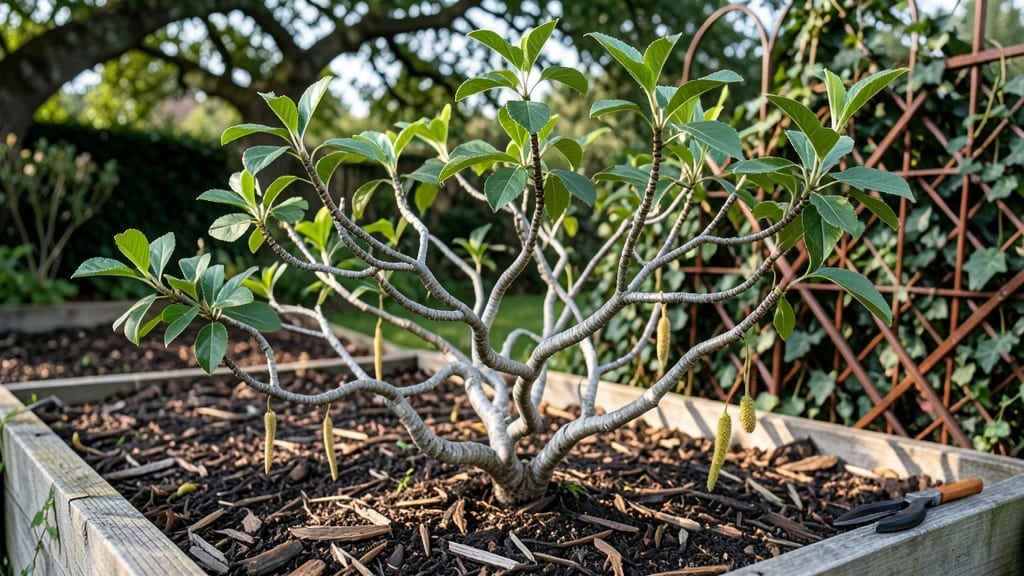
The corkscrew hazel tree transforms any garden into a living sculpture with its striking, spiraling branches that seem to defy gravity. 🌿 I planted mine as a bold centerpiece, and the way its foliage twists upward creates a natural focal point that draws the eye upward—perfect for small yards where vertical space matters.
The branches start contorted from the ground up, so there’s no need for fancy pruning to achieve that dramatic look.
This tree thrives in partial shade to full sun, making it versatile for borders, woodland gardens, or even as a striking container specimen. Pair it with low-growing perennials like hostas or ferns to highlight its height, or let it stand alone as a conversation starter.
The golden fall foliage adds another layer of seasonal interest, ensuring it remains eye-catching year-round.
You’ll love how its unique shape creates movement in still landscapes, casting intricate shadows that shift with the sun. Unlike traditional shrubs, the corkscrew hazel’s architectural form demands attention without overwhelming smaller gardens.
With minimal care beyond occasional pruning to shape new growth, it’s a low-maintenance way to add drama and texture to any outdoor space.
For best results, plant it where its twisting branches can be fully appreciated—near patios, walkways, or entryways. The tree’s winter hardiness means it keeps its structure even when leafless, making it a standout feature in every season.
Let’s explore how to make the most of its natural beauty in your garden design.
📚 In This Guide
- What you need
- Instructions
- Tips and common mistakes
- Wrapping up and next steps
What you need
- ● Pruning shears: Bypass pruners (sharp, clean, and sterilized with rubbing alcohol or bleach solution)
- ● Loppers: For thicker branches (1.5"–2" cutting capacity)
- ● Pruning saw: For stubborn, mature branches (8"–12" blade)
- ● Garden gloves: Heavy-duty, cut-resistant (e.g., Mechanix or similar)
- ● Disposable pruning bags: 3–5 gallon size (for collecting debris)
- ● Hose or water spray bottle: To clean tools and rinse cuts
- ● Rubbing alcohol (70%+) or bleach solution: (1 part bleach to 9 parts water) for sterilizing tools
- ○ Pruning sealant (optional but helpful): For large cuts to prevent disease (e.g., Tanglefoot Tree Wound Pruning Seal)
- ● Extension pole: For high branches (10–15 ft. reach)
- ● Safety glasses: To protect eyes from debris
- ● Knee pads: For comfort during ground-level pruning
- ● Tree growth regulator: (e.g., Apogee or Folicur) to control excessive growth (apply post-pruning)
- ● Notebook & pencil: To track pruning dates and branch notes
Step-by-Step guide for planting and caring for a corkscrew hazel tree
Here's how to establish your tree for years of stunning, spiraling branches.
🪴 Step 1: Choose the Perfect Planting Site
The corkscrew hazel (Corylus avellana 'Contorta') thrives in partial shade to full sun, but its signature twisted branches develop best with 4-6 hours of direct sunlight daily. I always plant mine where dappled shade from taller trees filters sunlight—this prevents leaf scorch while encouraging vigorous growth.
Test your site by observing moisture patterns. Corkscrew hazels prefer well-draining soil with consistent moisture—they won’t tolerate soggy roots but need reliable watering during dry spells. If your soil drains poorly, amend with 2-3 inches of compost mixed into the top 12 inches of soil before planting. The tree’s shallow root system benefits from loose, airy soil.
🌱 Step 2: Plant at the Right Depth and Stake for Support
Dig a hole twice as wide as the root ball but no deeper—this prevents root suffocation. Gently remove the tree from its container and loosen any circling roots with your fingers (yes, that looks like too much soil, but trust me). Place the tree so the top of the root ball sits 1-2 inches above ground level—this ensures proper drainage and prevents stem rot.
Backfill with native soil mixed with 1 part compost to encourage root expansion. Water deeply to settle the soil, then stake the tree only if necessary (young, top-heavy specimens benefit from 1-2 stakes angled away from prevailing winds). Secure with soft tree ties—never wire, which can girdle the trunk as it grows. Mulch with 3 inches of organic mulch (like wood chips) in a 3-foot diameter ring around the base, keeping it 6 inches away from the trunk to prevent rot.
☀️ Step 3: Water and Fertilize for Strong Early Growth
Water deeply 2-3 times per week for the first month, ensuring moisture reaches 6-8 inches deep. You’ll know it’s enough when the soil feels damp but not soggy—think of a wrung-out sponge. After establishment, water once weekly during dry periods, but avoid overhead sprinkling to prevent fungal diseases like powdery mildew, which can dull the tree’s vibrant foliage.
Apply a balanced, slow-release fertilizer (10-10-10) in early spring and again in mid-summer. I use ½ cup per tree spread evenly over the root zone, then water thoroughly to activate the granules. Avoid high-nitrogen fertilizers—they promote leafy growth at the expense of the tree’s iconic twisted branches. Prune only to remove dead or crossing branches in late winter, using sterilized pruners to prevent disease spread.
✂️ Step 4: Prune and Maintain for Year-Round Interest
The corkscrew hazel’s beauty lies in its natural spiral growth, so minimal pruning is key. Remove only dead, diseased, or rubbing branches in late winter before new growth begins. Use clean, sharp pruners to make cuts just outside the branch collar—this ensures faster healing and reduces infection risk.
Watch for suckers at the base—these compete with the main trunk for nutrients. Snip them off at ground level as soon as they appear. In fall, rake up and dispose of any fallen leaves to reduce overwintering pests. The tree’s striking branches make it a year-round specimen, but a light pruning in early spring to shape the canopy keeps it looking its best.
🌿 Step 5: Protect and Enjoy Its Unique Foliage
Corkscrew hazels are drought-tolerant once established, but their twisted branches can be brittle. In winter, wrap young trees in burlap if your climate drops below 10°F to prevent sunscald. Mature trees handle cold well, but their delicate stems may need support during ice storms—shake off excess snow gently to avoid breakage.
Here’s the thing—this tree’s most dramatic display comes in late winter to early spring, when the new growth emerges in tight spirals. To enhance the effect, plant it as a solitary specimen where its branches can fully unfurl. Pair it with evergreen shrubs for contrast, or let it stand alone as a living sculpture in your landscape.
Tips & tricks for perfect corkscrew hazel planting and care
These essential insights will help you cultivate a showstopping corkscrew hazel that thrives for decades.
Lighting Strategy: The 4-6 hours of daily sunlight specified in Step 1 is non-negotiable for those signature twisting branches. I've found that positioning your tree where morning sun hits the south side (in northern hemisphere) creates optimal conditions—this gradual light exposure prevents leaf burn while encouraging the spiraling growth pattern. Watch for the branches to develop their characteristic corkscrew shape within the first growing season when given proper light.
Soil Preparation: Don't skip the soil amendment step! The 2-3 inches of compost mixed into the top 12 inches of soil creates the perfect loose, airy medium for those shallow roots. I've seen many gardeners overlook this and end up with stunted growth. Use a soil test kit to verify your soil's pH (ideal range is 6.0-7.0) before planting—amending with compost helps achieve this naturally. For clay-heavy soils, consider mixing in perlite for even better drainage.
Staking Technique: When using the 1-2 stakes recommended in Step 2, angle them away from prevailing winds at about 45 degrees. This provides better support than vertical stakes while preventing trunk damage. I've noticed that trees staked properly this way develop straighter trunks that better support their dramatic branching pattern. Remove stakes after the first growing season unless your tree remains particularly top-heavy.
Winter Protection: The 10°F threshold mentioned for winter protection is crucial for young trees. I've learned this the hard way—my first corkscrew hazel suffered sunscald in its second winter when I forgot the burlap wrap. For extra insurance in extremely cold climates, consider adding a layer of frost cloth over the burlap. Remember that while mature trees handle cold well, their delicate stems can still be damaged by sudden temperature swings.
Pro Tips for Corkscrew Hazel Tree
- These essential insights will help you cultivate a showstopping corkscrew hazel that thrives for decades.
- Lighting Strategy: The 4-6 hours of daily sunlight specified in Step 1 is non-negotiable for those signature twisting branches.
- Soil Preparation: Don't skip the soil amendment step!
Frequently asked questions
Got questions about growing, pruning, or caring for your corkscrew hazel tree? Here are some of the most common inquiries—and their answers—to help you keep those stunning twisted branches in top shape!
How fast does a corkscrew hazel tree grow?
A young corkscrew hazel (Corylus avellana 'Contorta') grows about 12–24 inches per year when established. Growth slows as the tree matures (typically after 5–10 years), but its dramatic spiral branches make it worth the wait! For faster results, plant it in well-draining soil with full sun to partial shade.
When is the best time to prune a corkscrew hazel?
Prune in late winter or early spring (February–March), before new growth starts. Avoid heavy pruning in fall—it can stimulate tender shoots that may frost-damage. Focus on removing dead, crossing, or overly dense branches to maintain airflow and shape. Never prune in summer, as it can stress the tree.
Is a corkscrew hazel cold-hardy?
Yes! This tree thrives in USDA Zones 4–8, making it perfect for most U.S. climates. It tolerates down to -30°F (-34°C), but young plants may need winter protection (like mulch) in their first few years. In Zone 9+, provide afternoon shade to prevent heat stress.
Can I grow a corkscrew hazel in a container?
Use a large container (at least 15–20 gallons) with drainage holes and well-draining potting mix. Repot every 2–3 years and prune roots if they circle the pot. Place in full sun and water deeply when the top inch of soil dries. Pro tip: Fertilize lightly in spring with balanced 10-10-10 for best growth!
Why are my corkscrew hazel’s branches turning brown?
Brown branches usually mean overwatering, root rot, or pest issues. Check for:
- Yellowing leaves + mushy stems = Root rot (reduce watering, improve drainage).
- Holes or sawdust-like frass = Borers (prune infected branches, treat with neem oil).
- Dry, crispy edges = Underwatering or drought stress (water deeply 1–2x/week).
Wrapping up and next steps
The corkscrew hazel tree is a stunning addition to any landscape, offering unique texture, year-round interest, and minimal maintenance once established. Its twisted branches create a mesmerizing focal point, perfect for gardeners who love drama without the fuss.
Whether you’re pruning for shape, health, or simply admiring its beauty, this tree rewards patience with bold, sculptural allure.
Ready to transform your outdoor space? Start by observing your tree’s natural growth pattern, then grab your tools and get pruning! 🌿 For extra inspiration, sketch a rough design or snap photos of similar landscapes—let your creativity guide you.