Pruning
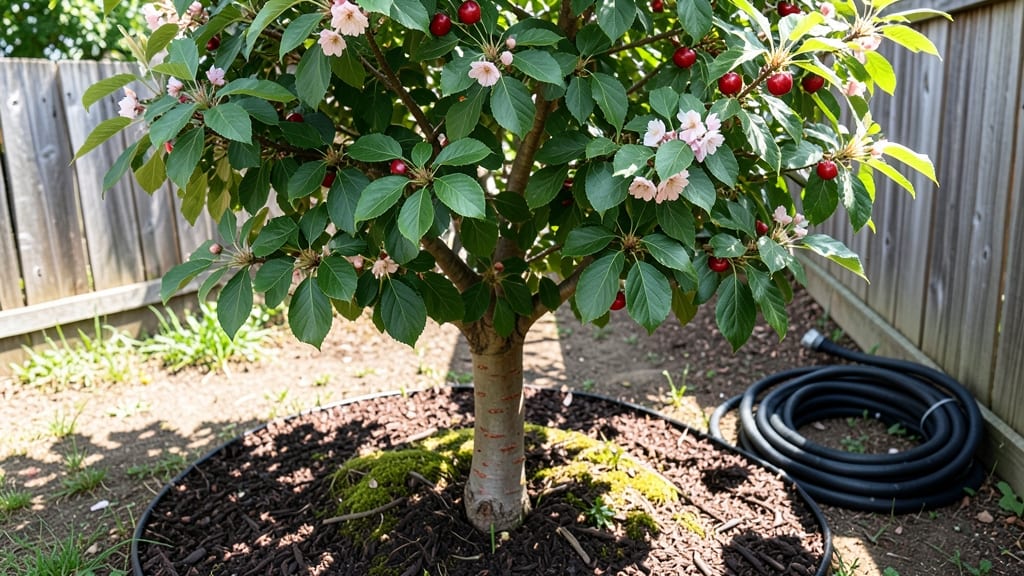
A cherry tree in your backyard transforms an ordinary space into a seasonal showstopper—from delicate spring blossoms to fiery fall foliage. I planted mine last year, and now it’s the heart of my garden, drawing hummingbirds in spring and casting dappled shade in summer.
The right variety makes all the difference: ornamental cherries like 'Stella Compact' dazzle with pink blooms, while fruiting types like 'Rainier' deliver sweet harvests for pies.
Start with sunlight and space: most cherries need 6+ hours of sun and 15–25 feet of clearance to thrive. Amend your soil with compost before planting, and pair it with shade-loving perennials like hostas or ferns at its base.
My tree now anchors a cottage-style garden, but modern varieties like 'Chelan' work just as well in minimalist designs—just keep the pruning light to maintain that natural shape.
Year-round beauty comes from smart layering: spring’s blossoms fade into summer’s glossy leaves, then autumn’s fiery hues, and winter’s intricate bark. Even the pruning stays simple—just remove crossing branches in late winter.
You’ll spend less time maintaining it than you do admiring it, and neighbors will ask how you pulled off that effortless elegance.
Whether you want a focal point or a food source, cherry trees deliver. They’re adaptable to most climates (zones 5–8) and fit into any theme—just pick your priority: flowers, fruit, or four-season structure. Ready to make your backyard the envy of the block?
📚 In This Guide
- What you need
- Instructions
- Tips and common mistakes
- Wrapping up and next steps
What you need
- ● Cherry tree sapling or bare-root tree: Choose a variety suited to your climate (e.g., Prunus avium for sweet cherries or Prunus cerasus for tart). Size: 1–3 feet tall.
- ● High-quality potting soil or native soil mix: 5+ bags (20 lbs each) enriched with compost or aged manure.
- ● Organic mulch: 3–5 cubic feet (wood chips, straw, or shredded bark).
- ● Slow-release fertilizer: 10-10-10 or balanced organic blend (e.g., 5 lbs).
- ○ Drip irrigation system or soaker hose: 50+ feet (optional but highly recommended for young trees).
- ● Pruning shears: Bypass-style (for small branches, 6–8" blades).
- ● Loppers: 1 pair (for thicker branches, 8–10" cutting capacity).
- ● Hand saw or pruning saw: 1 (for branches >1.5" thick).
- ● Gloves: Heavy-duty, cut-resistant (1 pair).
- ● Shovel and garden fork: For planting/digging (borrow if needed!).
- ● Measuring tape: 25+ feet (for spacing and branch trimming).
- ● Disinfectant (70% isopropyl alcohol or bleach solution): To clean tools between cuts.
- ● Tree guard or wire cage: To protect young trees from critters.
- ● Bird netting: If you want to preserve fruit for yourself (cherries = bird magnets!).
- ● Soil pH tester: To ensure your soil is slightly acidic (pH 6.0–6.5).
- ● Stake and ties: For extra support if planting in windy areas.
- ● Seasonal pruning schedule reminder: A cute chalkboard or app notification!
Step-by-Step guide for planting and caring for a cherry tree in your backyard
Here's how to establish a healthy, low-maintenance cherry tree that thrives year after year.
Choose the Right Location and Prepare the Soil
Cherry trees need full sun—at least 6-8 hours daily—so pick a spot where they'll get morning sunlight and afternoon shade if your climate is hot. Avoid low areas where water pools, as soggy roots lead to rot. The ideal location has well-draining soil with a pH between 6.0 and 7.0—test your soil before planting.
Dig a hole twice as wide as the tree's root ball but no deeper. Loosen the soil at the bottom with a shovel to encourage root spread. Mix the native soil with 2-3 inches of compost from your materials list to improve drainage and fertility. This step ensures your tree gets a strong start without competing with weeds or compacted soil.
Plant the Tree Properly for Long-Term Stability
Place the tree in the hole so the top of the root ball sits 1-2 inches above ground level. This prevents water from pooling at the base and causing rot. Spread the roots gently outward—don’t bend them—and fill the hole with the amended soil, tamping lightly as you go. Water deeply to settle the soil and eliminate air pockets.
Stake the tree only if necessary (young trees in windy areas). Use two stakes on opposite sides, tied loosely with soft fabric to avoid girdling the trunk. Mulch around the base with 2-3 inches of organic mulch, keeping it 6 inches away from the trunk to prevent moisture buildup. This mulch layer retains moisture, regulates soil temperature, and suppresses weeds—critical for young trees.
Water Consistently and Monitor Early Growth
Water the tree deeply 2-3 times per week for the first year, ensuring moisture reaches 12-18 inches down. You’ll know it’s enough when water drains out the bottom of the hole. After that, water once a week unless it’s unusually dry or hot. Overwatering is just as harmful as underwatering—soggy soil suffocates roots.
Check the soil 1 inch below the surface before watering. If it feels dry, it’s time; if it’s damp, wait. Avoid wetting the leaves to prevent fungal diseases. Fertilize lightly in early spring with a balanced 10-10-10 fertilizer (follow package rates) to support new growth without overwhelming the young tree.
Prune for Shape and Health During Dormancy
Prune your cherry tree in late winter or early spring, before buds swell but before leaves emerge. Remove dead, diseased, or crossing branches first—these compete for resources and invite pests. Cut back to a healthy bud or branch collar to encourage proper healing. Avoid heavy pruning; remove no more than 25% of the canopy in one season.
Shape the tree by thinning out branches that grow inward or rub against others. This improves airflow and sunlight penetration, reducing disease risk. Use clean, sharp pruners to make cuts at a 45-degree angle just outside the branch collar. Seal larger wounds with pruning sealant if they’re over ½ inch in diameter—this prevents decay.
Year-Round Maintenance for Longevity
In spring, apply a 2-3 inch layer of mulch around the base, renewing it annually. This keeps roots cool in summer and insulates them in winter. Monitor for pests like aphids or scale insects—spray with neem oil if you spot them early. Cherry trees are generally low-maintenance, but consistent care prevents problems before they start.
In fall, rake up fallen leaves and fruit to reduce disease pressure. If your tree is young, consider wrapping the trunk with tree guard to protect it from rodents and voles. Mature trees develop thicker bark and need less protection. Enjoy the spring blossoms, summer shade, and fall fruit—your cherry tree will reward you for minimal effort with decades of beauty.
Tips & tricks for perfect backyard cherry tree planting
Real talk: Planting a cherry tree that thrives for decades isn't rocket science, but these small details make all the difference. I've seen beautiful trees fail because of one overlooked step—don't make that mistake.
Sunlight Strategy: That 6-8 hours of sunlight is non-negotiable, but here's what nobody tells you: Eastern exposure gets morning sun without afternoon heat stress in hot climates. If your yard only gets partial sun, choose a dwarf variety—they're more forgiving. Also, avoid planting near large shrubs that will compete for sunlight as they grow.
Soil Science: The 2-3 inches of compost we mix in Step 1 isn't just about fertility—it's about creating the perfect crumbly texture that encourages root spread. I learned this the hard way after planting in heavy clay soil where roots struggled to establish. If your native soil is sandy, add an extra inch of compost to help retain moisture. For clay soil, mix in perlite to improve drainage.
Watering Wisdom: Those first-year waterings of 2-3 times per week might seem excessive, but here's the thing: You want that moisture to reach 12-18 inches down. A simple way to check is to insert a long screwdriver after watering—if it goes in easily, you've got good penetration. In hot summers, I water in the early morning to reduce evaporation and fungal risks.
Pruning Precision: When shaping your tree in Step 4, always cut just outside the branch collar at a 45-degree angle. This might seem fussy, but it's what prevents those ugly stubs that invite disease. I use a small paint marker to circle the cut line before making the actual cut—it helps me visualize where to aim. For larger branches over ½ inch, I seal the wound immediately with pruning sealant to prevent decay.
Pro Tips for Cherry Tree In Backyard
- Real talk: Planting a cherry tree that thrives for decades isn't rocket science, but these small details make all the difference.
- Sunlight Strategy: That 6-8 hours of sunlight is non-negotiable, but here's what nobody tells you: Eastern exposure gets morning sun without afternoon heat stress in hot climates.
- Soil Science: The 2-3 inches of compost we mix in Step 1 isn't just about fertility—it's about creating the perfect crumbly texture that encourages root spread.
Frequently asked questions
Got questions about keeping a cherry tree thriving in your backyard? Here are some of the most common concerns—and their answers—to help you enjoy year-round beauty with ease!
How much sunlight does a cherry tree need to grow well in my backyard?
A cherry tree typically thrives in full sun (6–8 hours of direct sunlight daily). If your backyard has partial shade, opt for sweet cherries (like Stella®) over tart varieties, as they tolerate shade slightly better. For best fruit production and minimal pruning, plant in the sunniest spot possible!
When is the best time to plant a cherry tree in my backyard?
Plant your cherry tree in early spring or fall when temperatures are mild. Avoid extreme heat or frost, as these can stress young roots. If planting in containers, spring is ideal—just ensure the soil stays consistently moist for the first few weeks!
Do cherry trees require a lot of pruning, or can I keep it low-maintenance?
Cherry trees need minimal pruning if planted correctly! Focus on removing dead/diseased branches in late winter and shaping lightly after fruiting. Avoid heavy pruning in summer, as it can stress the tree. A well-placed tree with good airflow reduces pests and disease—cutting down on future work!
Will birds eat all my cherries before I can enjoy them?
Yes, birds love ripe cherries! To protect your harvest, try netting the tree when fruits ripen or choose self-pollinating varieties (like Bing or Rainier) that ripen faster. Alternatively, plant a second tree nearby—birds may still visit, but you’ll still get some fruit!
Are cherry trees cold-hardy, or do I need to worry about winter damage?
Most cherry trees handle USDA Zones 5–8, but tart cherries (like Montmorency) are hardier than sweet varieties. Young trees may need winter mulch (3–4 inches of straw) to protect roots. If you live in a colder zone, choose late-blooming varieties to avoid spring frost damage!
Can I grow a cherry tree in a pot, or does it need to be planted in the ground?
Cherry trees can grow in large containers (15+ gallons) for 2–3 years, but they’ll need regular watering, fertilizer, and winter protection (move pots indoors or wrap in burlap). For long-term success, plant in the ground—they thrive with deep root systems and minimal transplant shock!
Wrapping up and next steps
A cherry tree in your backyard isn’t just a pretty face—it’s a low-maintenance way to enjoy year-round beauty with minimal effort. From delicate spring blossoms to vibrant fall foliage (and even winter interest!), this tree delivers effortless elegance while requiring just a few strategic pruning sessions.
With the right tools, timing, and techniques, you’ll keep it healthy, productive, and stunning—without the hassle.
Ready to transform your space? Start small: Pick one pruning task this season (like removing dead branches or shaping for airflow), and build from there. Your backyard—and future generations—will thank you! 🌸✨