
Planting
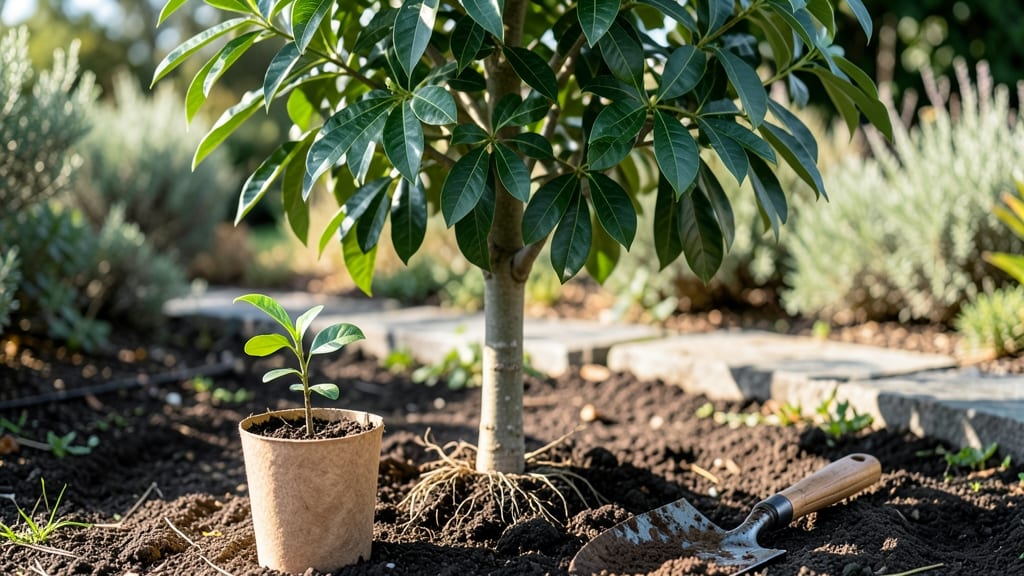
Avocado trees thrive where the sun kisses their leaves all day—where to plant avocado trees starts with full sun exposure for at least 6-8 hours daily, and the right climate to match their tropical roots.
I learned this the hard way when my first tree struggled in a partially shaded spot, its leaves yellowing by mid-afternoon. The key isn’t just sunlight—it’s pairing that with USDA zones 9-11 or container growing for cooler areas, where frost would kill even the hardiest varieties.
Your soil needs to drain like a desert after a rainstorm—avocados hate soggy feet. Amend heavy clay with sand or compost to create a loose, well-draining mix, and avoid low-lying spots where water pools.
In-ground planting works best in warm climates, but containers let you move trees indoors before winter, giving you flexibility. Just use pots at least 18 inches wide with drainage holes, and fill them with cactus or citrus mix for the perfect growing medium.
Picture this: a 10-foot-tall tree loaded with glossy green fruit by its third year, its roots stretching deep into warm, fertile soil.
That’s what you’ll get when you nail the location—sheltered from cold winds, near a fence or wall to capture reflected heat, and spaced 15-20 feet apart if planting multiple trees. The payoff? Juicy, creamy avocados picked straight from your backyard, not a grocery store.
Let’s get those roots settled in the right spot.
For cooler climates, don’t give up—container growing is your secret weapon. Just bring your tree inside before temperatures dip below 32°F, and you’ll still enjoy fresh fruit.
Avoid common mistakes like planting too early in spring (wait until soil warms to 60°F) or choosing the wrong variety (like Hass trees in cold zones—they’ll freeze). With the right spot, your avocado could outgrow your expectations faster than you think.
📚 In This Guide
- What you need
- Instructions
- Tips and common mistakes
- Wrapping up and next steps
What you need
- ● Avocado Tree: A healthy sapling or young tree (check local nurseries for Persea americana varieties like Hass or Fuerte).
- ● Well-draining soil: 50% native soil + 50% compost or potting mix (avoid clay-heavy soil).
- ● Planting hole: Twice as wide and deep as the root ball (dig to 18–24 inches for mature trees).
- ● Organic mulch: Wood chips or straw (2–3 inches thick) to retain moisture and regulate temperature.
- ● Watering can or hose: With a gentle spray nozzle (avocado trees hate soggy roots!).
- ● Fertilizer: Slow-release citrus/avocado fertilizer (follow package rates, typically 1–2 lbs per tree at planting).
- ○ Stake & ties (optional but helpful): For young trees in windy areas (use 2-inch-wide stakes).
- ● Soil pH tester: Aim for 6.0–7.0 (adjust with lime or sulfur if needed).
- ● Drip irrigation system: For consistent moisture (especially in dry climates).
- ● Pruning shears: Sharp, bypass-style shears for shaping or removing dead branches.
- ● Frost cloth: If planting in cooler zones (avocados hate temps below 20°F).
- ● Epsom salt: 1 tbsp per gallon of water (monthly spray for magnesium boost).
How to choose the perfect location for your avocado tree
Sun, warmth, and shelter are the three pillars of avocado success.
☀️ Step 1: Select a Full-Sun Exposure Spot
Avocados demand at least 6-8 hours of direct sunlight daily—no compromises. The ideal location receives morning sun and afternoon shade in hot climates, but young trees can handle full sun if soil stays moist. I always scout potential spots between 10 AM and 2 PM when sunlight is strongest to gauge true exposure.
Look for areas where sunlight reaches the ground without obstruction from buildings or taller plants. If your yard has afternoon shade from trees, position the tree where it gets sunlight before 3 PM. Mature trees can tolerate partial shade, but fruit production suffers dramatically in low-light conditions.
🌿 Step 2: Prioritize Well-Draining Soil in Sheltered Areas
Avocados hate soggy roots, so avoid low spots where water pools after rain. Test drainage by digging a 12-inch hole—if water doesn’t drain within 30 minutes, amend the soil with 3-4 inches of compost or plant on a slight mound. I’ve seen trees drown in heavy clay within weeks if not elevated.
Choose a location protected from strong winds, especially coastal areas where salt spray can damage leaves. A southeast-facing wall provides winter sun while shielding from cold winds—perfect for temperate climates. In frost-prone zones, plant near heat-retaining structures like brick walls or patios.
🪴 Step 3: Account for Mature Tree Size and Root Spread
Avocado trees grow 20-30 feet tall with a 15-20 foot spread, so plant at least 15 feet from structures, driveways, or property lines. Measure the area where the tree’s canopy will extend—this determines where to place it now. I always sketch a rough circle with a 20-foot radius to visualize the space needed.
Consider underground utilities before digging. Avocado roots spread aggressively and can damage pipes or foundations if planted too close. In urban settings, container growing is often the only viable option—just ensure the pot is at least 24 inches deep with drainage holes.
⏰ Step 4: Time Planting for Optimal Establishment
Plant bare-root trees in early spring when soil temperatures reach 60°F—this gives roots 3-4 months to establish before summer heat. Container-grown trees can be planted year-round in frost-free zones, but avoid transplanting during extreme heat or cold. I’ve lost young trees planted in July because the shock of transplanting combined with summer stress was too much.
If planting in colder regions, wait until after the last frost date and choose a microclimate where frost rarely lingers. Mulch heavily with 3-4 inches of organic mulch (like wood chips) to protect roots from temperature swings. Water deeply 2-3 times per week for the first month to encourage root growth into the surrounding soil.
Tips & tricks for perfect avocado tree placement
Sunlight, soil, and space determine whether your avocado tree thrives or struggles—here’s how to get it right the first time.
Light Exposure Strategy: In Step 1, when assessing sunlight, use a simple trick: place a white sheet of paper on potential spots between 10 AM and 2 PM. If shadows appear within 6-8 hours, that location works. I’ve seen trees planted in "sunny" spots that turned out to be partial shade—always verify with this quick test. The morning sun is most critical for fruit development, so prioritize locations where the tree gets at least 4 hours of direct morning sunlight.
Soil Test Hack: The 30-minute drainage test in Step 2 is non-negotiable, but here’s how to make it foolproof: Fill the 12-inch hole with water, then let it drain completely. Refill and time how long it takes to drain again—this gives you a more accurate reading of your soil’s natural drainage capacity. If water still pools after 30 minutes, consider building a raised bed instead of amending with compost alone. I’ve had to replant trees twice because I skipped this second test.
Space Planning Visual: For Step 3’s 15-foot clearance, sketch your tree’s mature canopy by drawing a 20-foot diameter circle on graph paper. Place it on your yard layout to visualize how it will interact with structures. I always mark utility lines on the same diagram—avocado roots can grow 3-4 feet deep and will seek out water pipes like a heat-seeking missile if planted too close.
Seasonal Timing Insight: The 60°F soil temperature guideline in Step 4 is about more than just warmth—it’s about microbial activity in the soil. Cold soil slows down beneficial fungi and bacteria that help roots establish. Use a soil thermometer to check temperatures at 4-inch depth before planting. In cooler climates, consider using black plastic mulch to warm the soil faster in early spring, which can give your tree a head start.
Pro Tips for Where To Plant Avocado Tree
- Sunlight, soil, and space determine whether your avocado tree thrives or struggles—here’s how to get it right the first time.
- Light Exposure Strategy: In Step 1, when assessing sunlight, use a simple trick: place a white sheet of paper on potential spots between 10 AM and 2 PM.
- Soil Test Hack: The 30-minute drainage test in Step 2 is non-negotiable, but here’s how to make it foolproof: Fill the 12-inch hole with water, then let it drain completely.
Frequently asked questions
Got questions about planting your avocado tree? Here are some of the most common concerns—plus quick, actionable answers to help you grow a thriving tree!
Can I plant an avocado tree in a container, or does it need to be in the ground?
Yes! Avocado trees thrive in containers if you choose the right size (at least 15–20 gallons) and provide excellent drainage. Use well-draining potting mix, and repot every 2–3 years. Just remember: container-grown trees may produce fewer fruits than in-ground ones but are perfect for patios or small yards. Pro tip: Move containers indoors during winter if temperatures drop below 40°F.
How long does it take for an avocado tree to bear fruit after planting?
Patience is key! Most avocado trees take 3–5 years to bear fruit from seed, while grafted varieties (bought from nurseries) may fruit in 1–3 years. Factors like sunlight, soil quality, and tree health speed up the process. Bonus: Young trees need regular watering and protection from frost to encourage faster growth.
What’s the best time of year to plant an avocado tree?
The ideal window is late winter to early spring (just before new growth starts) or early fall (6–8 weeks before frost). Avoid planting in extreme heat or cold—roots need time to establish before stress. Troubleshooting: If you’re in a warm climate, plant during the cooler, wetter months to reduce transplant shock.
My avocado tree isn’t growing—what could be wrong?
Check these common issues:
- Poor drainage: Yellow leaves or root rot? Ensure pots have drainage holes or amend heavy soil with perlite.
- Not enough sun: Leggy growth or sparse leaves? Move to a south-facing spot with 6+ hours of sunlight daily.
- Over/under-watering: Wilting or crispy leaves? Water deeply 1–2 times per week (adjust for climate).
- Nutrient deficiency: Pale leaves? Fertilize with citrus-specific fertilizer in spring and summer.
Can I grow an avocado tree indoors, or does it need outdoor conditions?
Indoor growth is possible but challenging! Place near a sunny window (south-facing) and supplement with grow lights. Expect slower growth and fewer fruits. Outdoor spots win: Trees need humidity, airflow, and seasonal temperature shifts to thrive. If indoors, rotate the pot weekly for even light exposure.
Wrapping up and next steps
Planting your avocado tree in the right sunny spot is the secret to a bountiful harvest! 🌞 Whether you’re in a warm climate or a container, prioritize full sun (6+ hours daily), well-draining soil, and protection from harsh winds.
With patience and care, your tree will thrive—and those creamy, delicious avocados will be well on their way!
Ready to get started? Mark your calendar for spring or early fall, grab your tools, and dig in! Your future avocado feast begins with one small (but mighty) planting step. 🌱✨