Pruning
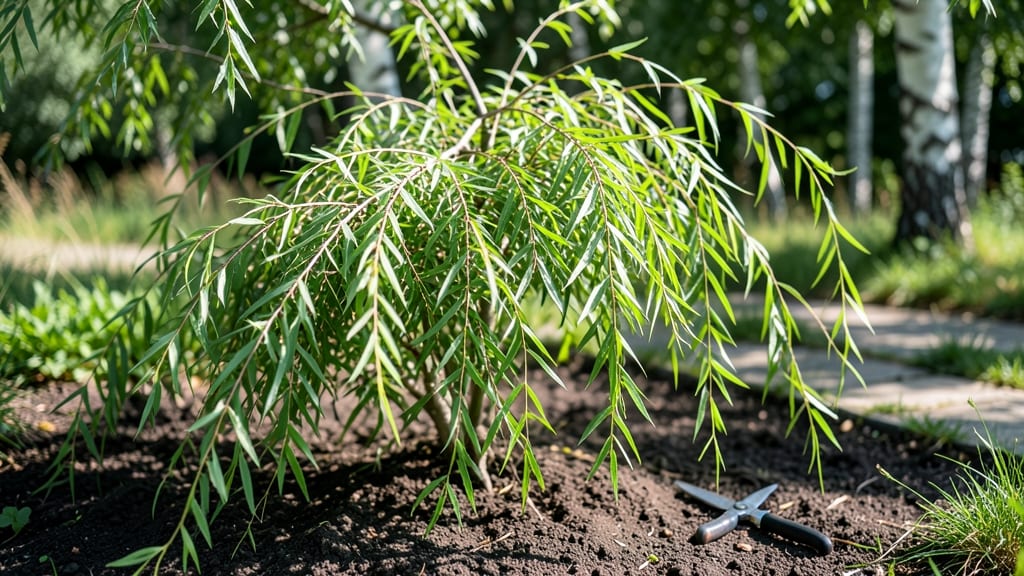
Weaving a willow tree into a living fence transforms your Pacific Northwest yard into a lush, natural boundary that moves with the wind. 🌿 The first time I saw one swaying along a misty Oregon fence line, I knew it would change how I think about privacy—no more stiff lattice or chain-link.
These trees grow fast, adapt to damp soil, and their flexible branches practically beg to be shaped into art.
The key is choosing the right variety—Salix viminalis or Salix purpurea work best for weaving because they’re fast-growing and produce long, supple shoots. You’ll need about 10-15 trees spaced 12 inches apart for a 6-foot-tall fence, and a sturdy frame to train them against.
The best time to start is early spring, when new growth is tender and pliable.
By summer, your fence will be dense enough to block views while letting light and air flow through. The branches will thicken over time, creating a living tapestry that’s both functional and stunning.
Imagine morning sun filtering through the leaves or rain dripping off the woven patterns—it’s nature’s privacy screen at its finest.
This project works for any Pacific Northwest yard, from coastal gardens to rainforest-like backyards. Once established, the fence needs minimal care—just occasional pruning to maintain shape and water during dry spells. Ready to grow something that’s both beautiful and alive?
📚 In This Guide
- What you need
- Instructions
- Tips and common mistakes
- Wrapping up and next steps
What you need
- ● Willow whips: 10–20 live willow branches (Salix spp.), 1/4–1/2 inch in diameter, and 6–10 feet long. Harvest from a local willow tree in early spring for best results!
- ● Stakes: 10–15 wooden or bamboo stakes (4–6 feet tall), treated or untreated, to anchor your fence.
- ● Twine or jute rope: 50–100 feet of biodegradable twine (1/8 inch thick) for initial weaving support.
- ● Water source: A hose or watering can to keep willow whips hydrated during planting and weaving.
- ● Pruning shears: A sharp pair to trim willow branches as needed.
- ● Measuring tape: To ensure even spacing between stakes (3–4 feet apart).
- ● Gloves: Heavy-duty work gloves to protect your hands from thorns or rough bark.
- ○ Post hole digger or auger: For planting stakes securely (optional if using pre-installed stakes).
- ● Mulch or straw: To retain moisture around the base of your willow whips.
- ○ Decorative elements (optional): Stones, pebbles, or native plants to enhance the aesthetic of your living fence.
Step-by-step guide for crafting a weaved willow tree living fence
Here's how to create a sturdy, natural privacy screen using willow branches—perfect for Pacific Northwest's damp climate.
🌱 Step 1: Select and Prepare Fresh Willow Branches
Choose flexible, green willow branches that are at least 1/4-inch thick and 4-6 feet long. The best time to harvest is in early spring when branches are still pliable. I like to cut them on a cloudy day—they bend easier without snapping. Bundle them in groups of 4-6 branches per section you plan to weave.
Strip the branches of leaves and side shoots, leaving only the main stem. This prevents rot and makes weaving cleaner. Soak the branches in lukewarm water for 24 hours before weaving—this softens the wood slightly and keeps it flexible. Real talk: Skipping the soak means branches will crack mid-weave, and you'll have to start over.
🪴 Step 2: Build the Base Frame for Your Living Fence
Construct a U-shaped base frame using 4-foot-long wooden stakes (2x4s work well). Space the stakes 3 feet apart in a row, then connect them at the top with horizontal 2x4s to form the top rail. This creates a sturdy structure to anchor your woven willow sections. The Pacific Northwest's frequent rain means your frame needs to be extra stable—don't skimp on the wood thickness.
Position the frame where you want your living fence to stand. The base should be 6 inches deep to allow for root growth if you later plant willow cuttings into the soil. Use a level to ensure the frame is perfectly straight—crooked frames lead to uneven, wobbly weaves. Hammer the stakes 12 inches into the ground for maximum stability.
🌿 Step 3: Weave the Willow Branches into the Frame
Start weaving by threading the first branch through the frame from the back to front, securing it at the base with twine or wire. Leave 6 inches of branch extending above the frame—this will be your first "row" of weaving. Here's the thing: Weaving willow is like learning to knit—it looks messy at first, but once you get the rhythm, it comes together beautifully.
Alternate branches between over-under patterns, pulling each one tight as you go. Space each new branch 2-3 inches apart for a dense, natural look. Use 3-4 branches per section of the frame, weaving them tightly together. The goal is to create a solid, interlocked lattice that blocks wind and provides privacy. If a branch snaps, don't panic—just replace it and keep weaving.
☀️ Step 4: Secure and Maintain Your Living Fence
Once your weave is complete, secure the top of each branch to the frame with twine or zip ties to prevent unraveling. This is especially important in the Pacific Northwest, where wind and rain can test your fence's durability. Trim any loose ends neatly for a polished finish. Water the base of the frame 2-3 times per week for the first month to encourage root growth if you plan to plant willow cuttings later.
Check your fence every 2 weeks for loose branches or signs of sagging. Reinforce any weak spots immediately. Over time, the willow branches will dry out and harden, becoming even more durable. For a permanent living fence, plant willow cuttings at the base of the frame in early spring—they'll grow into a natural, dense screen within a few years.
Tips & tricks for perfect weaved willow tree living fences
Building a natural privacy screen takes patience—but these tricks will help you avoid common pitfalls and create something truly beautiful.
Branch Selection Matters: When harvesting your willow branches, look for ones that bend easily when you flex them—if they snap immediately, they're too dry. I've found that branches harvested on overcast days are the most pliable. The 24-hour soak in lukewarm water is non-negotiable; it's what makes the difference between a fence that holds together and one that falls apart after the first storm. Trust me on this.
Frame Stability is Everything: The Pacific Northwest's damp conditions mean your frame needs to be rock-solid. I recommend using pressure-treated 2x4s for the stakes—regular lumber will rot faster in our climate. When positioning your frame, use a level and check it at both ends; even a slight tilt will throw off your entire weave. The 12-inch deep stakes create a foundation that can handle wind and rain without shifting.
Weaving Technique Tip: Start your first row with the branch positioned from back to front—this creates a stable base for all subsequent weaving. When you're spacing branches 2-3 inches apart, use a ruler or measuring tape to maintain consistency. The key is tension: each new branch should be pulled tight enough to eliminate gaps but not so tight it cracks. If you notice branches starting to sag after a few days, simply re-tighten them—they'll hold better once they've dried out slightly.
Maintenance Secret: That 2-3 times weekly watering in the first month isn't just about encouraging root growth—it's also keeping your willow branches flexible during the initial drying process. After the first month, you can reduce watering to once a week unless we're in a particularly dry spell. The 2-week check for loose branches becomes especially important during our rainy seasons when everything tends to soften and expand.
Pro Tips for Weaved Willow Tree
- Building a natural privacy screen takes patience—but these tricks will help you avoid common pitfalls and create something truly beautiful.
- Branch Selection Matters: When harvesting your willow branches, look for ones that bend easily when you flex them—if they snap immediately, they're too dry.
- Frame Stability is Everything: The Pacific Northwest's damp conditions mean your frame needs to be rock-solid.
Frequently asked questions
Got questions about growing and maintaining a weaved willow tree? You’re not alone! Here are some of the most common inquiries from gardeners in the Pacific Northwest—and their practical answers.
What’s the best time of year to plant a weaved willow tree in the PNW?
Plant your weaved willow in early spring (March–April) or fall (September–October) for optimal root establishment. Avoid planting in summer heat or winter frost, as young roots are sensitive. The PNW’s mild, wet winters mean fall planting can work well, but spring gives roots a full growing season to adapt.
How often should I prune a weaved willow tree to keep it shaped?
Prune once or twice a year: late winter (February) to shape the structure and summer (June–July) to control vigorous growth. Use clean, sharp shears to trim just above a leaf node—never more than 1/3 of the plant’s height at a time. Regular pruning encourages dense weaving and prevents overgrowth.
Do weaved willow trees need special soil or drainage?
Willows thrive in moist, well-draining soil but tolerate clay or sandy loam common in the PNW. Amend heavy soil with compost or sand to improve drainage, and avoid waterlogged spots. They’re adaptable but grow best near water sources—like streams or rain gardens—where roots can access consistent moisture.
What pests or diseases should I watch for with weaved willow trees?
Common issues include aphids, willow leaf beetles, and fungal diseases (like powdery mildew) in humid PNW summers. Prevent pests with neem oil or insecticidal soap, and improve airflow by pruning dense areas. For mildew, apply copper fungicide early in the season. Healthy soil and regular pruning reduce risks significantly!
Can I grow a weaved willow tree in a container instead of the ground?
Yes! Use a large container (at least 18–24 inches deep) with drainage holes and moist, well-draining potting mix. Repot every 2–3 years to refresh soil. However, container-grown willows may need more frequent watering and could outgrow small spaces quickly. Ideal for patios or small yards!
Wrapping up and next steps
Creating a weaved willow tree living fence is a rewarding way to blend nature with your Pacific Northwest landscape—adding beauty, privacy, and sustainability. This project thrives in your region’s mild, wet climate, offering low-maintenance charm while supporting local ecosystems.
Whether you’re a beginner or a seasoned gardener, the key is patience and regular pruning to encourage lush, intertwined growth.
Now that you’re inspired, take the next step: start small! Plant a few willow whips this season, experiment with different weaving techniques, or even share your progress with fellow gardening enthusiasts. Your future living fence will be a stunning testament to the magic of nature—and your green thumb! 🌿✨