Pruning
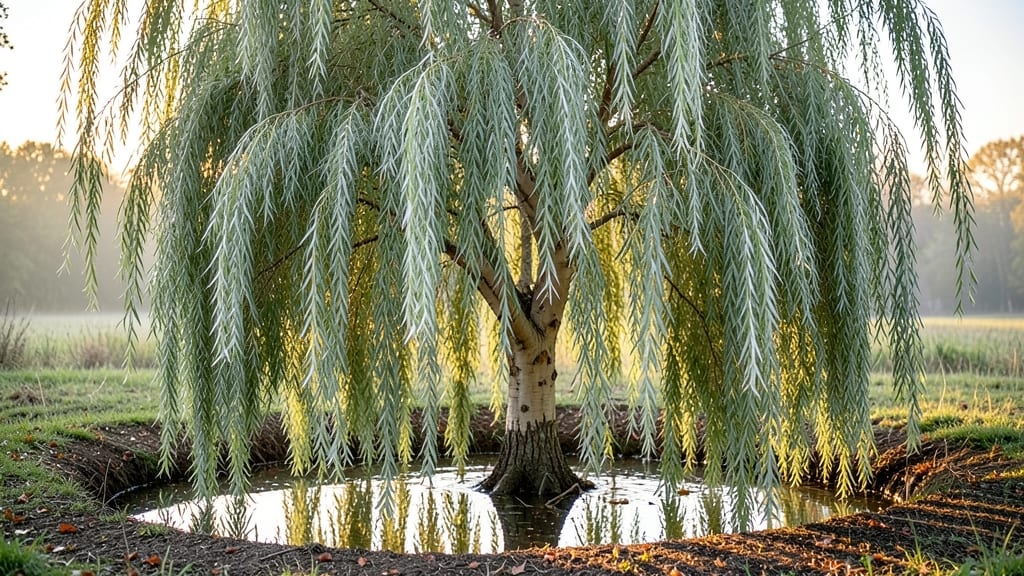
Proper Tree of Enchantment weeping willow care turns this graceful tree into a lush, golden riverside centerpiece for your Pacific Northwest garden. I planted mine three years ago after struggling with bare winter landscapes, and now it’s the centerpiece of my garden—even in stormy seasons.
The secret lies in understanding its unique growth habits, especially in our rainy climate where overwatering or improper pruning can turn that dreamy look into a tangled mess.
This willow thrives in moist, well-draining soil that mimics its natural wetland roots, and it craves full sun to partial shade—perfect for our mix of cloudy days and golden afternoons. Pruning isn’t just about shaping; it’s about encouraging that signature weeping form while preventing weak branch growth.
I’ve found that spring and late winter are the best times to trim, when the tree’s energy is focused on new growth rather than healing old wounds.
What you’ll end up with is a tree that stays lush year-round, its branches swaying even in still air, creating movement that no other tree in your neighborhood can match. The golden hues in fall and the soft green of summer foliage make it a living tapestry.
With the right care, you’ll have a tree that feels like a secret garden in your own backyard, requiring just 10-15 minutes of maintenance per season once you get the hang of it.
Whether you’re dealing with urban heat islands or coastal winds, this willow adapts beautifully—just adjust your watering slightly. The key is patience: it takes a few years for that full, enchanting shape to emerge, but every season brings you closer to the magical, cascading beauty you’re after.
Let’s get your Tree of Enchantment looking its absolute best.
📚 In This Guide
- What you need
- Instructions
- Tips and common mistakes
- Wrapping up and next steps
What you need
- ● Pruning shears: Bypass pruners (sharp, 6-8" blades) for clean cuts on small branches.
- ● Loppers: 1 pair (18-24" handles) for thicker branches (1-2" diameter).
- ● Pruning saw: Curved-tooth saw for branches 2-4" thick (e.g., Felco or Fiskars).
- ● Gloves: Heavy-duty, cut-resistant gloves (leather or reinforced fabric).
- ● Disinfectant: 70% isopropyl alcohol or 10% bleach solution (1 part bleach to 9 parts water) to sterilize tools.
- ● Sealing wax: Pruning sealant (e.g., Tanglefoot Tree Wound Pruning Sealer) for large cuts.
- ● Ladder or step stool: Sturdy, extendable ladder (12-16 ft) for tall branches.
- ● Heavy-duty trash bags: 3-5 gallon bags for debris cleanup.
- ○ Work apron: Optional but handy for tool storage and debris collection.
- ● Pole pruner: For high branches (16-20 ft reach).
- ● Safety glasses: Protect your eyes from debris.
- ● Work boots: Sturdy, ankle-supporting boots for uneven terrain.
- ● Marking spray: Fluorescent paint to mark branches for removal.
- ● Tree growth regulator: (e.g., Apogee or Bonzi) to control vigorous growth (apply post-pruning).
- ● Camera or phone: Document your progress—PNW pruning art deserves a snapshot! 📸
Step-by-step Pacific Northwest pruning guide for your weeping willow
Here's how to keep your Tree of Enchantment weeping willow thriving—with seasonal cuts that enhance its graceful form.
Assess Growth Patterns Before Pruning
Start by examining your willow's branches in late winter or early spring, when growth is dormant but about to begin. Look for any dead, crossing, or crowded branches—these are your priority targets. The Pacific Northwest's mild winters mean willows stay semi-active longer, so timing matters more than you might think.
Focus on branches that grow inward or rub against others. These create weak points that can split during storms. I always scan from the ground up—starting at the base helps me spot structural issues before they become major problems. Healthy branches should have a smooth, consistent diameter and flexible wood.
Make Clean Cuts at the Right Time
Prune during the dormant season (late winter to early spring) when the tree isn't actively growing. Use sharp, clean pruning shears to make 45-degree cuts just above a bud or branch collar. Avoid leaving stubs—this invites disease and weakens the tree.
For larger branches over 2 inches thick, use a pruning saw. Make the first cut about 12 inches out from the branch collar, then follow with a second cut to remove the remaining section. This prevents bark from tearing. Remember, willows are fast growers, so you can be aggressive with shaping—just avoid removing more than 25% of the canopy in one season.
Shape for Year-Round Beauty and Structural Integrity
Weeping willows thrive on a natural, flowing shape, so avoid harsh geometric cuts. Instead, focus on thinning out rather than topping. Remove branches that grow straight up or downward—they disrupt the tree's graceful cascade. I like to step back every few cuts to visualize the silhouette.
In the Pacific Northwest, where rain is frequent, prune to improve airflow. This reduces fungal diseases like powdery mildew, which loves the damp climate. If your willow has grown too wide for its space, prioritize branches on the outer edges to encourage a more compact form. The goal is to maintain that dramatic, weeping effect while keeping the tree strong.
Monitor and Maintain Through the Seasons
After the initial pruning, check your willow twice a year—once in early summer and again in late summer. Remove any suckers (shoots growing from the base or roots) immediately, as they drain energy from the main tree. Suckers are common with willows, but they can overwhelm the tree if left unchecked.
In fall, do a light cleanup—remove any dead or diseased branches before winter sets in. This keeps the tree healthy and prepares it for the next growing season. The Pacific Northwest's mild winters mean willows stay active longer, so a little extra attention in fall pays off in spring.
Protect and Nourish for Long-Term Health
After pruning, apply a balanced, slow-release fertilizer (like a 10-10-10 formula) in early spring to support new growth. Water deeply but infrequently—willows have deep roots and don't like soggy soil. Mulch around the base with 3-4 inches of organic mulch, keeping it 6 inches away from the trunk to prevent rot.
Willows are resilient, but they appreciate a little extra care in the Pacific Northwest's wet climate. If you notice yellowing leaves or slow growth, it might signal iron deficiency—common in alkaline soils. A foliar spray of chelated iron can help. Keep an eye out for aphids or spider mites, which love willow leaves, and treat with neem oil if needed.
Tips & tricks for perfect Pacific Northwest weeping willow pruning
Transform your weeping willow into a showstopper with these game-changing pruning secrets tailored for our region's unique climate.
Timing is Everything: The Pacific Northwest's mild winters mean willows stay semi-active longer, so don't wait until spring to prune. Late winter (February-March) is ideal when buds begin swelling but before new growth starts. I've seen willows respond poorly when pruned too late—waiting until April can stress the tree as it's already pushing new leaves. For mature trees, you can even do light pruning in late fall (November) to remove deadwood before winter sets in.
The 45-Degree Cut Secret: When making those precise 45-degree cuts above the branch collar, think of it like slicing a cake at an angle—this creates a larger wound surface that heals faster. I always use a sharp pruning saw for branches over 2 inches thick, making the first cut 12 inches from the collar to control the branch's weight and prevent tearing. For smaller branches, clean shears work perfectly, but always make the cut just outside the branch collar to avoid damaging the protective tissue.
Canopy Management Matters: Willows are aggressive growers, so resist the urge to remove more than 25% of the canopy in one season. I've learned this the hard way—after over-pruning a client's willow, it took three years to recover its dramatic weeping form. Instead, focus on thinning out crowded areas and removing upward-growing branches that disrupt the graceful silhouette. Step back frequently to visualize how each cut affects the overall shape—you're sculpting a living work of art, not just trimming branches.
Pacific Northwest Disease Prevention: Our region's frequent rain creates perfect conditions for fungal diseases like powdery mildew. After pruning, improve airflow by removing crossing branches and thinning the canopy from the inside out. I always sterilize my tools with rubbing alcohol between cuts to prevent spreading any potential pathogens. For extra protection, apply a thin layer of horticultural oil in late summer if you notice early signs of fungal growth—it creates a protective barrier without harming beneficial insects.
Pro Tips for Tree Of Enchantment Weeping Willow Care
- Transform your weeping willow into a showstopper with these game-changing pruning secrets tailored for our region's unique climate.
- Timing is Everything: The Pacific Northwest's mild winters mean willows stay semi-active longer, so don't wait until spring to prune.
- The 45-Degree Cut Secret: When making those precise 45-degree cuts above the branch collar, think of it like slicing a cake at an angle—this creates a larger wound surface that heals faster.
Frequently asked questions
about caring for your Tree of Enchantment weeping willow—especially in the Pacific Northwest’s unique climate—can help you avoid common pitfalls. Here are answers to the most pressing questions:When is the best time to prune my weeping willow for maximum growth?
The ideal time to prune your Tree of Enchantment weeping willow is late winter or early spring (February–March), just before new growth begins. This timing promotes vigorous regrowth while avoiding late-season pruning, which can stimulate weak, disease-prone shoots. Avoid pruning in fall—it can leave cuts vulnerable to fungal infections in the damp PNW climate.
Can I prune my weeping willow in summer, and how?
While summer pruning is possible, it’s not recommended for weeping willows unless addressing safety hazards (e.g., dead branches). If you must prune in summer, do so in early morning to reduce stress, and limit cuts to no more than 25% of the tree’s foliage. Always sterilize tools with rubbing alcohol to prevent bacterial spread in the humid PNW air.
How do I prevent my weeping willow from getting fungal diseases after pruning?
Weeping willows are prone to Verticillium wilt and canker diseases, especially in the PNW’s wet conditions. To prevent issues:
- Seal cuts with pruning sealant (or beeswax) on cuts larger than ½ inch.
- Avoid pruning when foliage is wet—wait for dry, sunny days.
- Improve drainage around the root zone to reduce soil-borne pathogens.
- Space trees 30+ feet apart to allow airflow.
Are there alternatives to weeping willows for low-maintenance PNW landscapes?
If weeping willows seem high-maintenance, consider these low-maintenance PNW natives with similar elegance:
- Pacific Dogwood (Cornus nuttallii) – Thrives in shade, disease-resistant, and blooms stunningly.
- Western Red Cedar (Thuja plicata) – Evergreen, drought-tolerant, and supports wildlife.
- Oregon Ash (Fraxinus latifolia) – Fast-growing with graceful branches (but watch for emerald ash borer).
These options require far less pruning while still adding enchantment to your landscape!
My weeping willow’s branches are dying—what’s wrong?
Dying branches in weeping willows often signal one of three issues:
- Over-pruning – Willows regrow aggressively but can weaken if pruned too heavily. Stick to 10–20% annual cuts.
- Root or soil compaction – Willows need deep, well-draining soil. Aerate or mulch heavily if growth stalls.
- Pests (e.g., willow borers) – Look for exit holes or sawdust-like frass. Treat with neem oil or invite woodpeckers (natural predators).
If the issue persists, consult a PNW-certified arborist—they can diagnose fungal or bacterial infections.
Wrapping up and next steps
Caring for your Tree of Enchantment weeping willow in the Pacific Northwest is a rewarding journey that blends artistry with nature.
With the right tools, seasonal pruning know-how, and a touch of patience, you’ll cultivate a lush, magical presence in your landscape year-round. Your next step? Grab your pruners, schedule a quick check-in with your tree every few months, and watch it thrive—one enchanting branch at a time! 🌿✨