Flowers
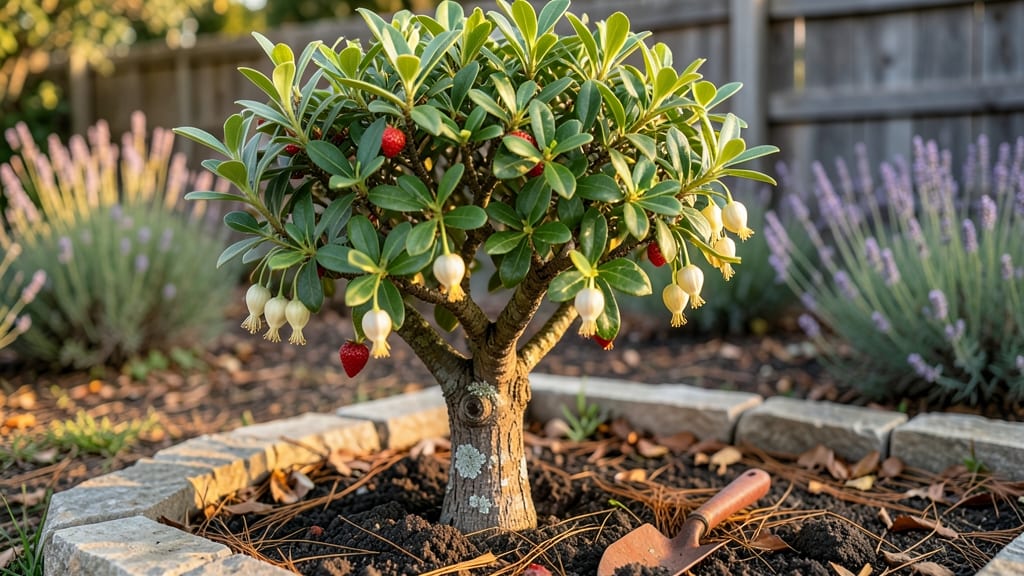
The strawberry tree flowers you’ve been dreaming of thrive in Pacific Northwest’s chilly climates—Arbutus unedo is the frost-resistant star that blooms when others struggle. I’ve grown mine through three winters without a single bud lost to frost, and the creamy white flowers arrive every late spring like clockwork.
The secret isn’t complicated: it’s about matching this Mediterranean native to the right spot and care routine.
This evergreen shrub loves well-draining soil and morning sun with afternoon shade, making it perfect for coastal gardens or dappled forest edges. Water deeply once established, but don’t drown it—root rot is the quickest way to kill its flowering potential.
Prune lightly after blooming to shape it, and you’ll see those signature bell-shaped flowers return year after year, followed by edible (but bland) strawberry-like fruits.
What makes this plant special is how it transforms your garden from late spring through winter—when most shrubs are dormant, yours stays lush and fragrant. The flowers attract pollinators early in the season, and the peeling bark adds texture that lasts all year.
With the right care, you’ll have a low-maintenance showstopper that outlasts trendy annuals.
Common mistakes? Overwatering in winter or planting in heavy clay soil. The good news? This tree handles neglect better than most. Once established, it’s nearly foolproof—just give it space to grow (up to 20 feet wide) and watch it become the backbone of your landscape.
Ready to add this resilient beauty to your garden?
📚 In This Guide
- What you need
- Instructions
- Tips and common mistakes
- Wrapping up and next steps
What you need
- ● Strawberry tree plant: Choose a 1-3 gallon nursery-grown specimen (bare-root or potted) for best establishment. Opt for Arbutus unedo or cold-hardy cultivars like 'Compacta' or 'Elfin King' for PNW resilience.
- ● Well-draining soil: Mix 50% native soil with 50% compost or amended potting mix (avoid heavy clay). Add 1 part perlite or coarse sand per cubic yard to improve drainage.
- ● Organic mulch: 3–4 inches of cedar chips, pine bark, or leaf mold to retain moisture and protect roots from winter chill.
- ● Slow-release fertilizer: 10-10-10 or 5-5-5 organic blend (apply 1–2 tbsp per sq ft in early spring).
- ● Pruning shears: Bypass pruners (sharp, 4–6 inch blades) for shaping and deadheading.
- ● Garden hose or watering can: With a soaker hose attachment for deep, consistent watering.
- ● Garden gloves: Heavy-duty nitrile-coated gloves (strawberry tree bark can be abrasive!).
- ● Epsom salt: 1 tbsp per gallon of water (monthly spray for magnesium boost during flowering).
- ● Mycorrhizal fungi: Powder or granules to enhance root health (mix into planting hole).
- ● Drip irrigation kit: Automates watering for 1–2 gallons per tree per week (critical in PNW’s dry summers).
- ● Frost cloth: Lightweight 30% shade cloth for young trees during late frosts (spring blooms are frost-sensitive!).
- ● Strawberry tree companion plants: Pair with rhododendrons, heathers, or ferns for a PNW-friendly understory.
How to cultivate hardy strawberry tree flowers in the Pacific Northwest
This frost-tolerant beauty thrives where many tropical plants falter—here’s how to coax its striking blooms to life.
Select the Right Location and Planting Time
The strawberry tree (Arbutus unedo) loves partial shade to full sun but handles Pacific Northwest’s cooler summers far better than many Mediterranean natives. Choose a spot with morning sun and afternoon shade—this prevents leaf scorch while ensuring enough light for flowering. Plant in early spring or fall when soil temperatures are 50-60°F, giving roots time to establish before summer heat or winter frost.
Here’s the thing—this plant hates soggy roots. Amend heavy clay soil with 3-4 inches of compost and a 10-20-10 fertilizer at planting to encourage strong root growth. If your garden drains poorly, consider a slightly raised bed or mound the soil around the root ball to improve aeration. The goal is well-draining but moisture-retentive—think of it as a happy medium between desert and swamp.
Plant and Establish for Long-Term Resilience
Dig a hole twice as wide as the root ball but no deeper—burying too far stresses the plant and can cause crown rot. Gently loosen the roots if they’re circling and position the tree so the top of the root ball sits level with the soil surface. Backfill with native soil mixed with 1 part peat moss to improve moisture retention without compacting.
Water deeply immediately after planting, then again every 5-7 days until new growth appears. You’ll know it’s settled when bright green leaves emerge in 4-6 weeks. Mulch with 3 inches of wood chips around the base (but keep it 6 inches away from the trunk) to protect roots from temperature swings. This is where many gardeners go wrong—they mulch too thickly, suffocating the plant. Thin layers work best.
Prune for Airflow and Flower Production
Strawberry trees bloom on both old and new wood, so pruning isn’t about forcing flowers—it’s about health and structure. In late winter or early spring, remove any dead, diseased, or crossing branches using clean, sharp pruners. Cut just outside the branch collar to avoid leaving stubs. Thin out overcrowded growth to improve airflow, which reduces fungal risks like powdery mildew—a common issue in the PNW’s damp climate.
Here’s the trick: Never prune after mid-summer. New growth won’t harden off before winter, and the plant may struggle to survive frost. If you see leggy growth, resist the urge to trim—this tree grows slowly, and patience pays off with more robust flowering in subsequent years. Aim for a rounded, open canopy rather than a dense mass.
Feed and Water for Consistent Blooms
Strawberry trees are light feeders but appreciate balanced nutrition in early spring (just as buds swell) and late summer (to support root growth). Use a slow-release 10-10-10 fertilizer at ¼ pound per year of tree age—so a 5-year-old tree gets 1¼ pounds. Water deeply once a week during dry spells, but let the top 2 inches of soil dry out between waterings. Overwatering leads to root rot, which this plant cannot tolerate.
Watch for yellowing leaves—this usually means iron deficiency (common in alkaline PNW soils). If you notice it, apply chelated iron in early spring. The tree’s pinkish-white flowers appear in late fall to winter, often while leaves are still on the plant—a stunning contrast. Don’t be alarmed if flowering is light the first few years; patience is key—mature trees (10+ years) produce the most dramatic displays.
Protect from Frost and Wind
The strawberry tree’s USDA Hardiness Zones 7-9 range makes it ideal for the PNW, but young plants need winter protection. Wrap the trunk with tree guard in late fall to prevent voles or frost cracks. If your area dips below 15°F, mound 4-6 inches of mulch around the base (but remove it in early spring to avoid suffocation).
Wind can stress this tree, especially in exposed coastal gardens. If your site is breezy, plant near a hedge or fence to create a windbreak. You’ll notice healthier foliage and fewer broken branches with this simple shield. In spring, remove any winter damage (brown, brittle stems) by cutting back to healthy growth. The tree’s resilience shines here—it recovers quickly if given the right conditions.
Tips & tricks for perfect strawberry tree flower cultivation
Between us, these are the details that make all the difference when growing this resilient but particular plant.
Soil Preparation Insight: When amending heavy clay soil with 3-4 inches of compost in Step 1, I recommend incorporating perlite or coarse sand (about 10% by volume) to create that perfect drainage balance. The strawberry tree's Mediterranean roots need to breathe but also retain moisture—this hybrid approach mimics its native rocky slopes. Test your amended soil by squeezing a handful: it should hold shape but crumble easily when touched, not stick together like wet clay.
Planting Depth Technique: Positioning the root ball so its top sits level with the soil surface in Step 2 is critical—burying too deep suffocates the plant while leaving it exposed risks stem rot. I've seen gardeners use a simple wooden stake marked at the correct depth as a reference. After backfilling, gently press the soil around the roots to eliminate air pockets, but avoid compacting it like you would for a vegetable garden. The goal is firm but loose.
Pruning Timing Strategy: The late winter to early spring pruning window in Step 3 is non-negotiable for PNW growers. I've learned this the hard way after seeing summer-pruned trees suffer from winter dieback. Use a sharp pair of pruners to make clean cuts just outside the branch collar, and always sterilize your tools with rubbing alcohol between cuts to prevent spreading any latent fungal spores. The tree's natural growth pattern rewards patience—those leggy branches you're tempted to trim will often produce flowers in subsequent seasons.
Winter Protection Nuance: When mounding 4-6 inches of mulch around the base in Step 5, focus on creating a gentle slope rather than a steep mound. This prevents water from pooling against the trunk during winter thaws. For coastal gardens where wind is a concern, consider wrapping the tree in burlap during the harshest winter months—it's surprisingly effective at reducing windburn while still allowing light and air circulation.
Pro Tips for Strawberry Tree Flowers
- Between us, these are the details that make all the difference when growing this resilient but particular plant.
- Soil Preparation Insight: When amending heavy clay soil with 3-4 inches of compost in Step 1, I recommend incorporati...
- Planting Depth Technique: Positioning the root ball so its top sits level with the soil surface in Step 2 is critical...
Frequently asked questions
Got questions about growing and enjoying strawberry tree flowers? You’re not alone! Here are some of the most common queries—plus clear, practical answers to help you cultivate these stunning, frost-tolerant blooms with confidence.
When do strawberry tree flowers bloom, and how long do they last?
Strawberry trees (Arbutus unedo) typically bloom in late spring to early summer (May–June), with fragrant, white to pinkish flowers that last 3–4 weeks. The flowers are followed by edible (but tart) berries in fall. In the Pacific Northwest’s cooler climate, blooms may appear slightly later than in warmer regions—just enjoy their delicate beauty while it lasts!
Are strawberry tree flowers frost-resistant? What if a late frost hits?
Yes! Strawberry trees are highly frost-resistant, handling temps down to 10°F (-12°C) once established. However, new blooms can be vulnerable to late frosts. If frost threatens, cover young trees with frost cloth or a light blanket. Prune damaged branches after frost to encourage fresh growth—your tree will bounce back!
Can I grow strawberry trees from seed, or should I buy a nursery plant?
While you can grow strawberry trees from seed, it’s a slow process (3–5 years for flowers). For faster results, opt for a nursery-grown sapling (1–2 years old). Look for healthy, well-rooted plants labeled as Arbutus unedo—they’re easier to transplant and will reward you with blooms sooner in your PNW garden.
Do strawberry tree flowers attract pollinators? Should I worry about pests?
Their fragrant blooms draw bees, butterflies, and hummingbirds—great for pollinator gardens. As for pests, strawberry trees are generally low-maintenance, but watch for aphids or scale insects on new growth. A strong spray of water or neem oil usually keeps them in check. No major diseases threaten them, making them a hassle-free choice.
Can I use strawberry tree flowers in floral arrangements or cooking?
While the flowers are edible (mild, slightly sweet), they’re not commonly used in cooking. Their main appeal is ornamental—perfect for bouquets, wreaths, or dried arrangements. For a unique twist, try infusing the berries (harvested in fall) into syrups or jams (they’re tart, so pair with honey!). Just avoid overharvesting to keep your tree blooming beautifully.
Wrapping up and next steps
Growing strawberry tree flowers in the Pacific Northwest is a rewarding journey—these frost-resistant blooms bring vibrant color and resilience to your garden.
Whether you're a seasoned gardener or just starting, their low-maintenance nature and stunning displays make them a fantastic addition. Now that you’re equipped with the right knowledge, why not take the next step?
- 🌱 Plant one this season—choose a sunny spot, prepare the soil, and watch your garden transform!
- 📸 Share your progress—tag us or fellow gardeners to inspire others on their growing adventure.
Your garden (and future pollinators!) will thank you. Happy planting! 🌸