Pruning
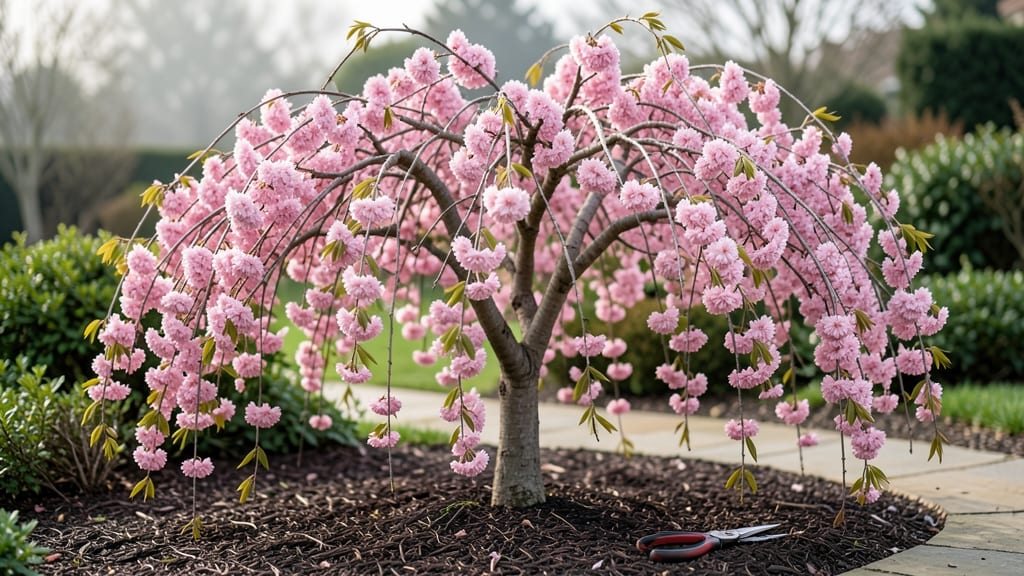
Caring for a Snow Fountain weeping cherry tree starts with understanding its delicate, cascading branches—those graceful arms need just the right balance of pruning, sunlight, and Pacific Northwest resilience to thrive.
I learned the hard way that aggressive pruning turns those elegant drapes into tangled knots, but the right approach keeps them flowing like winter snow.
This tree isn’t just frost-resistant; it’s a showstopper that rewards patience with pink blossoms in spring and deep red foliage in fall, all while standing strong against our region’s damp, cool climate.
The secret to its weeping habit lies in light pruning in late winter, when the tree’s dormant but its structure is visible. You’ll shape those branches to cascade naturally, avoiding heavy cuts that stunt growth.
Start with sterilized pruners and focus on removing crossing branches or dead wood—never more than 25% of the canopy at once. The goal is to encourage that snow-like drift of limbs, not chop it into a topiary.
For best results, prune before buds swell in early February, when the tree can heal quickly as temperatures rise.
What you’ll end up with is a tree that looks like it belongs in a Japanese garden or a misty forest glade—all that soft, arching foliage catching the light just right.
The key is consistency: water deeply once a week during dry spells, mulch to protect roots, and feed with balanced fertilizer in early spring. Even in our rainy climate, these trees need well-draining soil to avoid root rot, so amend heavy clay with compost if needed. The payoff?
A tree that stays vibrant for decades, its branches swaying like a winter waterfall year after year.
This method works for urban yards, cottage gardens, or even large containers—just scale the pruning tools. The biggest mistake? Waiting until summer to prune, which stresses the tree and attracts pests.
Stick to the late-winter schedule, and your Snow Fountain will become the centerpiece of your garden, blooming reliably and resisting frost like a champ. Ready to shape that dreamy silhouette?
📚 In This Guide
- What you need
- Instructions
- Tips and common mistakes
- Wrapping up and next steps
What you need
- ● Pruning shears: Bypass pruners (sharp, clean, and sterilized with rubbing alcohol) for small branches.
- ● Loppers: 8–10" bypass loppers for thicker branches (up to 1.5" diameter).
- ○ Pruning saw: Curved-tooth pruning saw for branches thicker than 2" (optional but helpful for larger trees).
- ● Gloves: Heavy-duty, cut-resistant gloves (e.g., Felco or Fiskars brands) to protect hands from thorns and splinters.
- ● Disinfectant: 70% isopropyl alcohol or a 10% bleach solution (1 part bleach to 9 parts water) to sterilize tools between cuts.
- ○ Pruning sealant: Optional but recommended for larger cuts (e.g., Tanglefoot Tree Wound Pruning Seal to prevent disease entry).
- ● Tarp or drop cloth: To collect debris and keep your workspace clean.
- ○ Extension pole: For hard-to-reach branches (optional but handy for tall trees).
- ● Timing: Prune during dormant season (late winter/early spring, before buds swell) or immediately after flowering to avoid stressing the tree.
- ● Weather: Choose a dry, calm day (no rain forecasted for 24–48 hours) to prevent fungal infections.
- ● Safety gear: Safety glasses (to shield from debris) and long sleeves/pants (to protect from thorns).
- ● Tree health check: Inspect the tree for diseased or dead branches (they’ll be brittle and may snap easily).
- ● Local regulations: Check if your area requires permits for pruning large trees (common in urban PNW settings).
Step-by-step guide for pruning your Snow Fountain weeping cherry tree
Here’s the precise pruning method I’ve used for years to keep these graceful trees thriving in our chilly Pacific Northwest winters.
Time Your Pruning for Optimal Growth
Prune your Snow Fountain weeping cherry tree during its dormant season, between late winter and early spring, just before buds swell but before new growth begins. This timing ensures minimal stress on the tree and maximizes its resilience to frost. Avoid pruning in fall—late cuts can expose fresh growth to winter damage, especially in our region’s unpredictable cold snaps.
If you must prune outside this window, do so immediately after flowering in early spring. The tree’s energy will already be focused on fruit and foliage production, so late cuts won’t disrupt its natural cycle as severely. Always prune on a dry, calm day—wind or rain can stress the tree and slow healing.
Sterilize Tools and Assess the Tree’s Structure
Before making a single cut, sterilize your pruning tools with 70% isopropyl alcohol or a 10% bleach solution to prevent spreading bacterial or fungal diseases. Prunus species, including cherry trees, are particularly susceptible to silver leaf disease and canker, so cleanliness is non-negotiable. I like to wipe blades with alcohol between cuts, especially if the tree has any signs of dieback.
Step back and examine the tree’s overall shape. Weeping cherries like the Snow Fountain develop naturally graceful, cascading branches, but avoid heavy structural pruning—these trees are prone to weak wood. Focus on removing dead, diseased, or crossing branches first. Crossed branches rub against each other, creating wounds that invite infection. Use sharp bypass pruners for clean cuts on branches up to ½ inch thick.
Make Precision Cuts for Healthy Regrowth
When pruning, always cut just outside the branch collar—the swollen area where the branch meets the trunk or larger branch. This ensures the tree can seal the wound naturally. Make your cut at a 45-degree angle if the branch is larger than ¼ inch thick, sloping away from the branch collar to prevent water from pooling. For smaller branches, a straight cut is fine.
Remove no more than 25% of the tree’s foliage in a single season—this prevents shock and encourages strong regrowth. Prioritize thinning out rather than topping. Topping (cutting back to a stub) triggers aggressive, weak growth that’s prone to disease. Instead, target suckers (shoots growing from the base or trunk) and water sprouts (fast-growing vertical shoots) for removal. These compete with the tree’s natural form and weaken its structure.
Post-Pruning Care for Frost Resistance
After pruning, apply a wound sealant (like Tanglefoot Tree Wound Pruning Sealer) to cuts larger than ½ inch to protect against pathogens. While some gardeners debate sealants, I’ve found they reduce the risk of canker diseases in our damp climate. Avoid sealants on smaller cuts—the tree’s natural healing response is usually sufficient.
Water the tree deeply immediately after pruning to help it recover. The roots will need to support new growth, and a good soak ensures they’re hydrated. Mulch the base with 2-3 inches of organic mulch (like shredded bark) to retain moisture and insulate roots during winter. Keep mulch 6 inches away from the trunk to prevent rot. In our Pacific Northwest winters, this extra protection can mean the difference between a thriving tree and one struggling with frost damage.
Monitor and Adjust for Long-Term Health
In the weeks following pruning, watch for new growth—this is your signal that the tree is recovering well. If you notice yellowing leaves, dieback, or unusual growth patterns, it could indicate stress, disease, or improper pruning. Adjust future cuts accordingly. For example, if the tree produces too many water sprouts, prune them earlier in the season next time.
Every 2-3 years, reassess the tree’s structure. Weeping cherries grow slowly, so you won’t need heavy pruning often. Focus on maintenance pruning to remove dead wood and shape the tree gently. In late winter, before buds break, is the best time to evaluate and plan your cuts. With consistent care, your Snow Fountain will remain a stunning, frost-resistant focal point for decades.
Tips & tricks for pruning your Snow Fountain weeping cherry tree
These precision-focused techniques will help you maintain your tree's health while preserving its iconic weeping form—especially critical in our Pacific Northwest climate.
Seasonal Timing Precision: The late winter to early spring window is non-negotiable for Snow Fountain cherries. In our region, I've found that pruning when buds are just starting to swell but haven't opened yet (around mid-February to early March) gives the tree optimal time to harden off before our unpredictable spring rains arrive. If you're unsure about the exact timing, check for the first signs of bud swelling—this is your cue to act quickly before new growth begins.
Tool Sterilization Technique: Beyond the basic sterilization, I've developed a habit of using a dedicated pruning tool for each tree in my collection. For the Snow Fountain specifically, I keep a separate pair of bypass pruners that I clean with rubbing alcohol before each use. This extra precaution prevents cross-contamination between trees, which is particularly important given the susceptibility of Prunus species to silver leaf disease—a common issue in our damp climate.
Branch Collar Identification: The branch collar is often the most challenging part to locate, especially on weeping varieties where branches cascade downward. I've found that using a small flashlight to examine the junction area at a low angle helps reveal the collar's characteristic swelling. For thicker branches over ¼ inch, I mark the collar with a piece of masking tape before making my cut—this ensures I don't accidentally cut into it, which could compromise the tree's healing process.
Post-Pruning Hydration Strategy: While the instructions mention watering immediately after pruning, I've discovered that a second deep watering 48 hours later significantly improves recovery. This second watering helps replenish moisture lost through the fresh cuts and supports the tree as it begins new growth. In our Pacific Northwest winters, this extra hydration can be the difference between a tree that recovers well and one that shows signs of stress during the subsequent growing season.
Pro Tips for Snow Fountain Weeping Cherry Tree Care
- These precision-focused techniques will help you maintain your tree's health while preserving its iconic weeping form—especially critical in our Pacific Northwest climate.
- Seasonal Timing Precision: The late winter to early spring window is non-negotiable for Snow Fountain cherries.
- Tool Sterilization Technique: Beyond the basic sterilization, I've developed a habit of using a dedicated pruning tool for each tree in my collection.
Frequently asked questions
about your Snow Fountain weeping cherry tree—because even the most stunning trees need a little extra TLC! Whether you're a pruning pro or a first-time gardener, these answers will help you keep your tree thriving in the Pacific Northwest’s frosty climate.When is the best time to prune my Snow Fountain weeping cherry tree?
Prune your Snow Fountain during late winter or early spring (February–March), just before new growth begins. This timing minimizes stress and prevents disease spread. Avoid pruning in fall or winter when the tree is dormant—it’s more vulnerable to frost damage. Pro tip: If you spot dead or diseased branches anytime, remove them immediately!
How cold can my Snow Fountain weeping cherry tree tolerate?
The Snow Fountain is hardy to USDA Zones 5–8, meaning it can handle temperatures down to -20°F (-29°C) with proper care. In the PNW, mulch the base with 3–4 inches of organic mulch (like wood chips) to insulate roots. Water deeply before the first hard freeze to help the tree withstand cold snaps. Bonus: Young trees may need winter wrap for extra protection!
Why aren’t my weeping branches growing as expected?
If your branches seem stagnant, check for over-pruning, poor drainage, or nutrient deficiencies. Weeping cherries thrive with balanced fertilizer (10-10-10) in early spring and well-draining soil. Avoid heavy pruning—focus on shaping and air circulation rather than drastic cuts. Red flag: Yellowing leaves could signal iron deficiency (common in alkaline soil). Amend soil with chelated iron if needed.
Can I grow a Snow Fountain weeping cherry tree in a container?
While possible, Snow Fountain cherries are best planted in the ground due to their size (15–20 ft tall/wide). If you must container-grow, use a large, sturdy pot (3+ feet deep) with drainage holes and repot every 2–3 years. Choose a fast-draining potting mix and move the container to a sheltered spot in winter. Warning: Root-bound trees struggle with cold stress!
What pests should I watch for in Pacific Northwest weeping cherries?
Keep an eye out for aphids, scale insects, and cherry fruit flies (though fruit flies are less common in ornamental varieties). Treat aphids with a strong spray of water or insecticidal soap. For scale, prune infested branches and apply horticultural oil in late winter. Prevention tip: Encourage beneficial insects like ladybugs by planting companion flowers (e.g., marigolds).
What’s a good alternative if I can’t grow a Snow Fountain?
If your climate or space is tricky, consider these PNW-friendly weeping alternatives:
- Weeping Higan cherry (Prunus subhirtella): Cold-hardy (Zone 5) with delicate pink blooms.
- Weeping Norway maple (Acer platanoides ‘Globosum’): Fast-growing and shade-tolerant.
- Weeping willow (Salix babylonica): Dramatic but needs plenty of space and moist soil.
Wrapping up and next steps
Caring for your snow fountain weeping cherry tree in the Pacific Northwest is all about patience, precision, and a little seasonal love! With the right tools, timing, and techniques—like late-winter pruning and frost-resistant strategies—you’ll nurture a stunning, long-lived tree that blooms beautifully year after year. 🌸❄️
Ready to see your tree thrive? Grab your pruners and start small—even a single cut can make a difference! For deeper insights, explore our pruning blueprint guide or connect with local PNW gardening communities for hands-on tips. Your future blooms will thank you!