
Pruning
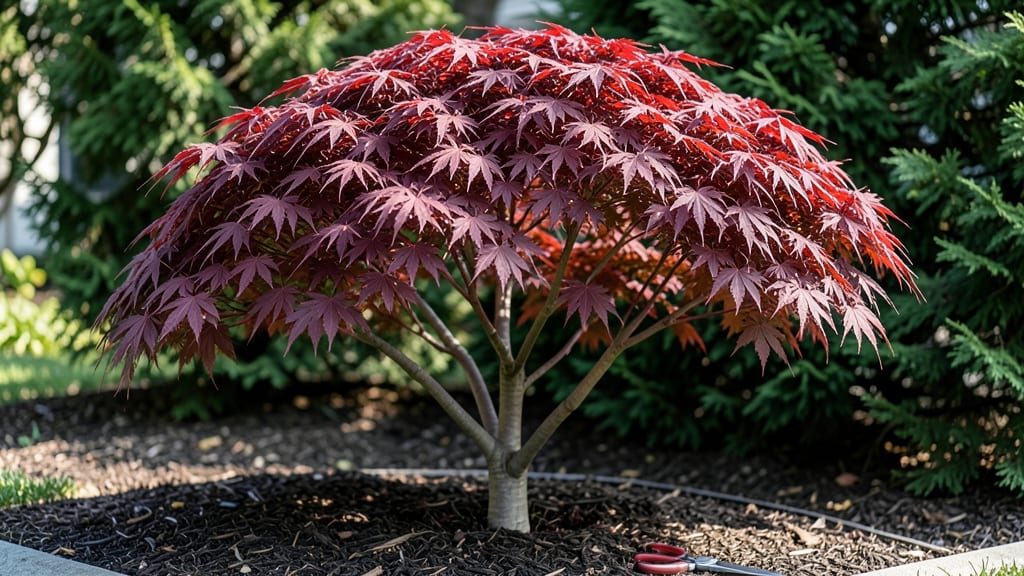
The scarlet maple tree transforms Pacific Northwest gardens with fiery foliage that lasts from spring through winter. I’ve pruned mine for years, and the secret to its year-round vibrancy lies in strategic cuts that balance shape and color intensity.
The first step is understanding when to prune—late winter, before buds swell, is ideal for shaping, while summer trims keep those deep red leaves popping against the gray skies.
You’ll need basic tools: sharp pruning shears, loppers for thicker branches, and a ladder if your tree’s over 10 feet tall. The real magic happens in the timing—prune too early, and you risk encouraging weak growth; wait too long, and you’ll sacrifice next year’s boldest colors.
My tree now stands as the centerpiece of my yard, its branches arching with leaves that shift from lime-green to scarlet, even in December.
What you’ll achieve is a tree that stays compact, healthy, and stunningly vibrant all season. The key is thinning out crowded branches to improve airflow, which prevents disease and keeps the foliage lush.
With consistent care, your scarlet maple will become the envy of the neighborhood—its fiery hues standing out against the evergreens and rain-washed greens of the PNW landscape.
This method works for both young saplings and mature trees, though larger specimens may need a team for safety. Whether you’re starting fresh or refreshing an established tree, these techniques will keep your scarlet maple thriving for decades. Ready to give your tree the pruning it deserves?
📚 In This Guide
- What you need
- Instructions
- Tips and common mistakes
- Wrapping up and next steps
What you need
- ● Pruning shears: Bypass pruners (for small branches, ¼"–¾" cutting capacity) – 1 pair (high-quality, stainless steel blades for clean cuts).
- ● Loppers: Bypass or anvil type (10"–14" long handles, ¾"–1½" cutting capacity) – 1 pair (for thicker branches up to 2" diameter).
- ● Pruning saw: Curved-tooth or folding saw (for branches >2" diameter) – 1 saw (with a sharp, durable blade).
- ● Extension pole: Adjustable or telescoping (10–15 ft) – 1 pole (for high branches; attach shears/loppers).
- ● Gloves: Leather or heavy-duty gardening gloves – 1 pair (protects hands from thorns and splinters).
- ● Disinfectant: 70% isopropyl alcohol or bleach solution (1 part bleach to 9 parts water) – small spray bottle (sanitizes tools between cuts).
- ○ Pruning sealant: Optional but helpful (for large cuts >½" diameter) – small tube (e.g., Tanglefoot Tree Wound Pruning Sealer).
- ● Weather check: Prune on a dry, calm day (avoid rain or high winds).
- ● Safety glasses: Protective eyewear – 1 pair (prevents debris injuries).
- ● Long sleeves/pants: Lightweight, breathable fabric (protects from scratches and sun).
- ● Ladder: Sturdy, extendable ladder (if branches are >8 ft high) – 1 ladder (ensure it’s rated for your weight + tools).
- ● Trash bags: Heavy-duty contractor bags – 2–3 bags (for collecting pruned branches).
- ○ Sharpie marker: Permanent marker – 1 (optional, for marking branches to remove).
Instructions for pruning a scarlet maple tree in the Pacific Northwest
Here's how to keep your scarlet maple thriving with seasonal pruning that protects its stunning foliage.
Time Your Pruning for Optimal Growth
Prune your scarlet maple during its dormant season, which in the Pacific Northwest runs from late fall through early spring—typically between November and March. This timing prevents stressing the tree when it's actively growing and minimizes disease risk. Avoid pruning during wet winters, as open wounds take longer to heal in damp conditions.
For light shaping or deadwood removal, you can also prune in early summer after the tree has finished its primary flush of growth. Just be sure to avoid heavy pruning during this period, as it can stimulate excessive new growth that won't harden off before winter.
Gather the Right Tools for Clean Cuts
Use sharp, clean pruning tools to make precise cuts without tearing the bark. A bypass pruner works well for branches up to ½ inch thick, while a pruning saw handles larger branches. Sterilize your tools with rubbing alcohol between cuts to prevent spreading disease.
I also recommend having a ladder or extension pole on hand, especially for taller maples. Scarlet maples can reach 30-40 feet, so safety is critical. Wear gloves to protect your hands from thorns and sap, and dress in long sleeves to avoid scratches from the tree's sharp edges.
Remove Dead, Diseased, or Damaged Branches First
Start by identifying and removing any dead, diseased, or crossing branches. Dead branches are dry and brittle, often with no leaves or green tissue. Diseased branches may have discolored bark, oozing sap, or fungal growth. Cut these back to the nearest healthy branch collar—the swollen area where the branch meets the trunk.
Crossing branches rub against each other, creating wounds that invite pests and disease. Remove one of the branches entirely, cutting just outside the branch collar. Never leave a stub—this creates an entry point for pathogens and weakens the tree's structure.
Thin the Canopy for Better Airflow and Light
Next, focus on thinning the canopy to improve airflow and sunlight penetration. Select branches that are growing inward or downward, as these block light and air from reaching the interior of the tree. Aim to remove no more than 25% of the tree's foliage in a single pruning session to avoid shocking the tree.
When thinning, make your cuts just outside the branch collar, at a slight angle. This encourages the wound to seal faster and reduces the risk of water pooling, which can lead to rot. Step back occasionally to visualize the tree's shape—you want an open, balanced structure that allows light to reach all branches.
Shape the Tree for Structural Integrity
Finally, refine the tree's shape by removing branches that detract from its natural form. Scarlet maples have a graceful, vase-like shape, so avoid heavy pruning that could turn it into a rigid, geometric form. Focus on removing suckers—shoots that grow from the base or trunk—and water sprouts—fast-growing, vertical shoots that appear on the branches.
After pruning, clean up all debris from the pruning site to prevent pests and disease from taking hold. Apply a wound dressing only if the cut is larger than 2 inches in diameter, as most research shows that dressing small wounds doesn't improve healing and can even trap moisture. Water the tree deeply to help it recover from the pruning stress.
Tips & tricks for pruning a scarlet maple tree
Here's what I've learned after years of pruning these stunning Pacific Northwest trees—tricks that'll keep your scarlet maple looking its absolute best.
Seasonal Timing Matters: The November-to-March dormant season window is crucial because that's when the tree's energy is focused on root development, not leaf production. I've seen trees stressed beyond recovery when pruned during wet winters—those open wounds just don't heal properly in damp conditions. For summer pruning, wait until after the first flush of leaves appears, usually around late June. This gives you that perfect balance between maintenance and growth stimulation.
Tool Sharpness is Non-Negotiable: I can't stress this enough—dull tools tear bark instead of making clean cuts. That torn bark is an open invitation for disease. Always test your bypass pruner on a small branch first to ensure it's sharp enough to cut cleanly through the bark without crushing it. For branches larger than ½ inch, your pruning saw should glide through without requiring excessive force. Remember, the cleaner the cut, the faster the wound seals.
Visualizing the Canopy: Step back frequently during Step 4 when thinning the canopy. I like to use the "window test"—imagine standing in the center of the tree looking outward. You should see clear openings through the canopy like windows. This helps ensure light reaches all branches. The 25% foliage limit isn't arbitrary—it's based on how much stress the tree can handle while still maintaining its natural beauty. Think of it like giving your tree a spa day rather than a haircut.
Safety First: Scarlet maples can grow to impressive heights, and working from ladders near power lines or roofs is never worth the risk. I always recommend using a sturdy extension pole for branches above 8 feet, and I never work alone when dealing with trees this size. The gloves and long sleeves aren't just about protection—they help you maintain better grip and prevent sap from getting everywhere. And remember, if a branch is too high or too thick, it's better to leave it for a professional than risk injury.
Pro Tips for Scarlet Maple Tree
- Here's what I've learned after years of pruning these stunning Pacific Northwest trees—tricks that'll keep your scarlet maple looking its absolute best.
- Seasonal Timing Matters: The November-to-March dormant season window is crucial because that's when the tree's energy is focused on root development, not leaf production.
- Tool Sharpness is Non-Negotiable: I can't stress this enough—dull tools tear bark instead of making clean cuts.
Frequently asked questions
Got questions about keeping your scarlet maple tree thriving with the perfect pruning touch? You’re in the right place! Here are answers to the most common queries from PNW gardeners—whether you're a pruning pro or just starting out.
When is the best time to prune my scarlet maple?
The ideal time is late winter or early spring (February–March in the PNW) before new growth begins. This minimizes stress and promotes vibrant foliage. Avoid heavy pruning in fall—it can stimulate tender growth that’s vulnerable to frost. For light maintenance (deadwood removal), you can prune anytime, but timing matters for major shaping!
How much can I trim without harming my scarlet maple?
Never remove more than 25% of the canopy in a single season—this keeps the tree healthy and prevents shock. Scarlet maples are resilient, but gradual pruning over 2–3 years yields the best results. Focus on thinning (removing inward branches) and shaping (opening the center) to encourage airflow and sunlight penetration.
Why are my scarlet maple leaves turning yellow or brown?
Yellowing leaves often signal overwatering or poor drainage, while brown edges can mean underwatering or heat stress. Check soil moisture (it should be evenly moist but not soggy) and mulch around the base to retain humidity. If yellowing persists, test for nutrient deficiencies (like iron chlorosis) and adjust with a balanced fertilizer.
Can I prune my scarlet maple during rainy PNW winters?
Yes, but timing matters! Prune on dry days (even in winter) to avoid fungal infections from wet tools or wounds. If you must prune during rain, sterilize tools with rubbing alcohol and seal cuts with pruning sealant. Wet conditions can also make branches slippery—work carefully to avoid accidents!
What’s a good alternative if my scarlet maple isn’t thriving?
If your tree struggles with disease, pests, or harsh PNW microclimates, consider these hardy alternatives:
- Japanese maple (Acer palmatum): Compact, disease-resistant, and stunning in fall.
- Vine maple (Acer circinatum): Native to the PNW, drought-tolerant, and great for small spaces.
- Red twig dogwood (Cornus sericea): Offers winter interest and thrives in wet soils.
All three are low-maintenance and adaptable to pruning!
Wrapping up and next steps
The scarlet maple tree isn’t just a stunning addition to your Pacific Northwest landscape—it’s a low-maintenance workhorse that thrives with the right care. By mastering seasonal pruning, you’ll ensure vibrant foliage, robust growth, and year-round beauty without the guesswork. 🌿
Ready to take the next step? Grab your tools, mark your calendar, and start small—even a single session will make a difference! Whether you’re a pruning pro or a curious beginner, your scarlet maple will thank you with bold, fiery leaves for seasons to come.