
Pruning
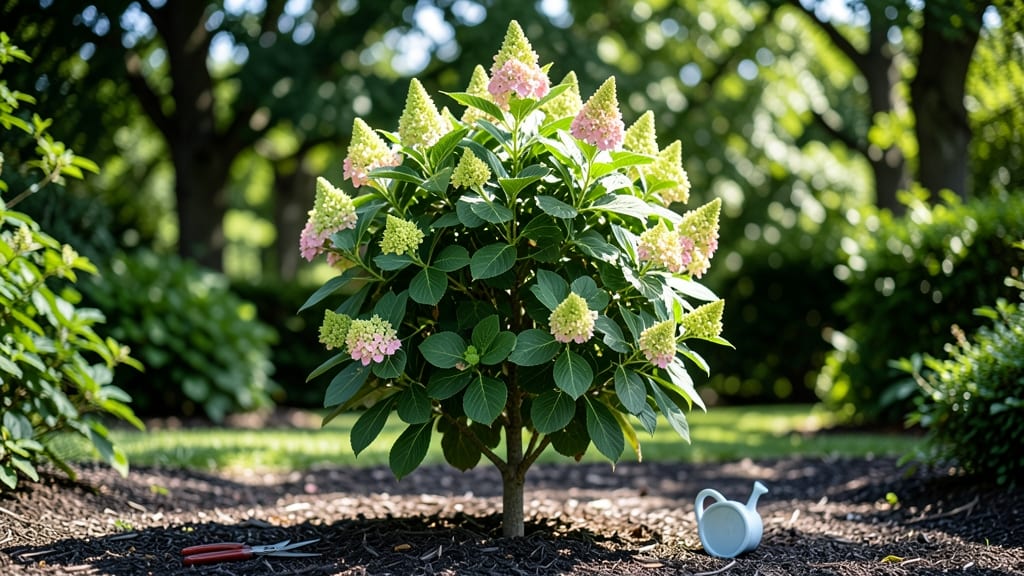
Transforming your Quick Fire hydrangea into a striking tree form isn’t just possible—it’s faster than you’d expect. ✨ I’ve pruned dozens of these upright beauties, and the secret lies in aggressive early shaping combined with strategic cuts that encourage bold, branching growth.
Most gardeners assume tree forms take years, but with this method, you’ll see dramatic vertical structure within just one growing season.
The key starts with your first pruning in late winter or early spring, before new growth begins. You’ll need sharp pruners, a sturdy branch spreader, and a little patience—no fancy tools, just precise cuts.
Quick Fire’s natural vigor means it responds well to bold shaping, so don’t be afraid to cut back hard to create that signature layered look. The result? A year-round focal point with glossy foliage that turns fiery red in fall, long after other hydrangeas have faded.
By summer’s end, your tree form will be unmistakable: a 6-foot-tall statement piece with multiple tiers of blooms and lush foliage. The best part? Maintenance stays simple—just a light trim in late winter to clean up and encourage fresh growth.
Even in tight spaces, this hydrangea thrives, making it perfect for small yards or container growing with proper support.
Here’s where it gets interesting: the same techniques work for other upright hydrangeas like ‘Limelight’ or ‘Little Lime,’ though Quick Fire’s fast growth rate makes it the easiest to shape. The only real challenge?
Resisting the urge to over-prune—too many cuts too soon can stress the plant. Start with confidence, then refine as you go. Your neighbors will be asking for your secrets by next summer.
📚 In This Guide
- What you need
- Instructions
- Tips and common mistakes
- Wrapping up and next steps
What you need
- ● Hydrangea plant: A mature Hydrangea macrophylla (bigleaf hydrangea) or Hydrangea paniculata (panicle hydrangea) in a container or garden bed. Pro tip: Choose a healthy plant with multiple strong stems (3+ inches thick). 🌱
- ○ Pruning shears: Sharp, bypass-style shears (avoid anvil shears—they crush stems). Optional: Loppers for thicker stems (1–2 inches).
- ● Gloves: Heavy-duty gardening gloves (hydrangeas can be thorny and sap may irritate skin).
- ● Pruning sealant: A wound-healing product (like Tree Seal Tape or pruning paste) to prevent disease on larger cuts.
- ● Support structure: For containers: A sturdy bamboo stake (6–8 ft tall) or a metal tree guard (4–5 inches in diameter).
- ● For garden beds: A wooden post (4x4 inches, 6–7 ft tall) or a metal rebar (½-inch diameter).
- ● Ties: Soft plant ties (fabric or rubber) or zip ties (for temporary support). Avoid wire—it can damage stems!
- ● Watering can or hose: With a gentle spray nozzle for post-pruning hydration.
- ● Hand pruners: For precision trimming of smaller stems.
- ● Saw: A pruning saw for any stubborn, thick stems (rare for hydrangeas but useful for panicle types).
- ● Mulch: Organic mulch (like pine bark) to retain moisture and protect roots.
- ● Fertilizer: A balanced, slow-release fertilizer (10-10-10 or hydrangea-specific) to support new growth.
- ● Spray bottle: With neem oil (prevents fungal issues post-pruning).
- ● Timing: Prune in early spring (before new growth) or late winter (dormant season). Avoid pruning in fall—it reduces winter hardiness!
- ● Weather: Choose a calm, overcast day to prevent stress on the plant.
- ● Knowledge: Familiarize yourself with your hydrangea’s bloom type (mophead vs. lacecap) to prune correctly.
- ● Safety: Wear closed-toe shoes and avoid pruning near power lines or in wet conditions.
Step-by-step instructions for sculpting hydrangea into a tree form
Here's how to transform any hydrangea bush into a stunning, year-round focal point—fast.
✂️ Step 1: Choose the Right Time and Tools
Prune your hydrangea in late winter or early spring, before new growth begins. This timing ensures you're working with dormant wood and avoids disturbing the plant's energy reserves. I always use sharp, clean pruning shears—dull blades crush stems and invite disease. Disinfect your tools with rubbing alcohol between cuts to prevent spreading any pathogens lurking in the plant.
Select a central stem to become your trunk. Look for the strongest, straightest branch—this will be your focal point. The rest of the bush will become your canopy. If your hydrangea is already mature, you may need to prune back some branches to create a clear trunk. Remember, hydrangeas are forgiving, so don't stress about perfection.
🌿 Step 2: Create the Trunk by Pruning Back Laterals
Start by removing all lateral branches from the bottom 3 feet of the central stem. Cut them back to the main trunk, leaving no stubs. This creates a clean, unobstructed trunk. I like to step back frequently to visualize the shape—it's easier to adjust as you go than to fix mistakes later. For larger bushes, you might need to prune back multiple central stems to create a thicker trunk.
If your hydrangea has multiple strong stems, select the two or three strongest and prune the others back to encourage a fuller canopy later. The goal is to create a trunk that's at least 2-3 inches in diameter at the base. For smaller hydrangeas, you can leave a thinner trunk and focus on shaping the canopy first.
☀️ Step 3: Shape the Canopy for Year-Round Drama
Once your trunk is established, focus on the canopy. Prune back the remaining lateral branches to encourage a full, rounded shape. Cut branches back to just above a leaf bud or set of buds—this ensures new growth will emerge in the right place. I usually aim for a canopy that's 2-3 times wider than the trunk's diameter at its widest point.
For a more dramatic look, you can prune the canopy into tiers—cut some branches shorter to create layers. This works especially well for larger hydrangeas. Step back every few minutes to check your progress. The key is balance: you want a full canopy that doesn't overwhelm the trunk. Hydrangeas bloom on new wood, so don't worry about removing flower buds—new blooms will form in their place.
💧 Step 4: Maintain Shape and Encourage Growth
After the initial pruning, hydrangeas will send out new growth quickly. In the first growing season, you may need to do some light pruning to keep the shape clean. Remove any branches that grow too close to the trunk or disrupt the canopy's symmetry. I like to prune these new shoots back to just above a leaf bud to encourage bushier growth.
Water deeply after pruning to help the plant recover. Hydrangeas are heavy drinkers, especially in their first season after a major pruning. Mulch around the base with 2-3 inches of organic mulch to retain moisture and protect roots. Fertilize lightly in early spring with a balanced fertilizer to encourage strong new growth.
⏰ Step 5: Refine Over Time for Perfect Form
Each subsequent year, prune in late winter to maintain the tree form. Focus on removing any branches that grow too close to the trunk or disrupt the canopy's shape. You can also prune back some of the older wood to encourage new, vibrant growth. I usually cut back about 1/3 of the oldest branches each year to keep the plant healthy and full.
Watch for new growth emerging from the base of the trunk—this is a sign your hydrangea is responding well to the pruning. If you notice any leggy growth, it's a sign the plant needs more light. Hydrangeas thrive in partial shade to full sun, but too much shade can lead to sparse blooms. Adjust the plant's position if needed, and you'll see a fuller, more dramatic tree form in no time.
Tips & tricks for perfect hydrangea tree form
Transforming your hydrangea into a stunning tree form is faster than you think—here's how to avoid common pitfalls and achieve professional results.
Timing is Everything: The late winter or early spring window is critical for success. This dormant period allows the plant to heal quickly and prevents stressing new growth. I've learned this the hard way after trying to prune in late spring—new growth was already underway, and the plant struggled to recover. If you miss this window, wait until after your hydrangea finishes blooming, but be prepared for a slightly longer recovery time.
Visualization Technique: Step back frequently to check your progress—literally! I've seen too many pruning attempts where the gardener gets too close and loses perspective. For Step 2, imagine your trunk as a tree's main branch and visualize how the canopy will spread. A simple trick is to use a string or garden twine to mark your desired trunk height before making any cuts. This gives you a clear reference point when removing those bottom 3 feet of lateral branches.
Pruning Precision: When shaping the canopy in Step 3, always cut just above a leaf bud or set of buds. This ensures new growth emerges in the right place and maintains the tree form. I like to make my cuts at a slight angle to prevent water from pooling on the cut surface, which could lead to rot. For larger branches, use your pruning shears to make clean cuts—avoid tearing the bark, as this can invite disease. Remember, hydrangeas are resilient, but precision pays off in the final shape.
Post-Pruning Care: After your initial pruning, don't forget the importance of the 2-3 inches of organic mulch. This isn't just about aesthetics—it helps retain moisture and protect roots from temperature fluctuations. I've noticed that hydrangeas pruned in this way recover more quickly and produce fuller canopies. Water deeply immediately after pruning to help the plant recover, especially if you're working in hot or dry conditions. Think of it as giving your hydrangea a refreshing drink after its "haircut."
Pro Tips for Quick Fire Hydrangea Tree Form
- Transforming your hydrangea into a stunning tree form is faster than you think—here's how to avoid common pitfalls and achieve professional results.
- Timing is Everything: The late winter or early spring window is critical for success.
- Visualization Technique: Step back frequently to check your progress—literally!
Frequently asked questions
Got questions about transforming your hydrangeas into stunning tree forms? Here are some of the most common queries—and their answers—to help you prune with confidence!
What’s the best time of year to prune my hydrangeas into a tree form?
For mophead and bigleaf hydrangeas, prune in late winter or early spring (before new growth appears). Panicle and oakleaf types can handle pruning in late winter or early spring too, but they’re more forgiving if done in summer. Avoid pruning in fall—it removes next year’s blooms!
How do I know if I’ve pruned too much off my hydrangea?
If you’ve cut back more than 1/3 of the plant’s total growth or see bare stems with no buds, you’ve likely over-pruned. Signs of stress include no new leaves or weak, sparse growth in spring. Wait until next year to prune lightly and encourage recovery.
Can I turn any hydrangea into a tree form, or are some better suited?
Mophead, bigleaf, and panicle hydrangeas are the best candidates—they respond well to heavy pruning. Smooth hydrangeas (H. arborescens) can work too, but oakleaf types may struggle with extreme shaping. Always check your variety’s growth habits first!
Do I need to fertilize after pruning my hydrangea into a tree form?
Yes! Pruning is stressful for plants, so feed with a balanced, slow-release fertilizer (like 10-10-10) in early spring after pruning. For extra blooms, add acid-loving plant food (like cottonseed meal) if your soil is alkaline.
What should I do if my hydrangea tree form doesn’t bloom well after pruning?
Check these fixes:
Pruned at the wrong time? Mophead/bigleaf types need old wood to bloom—avoid summer pruning.
Not enough sun? Hydrangeas need 4–6 hours of light daily.
Poor soil? Test pH—blue/purple blooms love acidic soil (pH 5.2–6.0).
Over-fertilized? Too much nitrogen = leafy growth, no flowers.
Give it a year—tree forms take time to establish!Wrapping up and next steps
Transforming your hydrangeas into a stunning tree form is easier than you think—and the results are worth every minute! With the right tools, timing, and patience, you’ll enjoy year-round vertical drama that elevates your garden’s style. 🌿✨
Ready to take the next step? Grab your pruners, sketch a rough plan, and start shaping in early spring. Your hydrangea tree awaits—let’s make it spectacular!