
Pruning
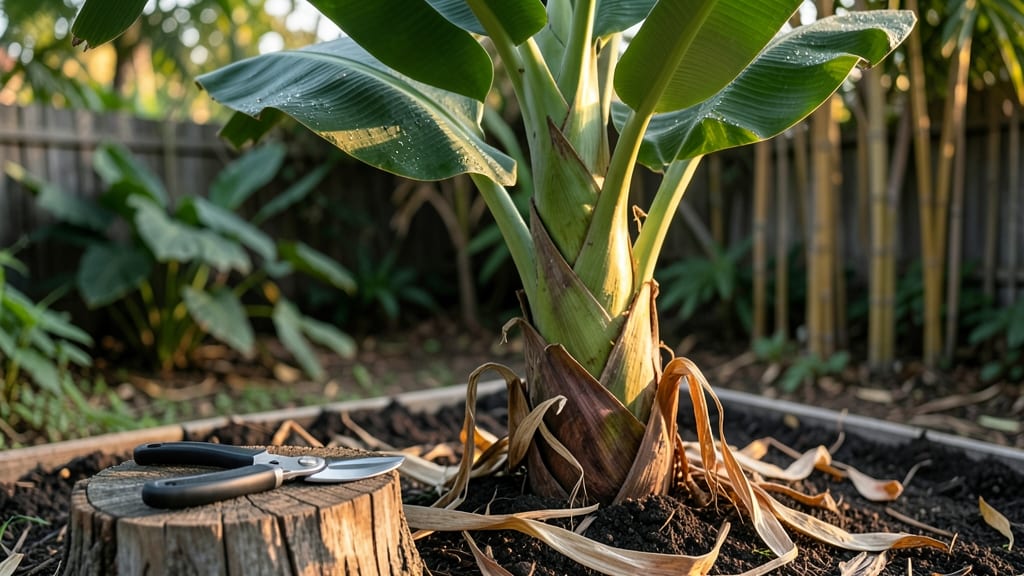
Cutting back a banana tree isn’t just about trimming—it’s about giving your plant a second chance at stronger growth and better fruit. I’ve learned the hard way that hacking away without a plan can weaken your tree instead of reviving it, so here’s the method that actually works.
The key is timing: wait until the old pseudostem collapses naturally or after harvest, never in the middle of a growing season when the plant is still storing energy.
You’ll need sharp pruners, a disinfectant (to prevent disease), and a clean tarp for cleanup—no fancy tools, just the right approach. Start by cutting the old pseudostem at ground level, then remove any dead or diseased leaves from the new growth.
This isn’t just cleanup; it’s redirecting the tree’s energy toward fresh shoots and fruit production. The first cut feels drastic, but trust the process—your tree will thank you with lush new leaves within weeks.
What you’ll end up with is a healthier, more productive banana tree that recovers faster and resists pests better. The new growth emerges from the base, and those young shoots are where your next harvest begins.
Plus, you’ll avoid the common mistake of leaving stubs too long, which traps moisture and invites rot. Think of it like giving your tree a fresh start—just like spring cleaning, but for plants.
This method works for both dwarf and large banana varieties, whether you’re in a tropical climate or a warm microclimate. The only difference? Larger trees might need a sturdy saw for the thickest stems, but the principles stay the same.
Ready to transform that tired-looking banana tree into a powerhouse? Let’s get to it.
📚 In This Guide
- What you need
- Instructions
- Tips and common mistakes
- Wrapping up and next steps
What you need
- ● Pruning shears or loppers – Choose bypass pruners (sharp, clean cuts) or loppers (for thicker stems, 2–4 inches in diameter). Disinfect blades with rubbing alcohol or a 10% bleach solution before and after use to prevent disease spread.
- ● Heavy-duty gloves – Opt for gardening gloves with reinforced palms (e.g., leather or thick canvas) to protect against sharp edges and sap.
- ● Saw (pruning or handsaw) – For thick pseudostems (trunks) over 4 inches wide. A bow saw works best for clean cuts.
- ● Ladder or step stool – Banana trees can grow 15–25 feet tall! Ensure stability and use a non-slip surface.
- ● Disposable trash bags or compost bin – Collect large debris (pseudostems, old leaves) for disposal or mulching.
- ● Rake or broom – Sweep up small leaf litter and mulch around the base post-trimming.
- ● Hose with nozzle – Rinse tools and clean sap off gloves post-trimming.
- ● Fungicide spray (e.g., copper-based) – Apply to cuts if your tree shows signs of fungal infections.
- ● Pruning sealant – Not always necessary for banana trees, but useful for large cuts in humid climates to prevent rot.
- ● Marking spray or tape – Helps map out cuts if you’re working with a large or complex tree.
Step-by-Step guide to pruning a banana tree
Revitalize your banana plant with these proven techniques—your tree will thank you with stronger growth.
✂️ Step 1: Identify and Mark the Right Growth Points
Start by examining your banana tree for the pseudostem—the thick, layered trunk that looks like bamboo. Look for dried or dead fronds at the base; these are your first targets. Use a sharp pruning shears to make a clean cut just above a visible bud or growth node (about 1-2 inches above the base). These buds signal where new shoots will emerge.
Real talk: Don’t cut into the actual stem—you’ll damage the plant. The pseudostem is just a protective sheath, so focus on removing only the outer layers. If your tree has yellowing or brown fronds higher up, wait until they’re completely dry before cutting—they’ll snap easily when dead.
✂️ Step 2: Remove Dead Fronds and Clean Up Debris
Use your pruning shears to slice through the dried fronds at their base, working your way up the pseudostem. For stubborn fronds, a hacksaw or pruning saw works better—just avoid sawing into the living tissue. As you cut, notice how the pseudostem peels back like an onion; this reveals the new growth points you’re protecting.
Clear away all cut fronds and debris from the base of the plant. Leaving old leaves piles up moisture, which can rot the pseudostem. I like to rake the area clean and scatter a 2-inch layer of mulch (if using) to protect the base from fungal issues. This step keeps your tree healthy and prevents pests from hiding in dead material.
✂️ Step 3: Trim Back Overly Long or Damaged Leaves
Now focus on the live fronds. If any are tattered, torn, or excessively long, trim them back to about half their length using sharp pruners. Cut at a 45-degree angle just above a leaf node to encourage new growth. Avoid cutting into the main stem—this can weaken the plant.
Watch for yellowing or curling leaves—these often signal stress from overwatering or pests. If you see black spots or mold, prune those leaves immediately and dispose of them in the trash (not your compost). Healthy leaves should be deep green, firm, and upright. This step ensures your tree directs energy to producing new, strong fronds.
⏰ Step 4: Monitor Regrowth and Repeat as Needed
After pruning, your banana tree will focus energy on new shoots emerging from the base. Within 2-4 weeks, you’ll see bright green suckers (small shoots) popping up. These are your future harvests! Water the base deeply but infrequently (about once a week) to encourage root growth—banana trees hate soggy soil.
If your tree produces multiple suckers, thin them to 1-2 strongest shoots per pseudostem. This prevents overcrowding and ensures bigger, healthier fruit. Repeat the pruning process once a year (late winter or early spring) to keep your tree productive. Over time, you’ll notice thicker stems, more fronds, and larger bunches of bananas.
Tips & tricks for cutting back a banana tree
These insights will help you prune with confidence and keep your banana tree thriving for years to come.
Tool Selection: Never use dull tools on a banana tree. Sharp pruning shears make clean cuts that heal faster and reduce the risk of disease. For the thicker fronds in Step 2, I recommend a hacksaw—it gives you the leverage needed without damaging the pseudostem. Always sterilize your tools with rubbing alcohol between cuts to prevent spreading fungal spores from dead to living tissue.
Visual Clues for Pruning: In Step 1, look for fronds that snap easily when you bend them—these are completely dead and ready to be removed. For Step 3, focus on leaves that are yellowing from the tips inward or have brown edges. These are signs the leaf can't photosynthesize effectively anymore. Healthy leaves should feel firm and spring back when gently pressed. If you're unsure, err on the side of keeping the leaf—banana trees can handle a little extra foliage better than too little.
Seasonal Timing: The instructions mention pruning once a year in late winter or early spring, but there's a trick to this timing. Wait until after the first frost if you're in a cold climate—this helps prevent shock to the plant. In tropical regions, you can prune anytime except during heavy fruit production. I've found that pruning just before the rainy season starts gives your tree a head start on new growth when water is abundant.
Post-Pruning Care: After completing all four steps, give your tree a nutrient boost. Mix a balanced fertilizer (10-10-10 ratio) into the soil around the base, but keep it at least 6 inches away from the pseudostem to prevent burn. The 2-inch layer of mulch mentioned in Step 2 should be organic—think straw or shredded leaves—to improve soil quality over time. This combination helps your tree recover faster and produces stronger regrowth.
Pro Tips for Cut Back A Banana Tree
- These insights will help you prune with confidence and keep your banana tree thriving for years to come.
- Tool Selection: Never use dull tools on a banana tree.
- Visual Clues for Pruning: In Step 1, look for fronds that snap easily when you bend them—these are completely dead and ready to be removed.
Frequently asked questions
Got questions about trimming your banana tree? You’re not alone! Here are answers to the most common concerns—from timing to tools—to help you prune like a pro.
When is the best time to cut back a banana tree?
The ideal time is after harvest, typically in late winter or early spring, when the plant is dormant or semi-dormant. Avoid cutting during frost or extreme heat. For tropical climates, prune after fruit production to redirect energy to regrowth. Pro tip: If your tree is diseased, trim immediately to prevent spread!
How long does it take for a banana tree to regrow after pruning?
Regrowth varies by variety and climate, but most banana trees send up new shoots within 2–6 weeks after cutting. In warmer conditions, you might see suckers (baby shoots) in as little as 3 weeks. Patience is key—full recovery can take 6–12 months, but consistent care speeds it up!
Can I cut back a banana tree too much? What’s the risk?
Yes! Over-pruning removes too much energy, stressing the plant and delaying regrowth. Never cut more than ⅓ of the pseudostem at once. If you’ve already trimmed too aggressively, reduce watering slightly and fertilize lightly to support recovery. Signs of over-pruning: yellowing leaves, no new shoots, or wilting.
What if my banana tree isn’t producing fruit after pruning?
Lack of fruit often means the tree isn’t mature enough (3–5 years old) or lacks nutrients. Ensure you’re fertilizing with potassium-rich soil (like banana-specific fertilizer) and providing full sun (6+ hours daily). If the tree is healthy but still not fruiting, it might need hand-pollination (gently shake flowers to release pollen).
Are there alternatives to cutting back a banana tree entirely?
If you want to preserve the plant’s structure, try selective pruning—remove only dead, diseased, or overcrowded leaves while leaving the core intact. For dwarf varieties, you can also top the pseudostem (cut horizontally) to encourage bushier growth. Just avoid cutting into the meristem (the growing point at the top).
What should I do if my banana tree bleeds sap after pruning?
Sap bleeding is normal and harmless—it’s the tree’s way of sealing wounds. To minimize mess, cut on a dry day and apply a 1:10 water-to-copper fungicide mix to the cut surface to prevent fungal infections. Avoid pruning during rainy seasons to reduce sap flow.
Wrapping up and next steps
Cutting back your banana tree might seem daunting, but with the right tools and technique, you’re well on your way to fostering healthier growth and bigger harvests! Remember, precision trimming—whether for maintenance or post-harvest—is key to keeping your tree thriving.
Now that you’re armed with knowledge, go ahead and give it a try—your future banana bounty will thank you! 🌱
Next step: Monitor your tree’s progress over the next few months. If you notice new shoots or leaves, you’re on the right track! For more gardening tips, explore our guides on fertilizing banana trees or identifying pests.