
Pruning
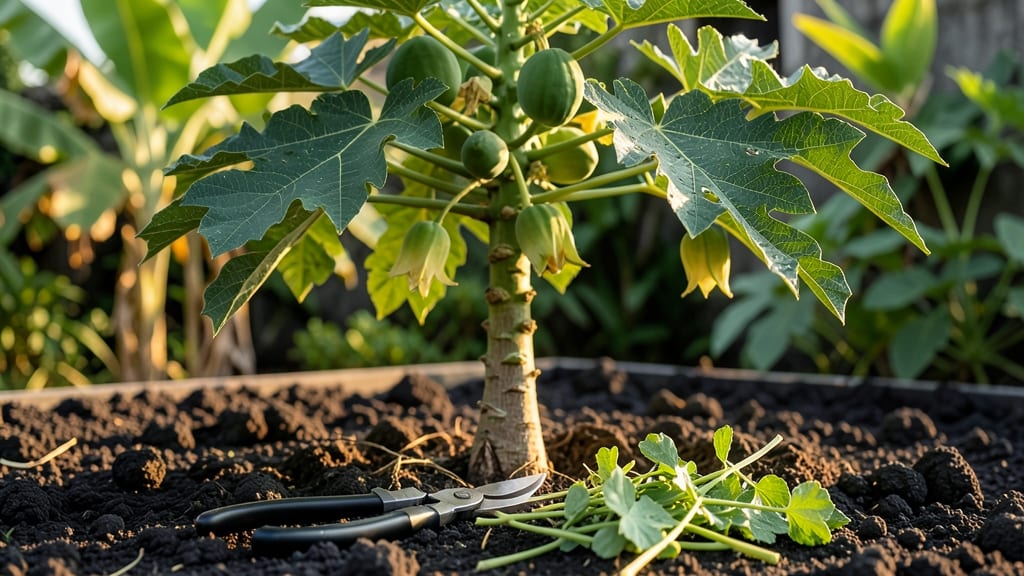
Pruning a papaya tree isn’t just about trimming—it’s the secret to year-round fruitfulness and a stronger, healthier plant. I’ve learned that skipping these cuts means fewer fruits and more disease risks, but doing it right transforms your tree into a productive powerhouse.
The key is timing: three strategic cuts per year, each tied to growth phases, not just when you feel like it.
The right tools make all the difference—a sharp pair of bypass pruners, sterilized shears, and a ladder (for taller trees) are non-negotiable. You’ll also want disinfectant to prevent spreading disease between cuts.
Start by removing dead or crossing branches first—they’re the easiest to spot and the most critical to address. This alone boosts airflow and sunlight, which directly translates to more flowers and fruit.
After pruning, your tree will reward you with thicker stems, denser foliage, and—most exciting—a steady stream of fruit throughout the year. The first cuts in early spring spark new growth, while summer trims shape the tree and encourage flowering.
Even in winter, a light cleanup keeps the tree tidy and ready for the next flush of production. It’s not just maintenance; it’s an investment in your harvest.
This method works for both container-grown and in-ground papaya trees, whether you’re in a tropical climate or a warm microclimate. The principles stay the same—only the timing shifts slightly based on your local growing season.
Ready to turn your papaya tree into a fruit machine? Let’s get those shears out and make it happen.
📚 In This Guide
- What you need
- Instructions
- Tips and common mistakes
- Wrapping up and next steps
What you need
- ● Sharp pruning shears – Bypass pruners (8-10 inch blades) for clean cuts on small branches.
- ● Pruning saw – For thicker branches (12+ inches)—look for a curved blade for precision.
- ● Disinfectant (70% isopropyl alcohol or bleach solution) – 1 part bleach to 9 parts water to sterilize tools between cuts and prevent disease.
- ● Gloves – Heavy-duty, cut-resistant gloves to protect hands from thorns and sap.
- ● Rubbing alcohol or hand sanitizer – For cleaning hands after handling sap, which can irritate skin.
- ● Plastic bags or bucket – To collect pruned branches for composting or disposal.
- ● Loppers – For medium-sized branches (1.5–2 inches thick).
- ● Pole saw – If your tree is tall and branches are out of reach.
- ○ Tree wound dressing (optional) – Only use if needed for large cuts (e.g., Tanglefoot Tree Wound Pruning Sealer). Avoid overuse—papaya trees heal well on their own!
- ● Sunblock and hat – If pruning in hot climates to protect yourself.
- ● Notebook & pen – To sketch a quick map of cuts for reference.
Step-by-Step guide to pruning papaya trees for maximum fruit production
Here's how to maintain a thriving papaya tree with precise seasonal cuts that boost yield.
Perform Initial Structural Pruning in Early Spring
Begin when new growth emerges after winter dormancy. Remove any dead, diseased, or crossing branches first - these compete with fruit production. Use sharp, sterilized pruning shears to make clean cuts just above outward-facing buds to encourage lateral branching.
Look for the tree's central leader - the dominant vertical stem. If it grows too tall, prune it back by one-third to redirect energy into fruit-bearing branches. This is critical for dwarf varieties that can become top-heavy without support.
Watch for suckers growing from the main trunk. These vigorous shoots steal nutrients from fruit development. Remove them completely at the base, but save 2-3 strong lower branches to become future fruit-bearing limbs.
Conduct Fruit-Thinning Pruning During Summer Fruit Set
When flowers appear and small fruits begin forming, this is your cue for selective pruning. Remove 50% of the smallest fruits first - this prevents overburdening the tree and allows remaining fruits to grow larger.
Focus on clusters with uneven-sized fruits. Keep only the largest, healthiest-looking fruit per cluster. Thin fruits every 2-3 weeks during peak production to maintain balance between vegetative growth and fruit development.
Pay attention to branch weight. If you see branches sagging excessively, prune back some fruits immediately. This prevents branch breakage and maintains the tree's structural integrity during heavy fruit loads.
Implement Maintenance Pruning in Late Fall
After the main harvest season, perform light maintenance pruning to prepare for winter. Remove any remaining diseased leaves or branches that might harbor pathogens over winter.
Prune back any overly vigorous new growth that appeared late in the season. This redirects the tree's energy toward root development rather than late-season shoots that won't mature before cold weather.
Examine the tree's overall shape. Make minor adjustments to maintain an open center that allows sunlight penetration to the inner branches. This prevents shading that can reduce fruit quality on lower branches.
Winter Dormancy Preparation (For Colder Climates)
In regions with frost potential, perform final pruning 6-8 weeks before first frost. Remove all remaining fruit and flower buds to prevent frost damage and redirect energy to root systems.
Prune back any weak or damaged branches completely. This prevents entry points for pests and diseases during the dormant season. Sterilize your tools with rubbing alcohol between cuts to prevent spreading pathogens.
Reduce the tree's overall size by 20-30% if needed. This makes winter protection easier and prevents wind damage. In warmer climates, minimal pruning is needed - just remove dead wood and any diseased growth.
Tips & tricks for perfect papaya tree pruning
Real talk: Pruning papaya trees isn't just about cutting branches—it's about strategic growth management that directly impacts your harvest. Here's what I've learned from years of working with these tropical trees.
Timing is Everything: In Step 1, when you're pruning the central leader by one-third, make sure to do this after the first signs of new growth in spring. The tree's natural energy surge after dormancy makes it much more resilient to pruning. I've seen trees recover beautifully when pruned at this stage, but if you wait too long, you risk stressing the plant during its critical fruiting period. Confession: I skipped this timing once and ended up with stunted growth all season.
Visual Cues for Fruit-Thinning: During Step 2, when thinning fruits every 2-3 weeks, look for these visual cues: healthy fruits should be firm with a slight blush of color, while underdeveloped ones remain small and pale. I've found that keeping only the largest fruit per cluster—even if it means removing some perfectly good-looking ones—results in fewer but significantly larger papayas. The trade-off is worth it for that restaurant-quality fruit size.
Structural Balance Matters: In Step 3, when examining your tree's shape, pay special attention to the lower branches. These often get shaded out in dense canopies. I've seen dramatic improvements in fruit quality on lower branches after opening up the center—sometimes just by removing a few overcrowded branches. This isn't just about aesthetics; it's about ensuring every part of your tree can photosynthesize efficiently.
Tool Sterilization Secret: The instructions mention sterilizing tools between cuts, but here's what nobody tells you—use a 10% bleach solution (1 part bleach to 9 parts water) for 30 seconds between severe cuts, especially in Step 4. I've seen fungal infections spread rapidly when tools weren't properly cleaned between trees. This simple step has saved me from losing entire branches to disease.
Pro Tips for Pruning Papaya Tree
- Real talk: Pruning papaya trees isn't just about cutting branches—it's about strategic growth management that directly impacts your harvest.
- Timing is Everything: In Step 1, when you're pruning the central leader by one-third, make sure to do this after the first signs of new growth in spring.
- I've found that keeping only the largest fruit per cluster—even if it means removing some perfectly good-looking ones—results in fewer but significantly larger papayas.
Frequently asked questions
Got questions about pruning your papaya tree? Here are some of the most common ones—plus quick, actionable answers to keep your tree thriving!
When is the best time to prune a papaya tree?
Prune your papaya tree during its dormant season (late fall to early spring in most climates) or right after harvest to promote new growth. Avoid heavy pruning during fruiting season—it can stress the tree and reduce yields. For tropical zones, prune after flowering but before fruit sets.
How much can I prune off a papaya tree?
Remove no more than 20-30% of the foliage in a single session to avoid shocking the tree. Focus on:
- Dead or diseased branches (cut to the base)
- Overcrowded growth (thin out to improve airflow)
- Suckers or water sprouts (trim to encourage stronger central growth)
What if my papaya tree bleeds sap after pruning?
Sap bleeding is normal! It won’t harm the tree but can attract pests. To minimize it:
- Prune on a dry, sunny day (sap flows less)
- Use a 1:10 bleach-water mix to sterilize cuts
- Avoid pruning during rainy seasons
Can I prune a papaya tree to make it bushier?
Yes! To encourage bushier growth, prune the topmost buds (apical buds) to stimulate lateral branching. Also:
- Remove vertical water sprouts (they compete for nutrients)
- Trim back overly leggy branches to the nearest leaf node
- Fertilize with low-nitrogen, high-potassium after pruning
What should I do if my papaya tree drops fruit after pruning?
Fruit drop is often due to stress from over-pruning or nutrient imbalance. To fix it:
- Reduce pruning to 10% of foliage max in future sessions
- Apply a balanced fertilizer (10-10-10) 2 weeks post-prune
- Ensure the tree gets 6+ hours of sunlight daily
- Water deeply but avoid soggy soil
Wrapping up and next steps
Pruning your papaya tree isn’t just about shaping—it’s about unlocking its full potential!
By mastering the three seasonal cuts (spring, summer, and fall), you’ll encourage healthier growth, bigger yields, and a tree that thrives year-round. 🌱 With the right tools, timing, and techniques, you’re well on your way to a bountiful harvest.
Now that you’re armed with knowledge, roll up your sleeves and get pruning! Start with one small section of your tree, observe how it responds, and build confidence as you go. Happy gardening—your future papaya feast awaits! 🍈✨